Helping A Loved One Who Has A Mental Illness

womencare-support-groups_istock_000010775681The other day, a friend of mine asked me how she could help a friend of hers that was mentally ill.

She explained to me that her friend had bipolar disorder, something she had been suffering from for years and had a long history of self-injury and suicide attempts.

According to my friend, this person was currently in a deep depression and posting dark posts on Facebook including some alarming ones such as wanting to give away her pets (giving away possessions is often associated with suicidal thoughts).

She wanted to know what should she do or say to her to make her “feel better” and I told her that there was no magic word or act she could to that would just bring her out of her current mental state. It’s like trying to help a friend who has a serious medical condition. You can help alleviate the pain, maybe make them feel more comfortable, but there is nothing you can actually do that will just cure the person of the condition.

Many people think they can or should be able to, and thus get very frustrated with themselves and/or the person they are trying to help when the reality hits that it’s just not that simple. The best thing you can do, and what I told my friend to do is to be a support system for her friend and show her love. Let her see that she has a friend who is going to stand by her side no matter what.

People suffering from a mental illness often feel broken, unlovable and fear that people will abandon them if they can’t keep it together. The best gift you can give them is showing support and love. There are no magic words or acts, but you may be surprised how a simple walk around the park talking about nothing in particular or just being present with that person, can have huge positive effects.

Many people who want to help someone they love who has a mental illness often don’t do that because as simple as it sounds, it can actually be quite difficult to actually sit with and be present with someone instead of lecturing, ordering and dictating to them what they should or need to be doing. That’s why actually just being with them, showing love and support can be such a precious gift.

Also, you may need your own support system to help yourself while helping someone you love and that’s okay.  There are many support groups tailored towards supporting loved ones of people with various illnesses including mental illnesses.

You may also need to make appropriate boundaries so that you don’t become overwhelmed and exhausted. Don’ try to be a superhero, you are only one person so do what you can when you can, but don’t feel obligated to do everything.

However you choose to support your loved one who has a mental illness is a blessing. They may not be able to tell you that or appreciate it right away. Your support doesn’t have to be perfect in order to be effective  You are doing what few people do, which is showing support and love instead of ignoring or stigmatizing.

Some Tips

  1. Learn about their illness. It’s easier to help and support someone with any illness when you have some information and insight about what they are going through. My friend who wants to support her friend with bipolar disorder actually had no working knowledge of the disorder.
  2. Let them know that they are not broken or defective and that they are the same person they have always been, they are just suffering from an illness, but they are NOT their illness.
  3. Help them if you can to get to their appointments, make sure they are taking their medications and actually talking to their doctors and/or other mental health professionals. That help can come from driving them to their appointments to simply reminding them to take their medication or to go to their appointments.
  4. Show and tell them that you love them and that you are there for them through thick and thin.
  5. Ask them what they need. Don’t just assume. The person who is sick generally knows what is best for them. They may need you to help clean the house or bring them dinner if they are too sick to do so.
  6. Check in with them, make sure that they are okay and following their treatment plan. This not only helps keep them accountable and responsible, but it also serves as a reminder that they have someone who cares about them

Counseling Minors and Confidentiality

Little-boy-shhhh-cropped-300x297Confidentiality is a crucial part of counseling. Clients have to believe that they can tell me practically anything and it won’t be repeated to anyone, including their parents.

All of my clients know that everything they tell me stays  between us except:

  • If they tell me they plan on killing themselves or someone else
  • If they tell me that are being abused
  • If I am court ordered to release information, and because I work in a school
  • If they have drugs or weapons on campus.

Also, because I work primarily with juveniles, I leave a little wiggle room by saying I will also report anything “life threatening” which may not include marijuana or alcohol use, but may include intravenous drug use or meeting adults online.

Even with these rules of confidentiality, teens will still inevitably tell me things that need to be reported to their parents, the school, law enforcement or child protective services.

More often than not, the child already knows this before they tell me so they aren’t usually upset when I have to make that phone call.

The problem generally comes from parents, who may not understand confidentiality. They think that their child is in counseling and as the counselor, I should tell them any and everything their child is doing and can get testy when I have to explain to them that confidentiality doesn’t work that way and that it’s actually illegal for me to tell them any information that doesn’t fall under the exceptions above, without their child’s permission.

I understand these rules and have worked within the confines of them for many years, even when I am hearing information that I wish I could tell parents. Information I actually knew would help the situation, if the parents knew.

For instance, last year a young lady was devastated when she went to a friend’s party and got raped by him and four guys she didn’t know. She was in tears when she confided in me and after calming her down, I practically begged for her to give me the name of the guys, some who went to the same school as her, or to report it to law enforcement.I gently repeated this request each session as we processed the trauma.

I offered to go with her to make the report, but she was adamant about not telling me any identifying information. She told me that she was scared that they would come after her if she told. No amount of me trying to convince her worked and at the end of it all, I had to allow her to make that decision she will have to live with for the rest of her life.

As much as I wanted to report that crime to law enforcement and her parents, I couldn’t. I had no identifying information, she wasn’t abused by a caregiver or someone in authority and she wasn’t a danger to herself or others so my hands were tied. All I could do was try to help her get through the emotional and psychology pain she was feeling. She went through a period of deep depression and eventually transferred schools.

I have had teens who have had abortions and miscarriages without their parents ever knowing they were pregnant. Kids who have battled substance and alcohol abuse right under their parents noses.

I always strongly encourage my teenage clients to involve their parents in their treatment though family counseling, but most teenagers are hesitant to let their parents know the things they do when they are not looking, or think that their parents will just be angry, judgmental or not listen if they do open up.

I usually only do a couple of family sessions a month and those usually happen after emergencies such as suicidal thoughts, severe panic attacks that require medical attention or another extreme circumstance  that causes the parents to be concerned.

That’s usually when, with the child’s permission, I feel like I can finally truly help them without restraints. Trying to help a child solve a problem that need parental involvement, when they don’t want the parent to be involved is truly handicapping.

However, this is usually also the time when parents get upset that I knew about the abortion, or the drug use, or the date rape that they didn’t know about, months sometimes even years before.

I let them know about the confidentiality regulations set by the Health Insurance Portability and Accountability Act (HIPPA) that prevented me from giving them that information, even when it was valuable information about their own child.

Most parents calm down once they realize that without the confidentiality between their child and myself, it would have been unlikely that their child would have told any trusted adult and received at the minimal, mental and emotional support as well as guidance and encouragement.

Some minors want help or at least to talk about issues in their lives that are concerning them, but will only do so if they know that their parents will not be notified. Not all parents are supportive and some parents could use the information to further cause damage to their child, knowingly or not.

Take for instance a girl I know who is scared of her father who has a past history of physical abuse against her. He’s told her that if he ever finds out she is having sex he will kick her out on the streets. Yet, she is having sex and thinks she may be pregnant. Should I risk her losing her housing in order to tell her father that she may be pregnant?

I believe breaching confidentiality, while it will give parents more information about their child, it is less likely to truly make a difference if that child just learns to hide their problem or not admit or talk about their problem anymore, resulting in them getting less help.

I definitely understand when parents are frustrated with confidentiality when it comes to their children, which is why I always encourage open communication and family therapy, but most kids I deal with would never want their parents to know their issues and unless it’s something that puts them or someone in immediate danger, my hands are usually tied pretty tight.

The Ohio Missing Women And Psychological Resilence

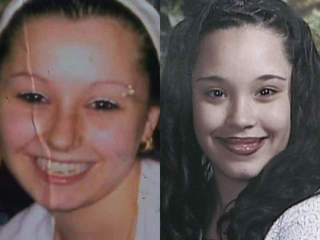
Berry_and_DeJesus_20130506191340_320_240Many people when they first heard of the unbelievable miracle that three women, Amanda Berry, Gina DeJesus and Michele Knight so far unnamed woman who all went missing in three separate incidents were found alive and well, at least physically, 10 years later, asked themselves the same questions:

1) How could this happen in the middle of a neighborhood in a big city? and;

2) Did this women, years later as adults, have chances to escape their captors and if so, why didn’t they?

From a psychological point I understood some of the  damage these women went through. Systematic abuse for long periods of times at the hands of someone who basically has your life in their hands, can create overwhelming feelings of hopelessness and worthlessness, especially when the abuse is taking place in a confined space where you are isolated or severely limited to contact with the outside world.

They most likely had no idea if they would live, die or survive the trauma they faced and struggled to make sense of it.

As human beings we always try to find meaning in things, our survival is based on placing meaning on situations and thus I am sure these women struggled with trying to find a meaning to why this was happening to them. It’s likely one of many reasons they were resilient enough to survive and to not be completely mentally broken, although I am sure their captors did their best bo break them.

Physical, sexual and psychological abuse were all most likely used repeatedly to make these young women feel devalued and worthless.

Jaycee Duggard, who was kidnapped in 1991 when she was 11 and held captive for 18 years before she was rescued, said that once she was raped, she felt defiled and as like she was worthless. As a Christian she held her virginity deeply precious and thought she was practically worthless once the sexual abuse begun.

Elizabeth Smart, who was kidnapped in 2002 when she was 14 and abused repeatedly by her abductor for 9 months before she was rescued, spoke at a human trafficking forum last week and said that her abductor broke her down to the point that she felt like:

“a chewed up piece of gum. Nobody re-chews a piece of gum, you throw it away. And that’s how easy it is to feel like you no longer have worth, you no longer have value. Why would it even be worth screaming out? … Your life still has no value.”

What Elizabeth is describing to some degree is what is called learned helplessness.

Learned helplessness is a psychological condition that happens to both people and animals when they believe that a condition they are in will never get better and that they have no control over it. They will stop trying to get out of the situation and will miss opportunities to escape it. They may not run when the door is unlocked for example.

Another possible, but less likely answer is what is sometimes called Stockholm Syndrome, where victims bond and even start defending their captors. It’s a psychological defense aimed at trying to survive by taking on the views of your captor and making yourself seem less as a threat to hurt them or escape.

It’s similar to what is called called traumatic bonding:  “strong emotional ties that develop between two persons where one person intermittently harasses, beats, threatens, abuses, or intimidates the other.” (Dutton & Painter, 1981).

In traumatic bonding, their is an imbalance of power, the abuse is sporadic, and the victim will start to deny that the abuse is existing or is as bad as it seems as a way to mentally protect themselves. They may even start to disassociate and distance themselves from the physical trauma in what is called cognitive dissonance.

I’m not saying either of these things in part or in whole is what kept these three young women alive and resilient for so long, but it is likely that mentally they had to do some cognitive dissonance in order to keep their sanity.

I was glad to hear today that all of these women had been released from the hospital, but their psychological healing has just begun. They will need time, understanding, patience, their families and privacy to heal their psychological and emotional wounds.

Hopefully they will begin to put this tragedy behind them. Their captors and torturers have stolen so much of their lives, they don’t need to allow them to still any more of their present and future. Their future is still bright and they are still people of much worth and value. They have to believe that in order to not just be survivors of this tragedy, but thrivers.

The DSM-V: Coming Soon, Criticisms, Flaws and All

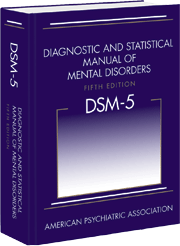
DSM-5_3DThe long awaited and controversial Diagnostic and Statistical Manual of Mental Disorders, version five (DSM-V) is slated to come out toward the end of this month.

The Diagnostic and Statistical Manual of Mental Disorders (DSM) is considered the bible of psychiatry. It is the guide we use in the mental health field to help us diagnose clients and this May, the newest version of the DSM, version five, is slated to be released, but not without much controversy.

The DSM is considered a research standard worldwide, yet, outside of the United States it is rarely used. Still, what is in the DSM is of international concern because trends in diagnosing in the United States (i.e., attention deficit disorder, autism) tend to spread worldwide especially in many European countries, China, Japan and Brazil.

Much of the criticism about the DSM comes from both the way illnesses are categorized and the ever expanding criteria for mental illness that basically makes everyday life issues a diagnosis.

Other  criticisms include weak scientific support and poor reliability in some of the DSM-V field trials, which leave some to believe that it will lose its role as the international standard for research journals.

One of the real dangers if the DSM-V is really that severely flawed is that all of the mental health field will also become tainted, with people not trusting those who are trusted to test, diagnose and help people in need.

With the DSM-V, we also put ourselves at more risk of mis-diagnosing, over-diagnosing and over-medicating individuals.

Some say that the changes to disorders such as Generalized Anxiety Disorder can include almost everyone, as well as a proposed new diagnoses called Somatic Symptom Disorder which will be diagnosed to any patient who has “excessive and disproportionate thoughts, feelings and behaviors” in relationship to an illness, which includes chronic pain and cancer. How much worry constitutes “excessive” worrying. Who wouldn’t be worried when they are dealing with a painful, chronic, potentially debilitating or life threatening illness?

Some believe that much of the flaws in the DSM period are because disorders are placed in discrete categories such as Bipolar Disorder and Schizophrenia, instead of “dimensionality” in which mental illnesses may overlap and people may be placed on one of several spectra such as the proposed Autistic Spectrum Disorders.

Most clients I see have a combination of symptoms, some which do not meet complete criteria for one specific diagnosis, but can meet several others and present differently at different periods, which is why I may see a client who has received three different diagnosis over the same number of years.

However, most in the mental health field prefer for mental disorders to continue to be categories as they already are which is one reason dimensionality won’t likely be introduced into the DSM anytime soon even in the face of growing evidence that disorders are more fluid and less rigid than previously thought.

It would take more research and funding into dimensionality for it to truly be accepted, but much of that research and funding is already put into confirming the categorization of mental disorders the way they already are.

Basically, people don’t really want change. Much of the mental health field, drug and insurance companies, like the rigidity of the DSM even though it is clear that it is failing many people.

Even patient groups and charities prefer the rigidity of the DSM because it highlights their disorder and keeps it visible. They do not want to see schizophrenia or bipolar disorder re-labeled into a spectrum just as Aspergers Disorder is slated to be dissolved into the autistic spectrum disorders.

On top of that health-insurance in the United States pay for treatment based on current DSM diagnosis. As a matter of fact, that is one of the most frustrating things about dealing with insurances.

In order to get paid for my services, they want a diagnosis almost immediately, usually after the first session or two of me meeting a client. Sometimes a DSM diagnosis is obvious, other times it is not and more time with the client is needed, but insurance companies won’t pay for that unless you diagnose them with something first. Insurance companies are probably the last ones who want to see the DSM categories dissolved.

According to Dr. Allen Francis, former chair of the DSM IV task force, the ten worse changes to the DSM-V are:

1) Disruptive Mood Dysregulation Disorder: DSM 5 will turn temper tantrums into a mental disorder- a puzzling decision based on the work of only one research group. We have no idea whatever how this untested new diagnosis will play out in real life practice settings, but my fear is that it will exacerbate, not relieve, the already excessive and inappropriate use of medication in young children. During the past two decades, child psychiatry has already provoked three fads- a tripling of Attention Deficit Disorder, a more than twenty-times increase in Autistic Disorder, and a forty-times increase in childhood Bipolar Disorder. The field should have felt chastened by this sorry track record and should engage itself now in the crucial task of educating practitioners and the public about the difficulty of accurately diagnosing children and the risks of over- medicating them. DSM 5 should not be adding a new disorder likely to result in a new fad and even more inappropriate medication use in vulnerable children.

2) Normal grief will become Major Depressive Disorder, thus medicalizing and trivializing our expectable and necessary emotional reactions to the loss of a loved one and substituting pills and superficial medical rituals for the deep consolations of family, friends, religion, and the resiliency that comes with time and the acceptance of the limitations of life.

3) The everyday forgetting characteristic of old age will now be misdiagnosed as Minor Neurocognitive Disorder, creating a huge false positive population of people who are not at special risk for dementia. Since there is no effective treatment for this ‘condition’ (or for dementia), the label provides absolutely no benefit (while creating great anxiety) even for those at true risk for later developing dementia. It is a dead loss for the many who will be mislabeled.

4) DSM 5 will likely trigger a fad of Adult Attention Deficit Disorder leading to widespread misuse of stimulant drugs for performance enhancement and recreation and contributing to the already large illegal secondary market in diverted prescription drugs.

5) Excessive eating 12 times in 3 months is no longer just a manifestation of gluttony and the easy availability of really great tasting food. DSM 5 has instead turned it into a psychiatric illness called Binge Eating Disorder.

6) The changes in the DSM 5 definition of Autism will result in lowered rates- 10% according to estimates by the DSM 5 work group, perhaps 50% according to outside research groups. This reduction can be seen as beneficial in the sense that the diagnosis of Autism will be more accurate and specific- but advocates understandably fear a disruption in needed school services. Here the DSM 5 problem is not so much a bad decision, but the misleading promises that it will have no impact on rates of disorder or of service delivery. School services should be tied more to educational need, less to a controversial psychiatric diagnosis created for clinical (not educational) purposes and whose rate is so sensitive to small changes in definition and assessment.

7) First time substance abusers will be lumped in definitionally in with hard core addicts despite their very different treatment needs and prognosis and the stigma this will cause.

8) DSM 5 has created a slippery slope by introducing the concept of Behavioral Addictions that eventually can spread to make a mental disorder of everything we like to do a lot. Watch out for careless overdiagnosis of internet and sex addiction and the development of lucrative treatment programs to exploit these new markets.

9) DSM 5 obscures the already fuzzy boundary been Generalized Anxiety Disorder and the worries of everyday life. Small changes in definition can create millions of anxious new ‘patients’ and expand the already widespread practice of inappropriately prescribing addicting anti-anxiety medications.

10) DSM 5 has opened the gate even further to the already existing problem of misdiagnosis of PTSD in forensic settings.

DSM 5 has dropped its pretension to being a paradigm shift in psychiatric diagnosis and instead (in a dramatic 180 degree turn) now makes the equally misleading claim that it is a conservative document that will have minimal impact on the rates of psychiatric diagnosis and in the consequent provision of inappropriate treatment. This is an untenable claim that DSM 5 cannot possibly support because, for completely unfathomable reasons, it never took the simple and inexpensive step of actually studying the impact of DSM on rates in real world settings.

Even with much of it’s flaws and criticisms, the DSM-V is likely to be the best guide for diagnosing mental disorders that we have had thus far. We can only hope that with further research and funding, the next revision of the DSM will be better and more forward thinking.

Have Your Teens Been Looking For Molly?

PinkPillWhen I am doing presentations on drugs to high school teenagers, one of the many questions I get asked is “What is a Molly?” Many teens have heard of the drug Molly, some have even tried it while many more are simply curious about the drug they are hearing so much about through the music that they are listening to.

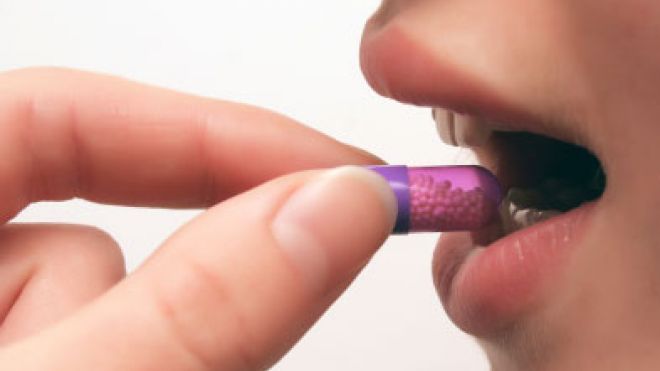
If you have never heard of the drug Molly, chances are that the teen in your life has. Molly is an innocent sounding name for a form of ecstasy that usually comes in colorful pills, powder or crystals. Some people mix it in their drinks to mask the taste and because it often gives drinks a different color or flavor.

Many teens think that it is harmless, mostly because so many of their favorite entertainers celebrate using it regularly, but it is not harmless. Part of the lure of the drug Molly is that there are few negative side effects, few verified long term effects (although depression may be one of them), and not a high risk of dependence. The real danger of using a drug like Molly, is not knowing what is really in it or how much.

When Molly is mixed with alcohol, as it often is, the risk for negative side effects increase from dehydration and exhaustion, to more severe side effects including hyperthermia, seizures, electrolyte abnormalities, cardiac episodes and even comas.

The name Molly is a play on the word molecule and it’s supposed to be a pure form of MDMA (3,4-methylenedioxy-N-methylamphetamine), but often isn’t. Some labs that  have been busted by law enforcement had the ingredients for chemicals such as bath salts mixed in.

MDMA can come from as far away as Canada, Asia and the Netherlands and can be created in labs with unknown health and safety dangers.

The scary part about Molly is that it is the latest club drug that rappers and other musicians are singing about as if it’s cool and fun to use.

Because popular rappers like Trinidad James, Future and Soulja Boy are practically promoting the drug, teens who may have not ever heard of or been interested in using drugs are becoming more and more curious about what a Molly is and what exactly does it do.

Here are some lines from some popular rap songs that mention Molly:

  • “pop a Molly I’m sweatin.”-Trinidad James
  • “”MDMA got you feeling like a champion/the city never sleeps better slip you an ambien.”- Jay Z.
  • “Something about Mary, she gone off that Molly/Now the whole party is melted like Dali”- Kanye West
  • “Talkin four door Bugatti/ I’m the life of the party/Let’s get these hoes on the Molly”- Rick Ross
  • “Take the blunt, dip it in the lean, then light it/Pop a Molly, drink some orange juice, get higher”- Juicy J.
  • “Pop a molly smoke a blunt/That mean I’m a high roller”- Lil Wayne
  • “Every Molly got my body feelin’ like I’m outer body/I’ll be high and above the rim, Amare Stoudemire”- Gun Play

A lot of these rappers and songs you may have never heard of, but many of your kids have or at least have heard other songs mentioning taking Molly as if it were as harmless as taking a sip of water. Even Madonna yelled out to a crowd during Miami’s Ultra Music Festival, “How many people in this crowd have seen Molly?”.

One of the side effects of taking MDMA is sweating profusely (“pop a Molly I’m sweating”), because people may not realize how hot they get and start sweating. Using Molly just like regular ecstasy can make you feel happy, sexy and less inhibited which could lead to unintended sexual encounters, but some experts report that just one hit of Molly can damage your brain forever.

Rapper Joe Budden told Fox News in New York that after a summer of using Molly, he started hallucinating and not sleeping for days. He reports it took people around him that cared about him to save his life.

Teens are young and impressionable. It’s easy for the music and entertainers they listen to to influence not only how they talk, and dress, but also what they do.

When their favorite entertainers are making casual drug use seem fun, exciting and happening, then it’s only natural that they become curious about and even become tempted to experiment with the things they reference.

Entertainers are always quick to remind us that they are not role models. They think this frees them for being responsible for their actions and words. Well they are Role models, good or bad, but it is our responsibility as responsible adults to be the good role models and to help our kids stay away from bad influences by educating them on drugs and other references made in the movies and music they watch and listen to while answering any questions they have.

Keeping Teens Safe During Prom Night

bc-web-liquor0107It’s Prom season again and teenagers across the country are getting ready for the big night, spending lots of money on dresses, hair, make up and alcohol.

Yes, alcohol.

The other day I happened to glimpse at one of my 17 year old client’s cell phone screen and saw that she was in the middle of texting someone about Prom. The last message read, “Are you sure your cousin is going to be able to get us the alcohol?”

I wasn’t shocked, but disappointed. After all, this client is one of my “good” kids who generally doesn’t give me any trouble at all, but I was disappointed that she was planning on drinking on Prom night, just as thousands of other students will be doing.

Teens and alcohol simply don’t mix, they never have, and Prom and alcohol definitely don’t mix.

Teens want to party and celebrate, to be “grown” for a night which includes partying and celebrating the way they see or think grown people do, with alcohol which is why Prom and Graduation season are so deadly for teens when it comes to alcohol related accidents and deaths.

For example, in 2005 the National Highway Traffic Safety Administration (NHTSA) reported 676 high school students were killed in alcohol related traffic accidents.  One third of all alcohol related traffic accidents involving students happen between the months of April, May and June.

Drinking alcohol can cause adults to make poor decisions, imagine the poor decisions involved with underage drinking.

Young drivers are less likely to wear their seat belts when they have been drinking.  In 2005, 64% of young drivers involved in fatal crashes who had been drinking were not wearing a seat belt (NHTSA).

Teens who have been drinking or aren’t thinking about possible consequences, are also more likely to get into a car with someone who has been drinking, which of course puts their lives at risk even if they avoided alcohol themselves.

According to a 2005 report by the CDC Youth Risk Behavior Surveillance, in the last 30 days, nearly 30 percent of high school students reported getting in a car driven by someone they knew had been drinking alcohol.

Other than drinking and driving, there are the other issues that come along with being intoxicated, such as leaving oneself vulnerable to sexual assaults, theft, violence and a host of other reckless, stupid behaviors and decisions.

One statistic I saw estimated that 90 percent of all crimes on college campuses including rape and murder involved alcohol.

Ask your teen how much would it suck on Prom night to end up:

  • on their knees somewhere throwing up or passed out
  • embarrassing themselves, their friends or their date
  • on a Youtube video doing something they wish they could take back
  • not remembering much of this supposedly unforgettable night
  • suspended from school or worse, arrested

Some people will say that teens will be teens, they will party and drink, but so what? Well if the statistics about alcohol related traffic accidents above doesn’t cause you to pause, think about these numbers from about.com:

  • 3 million children ages 14 through 17 are regular drinkers who already have a confirmed alcohol problem
  • Ninth graders who drink are almost twice as likely to attempt suicide as those who don’t
  • 40 percent of children who begin drinking before the age of 15 will become alcoholics at some point in their lives

We can’t ignore the problem of teenage drinking. I am almost positive that the client I spoke about above, parents have not talked to her at all about drinking on Prom night, because she is an excellent student who never has behavioral problems. They would be shocked to know about her intentions, which is why I let her know I saw her text and spoke at length with her about underage drinking.

Parents, talk to your teens about staying safe and away from alcohol and drugs during Prom. Not only should you talk to your teen, you should also speak with their dates and even friends to try to make sure everyone is on the same page. You can even have your teen, their date and friends sign a sobriety or Prom promise, that says something as simple as:

I,__(name)_________ hereby commit to having a safe Prom by not using alcohol, tobacco, or any other drugs. I will also encourage those with me to remain alcohol and drug free and I will not get into a vehicle driven by someone who is not sober.

Have your teen sign and date it. Sounds simple, but this little method has proven to be powerful on high school campuses across the country each Prom and graduation season.

Lastly, parents:

  • Let your teen know that they can call you or someone else you both trust and agree upon, to come and get them anytime from anywhere
  • Know your teen’s plans for before, during and after Prom
  • Know who they are with
  • Come to a fair and agreed upon curfew
  • Let them know your expectations for an alcohol and drug free night
  • Check in with them during and after the Prom, or have to check in. A simple text, “I’m okay” may suffice

Prom is an exciting, memorable time that unfortunately ends in tragedy for far too many young people. Let’s try to keep them safe while allowing them to prove that they are ready for the responsibilities that come along with being young adults.

Why Are Teens Inhaling Condoms and Cinnamon?

istock_000014270011xsmallTeens are great with coming up with pointless and sometimes dangerous fads that prove to us adults that their brains still aren’t fully developed.

Thanks to the internet, those fads spread like wild fire, putting more and more teens in danger.

Remember The Cinnamon Challenge? If you have no idea what I am talking about, it’s a “game” where you are supposed to put a spoon full of ground cinnamon in your mouth and attempt to swallow it without anything else to help wash it down.

The challenge is pretty much impossible.

There are plenty of YouTube videos demonstrating the challenge with the results usually ending with someone gagging, vomiting, coughing and/or choking.

Why this may sound stupid to us with fully developed brains, thousands of teens have taken this challenge with some ending up in the hospital.

According to the American Association of Poison Control Centers, there were 222 cases of abuse or misuse of cinnamon last year with the numbers steadily increasing.

Trying the cinnamon challenge can be damaging to the lungs with at least one teen being hospitalized with a collapsed lung when she attempted the challenge.

A newer, potentially even more dangerous fad is the The Condom Challenge. 

In The Condom Challenge teens open up a condom, snort it through their nostrils, and then attempt to pull it out of their mouths.

You can see the health hazards in this.

Condoms can easily get lodged in the windpipe, causing a person to have trouble breathing or not be able to get any oxygen at all. I haven’t heard of any deaths yet, but as this fad spreads, it’s most likely only a matter of time.

Teens do a lot of stupid things when they get bored and are around or influenced by other teens, including doing drugs,  drinking alcohol, and now apparently trying to swallow ground cinnamon and inhaling condoms.

Teens who have better things to do, like go to parks, participate in recreational activities, school sports and/or clubs are less likely to find themselves bored enough or interested enough to try the new fads.

Teens think that they are invincible and nothing will go wrong, but they do go wrong, often very quickly and un-expectantly.

It’s important that teens realize that they are their own person and they don’t have to follow other people in their real lives or in their online lives to be popular or cool.

As parents, caregivers and adults, we have to be aware of the fads our teens are facing and the hazards that go along with them.  What may sound stupid, idiotic and dangerous to us most likely sounds harmless, challenging and fun to them.

Teens will be teens and they will be reckless and risk takers. It’s all a part of their developmental stage. Still, our jobs are to educate them and keep them safe the best we can so they can live long enough to become adults and reflect back on how stupid they were when they were teens, just as most of us do.

Day of Silence

Boy-with-duct-tape-over-his-mouth-MG-9920Did you know that today is the Day of Silence? If you didn’t know, don’t feel bad because I was just educated about this last year by some of my students.

What is the Day of Silence? The Day of Silence is a nation wide, student led movement to bring attention to anti-gay, lesbian, bisexual and transgender (LGBT) bullying, harassment and name calling in schools.

Students across the nation from middle schools to colleges take a vow of silence to represent the silencing effect bullying and harassment has on LGBT students and those believed to be LGBT.

The event is sponsored by the Gay, Lesbian and Straight Education Network (GLSEN). Student use their vow of silence to speak up against anti-LGBT bullying and harassment.

I spoke with some of the LGBT students in my school who are planning on participating in the Day of Silence and they are all extremely passionate about it. All of them have been bullied, harassed, felt ostracized or misunderstood in someway and all want to stand up to against those who choose to treat them different from other people just because of their sexual orientation.

Many of them have gotten their straight friends to also participate in the Day of Silence by wearing duck tape (they chose red) around their mouths and not speaking all day. That’s a powerful statement and one I support wholeheartedly.

Often LGBT teens and  young adults feel so alone. This show of solidarity and support is extremely positive.

While students are encouraged to remain silent throughout the day, GLSEN doesn’t encourage classroom disruptions and makes amends for students to talk in class if a teacher insist that they answer a question. However, they also encourage students to talk to their teachers ahead of time for more positive and understanding results.

The day is supposed to be a positive educational experience, not a day of interruption. It’s a silent protest against the harassment and bullying that causes way too many LGBT students to miss school, have poor self-esteem and substance abuse problems, and even attempt and complete suicide each year.

I wrote a previous post about how young is too young to discuss sexual orientation which talks about the importance of the Gay Straight Alliance (GSA) and other support groups on campuses for LGBT students and those who support them. The Day of Silence is a powerful way to help other students and school administrations recognize the needs of LGBT students.

The Day of Silence doesn’t stop at the end of the day. GLSEN hopes that those who participate in it will continue to draw attention to the plight of the LGBT student body and community in positive ways and encourages schools to implement solutions that address anti-LGBT bullying and harassment.

GLSEN recommends schools:

  • Adopt and implement a comprehensive anti-bullying policy that enumerates categories such as race, gender, ethnicity, religion, sexual orientation and gender expression/identity.
  • Provide staff trainings to enable school staff to identify and address anti-LGBT name-calling, bullying and harassment effectively and in a timely manner.
  • Support student efforts to address anti-LGBT bullying and harassment on campus, such as the formation of a Gay-Straight Alliance.
  • Institute age-appropriate, factually accurate and inclusive curricula to help students understand and respect difference within the school community and society as a whole.

I know first hand from working with many LGBT students the painful affects that bullying, harassment and name calling can have, especially when they feel like they can’t voice their concerns to other heterosexual students, adults, teachers and their parents.

I encourage all of us, even if we can’t participate in the Day of Silence, to find one way we can stand up against bullying and harassment in any form, against any person, even if it’s as simple as intervening when we see it happening instead of  watching in silence.