Another great post I will be passing along and sharing with parents!

help4yourfamily's avatarhelp4yourfamily

It’s Monday, May 14th- Parent Affirmation day at Help 4 Your Family! Today’s affirmation is one I use a lot:

I give my children age appropriate time and space to solve their own problems.

This affirmation is good for many kinds of situations.  One is watching our children struggle with something.  This affirmation helps us to remember that there are some struggles that are age appropriate and that our children will benefit from resolving on their own because they want to learn it.  Rebecca from Mom Meets Blog writes about this in her sweet post about her son that you can read here.

Another situation where this affirmation is helpful is when our children are struggling with something and do not want to learn it- but we know it is age appropriate for them to do so.  A child who works really hard to get to you to give him the answers…

View original post 176 more words

Looking at the Five Stages of Grief in Our Daily Lives

Elizabeth Kubler-Ross developed the five stages of grief theory after her work with terminally ill patients. It is a widely used theory used to explain what happens when people are coping with dying and now is even used outside of death to include any experience of loss including divorce, separation and bereavement.  The five stages are:

  1. Denial- “I am fine”
  2. Anger- “Why me! It’s not fair!”
  3. Bargaining- “I’ll do anything for a few more years!” “I promise to go to church everyday!”
  4. Depression- “I’m dying, what’s the point of trying to be happy?”
  5. Acceptance- “I can’t fight it. It’s happening. I might as well be prepared for it the best way I can.”

People often go through these stages in different orders and sometimes from one to the other and back again. For example, someone can be in acceptance and go back to bargaining, or go from denial to depression while skipping anger and bargaining. While this theory has most widely been studied and accepted in dealing with the dying and grieving, in my experience, I’ve notice that it seems to apply outside of these populations.

The Five Stages of Grief Outside of The Grieving Population

  • Substance Abuse

In working with substance abuse users, they often times also experience the five stages of grief. There is a period of denial that there is a problem, anger that there may be a problem, pleading with themselves or a higher power to take away the problem, a period of depression as the reality of the problem starts to set in and then acceptance eventually sets in, more so in those seeking treatment compared to those who do not seek help and seem to remain in the denial stage. Even family members of substance abusers tend to go through the stages of grief in dealing with the family member who is abusing substances.

  • Loss of a Relationship/Affair
Often times the unseen or unwanted end of a relationship sends someone through the five stages of grief. The same sometimes happens when an affair is discovered or sensed. The person first is in denial and then as further evidence is discovered, the person becomes angry and then bargains with themselves, the other person, the universe or whoever for this not to be happening, and then they usually fall into a depression and then eventually acceptance which allows them to try to deal with the reality of the situation in a healthy way.
  • Sexual Abuse
 In cases of sexual abuse, families often go through the five stages of grief. Sometimes it’s a mother who goes through the stages when confronted with evidence or suspicion that one of her kids is being molested by a new boyfriend. Recently I started working with a young girl who was sexually abused by her uncle, who had recently gotten out of prison for sexually assaulting a minor,  but still no one in her family believed her until a year later when her younger sister became pregnant with her uncle’s baby. That tragedy could have been avoided if the family would have not stayed in the denial stage for so long in realizing that her uncle was a sexual predator.
  • Mental Illness
I wrote in a previous post about parents denial of their child’s mental illness. From my experience, parents often go through the five stages of grief when it comes to facing the fact that their child has certain challenges such as ADHD, anxiety or mood disorders or even more severe issues. Mentally ill individuals also sometimes go through the fives stages of grief, not wanting to admit or accept that they may have a depressive disorder, an anger problem, or whatever it may be. This is what usually keeps them from seeking help for years until they finally reach the acceptance stage.
  • Everyday Life
I know there are many other times and situations in which the five stages of grief can be applied, but the ones I named above are the ones I seem to deal with the most. How have the five stages of grief showed up in your life? Have you been diagnosed with an illness and went through a period of denial, anger, bargaining, depression and finally acceptance? I know when I was diagnosed with type II diabetes I went through the five stages of grief and it was only when I reached the acceptance stage that I was able to actively take control of my life.

Can Tanning and UV Rays be Addictive?

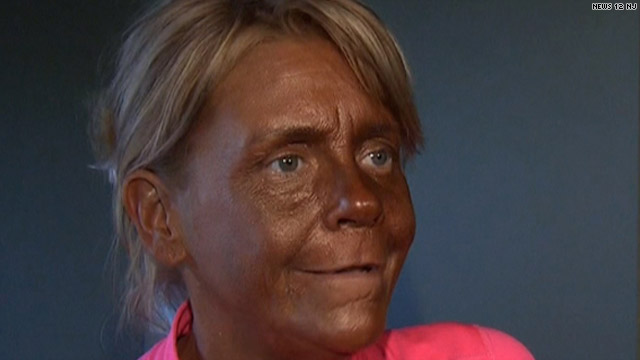
To be honest, before “Tan Mom” I had never ever heard of tanorexia. I assumed that she was a sick woman in need of mental help. I wasn’t judging her, or maybe I was. It just didn’t make sense to me why someone would do that to themselves, but maybe she really has a problem.

Tanorexia is a physical or psychological addiction to tanning. According to a study done by dermatologists, really frequent tanners tend to lose control of their tanning schedules and become a lot like smokers and other substance abusers, wanting more and more. Research says that tanning releases an opioid that tanners can become addicted to and even have withdrawal symptoms from.

Negative side effects of tanorexia include all of the negative things that come along with prolonged exposure to UV rays including cancer. In some cases  of tanorexia, it may even be a form of body dysmorphic disorder (which I originally thought “Tan Mom” had) where the person sees themselves as always too pale no matter how dark their skin gets, and/or finds their pale skin to be disgusting, unattractive and unacceptable. It’s this way it is a lot like anorexia where the person sees themselves as overweight no matter how thin they get.

Currently tanorexia is not an official diagnosis in the Diagnosis and Statistical Manual of Mental Disorders IV (DSM IV), but an updated version of this manual (the DSM V) is scheduled to come out soon and it will be interesting to see if tanorexia will be an official diagnosis. Further more, The Archives of Dermatology appear to make a case for diagnosing the addiction to UV rays as a type of substance abuse disorder so along with alcoholics we may soon have tanaholics.

I’ve always heard that you can become addicted to anything and everything should be done in moderation. Tanorexia seems to prove that statement.

I really like this. Especially as I sit here in my office with students and parents coming for help. I will pass this along and I know it will make a difference to someone today.

help4yourfamily's avatarhelp4yourfamily

From now on, Monday is going to be parent affirmation day at Help 4 Your Family.  Sometimes I  will share affirmations I have created and used, other times I will quote affirmations from teachers I have come to trust.

For this Monday, May 7, 2012 your parenting affirmation is:

My children give me constant opportunities to learn and grow.

Now, you know this one makes you smile, even when you are tired. I would suggest that, to make this part of your self-talk, you repeat it many times throughout the day.  Say it to yourself in the mirror, and mention it to your friends in conversations.

If you have a parenting affirmation that you would like to share, please feel free to let me know.  Maybe you will see it some other Monday 🙂

All the best to your family,

Kate

View original post

Parents Denial of Their Child’s Mental Health Issues Doesn’t Make It Go Away

ImageThe more family sessions I do, the more concerned I become at the astonishing number of parents who are in denial of their child’s mental health issues.

Recently I was dealing with a teenage girl referred to me by her mother because she was scared to be by herself, “acting weird”, talking and laughing to herself.

After meeting with the girl twice I got her to tell me some information she had ever told anyone else. She was hearing voices and having extreme paranoid delusions of someone putting “voodoo” on her and making her do things against her will.

After further sessions and gathering more collateral information from her mom and sister, I diagnosed the girl with a psychotic disorder, with a rule out of paranoid schizophrenia.  I referred the mom to a local psychiatrist so the young lady could be evaluated further and the mom was extremely hesitant. She questioned my every judgment, and while she was very concerned for her daughter, she hoped that it was “all in her head”. I tried to convince her mother that it wasn’t “all in her head”, but an illness, that according to her records, seemed to run in the family.

Their family history was peppered with undiagnosed mental illnesses.

Needless to say, the mother didn’t follow up on my referral until a few weeks later when her daughter had a psychotic episode that truly scared the mother. It was then she came back and thanked me for recognizing this when I did.

And then last week, I had a girl come to me extremely tearful. She had old and new self-inflicted cuts up and down her arm. She told me that she was suicidal, tried to walk out into traffic the day before but a friend stopped her. She had thoughts that day of hanging herself or jumping off the third floor of the school building.

I called her dad to have a conference and recommend that she be taking to the nearby psychiatric hospital for her safety. I didn’t need his permission to do that, but I thought it would be better for her.

When her dad showed up he was extremely annoyed, yelled at her for not being able to communicate with him, and said that she wasn’t suffering from depression, she was just “lazy”. He said she was failing school because she slept all the time, didn’t do her homework, didn’t want to be involved with her family and seemed aloof.

The more he described her “laziness” to me, the more he re-affirmed my diagnosis of his daughter being depressed. He argued with me that she was depressed because of her failing grades and being behind in her school work, even though she and I both tried to explain to him that the depression is what caused her to start failing school and get behind in her work in the first place.

He didn’t want to hear or believe that his daughter was depressed and suicidal. He said that it was a cry for attention, and it very well may be, but as a mental health professional, my job is the evaluate the situation and keep my client from hurting themselves or other people. I had her involuntarily hospitalized to a mental health facility for her safety. Her dad left with angry, probably thinking we were wasting his time, but I’d prefer him to be angry with me for being overly concerned than to be mad at me for not trying hard enough to prevent her suicide.

Even just recently I have been working with a girl suffering from severe depression and suicidal thoughts. She confessed to me that she had attempted suicide last weekend by taking 18 sleeping pills and was disappointed that it didn’t work. I convinced her to allow me to call her father so that I could recommend psychiatric help, possibly hospitalization. The first thing her father said to me over the phone was, “No, I don’t believe it. We are Christians, we don’t do things like that.”

It took me while to convince her father to actually come into my office so him and I can sit down and talk with his daughter, and even then it took nearly the whole session before he started to accept that his daughter was indeed depressed although he was still in denial about her suicidal thoughts or previous attempt.

Parents can be my biggest allies or worst enemies when it comes to dealing with children and adolescent clients, and their denial of their child’s mental health issues only complicates everything. I see so many kids who can benefit from intense therapy and maybe even medication, but their parents ignore the seriousness of the situation and write it off as defiant behavior, active imagination or they just hope their child will grow out of things such as torturing animals and setting fires. Denial is a defense mechanism and while it’s okay to be skeptical, being in denial is almost always unhealthy in the long run.

How Much Responsibilty Should You Have For Your Friends?

I am a big proponent of everyone being responsible for themselves, and this is largely because of my own personal flaws. I am a codependent. I often feel responsible for other people’s happiness and well being. This often times puts me in situations where I get used or even worst, don’t treat myself right because I’d prefer to see others happy before myself. Still, I think there are times when you should have a responsibility to and for your friends, and of course times when you should not.

The other night, a friend of mine went out drinking with a female friend of his. They both got intoxicated, she more so than he. After the drinking was done, he tried to help her sober up by walking around with her and forcing her to drink water. It was getting late and he was ready to go home so he took her to an establishment and according to him, told them that they were responsible for her and to not allow her to drive. Well, an hour later he got a call from a police officer saying that he had stopped her, was giving her a DUI and wanted to know if he was available to pick up her car from the side of the road.

My friend was devastated. At one end he felt responsible and on the other, felt like he had done all he could do and that she was a grown woman responsible for her own decisions. I agreed with him to a certain extent, except she was intoxicated and intoxicated people usually make very poor decisions. On top of that, as a friend, I felt like he should have placed her in a taxi and make sure she got home safely. When my friends and I go out drinking, we ALWAYS have a designated driver. I thought it was a poor decision on both of their parts to both drink in the first place. And as a man, I thought he should have been extra protective of his female friend.

I watched as he went back and forth from feeling bad, to feeling like he did nothing wrong and I notice I was starting to feel a certain way about him, almost as if I couldn’t trust or count on him in a life or death situation. I wondered if we had been together that night and he was more sober than I was, would he have left me to fend for myself the way he did his female friend. Then I had to start questioning what type of friend was he really? Sure he’s a fun person to hang around, but I was starting to think that he certainly wasn’t someone to count on in a life or death situation. Me, being who I am, would have never left my friend to fend for herself while she was inebriated, but maybe that’s just the codependency in me, or maybe that’s because I think friends should always look out for the best interest of each other.

So I think there is a line between taking responsibility for say, your friends happiness and being so codependent that you are not allowing them to learn to take care of themselves, but in the situation when it comes to your friends safety, especially when they are not in the right frame of mine to look out for themselves, I do think a good friend has the responsibility to make sure that their friend doesn’t do something irreparably foolish that they will certainly regret later.

Young, Poor and Pregnant

Why Your Teenaged Girls Get Pregnant

I work with a lot of young teenage girls and they all have a few things in common, including curiosity, misinformation about and pressure to have sex. What I hear a lot in the inner-city school I work at is that “everyone is doing it”, so the pressure to be part of the overall sexual culture becomes very important, at times, more important than the girls own autonomy. Most of these girls are clueless about sex and birth control. They are too afraid to let their parents know that they are sexually active, would die of embarrassment if a condom was found in their purse and would be too ashamed and scared to ask the guy they are having sex with, to put on a condom, if he doesn’t automatically do it. So instead, they open themselves up in more ways than one to everything that comes with precocious sex including sexually transmitted disease and psychological impairment.

Many get pregnant out of simple ignorance, but most get pregnant for more complex and often subconscious reasons. In her book, Young, Poor and Pregnant Judith Musick goes into great details about the psychology of teenage motherhood and why young girls decide to engage in sex, get pregnant and have babies. These girls usually get pregnant because of the lack of some other need. From my personal experience, six out of about forty young women I worked with last school year got pregnant for these reasons:

  • “My mom has been in prison all my life. I’ve never really had a mother. I can be a better mom than she was.” –“Luz”, 15, 10th grade
  • “My mom and I don’t get along. I think me being pregnant and having her grand daughter will bring us closer.” –“Jessica”, 17, 10th grade
  • “I have no idea what I want to do in my life. I’m failing school. I might as well have a baby and marry my boyfriend.” –“Rosaria”, 15, 10th grade
  • “Having a baby will give me someone who will always love and want me.” –“Keyana”, 17, 11th grade
  • “My boyfriend has a baby with another girl. If we have a baby together then I won’t have to worry about him leaving me for his first baby’s momma.” –“Brianna”, 15, 9th grade.
  • “My boyfriend and I have been fighting a lot. I think having a baby will bring us closer together.” –“Laura”, 18, 11th grade.

Only one of these young ladies came back to school after giving birth to their children. The other five dropped out. It’s hard for a young mother to continue her education after having a child, especially with a lack of support. The one girl that did come back  has a lot of support from her family and her baby’s father.

Why African American and Hispanic Teenage Girls Have Babies More Than Their European American Counterparts

European American teenage girls that get pregnant are more likely to have an abortion or give their baby up for adoption than African American or Hispanic teens. A small part of this may be finances, but more so I think is the strong anti-abortion and anti-adoption heritage in these communities. These children are also more likely to grow up in poverty if these young mothers are emulating their family and community. If it is the norm for 16 year old girls to get pregnant, drop out and get on welfare, where is the push for other young girls in the community to be different? If these young girls mothers had them while they were young, had more kids than they could financially and psychologically take care of, and these young girls older siblings repeated the cycle, it is incredibly hard for this young lady to avoid that same trap unless she has a strong will or other safety measures and programs are put in place.

Real Life Example

The other day a good friend of mine called me in shock. His 15 year old daughter is pregnant. She’s only in the 8th grade. This saddened me, but this is a generational curse. Her mother had her when she was 16 which is about the same age her grandmother had her mother. However, my friend and this young ladies mother were doing the best they could to keep her from making those mistakes, but it wasn’t enough. I’m convinced that the psychosocial factors surrounding her getting pregnant and then deciding she wants to keep the baby were even stronger and more prominent than whatever interventions her parents were trying to implement.

The Good News

Despite the popularity of shows like “16 and Pregnant”, The number of teenage girls that are getting pregnant is at its lowest point in nearly two decades according to the Centers for Disease Control and Prevention. Still, according to the CDC, 1,100 teenage women get pregnant each year which means that about one out of every ten babies born are born to teen moms.

Better education and prevention programs need to be put in place and it all starts at home. Don’t be afraid to talk to your teen or preteen about sex. If you are uncomfortable talking to them, they will be uncomfortable talking to you and you both will end up having an uncomfortable conversation when she becomes pregnant. Get sexually active teens on a form of birth control. Yes abstinence is the best way, but birth control AND a condom will hopefully keep your sexually active teen from becoming a teen mother.

“April”: A Quick Case Study (or more like a synopsis)

Every three months as part of my grant we have to do a report and in that report, besides asking for numbers to validate and show evidence of my value, we have to write about one client that has improved over those three months. I decided to share that client with you.

 “April”

April  (17 year old female) lives in a group home where she has been for about five years after being removed from her family because of neglect and ongoing sexual abuse.

When I met April she was having a hard time focusing in school, often walked off campus and ran away from her group home. Her grades were very poor and she was prone to emotional and angry outbursts. She was brought to me initially by another counselor after she had threatened to punch her school bus driver, walked off the school bus and went missing for twenty four hours and was later found by local authorities.

I begin working with April (using mostly cognitive behavioral therapy) on controlling her emotions as well as working with her group home and guidance counselor to make sure all of her needs were being reasonably met. I put her in a life skills group which initially she was reluctant to join because “I don’t get along with other people” and met with her once weekly in private sessions, often helping her process her anger and fear about her family and about her future. I encouraged her to keep a journal and to write down everything she wanted to say to her family (no communication with her family in almost five years was her biggest issue). I also worked with her teachers to make sure that when April was having a “bad day”, they knew how to appropriately handle the situation and not escalate it or send her out of class which usually led to her walking off campus.

As a result, within a few weeks April stopped walking off campus and running away from her group home as she learned how to self-regulate her emotions. Her attitude improved and the number of referrals for classroom disruptions fell to nearly zero. Her grades improved and her number of “emotional breakdowns” during class fell to zero, as she was able to express her emotions in private sessions with me. She became a very active member of her group and her number of group home infractions also fell. She begin getting positive attention and positive rewards from both her group home and school staff and is a much calmer person today than she was when I first met her.

Because she is much better at regulating her emotions, we are able to spend more of our private sessions processing her feelings of abandonment by her family and working on (in conjunction with her independent living counselor) becoming more self-sufficient in preparation for the day she will turn eighteen and transition out of the group home. In an individual education plan meeting I attended with April a couple of weeks ago, she was highly praised on her many improvements in both academics and behavior.

-April really is one of my favorite clients. She is labeled “emotionally disturbed”, and while she is 17 and functions more often like a 12 year old, she’s grown a lot since the first day she set across from me as a very angry young lady with no respect for authority. She could have been diagnosed at that time as oppositional defiant,  but she had enough labels and I didn’t see the need to label her any more and as she has improved, i’m glad I wrote her initial diagnosis as “deferred” despite the constant push by insurance companies that “everyone gets a diagnosis”. Oh gosh, that is another whole post for another time.

Saving the Lives of Butterflies

Self-Injury

The Butterfly Project

Self-injury, also known as self-mutilation and cutting is defined as the intentional, direct injuring of body tissue mostly done without suicidal intentions wikipedia.

Self-injury is unfortunately a very common issue among teenagers. According to research, it mostly effects women from ages 13 to 30.

In a typical year at the high school I work at, I usually only see about one case of self-injury a year. Not to say that there’s only one person at the school that cuts themselves, chances are, the rest are just hiding it better. This year however, I’ve had so many instances of self-injury that I actually have a group comprised mostly of “cutters”, as they refer to themselves. Coinciding with research, three out of the four people in the group are female. Most of them cut on their arms and one cuts on her arms and thighs. All of them cut out of anger, frustration and depression. They express to me that it helps them feel alive and/or that it helps them take out their frustrations on themselves. For all of them, it has become a form of addiction.

During my last meeting with this group, one of the newest members told me about The Butterfly Project. The Butterfly Project basically is a way to try and help those who self-injure and those who know someone who self-injures. It has seven rules.

1. When you feel like you want to cut, take a marker, pen or sharpies and draw a butterfly on your arm or hand.
2. Name the buttery after a loved one, or someone that really wants you to get better.
3. You must let the butterfly fade naturally. NO scrubbing it off.
4. If you cut before the butterfly is gone, you’ve killed it. If you don’t cut, it lives.
5. If you have more than one butterfly, cutting kills all of them.
6. Another person may draw them on you. These butterflies are extra special. Take good care of them.
7. Even if you don’t cut, feel free to draw a butterfly anyway, to show your support. If you do this, name it after someone you know that cuts or is suffering right now, and tell them. It could help.

I thought that this was a very creative and safe alternative to self-injury so my entire group is trying this and maybe it will help others out there who self-injure so definitely pass this on.

The above picture is an actually picture I took of a previous client of mine who self-injures. She actually did much more damage to her arms a few days after I took this picture and required psychiatric hospitalization.