10 Black Psychologists Who Greatly Impacted The Field: Kenneth And Mamie Clark

10 Black Psychologists Who Greatly Impacted The Field: Kenneth And Mamie Clark

In honor of Black History Month, I thought I’d do a 9 part post highlighting 10 Black psychologists I think everyone should know about.

The reason I chose to write about this is partly because as a behavior scientist, I have learned about all the greats in psychology from Adler to Zimbardo, but none of them were Black. Even in my undergraduate years I had no Black psychology professors, but was fortunate enough to have two in my graduate studies.

Because of this, often times when I think of psychology it’s easy to believe that Black people had little to no impact on the field, but that simply isn’t true.

Another reason I feel that this post is important is to show potential future behavior scientists that they not only have a place in the field of psychology/mental health, but that they can be future leaders in field.

#1 and # 2: Kenneth and Mamie Clark

Kenneth Clark, born on July 25, 1914 was a psychologist and educator. He was the first Black president of the American Psychological Association and was the first African-American to become a fully tenured professor at the City College of New York.

His wife, Mamie Phipps Clark did research with children that showed African American children became aware of their racial identity at about three years old and many of them began to see reflect and internalize the views that society held about them. She also found that many African American children that had been labeled as having a learning disability or disabled were actually not, but were the victims of  biased psychological testing.

The Clarks were the first African-Americans to obtain their doctoral degrees in psychology from Columbia University

In 1946 the couple founded the Northside Center for Child Development to work with inner-city children.

In 1950 the couple published a report unmasking the psychological effects of racial segregation in schools.

In their famous Clark “Doll Study”, they studied the responses of more than 200 Black children who were given a choice of white or brown dolls. The findings illustrated that children showed preference for white dolls from as early as three years old, considering the white dolls as “good” and the black dolls as “bad”. The report and study were cited heavily in the 1954 Supreme Court ruling, Brown v. Board of Education to help outlaw segregation nationwide. The Clarks both served as expert witnesses several school desegregation in the case.

The couple also helped found Harlem Youth Opportunities Unlimited. Kenneth Clark was named the first Black member of the New York State Board of Regents (1966), and published many books and articles on the condition of African-Americans such as Prejudice and Your Child, A Possible Reality, and Pathos of Power.

Mr. Clark passed away on May 1, 2005. Mrs. Clark in 1983.

Mr. and Mrs. Clark “Doll Study” is one of my favorite studies and one I have used before to highlight many different issues surrounding race, colorism, and self-esteem. Without the work of both Kenneth and Mamie Clark we could possibly still have segregated schools.


Micropsychosis: Temporarily Losing Your Mind

loses their minds 

Have you ever heard someone say that they “lost their mind”? Perhaps you’ve even witnessed a seemingly normal person “lose it”, such as the JetBlue pilot in 2012 that had to be subdued by passengers because of sudden, erratic behavior during a flight, or when a flight attendant on an American Airlines flight began speaking erratically over the intercom.

There are multiple medical conditions that can trigger psychotic like episodes such as brain tumors, thyroid conditions, fever, infection and substance abuse. There are also multiple psychiatric conditions that can cause a person to have brief psychosis such as bipolar disorder and major depression.

However, there are times when relatively healthy people can for an incredibly short amount of time, lose touch with reality, becoming paranoid, hearing voices, having a sense of depersonalization (a state in which one’s thoughts and feelings seem unreal or not to belong to oneself, or in which one loses all sense of identity) or derealization (a feeling that one’s surroundings are not real).

This condition is called micropsychosis and generally last only a few minutes to a few hours and typically occurs during times of heightened anxiety and/or stress. Afterwards, the person goes back to him or her normal self and may never have an episode again. It’s not to be confused with a brief psychotic episode which by definition last longer, typically one day to a month and is not re-occurring.

Micropsychotic episodes are what I think often happens when someone goes into a rage and is seemingly out of control. Afterwards, many of them can’t remember what happened, or feel as if they were watching themselves do things as if it were a movie.

Whenever someone who has never had a psychotic episode suddenly has one, it usually takes them and everyone by surprise, but in retrospect, there is usually some early symptoms that may have gone unnoticed or ignored. Often times it’s the way someone is dealing (or not dealing) with stress.

While having a micropsychotic episode may actually be quite a normal psychological response under some extreme stressful conditions, there is probably some underlying condition that needs to be investigated, even if it’s just talk therapy to help deal with stress or a visit to a medical doctor to rule out a medical condition.

Below is a video of a character with Borderline Personality Disorder and her Micropsychotic hallucination. A funny title for this video would be, “How To Make Your Hallucinations Disappear”.

A Fun Way To Get To Know Someone Within Five Minutes

istock_000014626855medium

Okay, so here is a projective test and fun way to get to know someone in five minutes. First of all, when you do this with someone don’t call it a test, but a game. I’ll  explain why later. Second, do not skip ahead if you ever plan on playing this game with yourself or it will forever ruin the game for you!

  1. Imagine a vast desert as far as your eyes can see. In the desert there is a cube. Describe the cube. Where is it? What does it look like? Is it transparent or is it obscure?
  2. In the desert there is also a ladder. Where is the ladder? What is the ladder made out of?
  3. There is a horse in the desert. Describe the horse. What is the horse doing? Where is the horse in relation to the cube?
  4. There are also flowers in the desert. Describe the flowers. Are their many flowers? A few flowers? Are they alive and vibrant or dying and withering?
  5. Lastly, there is a storm in the desert. Where is the storm? Is it moving away or towards the scene? How is it if at all, effecting the other items we’ve talked about in the desert?

Okay, now the fun part! You have your scene in your head, now here’s the breakdown:

rorschach_inkblot_test_cartoon

  1. The cube represents you. If it is transparent that may mean that you are an open book with no secrets. If it’s obscure, it may mean that you are very private, secretive or not trusting. If it’s in the sky or floating it may mean that you are a dreamer. If it’s in the sand then you’re probably more grounded. One woman I did the test with said that the cube was transparent on one side and obscure on the other, meaning that she probably has a side to her she keeps very private. Another man said that he felt like the cube had landed in the sand from somewhere else. He was a very spiritual person which I felt explained his description.
  2. The ladder represents friendships/relationships. If the ladder is made out of something sturdy then it most likely means that you feel like you have solid relationships. If the ladder is leaning against the cube than that means that you probably have people who depend on you. One person I did this test with said that the ladder was made out of glass. He also acknowledged that he broke off relationships easily to keep people from getting to know the real him.
  3. The horse represents your spouse or ideal partner. One man I did this test with described a beautiful horse that was running away from the cube. This man is an idealist and is always looking for the “perfect” woman so he is never happy with the women he dates and is always looking for that elusive perfect woman.
  4. The flowers represent children, either the ones you have or ideal ones. Some people describe three beautiful flowers, others describe one dying bush. Strangely, a woman I interviewed whose boyfriend had killed her son described the horse as trampling the flowers.
  5. The storm represents troubles/problems. Some people say the storm is moving in or away from the scene, representing perceived problems ahead or the end of already occurring troubles. One lady who was in jail because of her boyfriend described the storm as being in-between the cube and the horse. She was surprised that her boyfriend bailed her out that same day!

The reason I say to present this as a game and not a test is because if you say this is a projective test, then people will automatically start to over think their answers and think “pass” or “fail”.

I learned this the hard way. The first client I tried this with first said, “I don’t get it”. When I said, “It’s a projective test” they said, “I fail”. When I explained what a projective test was and that there was no pass or fail they replied “I don’t get it. What’s the purpose”.  By then I was like “forget it”. They were already overthinking it.

It’s a projective test, which means that everything is subjective and working from a person’s subconscious. There is no scientific validity to it, but it’s a fun way to get to know someone within a few minutes and have a great conversation exploring potential meanings and unconscious fears, desires and thoughts .

Sitting Down With A Killer: Impressions On Interviewing A Psychopath

Today I sat face to with a man who had killed three people and tried to have a fourth person killed, a real psychopath. This wasn’t some disturbed person who lost his mind and killed three people in one violent, rage filled act. This was a man who killed his friends’ girlfriend, then still remained friends with the guy while he grieved over his dead girlfriend. Fast forward three years later, while still friends with the guy, he decides to not only kill him, but also to kill his new girlfriend.

Finally arrested for the murders, from behind bars he tries to elicit the help of another inmate to kill a key witness to the last two murders. This man has no remorse. No real feelings. He’s currently facing two life sentences with yet more charges coming. He is barely 30 and will spend the rest of his life in prison.

psychopathySitting across from me in a big empty room, un-handcuffed, unshackled and unguarded (the nearest officer is two flights of stairs below), this man who is covered in multiple tattoos, some gang related, one reading, American Nightmare, has a very cold disposition. It’s in his frozen eyes and the way he talks as if he couldn’t care less about anything or anyone in the world that reminds me that I am in the room with a man who pretty much has nothing to lose.

I can’t explain the feeling. It’s not fear I feel when he tells me I am asking too many dumb questions, or when he leans in with an attitude of authority as if he were the one in charge of this interview. It’s not even nervousness that I feel, but an awareness that I am in the room with a three time killer, who wouldn’t hesitate to make it four, or five. It’s like being in a room where a poisonous snake is being kept. You’re not necessarily always checking to make sure it’s still there, but you’re always aware of it and its potential to get loose. As he stated, “My life is over, although I am still alive. I’ve had many family and friends die in prison. There is nothing you can say to me.”

And he was right. There wasn’t anything I could say to him to make him “feel better”.  Often times I get called to speak to inmates who get sentenced to long sentences including life. Most of them are already mentally prepared for it, or at least think they are. Very few show any real emotions. Even fewer show any real remorse. A handful become suicidal. A very few even attempt suicide.

This guy’s advice to me when talking to inmates facing lengthy sentences was pretty spot on; “Don’t talk too much, just listen. Don’t ask too many questions. Don’t ask, ‘is there anything I can do for you?’”

In the real world, only 1% of the population meets criteria to qualify as true psychopaths, but in jails and prisons, that number jumps to 15%. I’ve talked to multiple killers before, some who have killed on accident, who killed on purpose, who killed out of anger, who killed out of greed, who killed out of jealous, who killed out of impulse and some who killed for apparently no reason at all, but none were as electrifying or showed such lack of empathy as this guy.

Here was a guy who killed his friend’s girlfriend, then stayed friends with the guy only to kill him and his new girlfriend three years later. The lack of empathy, manipulation and callousness it took to look his friend in the face day in and day out, knowing that he was the one that killed his last girlfriend is frightening.

During the hour I spent talking with this guy today I learned more about dealing with psychopaths than I could have by reading a 300 page book or taking a 9 week college course . It’s terribly fascinating.

Five Ways To Combat Worrying

11794235_1009941262372072_3241828875963410031_o

“Worry is the direct descendant of the need to be in control. We cannot see everything. We do not know everything. It’s impossible for us to control everything…” –Iyanla Vanzant

Worrying is a natural part of life. Occasional worrying is actually a good coping skill that helps us plan ahead. However, worrying too much can become counterproductive, distracting and damaging to our mental and physical state.

Most of the things we worry about aren’t likely to happen in the first place, yet we waste vast amounts of emotional energy on them.

1 out of 10 people worry excessively. Extreme worrying can be a symptom of a mental health issue such as depression or generalized anxiety disorder. Some people who worry constantly and their worrying derails their lives may have a chemical imbalance and need medication, therapy or both.

For many of us, we worry because we want to control a situation, person or outcome that we usually don’t have that much control over. Worrying a lot usually means that you are trying really hard to control something, yet worrying usually doesn’t do anything to help or change the situation, it just causes us more emotional anguish.

Here are five tips to help combat worrying:

  1. Allow yourself to worry in small increments: I’ve told clients who worry a lot to designate one part of their day as their worry time, that way their worrying doesn’t build up nor do they worry throughout the entire day.
  2. Try to problem solve: Worrying is a poor attempt to solve a problem. It simply doesn’t work. Instead of wasting the energy on worrying, try to think of solutions to the problem you are worrying about.
  3. Learn to deal with uncertainty: Uncertainty is just a part of life, sometimes random things just happen, but many of us are unwilling to except that. We have to know and/or be in control of things that we simply can’t be. The faster we learn to deal with uncertainty, the easier it will be to stop worrying and the easier it will be to actually deal with the unexpected.
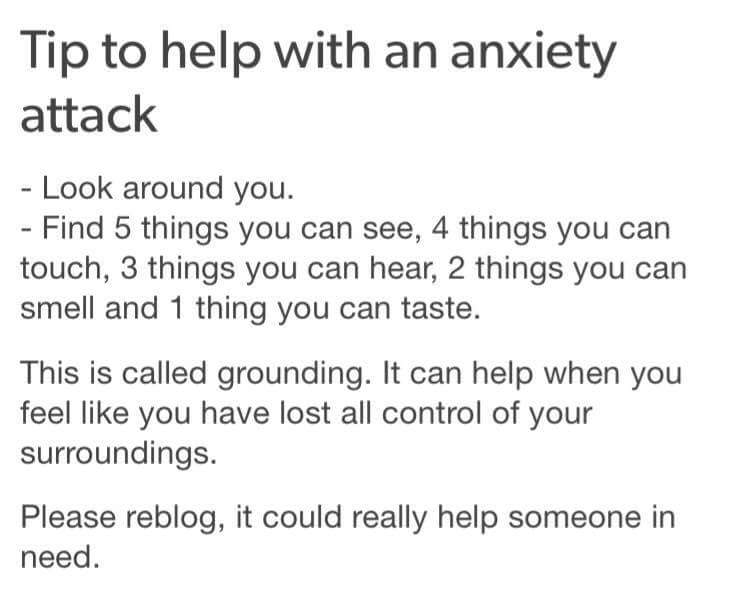
  4. Stay in the present: When we worry, we aren’t actually enjoying what’s going on around us now. We are so far into the “what ifs” of the future, that we are missing out on the great possibilities of right now. You can acknowledge your worries, but that doesn’t mean you have to allow them to pull you in. Meditation and mindfulness activities can help ease some of the stress from worrying and bring you back to the present.
  5. Get out of your head: You may find that putting what you’re worrying about down on paper helps release some of its power over you. Some people keep a worry journal next to their bed so that if their worries keep them up at night they can just jot them down on paper and “release” them. Guatemalan worry dolls, for example, are dolls based on a legend where children in Guatemala make dolls to tell their worries to and the doll “takes” their worry away.

“I have spent most of my life worrying about things that have never happened.” -Mark Twain

Who And Where You Are Today Is Right Where You Are Supposed To Be

e

Many of us spend a whole lot of time not being happy with ourselves and our current situations. We we always think there is somewhere else we should be at this point in our lives and would have a lot less stress if we learned to embrace who we are and where we are right now. We would have a lot less stress also if we learned to let go instead of trying to control situations and other people.

How much of our energy is spent beating up on ourselves or trying to make an outcome turnout in our favor or stop someone from doing something that really isn’t in our control?

I have to admit that during certain parts of my life I wasted a lot of energy trying to control the future, trying to control other people’s behaviors and even emotions. I went to great lengths to keep people from getting mad, to keep people from leaving or to get people to be who I wanted them to be. It was exhausting and robbing me of my sanity, but during those times, I thought it was keeping me sane. I thought it was keeping my world balanced, but in reality it was destroying certain parts of myself and my life.

A lot of the desire to control outcomes and people come from us not trusting that things will eventually workout in our favor. Some people will call it not having faith in God or the Universe, therefore we try to take control over things that are really out of control. I’m not talking about sitting back and not taking action in your life and just hoping things will happen by happenstance, but I am talking about not worrying excessively over whether you’re going to get the job you interviewed for when you’ve already interviewed and given it your all. I am talking about not worrying whether or not your friend will be mad when you let her know you can’t lend her $20 because you barely have $20 yourself.

We all have our own way of trying to keep our world in balance, especially when we don’t trust that things will be okay no matter what and that the Universe, for the most part, is working for our good. What we have to learn, what I am still learning, is that life is good right now. That everything that is happening right now is just the way it is supposed to be. That where I am right now is where I am supposed to be. I am not behind, I am not trying to play catch up to this other me that is living a better life, and I have not missed out on some magical opportunity that will never come back. I am exactly where I am supposed to be right now.

Realizing that and letting go of trying to control every little thing frees us from our past. Who we were back then and what we did back then was just fine for back then. Who we are at this moment is also just fine for right now. Once we stop trying to control circumstances and people, once we stop beating up on ourselves for not being better, we will realize how much control we actually have over ourselves, our thoughts, our emotions and our present moment. We all want to be better, to be happy, to grow, but sometimes we have to enjoy life as it is today and just be and realize that where we are and who we are right now is good enough for today.

We All Need To Practice Emotional First Aid

istock0000179371As a mental health professional, I have found myself spending a lot of time trying to convince people that they need to take care of themselves mentally and emotionally. Meaning, I run into people who are working two jobs, taking care of their family and everyone else around them, but are letting themselves go mentally and are getting sicker and sicker over time.

Or, I meet someone who is obviously not dealing with various issues in their lives, probably hoping that ignoring them will make them go away, but all the while they are growing emotionally unhealthy.

It reminds me of when a parent would bring a child in to see me for therapy and it would become apparent pretty quickly that it’s the parent that needs therapy, not the the child. Many times the parent would like at me as if I was crazy. They couldn’t see that their own neurotic behavior, substance abuse or even past childhood issues are creating the “problem” they are prescribing to their child.

It’s easy to tell when someone is physically not doing well, but it’s not always easy to tell when someone isn’t mentally doing well, especially when it comes to everyday things like anxiety, depression and self-esteem. Things we all deal with from time to time.

I have a sister who at one point was working a very demanding job, raising a challenging teenager on her own,  volunteering her sparse free time to multiple organizations and if that wasn’t enough, she was trying to help every friend that called and needed something from her.

On the outside she looked ambitious, energetic, like a true type A-personality. On the inside she was feeling overwhelmed, flustered and fragile.

One night, while having dinner with our family which should have been relaxing, seemingly out of the blue she had what some would call a nervous breakdown. She started crying, hyperventilating and felt as though she was going to lose control of her mind. I could look at her and tell she was having a classic panic attack, but she was too far gone to hear me and was convinced she needed medical attention.

Soon afterwards she was diagnosed with an anxiety disorder and was told to cut back on the million and one things she did in her day to day life to take care of other people and to start taking care of her own mental health, something many of us don’t do enough of.

Sometimes I even catch myself too caught up in work, life and everything else and before I realize it I am dealing with some type of anxiety, insecurity or dysthmia. I have to slow down, stop myself and figure out a) where is it coming from and b) how do I take care of it. Often times for me the solution is simple awareness and acknowledgement that something is bothering me. Other times it takes journaling, reading something inspirational or processing my feelings with someone I trust. I’m usually that person for everyone, but sometimes I need someone to be that person for me.

It doesn’t always have to be something major and it doesn’t always take a therapist, but sometimes it does. Sometimes it’s simple mindfulness, meditation, or getting out and having some fun, but many of us have no real idea of what it means to administer emotional first aid to ourselves which is why I included this Ted Talk by Guy Winch: Why We All Need To Practice Emotional First Aid

123 Mentally Ill People Killed By Police So Far This Year

In the first six months of the year, nationwide police have shot and killed 462 people. Out of those 462 people, 123 of them were in the midst of a mental or emotional crisis according to a Washington post analysis. c07_jd_02jul_shootinggraphic-640x230

To be fair, most of these individuals were armed, but mostly with weapons less lethal than a firearm such as toy guns, knives or a machete. Only 3 officers have been killed by a knife or machete in the past decade according to the FBI.

Below I have included a video of a mentally ill man shot and killed by police only seconds after they arrive on the scene. The mans mother called because her mentally ill son was acting erratic. He was armed with a screw driver. You can watch the video with caution and judge for yourself.

The police who responded weren’t usually called to respond to a crime, but were called by concerned family members, bystanders and neighbors because a person was acting erratically. 50 of them were outright threatening suicide.

In more than half of those killings, the officers who responded did not have adequate training in dealing with persons with a mental illness. Most of them actually responded with tactics that escalated the already volatile situation.

Yelling and pointing guns at a person with a mental illness is like pouring gasoline on a fire. A person in the middle of a mental crisis is not going to respond like someone else would, they have too much going on in their heads.

Almost a dozen of these individuals killed by the police were military veterans, many who suffered from post-traumatic stress disorder (PTSD). One was even a former California Highway patrolman who was forced into retirement after a severe beating during a traffic stop lift him suffering from depression and PTSD.

Forty five of these cases involved someone who was seeking medical treatment or had been turned away from medical treatment.

John Guillory, a 32 year old father of two had worked as a contractor in Afghanistan. He was having what his wife called a mental health emergency. He went to the Veterans Affairs hospital in Arizona, but was turned away because they were too busy. He went home and called 911 twice, hanging up both times. When the police showed up to his house he pulled a gun out of his waistband saying, “I bet I can outdraw you”. The police shot him six times killing him.

Suicide by cop is real thing and accounts for a number of these killings.

One individual in San Francisco who pulled a BB gun out on a group of officers and was shot and killed, had left a message on his phone telling the officers “You did nothing wrong. You ended the life of a man who was too much of a coward to do it himself.”

On average, police have killed someone who was mentally ill every 36 hours so far this year. Police are starting to acknowledge the lack of effective tools and trainings they have in dealing with this population. Without large-scale retraining and a nationwide increase in mental health services, these deadly encounters will continue.

While officers on average spend 60 hours in firearm training, they only spend 8 hours on learning to de-escalate a tense situation and 8 hours on handling mentally ill individuals. Otherwise they use tactics that are counterproductive and increase the risk of violence when they encounter these individuals. Most of these individuals end up dead within minutes of encountering the police.

Some of these killings probably couldn’t have been avoided. In some of the situations the individuals had guns pointed at the police. However, a large number of these individuals could still be alive if the officers had proper crisis intervention training.