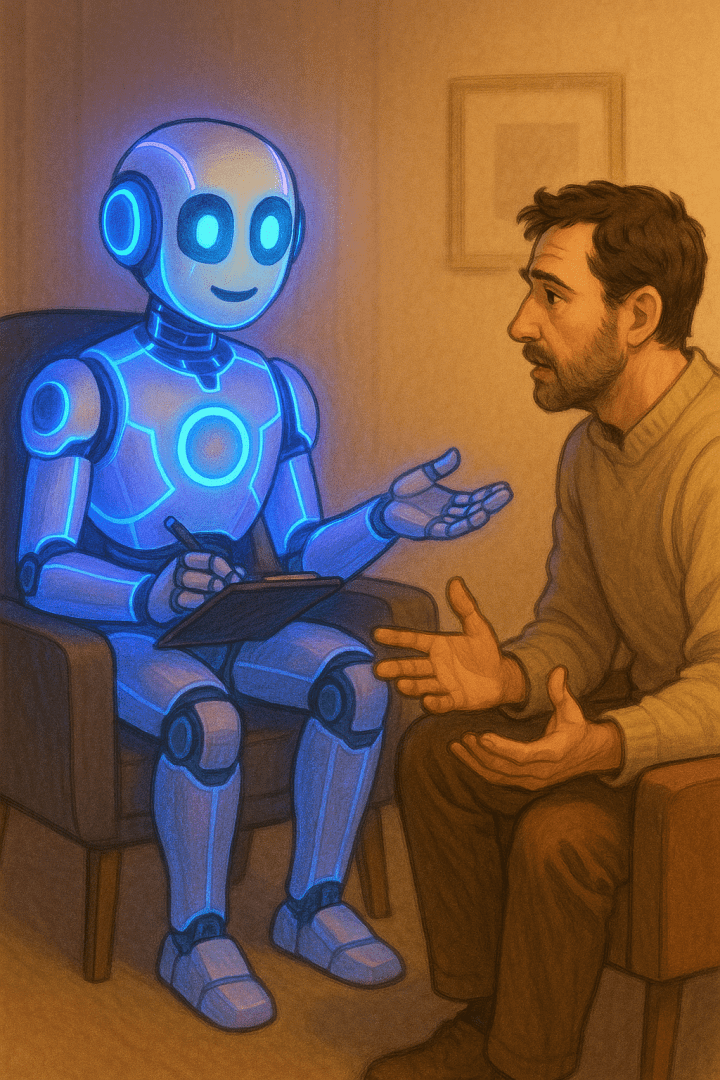
AI: Its Impact on Mental Health

AI: Its Impact on Mental Health

Artificial intelligence (AI) has gone from a futuristic concept to being a part of our everyday lives. From Siri to self-driving cars, AI is reshaping how we interact with the world. One area that’s seeing rapid AI integration is mental health.

AI is revolutionizing how mental health support is delivered, but it also has the potential to change the way we experience our emotions, relationships, and even our sense of self. So, what’s the real impact of AI on mental health


Positive Impacts of AI on Mental Health

1. AI-Driven Therapy Apps: Accessibility and Immediate Support
One of the biggest breakthroughs in mental health care has been the development of AI-driven therapy apps. Apps like Woebot, Wysa, and Replika use AI to provide users with cognitive behavioral therapy (CBT), emotional support, and mental wellness guidance. These apps can be used 24/7, offering instant support when someone feels overwhelmed or anxious.

For individuals who may not have access to in-person therapy due to financial constraints, geographic limitations, or the stigma of seeking mental health care, these AI tools are a game-changer. However, it’s important to remember that while AI can provide immediate relief, it doesn’t replace the nuanced, empathetic care provided by a human therapist.

2. Personalized Mental Health Tools: Custom-Tailored Support
Another exciting development is the use of AI to create personalized mental health strategies. By analyzing data such as sleep patterns, mood tracking, and even activity levels, AI can offer individualized wellness plans. For example, AI can recommend mindfulness exercises, cognitive reframing techniques, or journaling prompts based on a person’s emotional state or behavior patterns.

These tools can empower people to take control of their mental health and tailor their self-care routines to their unique needs. It’s a more proactive approach, putting users in the driver’s seat of their emotional well-being.

Honestly, this is one of the major way I have been using AI, as sort of a life coach or motivational coach when I need a little nudge to get me out of my head and for this, I think AI can be invaluable.

3. Early Detection and Improved Diagnostics
AI is also improving mental health diagnostics. For instance, machine learning algorithms are being used to analyze speech patterns, facial expressions, and even physiological responses to detect early signs of mental health issues like depression, anxiety, and PTSD. This early detection can be important in providing timely interventions before issues escalate.

In clinical settings, AI tools are being used to assist professionals in identifying patterns that may otherwise go unnoticed, helping to catch problems earlier and potentially save lives.

I sometimes use AI to help me differentiate between different diagnosis or to help me come up with an improved treatment plan for a patient. It’s not always perfect, but it usually will at least help me generate some new ideas I may have not come up with on my own.


Negative Impacts of AI on Mental Health

1. Social Media Algorithms and Mental Health
While AI has revolutionized mental health support in many ways, it’s also behind some of the negative aspects of modern life. One of the biggest culprits is social media. AI-driven algorithms determine what we see in our feeds, often pushing content designed to keep us scrolling content that can negatively impact our mental health.

Studies have shown that social media can contribute to feelings of inadequacy, anxiety, and depression, particularly among younger users. AI tends to prioritize engagement, meaning posts that generate strong emotional reactions, whether positive or negative, are more likely to be seen. This can create a cycle of comparison, unrealistic beauty standards, and constant validation-seeking, all of which can undermine self-esteem and mental well-being.

2. Job Insecurity and Stress
The rise of AI in the workplace has also led to concerns about job security. As AI systems become more advanced, more jobs are being automated, leading to uncertainty in industries like manufacturing, retail, and even healthcare. This economic shift can contribute to increased stress, anxiety, and depression, especially for workers in industries that are at risk of disappearing.

The fear of job loss due to automation can lead to feelings of obsolescence and anxiety, making it harder for individuals to cope with their personal and professional futures.

I have had therapists and students , tell me that AI will take our jobs. Well, in my opinion, AI is not likely to take our jobs as much as it will make therapy more available to those who otherwise would not seek therapy. A major part of my job in my current role as a trauma therapist is holding space. Holding space is it’s own concept I will write about at a later time, but it can be essential in therapy and holding space is something that AI can’t effectively do.

3. The Loss of Human Connection
While AI can offer emotional support and guidance, it’s not a substitute for genuine human connection. Research shows that deep, empathetic human interactions are essential for emotional well-being. As AI tools replace more human-driven roles, especially in customer service, therapy, and caregiving, there’s a risk of losing that vital connection.

Though AI can simulate empathy, it lacks the true understanding and warmth of a human being. Over-relying on AI for emotional support could lead to social isolation, where people feel disconnected from the world around them. This can be especially damaging for young people, people with certain disabilities or people who are more vulnerable to feeling disconnected.

4. Over-reliance on AI for Emotional Support
One of the more subtle risks of AI is that people may begin to rely on it too much. For example, some individuals may use AI chatbots as a way to “talk” through their problems instead of seeking human interaction. While these tools can offer support in the short term, they may prevent people from addressing underlying issues with friends, family, or professionals.

Additionally, AI-driven tools cannot provide the same level of emotional intelligence and personalized care that a trained therapist or counselor can offer although at times it can do a very good job mimicking it.


Finding Balance: Using AI Responsibly for Mental Health

1. The Need for Human Touch
AI can be a powerful tool for mental health, but it should complement, not replace, human care. The best approach is a hybrid one: using AI for accessibility, immediacy, and personalized support, but ensuring that there’s a human connection to guide, listen, and offer the empathy that AI simply can’t.

2. Setting Boundaries with Technology
As AI becomes more integrated into our lives, it’s essential to set healthy boundaries. It’s easy to fall into the trap of checking AI-driven apps or social media constantly, seeking validation or support. But to protect mental health, it’s crucial to take breaks, set time limits, and engage in face-to-face conversations with loved ones.

3. Data Privacy and Mental Health
As AI tools collect sensitive mental health data, it’s important to ensure that privacy and security are prioritized. People need to feel confident that their mental health data is being protected and used ethically. When choosing AI tools, look for platforms that value data security and are transparent about how they use your information.


Conclusion: The Future of AI and Mental Health

AI is reshaping the way we think about mental health care. It has the potential to make mental health support more accessible, personalized, and immediate. However, it also poses new challenges, from social media addiction to the loss of human connection.

I believe that the goal should be to integrate AI in a way that complements traditional mental health practices while maintaining the irreplaceable value of human empathy and connection. It’s important to be mindful of how AI impacts our mental well-being and how we can use it responsibly for both our mental health and society’s overall emotional health.


Questions: Are you using AI for mental health support? What are your thoughts on its role in your well-being? Leave a comment below to share your experiences or ask questions!

Navigating the Festive Frenzy: Strategies to Manage Holiday Stress

Navigating the Festive Frenzy: Strategies to Manage Holiday Stress

The holiday season, with its twinkling lights and merry melodies, often brings a mix of joy and stress. As a licensed mental health counselor and a father, I’ve seen and experienced the various shades of the holiday season. While it’s a time for celebration and family, it also comes with its unique set of pressures: financial constraints, family dynamics, and a seemingly endless to-do list. Here are some strategies to help you manage holiday stress and savor the joy of the season.

1. Acknowledge Your Feelings

First and foremost, it’s important to acknowledge your feelings. It’s okay if you’re not brimming with holiday cheer. The holidays can evoke a range of emotions, and it’s normal to feel overwhelmed, sad, or stressed. Recognizing and accepting these feelings is the first step in managing them.

2. Set Realistic Expectations

The portrayal of the holiday season in media and culture often sets an unrealistic standard of perfection. It’s crucial to set realistic expectations for yourself and your celebrations. Not everything has to be perfect, and it’s okay to scale back on decorations, gifts, or events. Remember, the holiday spirit isn’t about grandeur, but about warmth and connection.

3. Plan and Prioritize

Planning can significantly reduce stress. Make a list of what you need to do and categorize them by priority. This could include shopping, cooking, and attending events. Don’t hesitate to trim down your list by removing less important tasks or delegating them.

4. Set a Budget

Financial stress is a major aspect of holiday anxiety. To avoid this, set a budget for gifts, food, and other expenses. Be honest about what you can afford, and stick to your budget. Remember, meaningful gifts don’t have to be expensive; often, it’s the thought that counts.

5. Learn to Say No

You don’t have to participate in every activity or event. Overcommitting can lead to burnout. It’s okay to say no to certain invitations or responsibilities. Your well-being is paramount, and those who care about you will understand your need to prioritize it.

6. Maintain Healthy Habits

In the whirlwind of the season, it’s easy to let go of healthy habits. Try to maintain your regular routine, including eating healthily, exercising, and getting enough sleep. Physical well-being greatly influences mental health.

7. Take a Breather

When you start to feel overwhelmed, take a break. Even a few minutes of solitude can be refreshing. Practice deep breathing, meditation, or a quick walk outside. This brief respite can reset your stress levels and help you approach tasks with a clearer mind.

8. Connect Meaningfully

The essence of the holiday season is connection. Spend quality time with your loved ones, engage in meaningful conversations, and create lasting memories. In a season that can become materialistic, remind yourself and others that the best gift is quality time spent together.

9. Seek Professional Help if Needed

If you find yourself feeling persistently sad, anxious, irritable, or hopeless, consider seeking help from a mental health professional. There’s no shame in seeking support, especially during times that can amplify underlying issues.

10. Reflect and Appreciate

Finally, take some time to reflect on the year gone by. Acknowledge your achievements and the challenges you’ve overcome. Practice gratitude for the big and small blessings in your life. This positive reflection can shift your perspective and reduce stress.

The holiday season doesn’t have to be a time of overwhelming stress. By acknowledging your feelings, setting realistic expectations, and practicing self-care, you can navigate the festive frenzy with more ease and joy. Remember, the true essence of the season lies in the warmth of relationships and the joy of simple pleasures. May your holidays be filled with peace, love, and happiness.


!

Borderline Personality Disorder (BPD): A Brief Overview

Borderline Personality Disorder (BPD): A Brief Overview

What is Borderline Personality Disorder (BPD)?

BPD is a mental health condition characterized by intense emotional experiences, difficulty in maintaining stable relationships, and a pattern of unstable self-image. It’s important to understand that individuals with BPD often experience intense emotions, fear of abandonment, and may have a history of unstable interpersonal relationships.

Common Symptoms of BPD:

1. Fear of abandonment or rejection.

2. Unstable personal relationships, which can be characterized by intense love followed by intense dislike.

3. Unstable self-image or sense of self.

4. Impulsive behaviors, which might include spending sprees, unsafe sex, substance abuse, or binge eating.

5. Recurring thoughts of self-harm or suicidal tendencies.

6. Intense mood swings that can last a few hours to a few days.

7. Chronic feelings of emptiness.

8. Explosive anger or difficulty controlling anger.

9. Paranoid thoughts or dissociative feelings, especially under stress.

Being in a Relationship with Someone with BPD:

Being in a relationship with someone who has BPD can be challenging, yet rewarding. Their emotional intensity can lead to passionate and deep connections. However, the fear of abandonment and intense emotional reactions can be difficult to navigate.

1. Empathy is Crucial: Understand that their emotions and reactions are real and intense for them, even if they seem exaggerated to you.

2. Communication: Open dialogue can help in understanding each other’s triggers and finding ways to navigate them together.

3. Setting Boundaries: It’s essential for both partners to set and respect boundaries to ensure a healthy relationship.

4. Seeking Support: Both partners might benefit from couples counseling or therapy.

Tips for Supporting Your Partner with BPD:

1. Educate yourself about BPD. Understanding the disorder can help in empathizing with your partner.

2. Avoid invalidating their feelings. Instead, listen and validate their experiences.

3. Encourage them to seek professional help if they haven’t already.

4. Take care of your mental well-being. Consider joining a support group or seeking therapy for yourself.

Remember:

Every individual with BPD is unique. The symptoms and experiences might vary. It’s essential to approach the relationship with patience, understanding, and love.

Bed Rotting and Gen Z: A Trend, A Statement, or A Cry for Help?

Bed Rotting and Gen Z: A Trend, A Statement, or A Cry for Help?

Tucked away in the algorithm-driven corners of TikTok, Twitter (or should I say “X”), and Instagram, there’s a phenomenon gaining traction, especially among Gen Z: “bed rotting.” But what is it about this act that resonates so deeply with today’s youth? Is it a passing trend, a form of silent protest, or a deeper sign of the times?

Diving into Bed Rotting

For the uninitiated, bed rotting is the act of lying in bed for prolonged periods, not due to illness or physical fatigue, but often driven by emotional or mental states. While older generations might dismiss it as sheer laziness or a lack of ambition, the reality is far more nuanced.

Why Gen Z?

This generation, armed with technology from a young age, has seen the world in ways no previous generation has. From global crises to the rise of influencer culture, their worldview is unique. So, why is bed rotting becoming a “thing” among them?

  1. Overwhelm & Digital Burnout: Gen Z is the first generation to grow up fully immersed in the digital world. While this brings unparalleled connectivity, it also brings information overload, comparison culture, and a sense of never truly “switching off”.
  2. Protest Against Hustle Culture: Recently I wrote a blog post about Hustle Culture. For a generation witnessing the fallout of relentless hustle, bed rotting can be seen as an act of rebellion. A silent protest against the “always-on” mentality.
  3. Mental Health Awareness: Unlike previous generations, Gen Z is more vocal about mental health. Bed rotting can be both an expression of mental exhaustion and a plea for understanding.
  4. Isolation in Connectivity: Ironically, in an era of global connection, many feel isolated. Physical interactions have been replaced with likes, shares, and retweets. The bed becomes a safe cocoon against the paradox of feeling alone in a crowded digital space.

Beyond the Trend: Implications & Understandings

Bed rotting, whether a conscious act or subconscious retreat, has tangible implications:

  • Physical Health: Extended periods in bed can lead to health issues, from muscle weakening to sleep disturbances.
  • Mental Well-being: While it might start as a retreat, prolonged bed rotting can exacerbate feelings of isolation, anxiety, and depression.

Breaking the Cycle

Understanding is the first step. If Gen Z’s bed rotting is a statement, then it’s one we should listen to. Solutions can be multi-faceted:

  1. Open Conversations: Encourage open dialogues about feelings without judgment. Sometimes, understanding the “why” can pave the way for change.
  2. Digital Detox: Encourage breaks from the online world. Rediscover offline hobbies and passions.
  3. Redefine Success: Challenge the traditional narratives of success and achievement. It’s okay to have days of rest and reflection.
  4. Professional Help: If bed rotting becomes chronic, consider seeking therapeutic interventions.

Conclusion

For Gen Z, bed rotting isn’t just a trend; it’s a statement. It’s an embodiment of their experiences in a world that’s both incredibly connected and profoundly isolating. Recognizing it as such allows us to approach the phenomenon with empathy, offering support and understanding rather than judgment.


Hustle Culture: The Glorification of Burnout and the Quest for Balance

Hustle Culture: The Glorification of Burnout and the Quest for Balance

The saying goes, “Rise and grind.” Every day, social media feeds are flooded with motivational quotes urging us to hustle harder, push further, and never rest until our dreams are realized. Welcome to the era of “Hustle Culture” – a modern societal phenomenon that glorifies ceaseless work as the path to success. But at what cost?

Defining Hustle Culture

Hustle culture is the societal norm that promotes an obsession with relentless work. It’s the notion that every moment not spent working towards a goal is a moment wasted. Overnight success, according to this culture, is a myth. Instead, success is seen as the fruit of sleepless nights, sacrificed weekends, and an unwavering commitment to the “grind.”

The Rise of the Hustle

Several factors have contributed to the rise and popularity of hustle culture:

  1. Social Media & Comparison: Platforms like Instagram and LinkedIn often showcase highlight reels of individuals’ lives, leading others to feel they’re lagging behind and need to hustle more to catch up.
  2. Economic Pressure: In an era of rising living costs, many feel the pressure to side-hustle just to make ends meet.
  3. Entrepreneurial Dream: Stories of tech billionaires and startup successes have fueled the desire for entrepreneurship, often seen as a path that demands unyielding hustle.

The Downside of the Grind

While hard work is undeniably essential for success, the relentless push advocated by hustle culture can have negative effects:

  1. Burnout: Working incessantly without breaks can lead to physical and emotional exhaustion. Burnout can manifest as fatigue, irritability, and reduced performance.
  2. Mental Health Issues: The constant pressure to perform and achieve can lead to heightened stress, anxiety, and even depression.
  3. Lost Personal Time: Family, friendships, and personal hobbies can suffer when every moment is dedicated to the hustle.
  4. Physical Health Neglect: Sacrificing sleep, eating quick unhealthy meals, and lacking consistent physical activity can lead to a myriad of health issues.

Finding a Balanced Approach

Success doesn’t and shouldn’t come at the cost of well-being. It’s possible to be productive and driven without succumbing to the extremes of hustle culture:

  1. Set Clear Boundaries: Whether it’s logging off by a certain time or taking weekends to rejuvenate, setting boundaries is essential.
  2. Quality Over Quantity: Focus on task efficiency rather than hours worked. Being productive for a few focused hours can be more beneficial than scattered efforts throughout the day.
  3. Listen to Your Body: Rest is not a sign of weakness; it’s a requirement for sustained effort. Sleep, relaxation, and leisure activities recharge the mind and body.
  4. Seek Support: Build a supportive community around you. Talk about pressures with friends, family, or professionals who can provide perspective.
  5. Redefine Success: Remember that everyone’s journey is unique. Your measure of success doesn’t have to mirror someone else’s Instagram feed.

Conclusion

Hustle culture, with its seductive promise of success and recognition, has its merits. There’s no denying the value of dedication, commitment, and hard work. However, a balance is crucial. Embracing a more holistic view of success—one that includes well-being, joy, and contentment—can pave the way for a more fulfilling, healthy, and sustainable life journey.


In an age that often equates busyness with worth, it’s essential to remember that our value isn’t solely determined by our output. Taking a step back from the grind, every once in a while, might just be the real key to finding a meaningful life.

The Seven-Year Itch: Myth, Reality, or Just a Passing Phase?

The Seven-Year Itch: Myth, Reality, or Just a Passing Phase?

The iconic scene of Marilyn Monroe standing over a subway grate, her white dress billowing around her, isn’t just an unforgettable image from Hollywood’s golden era. It’s a cultural reference to a phenomenon many couples fear: the seven-year itch. But is this itch real, or just a figment of Hollywood’s imagination? Let’s peel back the layers on this relationship concept and see what the fuss is all about.

What Exactly is the Seven-Year Itch?

Coined in the 1955 film of the same name, the “seven-year itch” alludes to a decline in happiness around the seventh year of a relationship, but especially a marriage. It suggests that at this point, partners may feel a sense of restlessness, leading to doubts and temptations outside the relationship.

The Reality Behind the Number

While ‘seven’ is a catchy number (and makes for a great movie title), research shows the concept is a bit more complicated than the film suggests. Some studies propose that marital satisfaction dips not at year seven, but earlier, around years three to four, when the challenges of child-rearing often arise. For others, it might come later. The point is, there’s no universally fixed timeline for relationship ruts.

The Itch Factors

Several factors might contribute to this so-called itch:

  1. Routine and Monotony: The initial euphoria of love, termed the ‘honeymoon phase,’ can wane, giving way to the predictability of daily life.
  2. Children: While they are bundles of joy, children also bring challenges. Sleepless nights, financial strain, and divided attention can take a toll.
  3. Neglect: Partners may feel neglected or take each other for granted as time goes on.
  4. External Temptations: Over time, individuals might feel the allure of new attractions or experiences outside their relationship.

Combating the Itch

The good news? An itch doesn’t mean the end. Here’s how to scratch it without tearing the fabric of the relationship:

  1. Communication: Talk openly about feelings of restlessness or discontent. Recognizing the problem is the first step to addressing it.
  2. Rekindle the Spark: Invest in date nights, take a vacation together, or try something new as a couple.
  3. Seek Counseling: Professional therapy or couples’ counseling can offer tools and strategies to navigate rough patches.
  4. Self-Reflection: Sometimes, the itch might be more about personal dissatisfaction than the relationship. Consider personal therapy or self-help resources.

Is It All Bad?

While the concept of the seven-year itch sounds negative, it’s not necessarily a disastrous sign. It might be an opportunity for growth, reflection, and a renewed commitment. Many couples emerge from these phases with a deeper understanding and appreciation for each other.

In Conclusion: To Itch or Not to Itch?

Relationships, like all living things, evolve. They have their seasons of spring-like romance and winter-like discontent. While the seven-year itch makes for catchy terminology (and iconic film moments), it’s essential to recognize that every relationship has its timeline. With understanding, communication, and effort, most itches can be soothingly scratched, leading to many more years of shared happiness.


“The ultimate test of a relationship is to disagree but to hold hands.” – Alexandra Penney

The Allure and Downfall of Doomscrolling

The Allure and Downfall of Doomscrolling

In a world where the news cycle feels unending, and every refresh brings new tales of catastrophe, a peculiar yet entirely relatable behavior has emerged: doomscrolling. It’s midnight, you’re tucked into bed, but instead of drifting off to sleep, you find yourself trapped in a loop, endlessly scrolling through negative news. Sounds familiar? This phenomenon is often called “doomscrolling” and as innocent as it may appear it’s actuall affecting our mental well-being.

What is Doomscrolling?

Doomscrolling (or doomsurfing) describes the act of consuming a vast amount of negative online news, even though it’s upsetting or depressing. This compulsive need to constantly update oneself about the latest crises, tragedies, and anxieties of our time can have significant emotional consequences.

The Science Behind the Scroll

So, why do we doomscroll? On the surface, it seems counterintuitive. We’re hardwired to seek pleasure and avoid discomfort. Yet, when faced with a constant barrage of dire headlines, our brains become hooked. Here’s why:

  1. Negativity Bias: Humans are evolutionarily predisposed to pay attention to negative stimuli. It was a survival mechanism – the more aware you were of potential threats, the more likely you were to survive.
  2. The Need for Control: By staying updated, we might feel a sense of control over uncontrollable situations.
  3. Endless Information Stream: Modern technology, with its endless news feeds and updates, makes it easier than ever to get lost in the scroll.

The Impact of Doomscrolling

Emotional Toll

A steady diet of doom and gloom can significantly impact our mental health. Persistent exposure to negative news can increase feelings of anxiety, sadness, and hopelessness. Over time, it can also lead to compassion fatigue, where individuals become indifferent to tragic news due to overexposure.

Physical Consequences

Doomscrolling, especially before bedtime, can disrupt our sleep patterns. The blue light emitted by screens can suppress melatonin production, making it harder to fall asleep. Moreover, the emotional toll taken by the negative news can also lead to restless sleep.

Social Implications

Our worldviews can become skewed if we’re constantly immersed in negative news. We might start to see the world as a more dangerous place than it actually is, leading to unnecessary fear and anxiety in our daily lives.

Breaking the Cycle of Doomscrolling

Awareness is the first step. Recognizing that you’re falling into a doomscrolling spiral is crucial. Here are some strategies to curb the habit:

  1. Set Boundaries: Allocate specific times for news consumption. It can be helpful to avoid checking the news first thing in the morning or right before bed.
  2. Limit Notifications: Turn off news notifications on your phone. This prevents the constant barrage of updates that can pull you into the doomscrolling cycle.
  3. Curate Your Feed: Follow positive news outlets or accounts dedicated to uplifting content. Balance is key.
  4. Digital Detox: Designate times where you unplug entirely. This could be an evening, a weekend, or even an hour during your day.
  5. Engage in Positive Activities: Whenever you feel the urge to scroll, redirect your attention to activities that uplift you, such as reading a book, listening to music, or engaging in a hobby.

The Bigger Picture

In an age of information overload, it’s essential to remember that our media consumption habits play a significant role in shaping our perceptions, emotions, and overall well-being. While staying informed is important, it’s equally vital to ensure that our consumption patterns don’t negatively impact our mental health.

Conclusion

Doomscrolling, while a modern term, touches on age-old human behaviors and tendencies. In a world that feels increasingly uncertain, taking charge of our media habits can serve as a first step toward ensuring our emotional well-being. Remember, it’s okay to step back, breathe, and disconnect. Your mind will thank you.

A Journey into the Mind: Understanding the Alice in Wonderland Syndrome

A Journey into the Mind: Understanding the Alice in Wonderland Syndrome

“Curiouser and curiouser!” cried Alice as she tumbled down the rabbit hole into a world that defied logic and reason. Lewis Carroll’s fantastical adventure has not only entertained readers for generations but also inspired a curious medical phenomenon known as the Alice in Wonderland Syndrome (AIWS). This condition, much like Alice’s adventures, involves distortions of perception and reality, leading one to question what’s truly real.

What Is Alice in Wonderland Syndrome?

AIWS is a disorienting neurological condition that affects perception. Individuals with this syndrome may perceive objects as smaller or larger than they actually are, feel as though their body is changing size, or even lose a sense of time’s passage. These experiences can be both fascinating and frightening, taking one on an unexpected mental journey.

Symptoms of AIWS

Alice’s strange adventures in Wonderland resonate in the experiences of those with AIWS. Symptoms might include:

  • Size Distortions: Objects or parts of the body might appear larger (macropsia) or smaller (micropsia) than they actually are.
  • Time Distortions: Time may seem to slow down or speed up, causing disorientation.
  • Spatial Distortions: Distances may appear incorrect, with things seeming too close or too far away.
  • Altered Body Image: One might feel as if certain body parts are growing or shrinking.

Causes and Triggers

AIWS is not a disease itself, but a symptom that can be associated with various underlying conditions, including:

  • Migraines: The connection between migraines and AIWS is well-established, with distorted perceptions often occurring before or during a migraine attack.
  • Epilepsy: Seizures can sometimes trigger AIWS symptoms.
  • Infections: Certain infections, particularly in children, can lead to transient episodes of AIWS.
  • Psychiatric Conditions: Although less common, some psychiatric disorders might lead to experiences akin to AIWS.

Understanding the root cause is essential for proper management and treatment, which can vary widely depending on the underlying condition.

Diagnosis and Treatment

AIWS can be a challenge to diagnose, as its symptoms are so subjective and often transient. Medical history, detailed descriptions of the symptoms, and appropriate testing can lead to a diagnosis. Treatment usually focuses on managing the underlying condition, such as migraines, epilepsy, or infections.

The Mind’s Mysteries Unveiled

The Alice in Wonderland Syndrome offers a captivating glimpse into the complex and sometimes mysterious workings of the human mind. It reminds us that perception is not always an accurate reflection of reality, and our brains are capable of creating experiences as surreal and whimsical as any Lewis Carroll tale.

AIWS in Popular Culture

Beyond medicine, AIWS has inspired artists, writers, and thinkers. Its association with altered states of consciousness has led to explorations in literature, visual arts, and even philosophical discourse.

Conclusion: A Window into Perception

Alice’s adventures in Wonderland are more than mere children’s tales. They provide a metaphor for a medical phenomenon that challenges our understanding of perception and consciousness. AIWS is a rare but captivating condition that encourages us to reflect on how our minds construct reality.

Though it may seem fantastical, AIWS is a reminder that our perception of the world is a complex and delicate system, easily swayed by various factors. It invites us to question what we perceive as real and to marvel at the human brain’s ability to create worlds within worlds.

As we navigate our own rabbit holes in life, we can take a moment to appreciate the wonder and complexity of our minds, knowing that reality is sometimes as malleable and extraordinary as a journey through Wonderland.

Grappling with PTSD: How Jiu Jitsu Can Aid Trauma Recovery

Grappling with PTSD: How Jiu Jitsu Can Aid Trauma Recovery

Not too long ago I read a great book called “Transforming Trauma with Jiu-Jitsu” (I will link it at the end of this post). This book validated what I had already started to understand and that is that Jiu-Jitsu can help many people who struggle with various traumas.

This was only verified by the conversations I had on the mats with students who took up Jiu-Jitsu after being sexually assaulted, physically assaulted or were struggling to transition back into civilian life after years in the military.

Post-traumatic stress disorder (PTSD) is a debilitating mental health condition triggered by experiencing or witnessing a terrifying event. Symptoms may include flashbacks, nightmares, severe anxiety, and uncontrollable thoughts about the event. These symptoms are intense, long-lasting, and can significantly interfere with a person’s life. While the path to healing from trauma can be a long and challenging one, Brazilian Jiu Jitsu (BJJ) offers potential benefits that can assist in this journey.

The Neurobiology of PTSD

To understand how Jiu Jitsu can help in trauma recovery, it’s essential to first grasp the basic neurobiology of PTSD. Traumatic experiences can alter brain structure and function, particularly areas like the amygdala, prefrontal cortex, and hippocampus, which are involved in fear responses and memory. This alteration can result in the individual being in a constant state of “fight or flight,” even when there’s no immediate danger.

The Power of the Body in Trauma Recovery

Trauma-focused therapies like Eye Movement Desensitization and Reprocessing (EMDR) and Cognitive Processing Therapy (CPT) are often used in PTSD treatment. However, there’s growing recognition of the role that body-based therapies can play in trauma recovery. This is where Jiu Jitsu enters the picture.

The ‘Roll’ of Jiu Jitsu in Trauma Recovery

Brazilian Jiu Jitsu, with its combination of physical exertion, tactical strategy, and mindfulness, offers a unique approach to trauma recovery. Here’s how:

1. Restoring a Sense of Control

A sense of powerlessness is a common feeling in those with PTSD. Jiu Jitsu, by nature, is about gaining control – control over your body, your movements, and eventually, your opponent. By regularly practicing these maneuvers, an individual can regain a sense of control that extends beyond the mat, helping to counter the feelings of helplessness that trauma often induces.

2. Physical Exertion and Neurochemistry

Physical activity is known to stimulate the production of endorphins, neurotransmitters that act as natural mood elevators. Beyond the ‘feel-good’ factor, regular exercise can promote neurogenesis (creation of new neurons) and neural plasticity (the brain’s ability to reorganize itself by forming new neural connections). This can help counter some of the brain changes induced by trauma.

3. Mindfulness in Motion

Mindfulness, or being completely present in the moment, is a powerful tool for managing PTSD symptoms. Jiu Jitsu, with its requirement for focused attention on the body and its movements, acts as a form of moving mindfulness. This mindful state can provide temporary respite from intrusive thoughts and flashbacks.

4. Creating a Safe Space

Safety – physical, emotional, and psychological – is often compromised in individuals with PTSD. The respectful, disciplined environment of a Jiu Jitsu dojo can provide a sense of safety. Moreover, as the individual becomes more proficient in their skills, they develop a realistic sense of their physical capabilities, further enhancing feelings of safety and security.

5. The Power of a Supportive Community

Human connection and a supportive community are vital components of trauma recovery. A Jiu Jitsu dojo offers a supportive network of individuals working towards common goals. This camaraderie can help mitigate feelings of isolation that often accompany PTSD.

Jiu Jitsu: A Tool, Not a Cure

While the benefits of Jiu Jitsu for trauma survivors are promising, it’s important to remember that it isn’t a stand-alone treatment for PTSD. It should be used as a complementary approach, alongside traditional therapeutic interventions.

Moreover, the practice of Jiu Jitsu should be trauma-informed, meaning the instructors should be aware of the potential triggers and issues that trauma survivors might face. There should be a strong emphasis on consent, respect, and ensuring a safe training environment.

Brazilian Jiu Jitsu, with its unique combination of physical, cognitive, and social elements, offers a compelling approach to body-based trauma recovery. But it’s more than just a recovery tool; it’s a journey towards self-improvement, self-awareness, and perhaps, healing. In the end, it’s not just about the techniques you learn, but the person you become in the process. As Carlos Gracie Sr., one of the founders of Brazilian Jiu Jitsu, once said, “We cannot control the wind, but we can direct the sail.” With its potential benefits for trauma recovery, Jiu Jitsu might just help those grappling with PTSD direct their sails towards calmer waters.

Phubbing: The Unseen Impact of Phone Snubbing on Our Social Lives

Phubbing: The Unseen Impact of Phone Snubbing on Our Social Lives

In the digital era, where smartphones are as ubiquitous as the air we breathe, a new phenomenon has emerged—’phubbing.’ Coined from the words ‘phone’ and ‘snubbing,’ phubbing is the act of ignoring someone in a social setting by busying oneself with a phone or other mobile device. This seemingly innocent act might have deeper impacts on our social lives and mental health than we might think.

Understanding Phubbing

Phubbing is more than just checking a text or taking a quick call when you’re with someone. It’s the continuous use of a mobile device in the presence of others, leading to a sense of distraction, disengagement, or neglect. It’s that moment when a dinner conversation comes to a halt because someone decides to scroll through their social media feed, or when a one-on-one meeting turns into a monologue because the other person is engrossed in their phone.

The Social Implications of Phubbing

Most of us at some points have been guilty of phubbing. I know I have. My girlfriend is probably the queen of phubbing and I find it super annoying and rude, yet it’s become some common that I see it all the time with other people in other social situations that it’s almost become the norm to see people’s faces buried in their phone screens instead of making eye contact with those around them.

While phubbing might seem harmless—after all, everyone uses their phones, right?—its impact on our social interactions is profound.

Damage to Relationships

In interpersonal relationships, phubbing can create a sense of disconnect and dissatisfaction. It sends a non-verbal message that the phone is more interesting or important than the person present. This can result in feelings of neglect, leading to conflicts and strain in relationships. As I said, my girlfriend is extremely guilty of this, but she has also called me out when she’s caught me doing it as well so it’s something i have to work on too.

Impact on Communication

Effective communication involves not only verbal cues but also non-verbal ones such as facial expressions, body language, and eye contact. Phubbing disrupts this communication dynamic, leading to misunderstandings and a lack of depth in conversations.

Influence on Social Behavior

As phubbing becomes more commonplace, it subtly alters our social norms. The perceived acceptability of phone use in social settings increases, leading to a cycle where phubbing begets more phubbing. Have you ever been in a situation where you are trying to be engaging but everyone else seems to be more into their phones, so you pull your phone out too? I know I have.

The Psychological Impact of Phubbing

Beyond its social implications, phubbing can also have adverse effects on mental health.

Lower Self-Esteem

Being on the receiving end of phubbing can cause a decline in self-esteem. When someone prioritizes their phone over our company, it can make us question our self-worth and value in that relationship.

Increased Feelings of Loneliness

Even though one might be physically present with others, phubbing can cause feelings of isolation and loneliness. This feeling can be even more pronounced in group settings where multiple individuals engage in phubbing.

Heightened Stress and Anxiety

Witnessing others engage in social media or other online activities while phubbing can lead to increased feelings of stress and anxiety, particularly if it triggers comparisons or fear of missing out (FOMO).

Addressing the Issue of Phubbing

Phubbing is a modern-day challenge that requires contemporary solutions. Here are a few strategies to tackle phubbing:

Digital Detox

Periodically disconnecting from digital devices can help individuals become more present in their real-world interactions. This doesn’t mean abandoning technology altogether but using it consciously and sparingly in social settings.

Setting Clear Boundaries

Creating ‘phone-free’ zones or times, like during meals or meetings, can help reduce phubbing. Make these expectations clear to everyone involved to foster mutual respect and engagement.

Leading by Example

Sometimes, the best way to encourage others to put their phones down is to lead by example. Show your friends, family, and colleagues that you prioritize their company over your phone.

Conclusion: Building Conscious Connectivity

Phubbing, despite being a product of our digital age, is a social issue at its core. It brings to light the need for mindful use of technology, particularly in social settings. By becoming more conscious of our tech habits, we can combat phubbing and foster more meaningful, engaging interactions. After all, our phones are meant to connect us, not isolate us from the people in our immediate vicinity.