The other day I was reading a very interesting article about how mentally ill people are treated in Somalia where they have one of the highest numbers of mentally ill people in the world.
Somalia is a country that’s been plagued by war, famine and disease for decades. As a result, at least 1 out of 3 of their 10 million citizens are affected with a mental illness, including many former soldiers, some who joined various armies and fractions at as early as 7 years old and are suffering from post traumatic stress disorder (PTSD).
On top of all this, a very large number of the population uses a drug called Khat, which is a plant that you can chew and it causes psychedelic effects. It’s legal and addicting although it can cause both health and mental damage.
Things are further complicated for the mentally ill in Somalia because of the lack of qualified mental health professionals. Many of the mental health workers in Somalia have only received 3 months of training through the World Health Organization (WHO), which is advocating for the humane and proper treatment of the mentally ill in Somalia and worldwide.
WHO officials have rescued mentally ill people from some very poor conditions. Families who have mentally ill family members in Somalia often don’t know what to do or where to turn for help so they chain them to beds in the house or to trees in the yard, including one lady who was chained by her husband to a tree for eight years and gave birth to three children.
Faith and folklore also play a role in treating the mentally ill in Somalia, with individuals sometimes being flogged to get rid of the “evil spirits”, locked in a room with a hyena for three day stretches in hopes that the hyena would eat away the “evil spirits”, or simply just beaten to death by villagers.
The streets of Mogadishu, Somalia’s capital, are littered with the mentally ill sleeping under bridges or wandering around aimlessly chewing on Khat. Most of these individuals are suffering from some sort of mental trauma and are receiving no help.
Something that makes this story even sadder is that Somalia’s only trained psychiatrist died last year in a car crash. It’s one thing to have one psychiatrist in a country of 10 million people, but when that person dies and there is no one else to take their place, the fate of the mentally ill seems that much dimmer.
A lot of money is going into rebuilding Somalia and helping with diseases like HIV, TB and diarrhea, but not enough funding is going into helping the mentally ill.
I can only imagine that it will be nearly impossible to build a stronger country, economically, educationally and health wise, if such a large portion of the population is suffering from mental trauma.
Where will these workers come from? How can they function if they are suffering from a mental illness without being treated? How will the children who are suffering learn and grow up to be productive citizens?
This is only a snap shot about mental illness in a third world, war torn country and similar terrible conditions are played out everyday around the world.
Hearing about these deplorable conditions initially made me wish I could go to Somalia to help out, but I realized that it also makes me want to advocate even stronger for the rights and proper treatment of the mentally ill here in the United States and across the world through education, information and community service.
I recently read an article on psychologytoday.com entitled Why Our Thoughts Are Not Real. This wasn’t the first time I had read an article that talked about the fallaciousness of our thoughts and how we often misinterpret the information our thoughts give us.
Everyday we are filled with thousands of thoughts, most of them aren’t even real, but we assume and act on them as if they are real and that is what causes us to have many of the feelings and behaviors we have that cause us so much strife.
Our thoughts on their own are just thoughts, they don’t exist in reality, you can’t touch them and they really aren’t anything at all until we make them real by engaging in, dwelling on and trying to do something about them.
I try to explain this a lot when I work with clients dealing with anxiety. They will have a thought pop into their head, such as “I don’t think my shirt matches my pants today and everyone is going to notice and I am going to be walking around looking like a fool and people will be laughing behind my back.”
Consciously the client didn’t chose to have this thought, it just popped into her head and if she ignores it for a while, it will likely fade away and she will forget she even had that thought, but what most people do, especially people with anxiety, we try to do something to get rid of the thought which causes us to pay more attention to the thought which causes the thought to become more real and anxiety provoking.
The person in this case is then more likely to continue wondering if she looks stupid, may go look in the mirror and start scrutinizing her attire even more and may go to a coworker asking “do I look stupid in this” and may feel relieved when the co-worker says “No, you look fine” or may create even more anxiety by saying that her coworker is just too nice to hurt her feelings.
Whatever the case, the point is that because she is thinking about the thought, that isn’t even real, she is making it more and more real and creating more and more anxiety, when if she would have just let the thought enter her brain, allow herself to not do anything about it, including thinking about it, the thought most likely would have left her awareness and she would have went on with her day without being overly conscious about her attire.
When we start given our thoughts attention, that’s when they start to feel real and start to have some control over us because we typically want to do something about it. People with anxiety generally create more anxiety because they attend too much to their anxious thoughts and generally try to get rid of it, by doing something which causes even more anxiety, similar to someone with obsessive compulsive disorder. The same goes for people suffering from depression. They may have the unreal thought “no body likes me” and so they withdraw from people and when they find themselves alone use that as further proof that “no body likes me”.
When it comes to anxiety, I had a client who suffered with anxiety and her boyfriend would break up with her almost every week. When he would break up with her she would have the thought, “If he leaves me I will be alone and miserable for the rest of my life”, that thought would cause her to panic and she would call and text him repeatedly. He wouldn’t respond which would amplify that thought and her anxiety so she would jump in her car and drive fast and recklessly to his house where she would pound on the door and cry until he opened it and they reconciled.
Later she would always be depressed by the frantic and pathetic way she responded, yet the next week she would do it all over again.
I had to help her learn to just sit with her thoughts and feelings and do nothing about them, even though she felt like she needed to. It was hard for her not to call, text and drive to go see him the first few times we worked on this, her anxiety was through the roof, but when she finally allowed herself to sit with the anxiety, to try to not think about it, she was surprised that after about 20 minutes, the anxiety went from a level 10 to about a 2. It would come back when she thought about it and we had to work on letting it go again, and once again her anxiety would go back down without her doing absolutely anything except not giving it life by attending to it and trying to do something about it.
After a few sessions she was able to sit with her anxiety and not have it cause her whole world to stop or spin out of control and with that, her self-confidence increased and she was able to handle her situations a lot better, without panic, but with a clear level head.
I think this is something we can all practice. Remember that our thoughts are not real until we breathe life until them, and especially when it comes to an uncomfortable thought, sometimes doing nothing about it, including not thinking about it, will allow it to leave our consciousness and fade into nothingness instead of causing us to feel and do erratic and irrational things.
Distraction is a good tool to use when it comes to this. Instead of thinking about the thought, do something to distract yourself. I do it all the time and with practice it becomes really simple. Usually in about five minutes whatever the thought was causing the anxiety, sadness, or whatever, will fade from my consciousness and not have crippled my day or caused me a great deal of distress. This is a simple solution that can help us all live happier, more fulfilled lives.
Last week I did my very first involuntary hospitalization (or as we call it here in Florida, a Baker ACT) of an adult.
Involuntary hospitalization or commitment is actually a legal procedure where an individual who is showing severe signs of a mental illness such as suicidal thoughts, homicidal thoughts, self-neglect or any other potential to intentionally or unintentionally harm themselves or others is placed into a hospital even if they don’t want to go.
Here in Florida it’s generally a 72 hour hold where the person is evaluated by a nurse and other mental health professionals and then a psychiatrist who will decide if that person is well enough to be released or should stay longer. Technically a 72 hour hold can be extended for as long as a week to much longer in severe cases including state hospitalization which is typically months. It’s a major responsiblity because it’s basically taking away part of someone libery and forcing them into treatment.
In Florida, a doctor, a police officer, a physicians assistant and licensed social workers, marriage and family counselors and mental health counselors all have the authority to put someone involuntarily into the hospital if they feel that person is a threat to themselves or someone else.
I personally don’t take this responsibility lightly, especially working in my new job where I work mostly with adults who’s circumstances generally aren’t as black and white when it comes to meeting criteria to be placed into involuntary hospitalization compared to children. However I know that sometimes it is necessary to keep people safe from themselves, other people and even their illness.
Most of the children and adolescents I had to place into involuntary hospitalization were fairly easy decisions for me. They usually came straight out and told me that they wanted to kill themselves, wanted to kill a parent, or was doing something so outrageous that it was obvious they were imminent dangers to themselves. Most of them, once I told them I was going to have to have them put into the hospital for observation didn’t fight it much. Some cried, but most knew it was for their own good.
Adults however are different. Yes there are plenty of adults who are as obvious as the adolescents, but when it comes to adults, most of them won’t say that they want to kill themselves or someone else, but will skate around it and it becomes not black or white, but grey.
Working in a mental hospital makes it even worst because many of the adults present with some signs of psychosis and it’s not illegal to show sings of psychosis or to be symptomatic, meaning, I can’t hospitalize a schizophrenic just because she’s hearing voices and talking to herself, or a manic woman just because she’s speaking at a thousand miles an hour and bouncing from topic to topic driving her husband and kids up the wall, not as long as both of those people aren’t homicidal or suicidal and are oriented which is the majority of the case.
Often times people will want these people placed into the hospital against their will because they are acting “crazy”, but that doesn’t meet criteria to take away someones liberty and placing them into the hospital.
Because adults have been much more complicated than children when it comes down to deciding if they meet criteria for involuntary hospitalization or not, I was always nervous about writing my first adult involuntary hospitalization order, but when I got this current job, I knew it was only a matter of time. At least 2 to 3 times a week I was asked to evaluate an adult to see if they met criteria for involuntary hospitalization, but most of the time the adults were just symptomatic, maybe in need of some medication, but didn’t meet criteria for involuntary hospitalization.
That was until last week. Last week I was in a training when I got asked me to come evaluate a woman because her therapist thought she may need to be placed into the hospital for her safety.
I met with and evaluated the woman who was obviously in distress. Through my evaluation she told me she hadn’t eaten, slept or bathed in days, nor has she taken her medication because “demons” were telling her not to and were physically holding her down at night.
She then started telling me about being commanded by her deceased mother to do things like book an airplane ticket to another state. She also did not know where she was or what year it was. It was obvious to me that she needed to be hospitalized for her own safety so I had to write an involuntary hospitalization order and she was subsequently placed into our hospital where she would be evaluated, stabilized and released to go back home with a follow up plan of both medication and therapy.
I was nervous as I wrote it, but this one was obvious enough where I felt confident that I wasn’t violating anyones rights and where the power I have to place someone in the hospital against their will was being used for the right reason.
So that was my first adult involuntary hospitalization and I know there will be many more to come because as a licensed mental health counselor I evaluate people’s mental state everyday and working in a large mental health hospital where people come for medication appointments and therapy appointments, but sometimes end up presenting in ways that suggests they need to be placed in the hospital for stabilization, writing involuntary hospitalization orders is part of my job and it’s a responsibility I don’t take likely.
I have been a fan of Lee Thompson since my college days when I would find myself watching The Famous Jett Jackson on the Disney channel despite it being meant for teens between the ages of 12 and 16. After all, here was an African-American movie star/spy who lived with his father and grandmother and got into various adventurous with his friends, how could I not find that interesting?
Lee also starred in the movie Friday Night Lights and was in Akeelah and The Bee .
Tragically however, Lee, who was currently starring in TNTs police drama Rizzoli & Isles, committed suicide on August 19th. He was just 29 years old.
I personally was shocked by the news of his death because he was a fairly low key actor. I never heard about him getting into trouble with the law, abusing drugs or alcohol or even much about him having any mental or emotional instability. I always assumed he was just doing fine and that is the danger when it comes to suicide.
As I have stated before, I have done a lot of crisis counseling in the aftermath of people who have committed suicide and often the words I hear from family members and friends is that they thought the person was doing just fine and their suicide came as a huge shock.
And this is where some of the stigma that surrounds mental illness comes into play. According to sources, Lee may have been battling depression quietly for a long time. Some are saying that he really changed once he started practicing an African religion called Yoruba, but it’s very likely that in an attempt to ease his depression, he sought refuge in religion and when that failed to lighten his depression, he unfortunately thought his only alternative was death.
Sources say that his mom was worried about him because many of his friends that lived in Los Angeles with him had moved and that he was surrounded mostly by “industry types” and not real friends. If this is true, definitely having a lack of a support system/network increases the chances of someone with suicidal thoughts to actually act on them.
Apparently Lee was close to his mother and sister, but probably out of pride and/or shame (stigma even), never told them about his depression or at least about how bad it really was. Many times men feel weak for feeling depressed and will hold it in and take their lives without anyone knowing how long they had been suffering.
His coworkers on the set of the show Rizzoli & Isles got suspicious when he didn’t show up for work and sent an officer to his house to check on him and that is where he was found dead. Jackson didn’t leave behind a suicide note, but sources say that he took his life with a gun.
This comes right after reality television star Gia Allemand (who was also 29) of Bachelor and Maxim modeling fame committed suicide by hanging herself with a vacuum cleaner cord two hours after her NBA boyfriend Ryan Anderson told her that he didn’t love her any more on August 12th.
Gia
According to Gia’s father, she had a long history struggling with dealing with rejection when it came to friends and boyfriends.
Honestly I didn’t know much about Gia until this happened. I remember getting ready for work when it came on the morning news show and I paused to listen to the story. It’s troubling to me when anyone who commits suicide, but it’s especially painful when people who are in the spot light commit suicide because that often sends a message to their fans and others that it’s okay to end your life if you think there is no other solution.
There are ALWAYS other solutions.
Unfortunately when you are in the middle of a deep depression or a mental/emotional/psychological break down, it’s easy to imagine that life will never get better, that it will never be as you want it to be and that death is an easy escape.
Suicide is a permanent decision to a temporary problem is a popular saying, but unfortunately suicidal people ususally believe that their problem is indeed permanent even when it’s not.
**If you or someone you know needs help, please call the National Suicide Prevention Lifeline at 1-800-273-TALK (8255)**
It’s that time of the year again when students of all ages are headed back to class, but for college freshmen, this time of year can be full of excitement and loads of anxiety that can send them packing back home or spinning into a dangerous cycle of poor choices.
A few of the high school clients I worked with last year are feeling this same since of angst so I wanted to share some of what I have shared with them about creating an environment for success their freshmen year of college.
Live Like a Broke College Student
Sometimes when students go off to college they forget that they may not have the constant source of income they had while they were home, and yet there is more things that they want to do that cost more money.
College is expensive. Take advantages of free things, there are usually a lot of free things on campus from food to clothing.
Students have to learn how to live with less funds which means learning how to budget, given up some of their favorite meals or even activities. They will have to learn how to survive with less, which is a challenge, but it can be fun and creative. College student are notorious for coming up with inexpensive and free ways to have fun and that is something that should be embraced if you don’t want the lack of finances to be an added source of stress.
Don’t Be Afraid to Ask for Anything, Especially Help
A lot of times college is the first time young people are given total responsibility over themselves and many don’t know how to handle it. They think being an adult means you don’t have to ask for help, but that is where they get into trouble.
In college, you are treated like an adult. No one is going to remind you to read assignments, or to work on your paper, or to study. It’s up to you, so students need to learn to ask for help by being proactive in their relationships with their professors and not just thinking that the professor will let them know if they are not doing well in a particular course.
Building a support system is also crucial so that you have people you can turn to for advice, support and encouragement. A good support network should include upperclassmen, a professor they trust and look up to, as well as any administrators they feel they can turn to for advice or guidance.
Also, being part of a support group is extra helpful for students who need extra support or counseling, which is generally free on most college campuses. Asking for help is not about appearing weak, it’s about preparing for success.
Get Involved
When I speak to the college freshmen who are having the most difficult times adjusting, nearly all of them have done nothing to actually get involved or to get engaged on campus. It’s important to be open minded to both new experiences and people. Making real connections is one of the best ways to feel like you are apart of the college environment.
Many of the young people I work with who are college freshman come from the inner-city and sometimes feel out of place on college campuses where the majority of the student body doesn’t look like them. I always encourage them to join multicultural clubs and student support services in order to help them adjust and begin to engage with the entire student body.
At the same time, I let them know that it’s okay to take time to adjust and for them to not feel so overwhelmed if after a week or two they still don’t feel quite comfortable. The thing is, I want them to avoid feeling lonely which can lead to numerous issues including isolation, depression, poor grades and even dropping out of school.
Time Management
It’s good for college students to have some routine and a schedule that they can follow, but not a schedule that is so rigid that it doesn’t leave room for fun and other activities. Having a schedule such as when to study, when to workout, etc., can bring some order to a time that may appear chaotic.
This includes making time to take classes that they can manage and also allowing themseves to take a couple of fun classes like yoga or basketball, after all, it may be the last time they can take fun classes before they get into the really heavy stuff.
The first year of college is filled with lots of sometimes contradicting emotions, but being prepared to face those challenges will make it that much more exciting and fulfilling as well as prepared to accomplish all of their personal, social and academic goals.
This morning I read about Ronda Rousey, someone many of you probably have never heard of, but she is one of, if not the most famous woman in mixed martial arts and is the current female bantam weight champion.
Last week Thursday she hinted in a MMA article that she may retire early and possibly have a baby. A simple consideration for a young lady in her twenties, but many of her “fans” didn’t take it that way.
Many of her “fans” were irate and took to Twitter angry that she could even be thinking about retiring early, when she is still in the prime of her fighting career, and even more so, to retire and have a baby as if even thinking about a life outside of fighting was a sin.
She fought back on Twitter with her own angry comments and disappointment that even her talking about, thinking about retiring had her receiving backlash. She went on to say basically that she isn’t going to continue doing something if she feels like she’s accomplished what she set out to accomplish and/or doesn’t enjoy doing it any more.
That got me to thinking about a lot of things, including how we are affected by other peoples expectations for us and plans for us. You see, many of her so-called “fans” had put Ronda into a box and couldn’t even imagine her stepping outside of that box until they were ready for her to do so.
People will always have expectations and plans for us and a lot of times those expectations and plans will go against our very own expectations and plans. As long as we are living up to other people expectations and plans for us and our lives (living within their box) then things are very copacetic, but once we go outside of those boundaries, then things can get complicated and even heated.
We know this from being children, especially teenagers and young adults.
Maybe your parents expected you to go to college to be a doctor, but you decided to follow your dreams of being a fashion designer. How did that work out? Did your parents still support you or did they show their disapproval the way Ronda’s “fans” have at her decision to not fight until she is physically beat to a pulp with no life outside of fighting?
The same thing comes with friends and relationships. Maybe your husband expects you to stay at home with the kids, but that’s not what you want for your life? Is he going to support you in your decision or is he going to make you feel bad for even considering working outside of the home?
Most of us are influenced to some extent by other people’s expectations and plans for us and often times we don’t even know it. When we make plans for our own lives that go against what other people already had planned for us, it can send across waves of anxiety, even amongst those who are supposed to have our best interest at heart.
Take for example if you and all of your friends are stuck in a dead end job, but you decide to go back to school, switch jobs or are given a promotion. These same friends may resist that change, try to prevent you from making it or have animosity towards you for doing it.
Why?
One reason is that when we do something for ourselves that goes against other people’s plans and expectations for us, it causes them to reflect on how that change will effect them and forces them to think about themselves, their lives and about what they are and are not doing.
That’s why you can’t always expect your friends and family to encourage or celebrate your changes and accomplishment because your new direction may cause them anxiety which usually causes people (instead of focusing with in) to lash out either by not supporting your decision, plotting against it or having bitterness towards you for something as simple as buying a new car or getting a new hair-do.
When you do something that is different, they have to ask themselves, “now what for me?” and/or “What does this say about me?” Does your new car make them wonder what are they doing wrong so that they can’t afford a new car? Does your new hairstyle make them wonder why they can’t be as courageous as you are (instead of looking inward and recognizing that unconscious thought, they are likely to “dislike” your new hairstyle and try to make you dislike it too).
So, when making plans for your life, I think it is good and healthy to expect some resistance from those who are supposed to care about you the most. Hopefully all you will get is support, but don’t be surprised if you meet resistance or what some people call “hate”. Don’t get frustrated by it or allow it to distract you. All it is is a mirror being reflected back on them that makes them have to question their life and that is a good thing when they use it for motivation instead of “hater-ation”.
Recently a friend of mine and I had an intellectual and introspective conversation about the way we act when it comes to relationships. We discussed the ways we react to love, to break ups, to trust issues and to abandonment.
It was during this conversation that I started trying to identify our attachment styles because it was clear to me that ours were different, yet neither one of us had what I felt was a healthy attachment style.
As a clinician, I’ve always been aware of attachment styles, especially when it came to attachment disorders like reactive attachment disorder (RAD), but I never really gave them much thought when it came to my own life until I was having this conversation with someone who seemed so opposite, yet familiar.
What Exactly Are Attachment Styles?
Attachment styles are patterns of relating to others that develop early in childhood and they consciously and/or unconsciously continue to play a role in our relationships throughout life. We base much of our attachment style on the very early relationships we had with our parents (especially our mothers) or guardians.
The attachment style we operate from influences how we go about getting our needs met and how we meet or don’t meet the needs of others.
When we have a healthy attachment style we are confident, secure and easily interact with other people in a balanced relationship.
When we have an unhealthy attachment style we tend to be insecure, anxious, and/or detached and tend to find other people who fit into our unhealthy attachment style which generally means making bad choices in relationships because the people we choose tend to lack the capability to be good partners for us in the relationship.
We typically tend to project our sense of how we think relationships are, through our attachment style.
For instance, someone who has an insecure attachment style will likely seek out other relationships that confirm to them that they should be insecure. They will unconsciously seek out people who are unfaithful and friends who aren’t trustworthy, even when those relationships are clearly hurtful and destructive.
It’s helpful to understand what your attachment style is so that you can be aware of some of the unconscious factors that may be playing major roles in your adult relationships.
There are four basic patterns of attachment and we’ll discuss each one briefly in efforts to help you identify which style mostly resembles the way you relate to others, especially in your love life.
Secure Attachment
Lucky, the majority of of us have what is called secure attachment, which means that we grew up seeing our parents or caregiver as a safe and secure place, which allowed us to go out and explore our world as an individual.
People with secure attachment tend to have better relationships compared to the other attachment styles. They tend to find romantic partners who also have secure attachment. They feel connected, secure and do not try to control their partners or cut off their partners independency.
As adults they are supportive and aren’t afraid to ask for support when they feel they need it. Their relationships are generally more open, honest and fair because while they like feeling independent, they also like being connected with those in their life without hampering their independence.
The way they relate and love other people is usually more genuine and they act out of places of love, rather than fear or anger more often than those who have other attachment styles.
Anxious Preoccupied Attachment
People who have this type of attachment are often “starving” for love or attention. They tend to cling to people even when there is no real love and trust isn’t present. These people are usually looking for someone who “completes” them because they don’t feel complete by themselves and feel safer when they are in some sort of relationship. At the same time as they are clinging to others, they tend to do things that push them away.
Because these individuals are afraid of abandonment, they come off as anxious, insecure and desperate and do things to confirm their believe that they should feel this way such as becoming possessive, super clingy, demanding of time and attention and trying to control their partners independence. As a matter of fact, they may see their partners independence as rejection and confirming that they should be feeling anxious and insecure.
They may for instance see their best friends interest in other people as signs that they don’t want to be friends any more and will hurt them or if they’re in a relationship, they may see their partners interest in a “boys night out” as a sign that he doesn’t love her and wants to be with other women, therefor confirming their believes that they should be insecure and anxious.
Dismissive Avoidant Attachment
People who have this type of attachment seem to be emotionally detached, especially when it comes to people they are supposed to love and care about. They tend to isolate themselves and create a false sense of independence, often times isolating themselves from family and friends. These are the people that may seem totally wrapped up in themselves and their own well-being.
However, their false sense of independency is just that, it’s not real and they crave real relationships with others just like all humans do. We are social creature by nature. People with dismissive avoidant attachments will deny the importance of real relationships with family, friends and other loved ones and will detach easily from the people in their lives often for little to no reason at all.
This is a psychological defense that they use to shut off their emotions, usually to prevent from getting hurt, feeling rejected or having to be vulnerable in anyway. For example, even when they are really angry or sad, they may look unfazed. They have an uncanny ability to not react and just shut off all emotions.
They may repeatedly chose relationships with unhealthy people so that they will be forced to detach and affirm that they need to be detached and distant because they will only get hurt if they allow themselves to be vulnerable. Even if they are in a good relationship, they are likely to run or cut off all communication at the slightest hint that they are allowing themselves to be exposed.
Fearful Avoidant Attachment
People who have fearful avoidant attachment are always at a point where they are trying not to be too close to other people and at the same time, they don’t want to be too distant from them either. They try to maintain this balance by hiding their fear, but it’s nearly impossible to do for very long.
These people sometimes come off as unpredictable or even “bipolar” as they try to maintain that balance and often react in overly emotional ways. They usually believe that you have to go towards other people if you want to get your needs met (love, attention, security, etc.), but also believe that if you get too close you will get burned.
The very people they want to run to and turn to for love and support end up being the same people they are extremely afraid of being too close to. You can imagine how this type of attachment would play out in familial and romantic relationships and the turmoil it could cause. Because of this, they usually aren’t very successful at truly getting their needs met by others.
For instance, a wife with this type of attachment may feel like she needs her husband to be more attentive to her, but is too afraid to admit it and therefore never tells him and is bitter when he continues to be inattentive.
In the worse situations, these people tend to be more likely than the other attachment styles to end up in abusive relationships. They tend to like the dramatic type of relationships that are like emotional roller coasters as they fear being abandoned by their partner, but at the same time have difficulty being emotionally available and intimate.
Knowing your attachment style, even understanding some of the dynamics that helped develop it, can help you learn to change the way you relate to others so that you can have more genuine, fulfilling and valuable relationships with others.
I believe my attachment style most closely resembles anxious preoccupied attachment. Now that I know that I can not only analyze my past relationships, but change my future ones for the better.
By recognizing the defenses that we use to avoid being emotionally connected with other people and challenging ourselves to enter into friendships and relationships with people who have secure attachment styles, we can work on our issues in those relationships.
If you want more information, there are plenty of good books on attachment, but I personally recommend Attachments: Why You Love, Feel, and Act the Way You Doby Dr. Tim Clinton and Dr. Gary Sibcy.
The other day I found myself feeling a lot of anxiety. It was even manifesting itself in the form of physical symptoms like a slight headache and uneasy stomach. It took sitting with myself in introspection to realize that part of the anxiety I was feeling came from me taking things too seriously and not allowing myself to relax and have fun.
These things included situations in both my personal and professional lives. I wanted everything to be so perfect, afraid of making any mistakes, that I wasn’t truly enjoying what should be great and nurturing experiences.
I had become rigid and so critical of myself that I was feeling trapped and suffocated in the same way I have seen many people who are so afraid of making a mistake, looking like a fool, taking a chance or letting people see them vulnerable that they walk around stoic and detached or anxious and miserable. I was afraid to turn left or right, to get out of my lane, so I just kept moving forward even when I didn’t like or care for the direction I was headed.
I’ve never been the adventurous type, I’ve always been afraid of taking risks, big or small. I always felt like I had to do the right thing, even if that right thing meant living a boring, safe, unfulfilled life. I’ve never been spontaneous and have always admired people who are.
I’ve always been afraid of what other people may think or say if I did something unexpected or that put me first.
In many ways those other-imposed and self-imposed rigid boundaries were preventing me from living my best life, a full life, something I am always advocating for in the people I work with.
Last night I was watching the final episodes of season two of In Treatment, a show about a therapist and his clients that used to come on HBO. In one of the episodes, one of the therapist’s clients, Walter, a 68 year old man who had spent his whole life caring for and worrying about everyone else while maintaining rigid parameters while putting himself last, discovered that despite everything he had done his whole life, he had never truly lived or been happy. It was a depressing discovery and he felt like he was too old to start living, but his therapist, Paul, assured him that it was never too old to start focusing on himself and living a full live, but it had to start now.
I don’t want to be that way. I don’t want to discover one day at the age of 48, 58 or 68 that I have never truly lived because I have been so busy worrying about other people, what they think about me and not living the life I was meant to live, never truly being happy.
So many of us are living, but aren’t truly living. We aren’t fully participating in life. We are too afraid of making a mistake. We have to allow ourselves to be spontaneous, take risk and to not always worry about being appropriate or what other people may say or think.
We were not meant to be this rigid, this repressed and afraid of living the life we have been given. We have to find away to relax, enjoy life and have fun, to stop taking ourselves and everything so seriously so that we can see the true beauty of life. Many of us live with guilt and shame that has been placed on us by others or ourselves that keep us from moving forward and enjoying life. We have to let that go. We have to get out and enjoy life, experience life so that we can live a full life in touch with our whole self.
Sure there will be mistakes we make, lessons learned, but those will only serve to help us discover our boundaries and learn discipline, but for us to discover those parts of ourselves we have to loosen up, stop punishing ourselves and allowing others to punish us.
Life is meant to be lived, to be fully experienced, not to be so inhibited and rigid that we are just going through the day to day motions until the day we die.
Today, do something different, step out side of your comfort zone, of the boundaries that have been set for you by yourself and others. Live life and trust yourself that you won’t fall off the deep in, but will discover what life was meant to be. Start today and hopefully you and I both will continue to make really enjoying life and having fun with less inhabitions and fear, an essential part of our existence.
Recently I read an online article from XXL magazine entitled 25 Lyrics Referencing Mental Illness. The article was written in response to Hip Hop artist J. Cole issuing a public apology last week after he used the words retarded and autistic in one of his newly released songs.
J. Cole said in his apology letter that he regretted using those words and admitted that there is a recent trend of Hip Hop artist using offensive words and language and then feeling pressured to apologize. He admitted that part of him resents that because he views music like comedy and that it is supposed to “ruffle feathers at times” which to me means that his apology isn’t sincere and he knows nothing about the stigma, issues and plight of those with mental retardation and mental illness.
Besides those comments, what really bothered me was the title of the article, “25 Lyrics Referencing Mental Illness”, yet all 25 examples they gave mentioned the words “retarded” or “retard” in some way, which in itself is offense, but I was more offended that the person or persons that wrote this article didn’t take five minutes to do a Google search and learn that mental retardation and mental illness are not the same thing.
A person can be mentally retarded and not mentally ill, or mentally ill, but not mentally retarded OR both mentally ill and mentally retarded, but mental retardation and mental illness are no where near the same thing.
In short, the difference is that mental illness typically develops in an otherwise healthy person, such as depression, anxiety and schizophrenia. Some forms of mental illness may look like mental retardation, such as autism and other pervasive developmental disorders, but in those cases children usually start off developmentally normal and then regress or stop progressing mentally and/or physically.
Mental retardation, mostly called developmentally delayed today, on the other hand is usually a congenital defect where the mental, motor and other life skills of the person are somehow kept from fully developing. Mental retardation is usually confirmed by an IQ test, where mental illness is not. You can also develop mental retardation as the result of a traumatic brain injury and we will explore some of that in a later post.
Also, a major difference between mental retardation and mental illness is that, for the most part, mental illness can be treated and even cured through medication and therapy while mental retardation can’t.
As a licensed mental health counselor, I can put someone in involuntary hospitalization if they are acting out (harm to self, others, self-neglect) due to a mental illness, but not if it is due to mental retardation or a developmental disability. Legally there is a difference.
If you are going to write an article talking about the derogatory use of the words “retard” and “retarded” then entitle it “25 Lyrics That Reference Mental Retardation”.
It’s hard enough for people with a mental illness to find the courage to ask for help, but when they have to fear that people will start calling them “retarded”, it only makes finding the courage tougher.
Writing an article like this just confuses people, places stigma on people who already have enough stigma to deal with and doesn’t do anything to further the cause of making everyone aware of being sensitive in the way we treat and refer to our fellow humans.
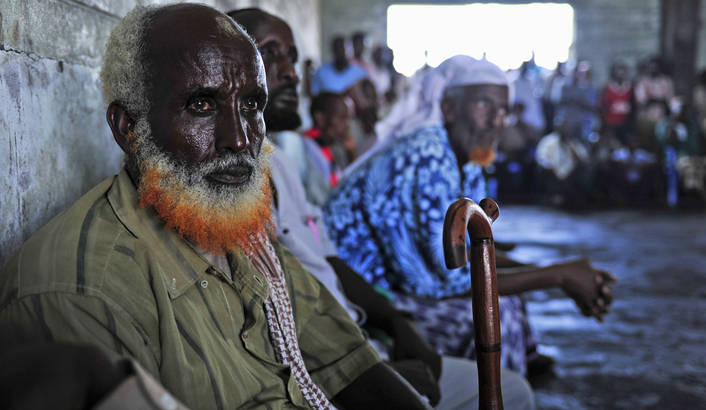 The other day I was reading a very interesting article about how mentally ill people are treated in Somalia where they have one of the highest numbers of mentally ill people in the world.




 Licensed Mental Health Counselor