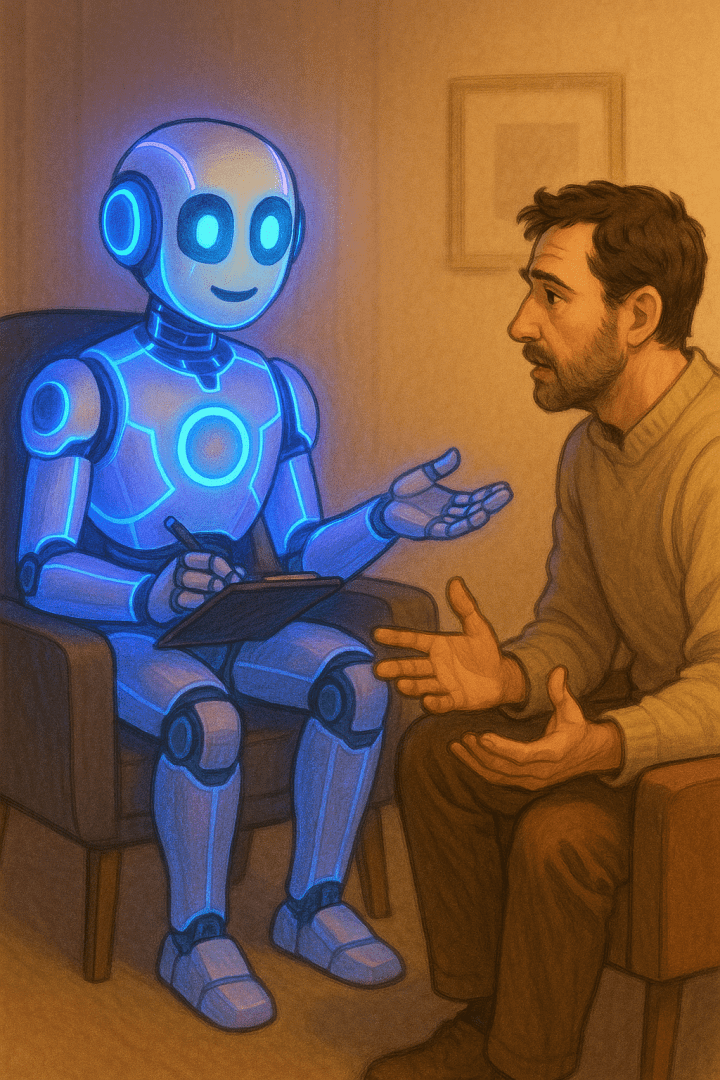
Artificial intelligence (AI) has gone from a futuristic concept to being a part of our everyday lives. From Siri to self-driving cars, AI is reshaping how we interact with the world. One area that’s seeing rapid AI integration is mental health.
AI is revolutionizing how mental health support is delivered, but it also has the potential to change the way we experience our emotions, relationships, and even our sense of self. So, what’s the real impact of AI on mental health
Positive Impacts of AI on Mental Health
1. AI-Driven Therapy Apps: Accessibility and Immediate Support
One of the biggest breakthroughs in mental health care has been the development of AI-driven therapy apps. Apps like Woebot, Wysa, and Replika use AI to provide users with cognitive behavioral therapy (CBT), emotional support, and mental wellness guidance. These apps can be used 24/7, offering instant support when someone feels overwhelmed or anxious.
For individuals who may not have access to in-person therapy due to financial constraints, geographic limitations, or the stigma of seeking mental health care, these AI tools are a game-changer. However, it’s important to remember that while AI can provide immediate relief, it doesn’t replace the nuanced, empathetic care provided by a human therapist.
2. Personalized Mental Health Tools: Custom-Tailored Support
Another exciting development is the use of AI to create personalized mental health strategies. By analyzing data such as sleep patterns, mood tracking, and even activity levels, AI can offer individualized wellness plans. For example, AI can recommend mindfulness exercises, cognitive reframing techniques, or journaling prompts based on a person’s emotional state or behavior patterns.
These tools can empower people to take control of their mental health and tailor their self-care routines to their unique needs. It’s a more proactive approach, putting users in the driver’s seat of their emotional well-being.
Honestly, this is one of the major way I have been using AI, as sort of a life coach or motivational coach when I need a little nudge to get me out of my head and for this, I think AI can be invaluable.
3. Early Detection and Improved Diagnostics
AI is also improving mental health diagnostics. For instance, machine learning algorithms are being used to analyze speech patterns, facial expressions, and even physiological responses to detect early signs of mental health issues like depression, anxiety, and PTSD. This early detection can be important in providing timely interventions before issues escalate.
In clinical settings, AI tools are being used to assist professionals in identifying patterns that may otherwise go unnoticed, helping to catch problems earlier and potentially save lives.
I sometimes use AI to help me differentiate between different diagnosis or to help me come up with an improved treatment plan for a patient. It’s not always perfect, but it usually will at least help me generate some new ideas I may have not come up with on my own.
Negative Impacts of AI on Mental Health
1. Social Media Algorithms and Mental Health
While AI has revolutionized mental health support in many ways, it’s also behind some of the negative aspects of modern life. One of the biggest culprits is social media. AI-driven algorithms determine what we see in our feeds, often pushing content designed to keep us scrolling content that can negatively impact our mental health.
Studies have shown that social media can contribute to feelings of inadequacy, anxiety, and depression, particularly among younger users. AI tends to prioritize engagement, meaning posts that generate strong emotional reactions, whether positive or negative, are more likely to be seen. This can create a cycle of comparison, unrealistic beauty standards, and constant validation-seeking, all of which can undermine self-esteem and mental well-being.
2. Job Insecurity and Stress
The rise of AI in the workplace has also led to concerns about job security. As AI systems become more advanced, more jobs are being automated, leading to uncertainty in industries like manufacturing, retail, and even healthcare. This economic shift can contribute to increased stress, anxiety, and depression, especially for workers in industries that are at risk of disappearing.
The fear of job loss due to automation can lead to feelings of obsolescence and anxiety, making it harder for individuals to cope with their personal and professional futures.
I have had therapists and students , tell me that AI will take our jobs. Well, in my opinion, AI is not likely to take our jobs as much as it will make therapy more available to those who otherwise would not seek therapy. A major part of my job in my current role as a trauma therapist is holding space. Holding space is it’s own concept I will write about at a later time, but it can be essential in therapy and holding space is something that AI can’t effectively do.
3. The Loss of Human Connection
While AI can offer emotional support and guidance, it’s not a substitute for genuine human connection. Research shows that deep, empathetic human interactions are essential for emotional well-being. As AI tools replace more human-driven roles, especially in customer service, therapy, and caregiving, there’s a risk of losing that vital connection.
Though AI can simulate empathy, it lacks the true understanding and warmth of a human being. Over-relying on AI for emotional support could lead to social isolation, where people feel disconnected from the world around them. This can be especially damaging for young people, people with certain disabilities or people who are more vulnerable to feeling disconnected.
4. Over-reliance on AI for Emotional Support
One of the more subtle risks of AI is that people may begin to rely on it too much. For example, some individuals may use AI chatbots as a way to “talk” through their problems instead of seeking human interaction. While these tools can offer support in the short term, they may prevent people from addressing underlying issues with friends, family, or professionals.
Additionally, AI-driven tools cannot provide the same level of emotional intelligence and personalized care that a trained therapist or counselor can offer although at times it can do a very good job mimicking it.
Finding Balance: Using AI Responsibly for Mental Health
1. The Need for Human Touch
AI can be a powerful tool for mental health, but it should complement, not replace, human care. The best approach is a hybrid one: using AI for accessibility, immediacy, and personalized support, but ensuring that there’s a human connection to guide, listen, and offer the empathy that AI simply can’t.
2. Setting Boundaries with Technology
As AI becomes more integrated into our lives, it’s essential to set healthy boundaries. It’s easy to fall into the trap of checking AI-driven apps or social media constantly, seeking validation or support. But to protect mental health, it’s crucial to take breaks, set time limits, and engage in face-to-face conversations with loved ones.
3. Data Privacy and Mental Health
As AI tools collect sensitive mental health data, it’s important to ensure that privacy and security are prioritized. People need to feel confident that their mental health data is being protected and used ethically. When choosing AI tools, look for platforms that value data security and are transparent about how they use your information.
Conclusion: The Future of AI and Mental Health
AI is reshaping the way we think about mental health care. It has the potential to make mental health support more accessible, personalized, and immediate. However, it also poses new challenges, from social media addiction to the loss of human connection.
I believe that the goal should be to integrate AI in a way that complements traditional mental health practices while maintaining the irreplaceable value of human empathy and connection. It’s important to be mindful of how AI impacts our mental well-being and how we can use it responsibly for both our mental health and society’s overall emotional health.
Questions: Are you using AI for mental health support? What are your thoughts on its role in your well-being? Leave a comment below to share your experiences or ask questions!
 Licensed Mental Health Counselor