The Basics of Behavior Modification Techniques

Behavior modification techniques have at times been controversial.

Many people believe that they don’t work in the long run, but I know when done correctly, they can be an effective tool to curve undesired behavior and increase desired ones.

A Very Brief History

Behavior modification is largely derived from tenets of a psychological approach known as operant conditioning created by B.F. Skinner, which proposes that behavior can be shaped by reinforcement or lack of reinforcement.

Behavior modification techniques have been used successfully with adults and children to help with conditions such as attention-deficit/hyper-activity disorder (ADHD), obsessive-compulsive disorder (OCD), generalized anxiety disorder (GAD), pervasive developmental disorders, phobias, and many others.

Reinforcing Positive Behavior 

Reinforcing consequences are anything a person receives as a result of their behavior, that increases the likelihood of that behavior occurring again.

For example, if a child gets a laugh from a parent when they swear, they are more likely to do it again. Or if they get praise for bringing home good grades, they are more likely to continue trying to bring home good grades.

Reinforcers, as the name suggest, reinforce behavior. Some good behaviors, some bad behaviors.

We use reinforcers all the time, often without realizing it. As the saying goes, we teach people how to treat us, because we often reinforce their behavior towards us, good or bad.

When people, especially children hear the word consequence, they usually assume that it is something negative, but consequences can also be positive.

Positive reinforcers are consequences a person wants to receive. They are used in behavior modification to increase desired behavior, usually through a reward system.

Behavioral contracts can be used to outline details of the reward system. As an example, a reward could be one hour of video games per day if all homework assignments for that day are complete, or all chores are done.

Sometimes negative behavior is also unintentionally rewarded. As an example, if a child yells enough and the parents gets annoyed and gives in to the child’s demands, that child is being reinforced to yell whenever he/she doesn’t get their way.

In these cases, the unwanted behavior needs to be stopped through what is called “extinction”.

Extinction

Extinction is basically stopping an undesired behavior by removing it’s rewards. Examples of rewards for undesired behavior include getting what they want after:

  • pleading
  • crying
  • throwing a tantrum
  • yelling
  • withdrawing

Time-out is one of many effective techniques used to extinguish undesired behaviors by removing the person from any rewards.

As I stated before, the saying “we teach people how to treat us” comes back to this, even as adults.

In a relationship, if our partner is being insensitive to our needs, yet we cling to them more and shower them with attention, then we are rewarding their behavior.

Negative Consequences for Behavior

Penalties, punishment and negative reinforcement are all forms of negative consequences.

Penalties are when someone loses something as a result of a behavior, such as the removal of a favorite toy or a privilege.

A punishment is when someone receives a consequence for a behavior that they don’t want, such as a spanking.

Negative reinforcers include the withdrawal of a privilege or addition of extra chores/assignments.

Differences Between Negative Reinforcement and Positive Reinforcement

Punishment, penalty and negative reinforcement usually result in minimal effort on part of the person to achieve the desired behavior.

Positive reinforcement is the only method that will encourage people to give voluntary, extra, enthusiastic effort to achieve the desired behavior.

The key to behavior modification is to use negative consequences as necessary, but to focus more on positive reinforcements.

The Five B’s of Effective Parenting

Lastly, the five B’s are very important when it comes to using behavior modification techniques with effective parenting:

  1. Be positive– try using positive consequences more than negative
  2. Be specific– be specific what behaviors are being punished or rewarded
  3. Be certain– your child should know without a doubt what to expect from you        based on their behavior.
  4. Be consistent– if you don’t apply rules consistently, your child can never be certain of what to expect
  5. Be immediate– act immediately when your child deserves a positive or negative reinforcer.

When used correctly, behavior modification techniques are positive tools and great ways for kids to learn in a rather safe environment about consequences.

They learn that in life, often there are no right or wrong decisions, but they have to be able to deal with the consequences (positive or negative) of their decisions.

Is It Okay To Use Different Academic Standards Based on a Students Race?

I was honestly shocked the other day when on the local news I saw a report that the Florida Board of Education, just passed a new race-based standards of academic acceptance which will affect all of the 2.6 million students that are in the state’s public school system.

I was shocked because I don’t remember hearing about this, and yet it has passed. Apparently there was no vote on this from the public and I was even more shocked to hear what the standards are.

The new academic standard says that by 2018, 90% of Asian students, 88% of white students, 81% of Hispanic students and 74% of black students are to be reading at or above grade level.

It also states that 92% of Asian students, 86% of white students, 80% of Hispanic students and 74% of black students will be at or above their math grade level.

Really?

Now some people will say that this is a part of Affirmative Action, but I’d like to argue against that. This is part of goals required from Florida’s waiver of No Child Left Behind. State officials say that these new standards take into account the performance numbers of current students of color.

I say that this is a way the state can take the blame away from where it really should be, and that is on failing schools, inequality of schools and teachers in different communities, poor teachers, bad parenting and failing community services and supports.

It is unconscionable to me that we would expect less of a child based on his or her race/ethnicity. All kids have the ability to learn regardless of race or ethnicity.

It is true that often things such as socio-economic status and parental educational background have a lot to do with a child’s academic performance, exposure and experiences, but to dumb down the expectations of a child based on their race/ethnicity is really backwards.

And where is Florida getting this idea from? Virginia! No offense to Virginians, but Florida is following in Virginia’s footsteps when it comes to educating their students. Some say it’s so that black and Hispanic children won’t feel bad when they don’t perform as well as their white and Asian counterparts. Really?

When I was in high school I had to pass a competency exam to graduate, my race/ethnicity played no part in this. I was expected to get the same passing score as everyone. They same went for the exit exams I took in undergrad and graduate school.

Former Florida Governor Jeb Bush even said that this would send a “devastating message” that Hispanic and black students aren’t as capable as other students.

Palm Beach County School Board Vice-Chair Debra Robinson said she’s “somewhere between complete and utter disgust and anger and disappointment with humanity” because of this.

We do a disservice to our kids when we are basing academic standards on race/ethnicity. We will be placing a black mark on the high school diplomas of every black and Hispanic child.

It would be better to track students individually and not group them by race/ethnicity, but that would cost the state too much, so it’s easier to just make generalized, in my opinion, racist academic standards of achievement.

A long time ago I read a book called The Bell Curve and thought it was the most racist piece of garbage I had ever read. It was largely about whites intellectual superiority over blacks. This isn’t much different.

How can black and Hispanic children feel good about their academic achievements if they are held to a lesser standard, especially in elementary, middle and high school where these poor standards are setting them up for future failure?

In elementary school I always made the honor role until one day I got a “C” and cried. My teacher consoled me by saying “C’s are good for a boy”. After that day, I never made the honor role again until the 11th grade. I was happy with “C’s” and it was only until the end of my sophomore year in high school that I started making all A’s and B’s again.

What changed? I did, not the academic standards, or even the school or teachers, but me.

I learned that “A” stood for excellent, “B” for good, “C” for average, “D” for poor and “F” for failure. I told myself I was above average and aimed to never get below a “B” and from that point on in high school, through undergrad and graduate school, I didn’t.

With Affirmative Action, yes it helps minority students get into college with lower exam scores than whites and Asians, but once in college they are expected to keep up or get out. There’s a difference between that and this.

If we tell our kids it’s okay to be below average because of your race/ethnicity, I think it will have the same affects. Kids won’t try harder, they will accept poor performance as “good for my race/ethnicity”.

Those black/Hispanic kids that are high achievers, will never feel the pride they should feel.

We already have a problem with black/Hispanic kids being stereotyped as “not as good as” whites and Asians, but this is almost like making it official.

We all learn differently and EXPOSURE and EXPECTATION go a long way to defining a child’s self-efficacy. This is not the way of solving a problem, but creating one we all will have to deal with in the future.

Politicians are always saying that they want our nation to be at the top when it comes to math and science, but I guess that doesn’t apply if you are black/Hispanic. We should be encouraging, educating and encouraging all students, regardless of race/ethnicity, to do their absolute best, and not a percentage of what is considered the absolute best.

edit: My 16 year old niece, who is black and attends a predominately black school, just got accepted into the National Honor Society for having a grade point average of or above a 3.5. Imagine if the criteria for the National Honor Society was lowered for her just because she was black. I doubt she would have the same sense of pride and accomplishment she has today. 

Is Pretending to be Pregnant a Mental Illness: Part 2

In my original  post, Is Pretending to be Pregnant a Mental Illness, I discussed a high school teenager I have known for three, now going on four years, who has been “pregnant” every year and has had a “miscarriage” every year as well.

Last year was no different, but for some reason I believed she was pregnant, even when her closes friends did not. Still I remained skeptical, especially as the “pregnancy” went along and she didn’t get any bigger and refused to tell her mom about it.

Then summer came and I waited anxiously to see her when school started, knowing she should be close to her due time. Yet, when I saw her last week, she was no bigger than she was almost three months ago.

She told me that she had also “lost” that baby (big surprise), but now she is pregnant again and this time she isn’t making it up… and I believe her!

Why would I believe she is pregnant this time when she has lied about being pregnant four previous times?

Well this time she told me she told her mom, something she never did in her previous “pregnancies” even when I offered to talk to her mom with her.

Also, I know she has wanted to get pregnant for the past four years and so it was bound to eventually happen for real. I knew she was having unprotected sex with different guys.

And then today she showed me a picture of her getting a sonogram… a real picture this time and so yes, the girl who pretended to be pregnant for four years is finally pregnant.

It’s so sad because at 18 she is lost, she’s barely passing school, is extremely immature, admitted that her baby’s father is no good, that she doesn’t like him and her family doesn’t either, but yet they are bringing a child into this world.

There is no way she is ready to be a mother and yet, if everything goes right, she will be soon enough.

I’m concerned because this is a young lady with obvious mental issues and if she doesn’t get the help she needs she will raise a child who will potential have further issues because of being raised by an ill-prepared mother.

On top of everything, I really think this girl wanted to get pregnant to fulfill something missing in her life, maybe attention, unconditional love, purpose, who knows, and if having this baby doesn’t meet her conscious or unconscious expectations then where will that leave her and the child?

I see many mothers who had children for the wrong reasons (to keep a man, to fulfill a void, to prove that they can accomplish something, etc.) abandon their children physically, mentally or both when those expectations weren’t met.

Many of those parents end up abusing their kids, resenting them or being negligent in the way they raise their kids.

I’m not saying that this is definitely the case with this young lady, who knows? For a very few, having a baby serves as a catalyst to get them to step up and change their lives for the better so that they can be the best parent they can be for their child.

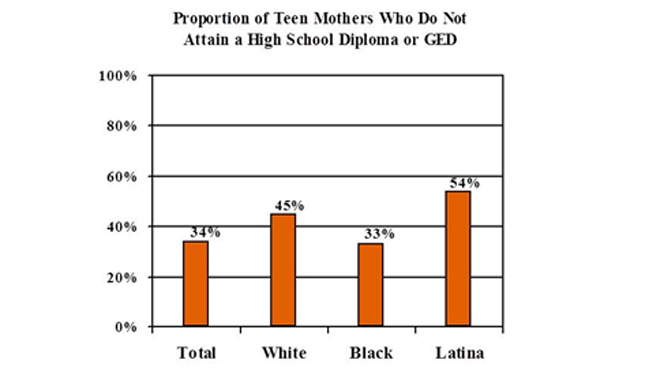
Unfortunately, that is rarely the case. Many impoverished, poorly educated, single, teenage moms end up dropping out of school and remaining in poverty.


The psychological issues that made this young girl persistently pursue to be pregnant for years will probably remain after she gives birth so I won’t be surprised if she isn’t pregnant or “pregnant” again and again even after she gives birth for real.

Political Bullying: What Are We Modeling to Our Children?

As the political season heats up, I can’t help but to notice that the ads seem to get nastier and more personal, so much so that it takes me back to some of the countless meditations I’ve done with high school students and initially I couldn’t understand why, but then it hit me, these campaign ads are reminding me of bullying.

Just like a lot of the bullying that goes on around school campuses across the nation (and now across the internet via sites like Facebook and Twitter), these politicians are often attacking each others characters, credibility and other qualities.

Unlike the bullying I see on school campuses, this type of bullying is different, and yet similar. It’s different in that it is much more of a sophisticated type of bullying, but it’s similar in it’s purpose and even worse, it is bullying that is played out across the nation, on television screens several times a day for millions to see, often during the times our young and impressionable children are watching.

These kids may not care about either candidate, and they may not even realize what they are witnessing, yet they are being exposed, often several times a day,  to a form of bullying that they may subconsciously model, especially in situations where they want to make themselves look better than someone else, rather in their social circle, sports or even in running for high school level campaigns.

Two adults bullying each other may sound ridiculous, but that is exactly what politicians do all the time. John Mica, who won the Republican primary House District 7 acknowledged that during a brutal campaign, he was severely affected by the mean spirited ads and statements made not only about him, but his family and integrity.

Although many political analyst believe that negative campaigns are necessary as they tend to get more voters attention than positive campaigns (what does that say about our Nation), at the end of the day I am concerned about how much of that negativity and mean spirited attention truly affects us.

As the campaign season continues to play out and ads are likely to get even more cruel, don’t just turn a blind eye to your child sitting there as it interrupts their television show. You may want to change the channel, or better yet, use it as a teaching and bonding opportunity to discuss with your child anything from bullying, the state of the Nation, the economy, to your political views. After all, they are likely getting all that anyway from watching the campaign ads, just that the information they are getting is likely tainted and smeared in figure pointing and character bashing.

Acting Out in School as a Way of Hiding a Learning Disability

There are variety of reasons kids act out in school, but they all usually act out to either hide something or as a way of expressing something they don’t know how to express in a more appropriate manner.

Earlier this week I sat in on an executive board meeting with various members of the Department of Juvenile Justice in the state of Florida and was reminded of Dexter Manley’s incredible story. 

Dexter Manley was an American professional football player who liked to give back to his inner-city community. Often he would go to various schools and speak to children about the importance of an education. Well one day after he had gotten through giving an inspiring speech to a group of elementary school kids, he was asked to read to them from an elementary level book. Dexter tried to get out of the situation, but he was cornered and eventually broke down crying. He had been hiding a secret that he was terrified would be exposed. He couldn’t read. Here was a man who had not only graduated from high school, but had also went to college and yet wasn’t able to read beyond a second grade reading level.

In elementary school Dexter realized in the second grade he had learning issues (poor auditory memory) and was often teased by other students. In return he started acting out in class, becoming a “troubled student” and even once pushed one of his teachers against the wall. He was passed on from class to class and grade to grade until he eventually graduated high school with only a second grade reading level. He had become a master at hiding his learning disability so well that he made it through college and much of his adult life without even his children and wife knowing he could barely read or write, but it all started in elementary school where he learned that acting out in class got him out of having to reveal that he was having trouble reading, writing or understanding material his peers were grasping. 

That got me to thinking about the many “troubled” teens I work with and I noticed before that most of them also had failing grades and very poor reading and writing skills, but I had been under the impression that it was mostly due to their lack of participation in class, lack of concentration, attention and motivation. It wasn’t until recently that I started realizing that many of them act out to hide the fact that they are suffering from one learning disability or the other. Now when I am referred a kid by a teacher or guidance counselor for “behavior issues” I also check their academics and their grades usually are very poor. Eventually I usually learn that their reading and writing skills are also extremely poor and I say “eventually” because it is usually hard to get them to write or read anything, they are usually master manipulators and will either change the subject, get angry or deviant. One kid in particular walked around with a stack of books, about five books checked out from the library in her arms at all times. I always thought she was an avid reader, but one day when I called her in my office and she came with her books, I asked her about each book and realized she hadn’t read any of them. When I tried to coach her into reading one to me, she struggled through a line or two and then became very angry and deviant. She stopped reading. She could barely read and she was a 17 year old high school junior.

Although I believe the practice of just passing troubled kids through school to get rid of them is less common today in the age of standardized testing, I am all too aware of many recent and not so recent high school graduates who read and write on elementary grade levels and seem to have slipped through the cracks of our educational system. Often times teachers send me kids they have kicked out of their class for “acting out”, and these kids are usually failing that class and have learned very quickly that if they act out, they will either get left alone or removed from the situation they don’t want to be in anyway. Up until recently, the real situation wasn’t getting dealt with as I had ignored the possible learning issues going on and went straight to trying to solve the cognitive and behavioral problems as I’ve been trained to do. 

Without help, these kids who manage to skate through high school will find that functioning in the real world is much harder. Many of the manipulation, distracting and defense mechanisms that worked in high school will not work in society and may actually get them hurt, arrested or worse. Unlike Dexter Manley who was a star football player and had the athletic talent and financial resources to hide his issues (at least for awhile), most of these young people will be unable to get or keep jobs and will most likely turn to drugs, alcohol, and criminal activities as ways of trying to cope. Ignoring the problem now will only cost everyone more later when these young people are carjacking us, or we are using our tax payers money to feed them in jail.  

If you have or are a parent of a child with a learning disability I would love to hear from you.

If you are a parent and have a child that is acting out and also struggling in school, it would be a good idea to have him or her tested for a learning disability. I think often learning disabilities go undiagnosed because parents are unwilling to have their kids tested. No one wants to have a child with a learning disability, but having that disability identified and attended to will allow that child to learn how to adjust and succeed. Not giving your child that opportunity out of fear of labeling could be detrimental to his/her future.

To read more about Dexter Manley you can click on this link http://findarticles.com/p/articles/mi_m1077/is_n12_v44/ai_8010811/?tag=content;col1

Teen Mom Wants to Have Another Baby ASAP

What if your 18 year old daughter who is in the 11th grade of high school, already has a two year old child, told you she was planning on having another child by her new boyfriend in order to not be selfish?

Working with teenagers it’s rarely anything I see or hear these days that shock me, however, there are plenty of things I see and hear that leave me dumbfounded, including when one of my favorite teenage clients, who already has a child, told me that she plans to stop taking her birth control so she can get pregnant by her new boyfriend of only about three months. What?!?!

She told me that she thought it was UNFAIR to her son that he didn’t have a sibling and unfair to her new boyfriend that she didn’t have a child by him and that she felt like she was being selfish to everyone by WAITING until the right time (oh, let’s say after she finished high school, started a career, got married) to have another child. I sat listening to her, almost hoping that I had falling off into a daydream and that this was just all part of my imagination, but it wasn’t. This high school junior, soon to be senior, with one child at home already was telling me that she was planning on getting pregnant again as soon as possible! She is already raising this child without the father’s involvement and I shouldn’t say she is raising her child because her parents are actually the ones taking care of her and her current child, yet she wants to go and get pregnant again!

I know part of the psychology of why she wants to get pregnant again is to keep her current boyfriend around. She is thinking that if she gets pregnant by her current beau, they will stay together forever. I am sure she had that same delusional fantasy with her current child’s father who she hasn’t seen in over two years. You would think she would have learned, but the delusional, fantasy world and mind of a teenager is a hard shell to crack, no matter how many times the world gets dropped on it.

As I listened to her, I actually felt a great deal of heartache for her because she was about to go and do something dumb… at least in my professional opinion. The chances of her being 18 with two kids, barely a high school degree, and being successful aren’t in her favor, especially coupled with her history of alcohol and drug use and her impulsive behavior that often leads her to be in dangerous situations.

I tried and hope I spoke some sense into her. I told her that she isn’t being selfish by waiting for the right time (and person) to have another child. I told her that it is OKAY for her to be selfish when it comes to her life. A lot of times we are told so many times about not being selfish that we forget that sometimes being selfish is a form of self-care and self-preservation. I also told her that it wouldn’t be fair to her, her current child or her future children if she once again got pregnant by a man who wouldn’t be around to help her raise the child(ren) they produced together. I definitely tried to convince her that waiting until after high school, after college (which she plans to attend), and hopefully after getting married, would be the time for her to have more children if she so chose to do that. Being a high school senior next year with two kids her and her parents are raising together is not the situation she wants to be in.

I really hope I convinced her that having a child right now, with a guy she’s only known for three months, is not a rational decision, but a large majority of the teenage mind functions irrationally. Their brains are just wired differently at this age and we’ll explore that in a future post. The bottom line is, every high school girl I’ve worked with that got pregnant to keep a boy NEVER ends up with that boy more than a year or so later. Does it happen? I’m sure it does, but I haven’t seen it. Still, it doesn’t stop them from thinking otherwise and even if they already had a child and that child’s father disappeared shortly after the birth of the child, some of them will still be convinced, as this young lady is, that it won’t happen again.

This isn’t the first time I had to deal with something similar to this. Not too long ago one of my high school clients who had a baby less than a year ago, wanted to have another baby right away because that is what her boyfriend (the babys’ father) wanted. A month or so later they broke up because he wasn’t helping her take care of the baby they already had. Imagine if she would have gotten pregnant with a second child like she wanted.

Saving the Lives of Butterflies: Part 2

It’s been a few months since I first introduced The Butterfly Project to the high school kids I work with (if you haven’t already, you can check out my post entitled “Saving the Lives of Butterflies”). Well I’m happy to report that over the past two weeks I’ve had a number of them come up to me and show me the butterflies that they drew on themselves in efforts to refrain from cutting themselves! I was so happy to see one or two of them do this, but was overwhelmed to see nearly all of the ones who have issues with self-injury trying this technique and so far it appears to be helping! Some of them even name their butterflies and they have been encouraging each other. It’s a small step, but I am so thrilled by it’s success so far that I just had to share some of the pictures!

With summer coming up, I am really worried about all of the teens I work with at the high school, especially the ones who self-injure, but I am really hoping that everything I’ve taught them over the summer, including cognitive behavioral interventions, emotional self regulation strategies and now the Butterfly Project, will help them make it through whatever they encounter and that they will emerge stronger and more confident. I will also be worried about the ones who use drugs, the ones who make irrational decisions, the ones with anger issues and the ones with severe depression and anxiety. Pretty much, I’ll be worried about all of them, but I have to hope and trust that I’ve helped them all enough or at least did my part in preparing them to better handle life.

On Childhood Disintegrative Disorder


We conclude our discussion on the Pervasive Developmental Disorders with a brief overview of Childhood Disintegrative Disorder.

Introduction

Childhood Disintegrative Disorder (CDD), is also known as Heller’s Syndrome and Disintegrative Pschosis.  It is a rare Pervasive Developmental Disorder that affects about 1 in 100,000 children. CDD resembles many of the other disorders on the Autism spectrum in the fact that it involves developmental delays, impairment in communication and social functioning, but most closely resembles Rett syndrome in that it almost exclusively affects boys whereas Rett syndrome almost exclusively affects girls. New research suggest that while CDD affects boys more than girls at a rate of 4 to 1, it is thought that girls diagnosed with CDD most likely should have been diagnosed with Rett. There is also further talk that in the future Rett and possibly even CDD won’t be separate diagnosis, but that they will both be collapsed into the Autistic category as low functioning forms of Autism.

Symptoms

Children with CDD develop normally up until about ages 2 to 4 years of age (rarely there are cases of delayed onset up to 10 years of age), and then start regressing, losing previously acquired developmental skills with in a few months to years, including language, non-verbal communication skills, motor skills and social skills.

Symptoms include:

    • Delay or lack of spoken language
    • Impairment in nonverbal behaviors
    • Inability to start or maintain a conversation
    • Lack of play
    • Loss of bowel and bladder control
    • Loss of language or communication skills
    • Loss of motor skills
    • Loss of social skills
    • Problems forming relationships with other children and family members

Causes

There are no known causes of CDD although abnormal electroencephalograms (EEG), epilepsy, Lipid storage diseases (excess build up of toxic fats in the brain and nervous system), Tuberous sclerosis (benign tumors that may grow in the brain and other vital organs) and Subacute sclerosing panencephalitis (chronic infection of the brain due to a form of the measles that damage the brain) all appear to be associated with CDD.

Treatment

There is no cure for Childhood Disintegrative Disorder and the treatment for it is similar to the treatment for all of the Pervasive Developmental Disorders with the addition of trials with steroid medications to try to slow down the progress of the disorder.

Diagnosis

Physicians will use some of the same assessment tools used to diagnose the other Pervasive Developmental disorders with the inclusion of all the symptoms listed above and impairment in normal function or impairment in at least two of the following three areas:

  • Social interaction
  • Communication
  • Repetitive behavior & interest patterns

The main symptoms to look for in diagnosing CDD is the loss of previous learned skills in at least two of these areas:

  • Expressive language skills (being able to produce speech and communicate a message)
  • Receptive language skills (comprehension of language – listening and understanding what is communicated)
  • Social skills & self-care skills
  • Control over bowel and bladder
  • Play skills
  • Motor skills

If your child has any developmental delays or starts to lose developmental functions previously learned, it is vital to talk with your physician in order to rule out  CDD or any of the Pervasive Developmental Disorders or mental retardation. The faster any illness is discovered and treatment begins, even if there is no cure, the better the prognosis or at least the slowing of the progress of the disorder. Some children with similar, yet less severe symptoms may have a learning disability or something much less serious than a Pervasive Developmental Disorder, but it is important to have everything ruled out for the best care of your child.

On Asperger’s Disorder

In the 1940s, a pediatrician working in a clinic in Vienna named Hans Asperger treated several patients who displayed similar symptoms. However, because his work was conducted during World War II, none of it was seen amongst the English-speaking world so it wasn’t until the 1980s that his work was discovered by the English-speaking community and was translated in 1991 by Uta Frith. The characteristic first described by Hans Asperger became known as Asperger’s Disorder.

What Is Asperger’s Disorder?

Just like all of the Pervasive Developmental Disorders, children with Asperger’s have trouble relating to others.  In some children this means that they do not like interacting with others, or that they do enjoy interacting with others but lack the non-verbal skills (i.e. eye contact, smiling, facial expression, touching) necessary to have full interaction. Having a two way conversation with a child with Asperger’s is often very difficult because they have trouble understanding figures of speech, sarcasm, subtle suggestions and often take speech very literally.  These children are also often unaware of their own behavior and can’t relate to other children at their developmental level.

Children with Asperger’s also often have unusual behaviors and interests. Some children become almost obsessed with an object or ideal to the point that they exclude everything else. For example, a young man I worked with was very interested in sports and would talk you to death about sports, but only sports and if you tried to talk to him about anything unrelated to sports he would just go back to talking about sports. In other children, they may have extreme reactions to simple changes to their environment (i.e. movement of furniture or objects) or routine.

While all children with Asperger’s have impairment in social and behavior functions, the degree of impairment differs in each child. To be diagnosed with Asperger’s the symptoms have to be severe enough that it impacts their life (i.e. school functioning, family function, or social life).

How Does Asperger’s Differ from Autistic Disorder?

Asperger’s differs from Autistic Disorder in that there are no significant delays in cognition or language development.  Many children with Asperger’s have difficulty with non-verbal communication, hand eye-coordination and may appear clumsy. Some children with Asperger’s have an exceptional vocabulary and may speak earlier than expected. Because children with Asperger’s appear to develop normally, they usually aren’t diagnosed before the age of five while children with Autistic Disorder are generally diagnosed earlier. Some people reach all the way to adulthood without being diagnosed with Asperger’s, whereas children with Autistic Disorder generally aren’t expected to live independently.

Risk for Other Issues

Children with Asperger’s Disorder are often also diagnosed with Attention Deficit/Hyperactivity Disorder. They are also at a higher risk for Obsessive-Compulsive disorder. Undiagnosed children with Asperger’s often experience depression and social isolation, especially in their adolescent years when peer interactions and relationships become more important.

Diagnostic Criteria (Diagnostic and Statistical Manual of Mental Disorders IV)

I) Qualitative impairment in social interaction, as manifested by at least two of the following:

(A) marked impairments in the use of multiple nonverbal behaviors such as eye-to-eye gaze, facial expression, body posture, and gestures to regulate social interaction
(B) failure to develop peer relationships appropriate to developmental level
(C) a lack of spontaneous seeking to share enjoyment, interest or achievements with other people, (e.g.. by a lack of showing, bringing, or pointing out objects of interest to other people)
(D) lack of social or emotional reciprocity

(II) Restricted repetitive & stereotyped patterns of behavior, interests and activities, as manifested by at least one of the following:

(A) encompassing preoccupation with one or more stereotyped and restricted patterns of interest that is abnormal either in intensity or focus
(B) apparently inflexible adherence to specific, nonfunctional routines or rituals
(C) stereotyped and repetitive motor mannerisms (e.g. hand or finger flapping or twisting, or complex whole-body movements)
(D) persistent preoccupation with parts of objects
(III) The disturbance causes clinically significant impairments in social, occupational, or other important areas of functioning.

(IV) There is no clinically significant general delay in language (E.G. single words used by age 2 years, communicative phrases used by age 3 years)

(V) There is no clinically significant delay in cognitive development or in the development of age-appropriate self-help skills, adaptive behavior (other than in social interaction) and curiosity about the environment in childhood.

(VI) Criteria are not met for another specific Pervasive Developmental Disorder or Schizophrenia.”

I Think My Child May Have Asperger’s Disorder, What Do I Do?

If you think your child has symptoms of Asperger’s Disorder, contact your physician, school psychologist or a licensed psychologist to initiate an evaluation. Thorough medical, family and developmental histories will be taken, as well as interviews with the family and child as well as behavioral observations to help determine if a diagnosis of Asperger’s Disorder is correct.

All of the interventions and prognosis for Asperger’s Disorder are basically the same for all the other Pervasive Developmental Disorders and you can find those on my post about Pervasive Developmental Disorders.

Resources

Attwood, Tony. (2006) The Complete Guide to Asperger’s Syndrome. Jessica Kingsley Publishers.

Online Asperger Syndrome Information and Support

(OASIS) http://udel.edu/bkirby/asperger/

Center for Autism and Related Disabilities (CARD): http://card.ufl.edu/

On Autistic Disorder

In my years in the field of mental health, I’ve had the privilege to work briefly with children who had Autistic Disorder. That brief time gave me a tremendous amount of respect for these children, those who work with them regularly as well as the parents who care for them around the clock. The degree of impairment in each child was sometimes drastically different. Some didn’t move from the same spot all day, staring out into space and rocking back and forth while others were very mobile and verbal (even if I couldn’t understand a word they were saying). Most of them were very rigid however in appearance, behavior and psychomotor activity.

If you haven’t done so already, you may want to read the post I wrote on Pervasive Developmental Disorders in order to get a better understanding of Autistic Disorder and all of the other Pervasive Developmental Disorders under the Autism Spectrum.

Autistic Disorder shares a lot in common with all the previously discussed Pervasive Developmental Disorders and is sometimes referred to as early infantile autism or childhood autism. To add to the confusion of labeling, some professionals use Autistic Disorder to describe all five of the pervasive developmental disorders (Autistic Disorder, Rett’s Disorder, Childhood Disintegrative Disorder, Asperger’s disorder, Pervasive Developmental Disorder Not Otherwise Specified) under the Autistic spectrum.

Brief Introduction to Autistic Disorder

Autistic Disorder is four times more common in boys than in girls. Children with Autistic Disorder have a moderate to severe range of communication, behavior problems and socialization abilities. Many of them also have mental retardation. It is also thought to be high genetic.

Like all of the other Pervasive Developmental Disorders, parents of children with Autistic Disorder normally notice signs within the first two to three years of life. They usually develop gradually, but sometimes the child will develop normally at first and then regress.

Early behavioral and cognitive interventions are essential in helping children with Autistic Disorder learn to improve their skills of self-care, communication and socialization. Most children with the disorder will never live independently as adults and while there is no cure, they have been reported cases of children who have appeared to recover from it.

Diagnostic Criteria for Autistic Disorder

The Diagnostic and Statistical Manual of Mental Disorders IV (DSM-IV) uses these criteria to aid in the diagnosis of Autistic Disorder.

  1. Six or more items from (1), (2), and (3), with at least two from (1), and one each from (2) and (3):
      1. qualitative impairment in social interaction, as manifested by at least two of the following:
        1. marked impairment in the use of multiple nonverbal behaviors such as eye-to-eye gaze, facial expression, body postures, and gestures to regulate social interaction
        2. failure to develop peer relationships appropriate to developmental level
        3. a lack of spontaneous seeking to share enjoyment, interests, or achievements with other people (e.g., by a lack of showing, bringing, or pointing out objects of interest)
        4. lack of social or emotional reciprocity
    1. qualitative impairments in communication as manifested by at least one of the following:
      1. delay in, or total lack of, the development of spoken language (not accompanied by an attempt to compensate through alternative modes of communication such as gesture or mime)
      2. in individuals with adequate speech, marked impairment in the ability to initiate or sustain a conversation with others
      3. stereotyped and repetitive use of language or idiosyncratic language
      4. lack of varied, spontaneous make-believe play or social imitative play appropriate to developmental level
    1. restricted repetitive and stereotyped patterns of behavior, interests, and activities, as manifested by at least one of the following:
      1. encompassing preoccupation with one or more stereotyped and restricted patterns of interest that is abnormal either in intensity or focus
      2. apparently inflexible adherence to specific, nonfunctional routines or rituals
      3. stereotyped and repetitive motor manners (e.g., hand or finger flapping or twisting, or complex whole-body movements)
      4. persistent preoccupation with parts of objects
  2. Delays or abnormal functioning in at least one of the following areas, with onset prior to age 3 years: (1) social interaction, (2) language as used in social communication, or (3) symbolic or imaginative play.
  3. The disturbance is not better accounted for by Rett’s Disorder or Childhood Disintegrative Disorder.

For more information visit http://www.autismspeaks.org