Clearing The Air: Mental Illness In Relation to Smoking

The other day I was at a sports bar people watching, something I commonly do, when an attractive waitress caught my attention. I watched as she went outside on her break and then did the most disgusting and disfiguring thing, she put a cigarette between her lips and lit it.

I was shocked as I watched her inhale and then exhale a white puff of smoke. She had to be aware of the astounding amount of health issues related to smoking from cancer to cardiovascular disease, and she was smoking by herself so there weren’t any apparent social benefits, so how could someone so young and beautiful be putting that carcinogenic smoke into her body?

I immediately started thinking that she had to be self-medicating for one reason or another and that got me to thinking, is that why so many people are still smoking, can they all be self-medicating with nicotine and if so, from what?

The first obvious answer to me was stress. A lot of people smoke because they are stressed out and use nicotine to help calm their nerves. A study I read said that approximately 30% of people who smoke do so because they are depressed. For these people, nicotine actually helps them feel better, if only temporarily. These people instead of learning how to deal with their depression through counseling and appropriate anti-depressants if needed, have learned to depend on nicotine. Evidence of this came from U.S. clinical trials for Wellbutrin, an anti-depressant. During the trial to see how effective Wellbutrin was on depression, a fair number of participants who smoked suddenly stopped smoking. With drug companies being as clever as they are, Wellbuturin was soon not only sold as an anti-depressant, but was repackaged and renamed as Zyban and sold as a treatment to help people quit smoking.

Also, in an article called “Smoking in relation to anxiety and depression: Evidence from a large population survey: The HUNT study” published in European Psychiatry, it was shown that anxiety and depression were the two most common complaints in people who smoke, with anxiety being the highest complaint, followed by anxiety and depression combined and then depression by itself.

People with mental health issues, even if they are underlying, are twice as likely to smoke as the rest of the population. So it is possible that the people around you who smoke, your spouse, your friend, your family member, (or even you if you smoke) may actually be self-medicating for an untreated and undiagnosed issue that needs to be attended to. With proper treatment, they may lose the desire to smoke altogether. Encourage them to talk to their doctor, health care provider or other mental health provider about how their mood factors in with their urges to smoke.

How to Resuscitate Your Life

The other day as I was sitting in a CPR recertification class, I couldn’t help but to think how could I apply the principles of CPR to my daily life.

Compressions

In the CPR recertification class we were taught that compressions are the most important part of CPR, keeping the blood flowing through the body. That got me to thinking that when it comes to resuscitating your life, perhaps the most important thing is to find, or rediscover the things you love and actually do them.

Many of us have hobbies or things we love to do, yet often allow the stressors of daily life to rob us of those joys and before we know it, it’s been weeks, months and sometimes even years since we’ve done those very things we claim to love. As a result we often find ourselves feeling drained, burnt out and unhappy as our time is spent more and more with obligations and less and less with the things that actually make us excited about life. This leads many of us to feel like we have lost a part of ourselves and sometimes don’t even know who we are because the real us has been smothered by this other person who doesn’t have time to do the things that actually make our hearts beat with joy.

Breathing

The second part of CPR is breathing, and I take that to mean breathing life back into yourself. Sometimes it’s easy to just come home from work and do nothing because we are tired and before we know it, a whole year has passed by without us accomplishing many of our goals or developing our personal lives the way we would have wanted to. We have to find motivation and inspiration to actually live life, be active participates in life and not just participate in it passively. What is it you need to do to breath life back into yourself? Maybe it’s getting up and going for a walk instead of taking a nap, or calling a friend instead of texting. Maybe it’s registering for a class you’ve always wanted to take, but never find the time or motivation to actually do it. Our maybe it’s surrounding yourself with people you know will help breath life back into you.

AED

Lastly, if all else fails in CPR, an Automatic External Defibrillator may be required to try to shock the person back into life. Do you need a jolt? Do you need to jump in head first in order to get past your initially trepidation? I know a friend who was afraid of heights and he signed up to sky dive as a way to overcome his fear. I’m not suggestion something so drastic, but what I am suggesting is that you push yourself out of your comfort zone if you know the reward for that is worth it. I know overweight people who are afraid to join gyms because they think people will look at them. Truth is, most people in a gym could care less and will actually compliment them when they start seeing results. They could find encouragement there, make friends, find motivation, but they can’t get over that initial fear enough to even step foot into the gym. Do you need to push yourself through that door, step into that uncomfortableness, recognize and accept that you feel uncomfortable, but know that it will pass and you will be a better person because of it?

Here is a very short list of suggestions, I would like to hear more from you and you can always create your own personalized list. Now, go out and reclaim your life!

  1. Eat some chocolate
  2. Go for a walk
  3. Take a three minute breathing space
  4. Do something pleasureable
  5. Meditate
  6. Be mindful of yourself and surroundings (mindfulness is something we will talk about in another post)
  7. Keep a gratitude journal
  8. Go to a movie
  9. Go for a walk
  10. Call an old friend

Stress During Pregnancy and it’s Affects on the Unborn Child

I have two close friends who are both first time mothers to be and although both are in healthy relationships and are overall healthy individuals, both of them are incredibly stressed, so much to the point that they both at times get very dysthymic, have trouble eating, sleeping, being intimate, feeling attractive and are easily irritable. 

When asked what exactly they are stressed about, they both answered that they are worried about being good mothers, about being financially secure enough to properly take care of their child, how their child will change their lives and mostly, if their child will be healthy despite all the signs that they are having a normal, healthy pregnancy. 

I found that last part to be very interesting. Their biggest concern was that their child is developing normally and that they will have a healthy child, yet the stress that they are experiencing may play a vital role in the health of their baby. 

Stress is a Part of Life

We all experience stress and pregnant women often experience stress more than any of us. Often times women who are pregnant are busy trying to run house holds, hold down jobs and balance a busy schedule. While stress is normal, how much stress is too much and does it affect the fetus?

It used to be considered a myth that too much stress affects the unborn child, but researchers, including Dr. Calvin Hobel, a perinatologist (an obstetrician who practices maternal-fetus medicine) in Los Angeles who studies the affects of stress on pregnancy, are providing more and more evidence that stress is bad for pregnant women and their unborn child. Stress not only increases the risk of pre-term labor, but also a number of problems after the child is born. 

Women who are stressed release hormones and those hormones “wash” over the fetus. Genetically the fetus is forced to react to environmental cues about how to best construct and respond within the capabilities of that specific gene to what is going on. According to Dr. Pathik Wadhwa, assistant professor of behavioral science, obstetrics and gynecology at University of Kentucky College of Medicine, “The fetus builds itself permanently to deal with this kind of high-stress environment, and once it’s born may be at greater risk for a whole bunch of stress-related pathologies.” 

Some of the most recognizable effects of maternal stress on pregnancy: pre-term births and low birth weight.

Baby’s who are born premature (before 37 weeks) are at risk of many complications later such as developmental delays, learning disabilities, chronic lung disease, pervasive developmental disorders, and even death. There is even research suggesting that babies who express stress in utero are more likely to suffer from heart disease, diabetes and high blood pressure as adults. More recent evidence is pointing to stress in utero affecting the baby’s temperament and possibly IQ. Baby’s who experience a lot of stress in utero are more likely to show signs of depression and irritability and are less likely to tune out repeated, unimportant stimuli, a predictor of IQ. 

Who the Mother is and What She is Like During Pregnancy Affects Who the Baby Will Turn Out To Be

According the the biopsychosocial model, we are who we are determine in part by biological, psychological and environmental influences. Mother’s who experience a lot of stress and anxiety during pregnancy are bathing their unborn child in those chemicals that affect the baby. Stress causes the mother’s nervous system to stimulate the release of epinephrine and norepinephrine which are stress hormones that restrict blood flow and oxygen to the fetus. Research also shows that the placenta in pregnant women who are stressed, releases more corticotropin-releasing hormone (CRH) which tells the body how long a pregnancy should last and helps the fetus reach maturation. This is probably largely responsible for the increase in pre-term birth and low birth weight. 

How much stress is too much stress?

It’s hard to say, it really comes down to the woman, her personality and how she copes with stress. One woman can work two or three jobs and be fine, while one woman may find herself in trouble just trying to hold down one job. The woman needs to listen to her body, her doctor and even her family member’s if they are worried that she is too stressed or anxious. Studies show that extra help for the mother to relive some of the psycho-social stress as well as work leaves as early as 24 weeks cut down on the risk of premature birth by about 21%

Ways to Relieve Stress

Somethings pregnant women can do to relieve stress include yoga (not strenuous yoga of course), biofeedback, guided imagery and deep breathing techniques. Also, having a great support network is crucial. It is important for the pregnant woman to slow down when she starts feeling stressed, even if that means cutting back on certain things and delegating tasks to others. 

Pregnant Women Should Take this Questionnaire! 

One way to measure your stress is to take this questionnaire developed by Dr. Hobel. For every question answer “yes”, “no” or “sometimes”. If you answer “yes” or “sometimes” to three or more questions, Dr. Hobel believes you may be stressed enough to warrant talking to a counselor or your physician to help put together an intervention to help protect you and your unborn child from stress.   

  1. I feel tense
  2. I feel nervous
  3. I feel worried
  4. I feel frightened
  5. I have trouble dealing with problems
  6. Things are not going well 
  7. I cannot control things in my life
  8. I am worried that my baby is abnormal
  9. I am concerned that I may lose my baby
  10. I am concerned that I will have a difficult delivery
  11. I am concerned that I will be unable to pay my bills
  12. I live apart from my partner or spouse
  13. I have extra-heavy homework
  14. I have problems at work
  15. Have you and your partner or spouse had any problems?
  16. Have you been threatened with physical harm?

Saving the Lives of Butterflies: Part 2

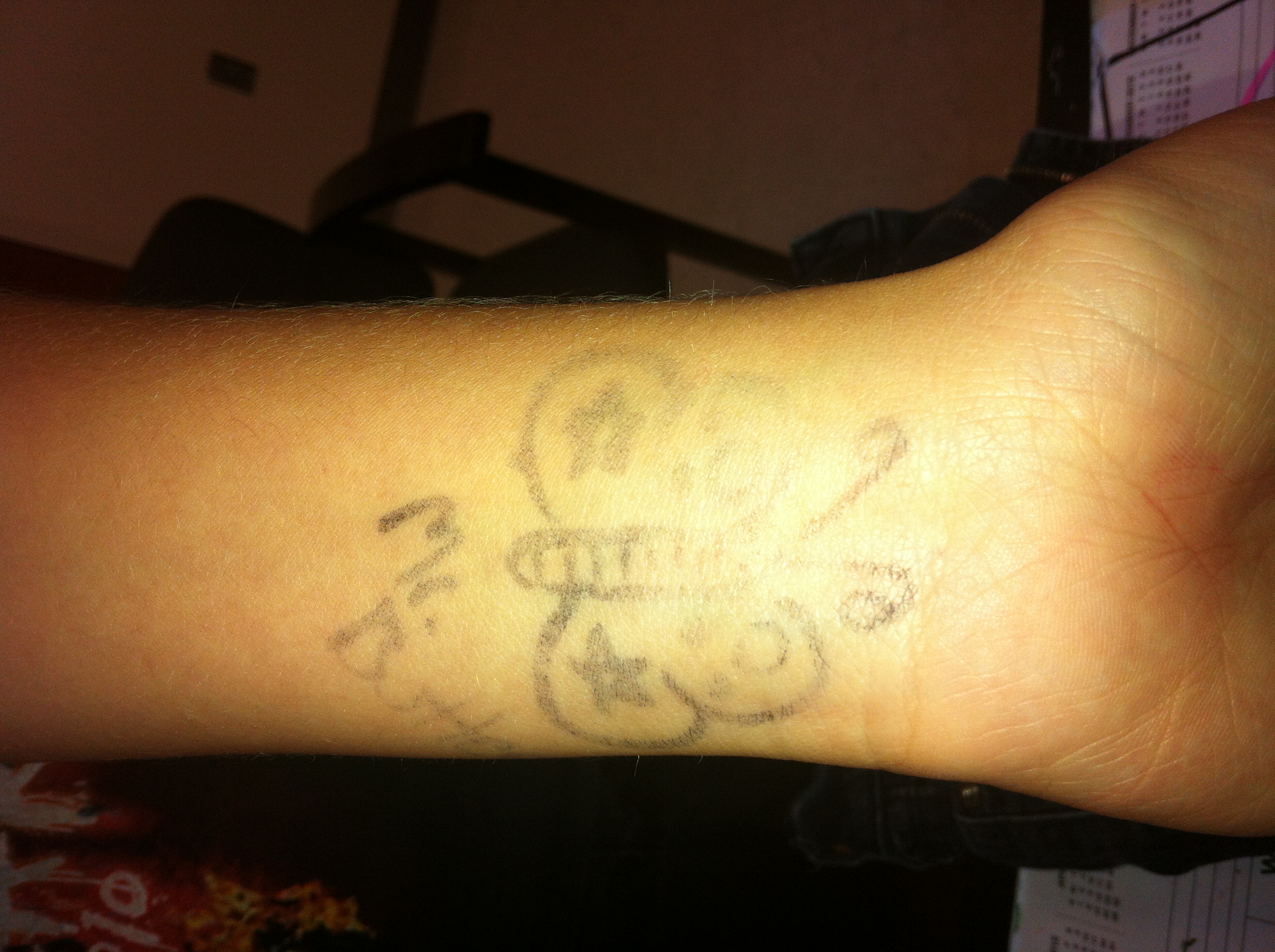
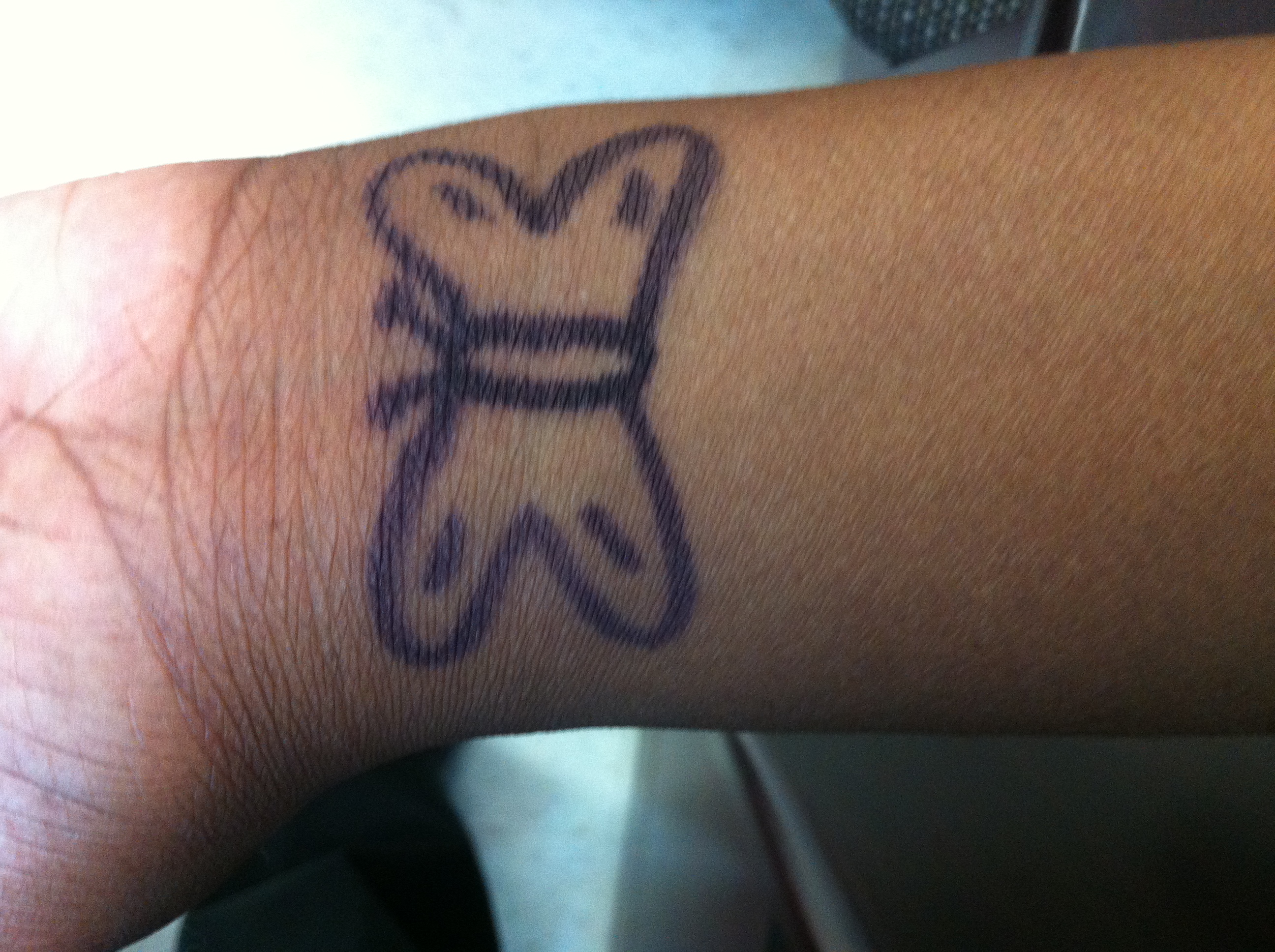
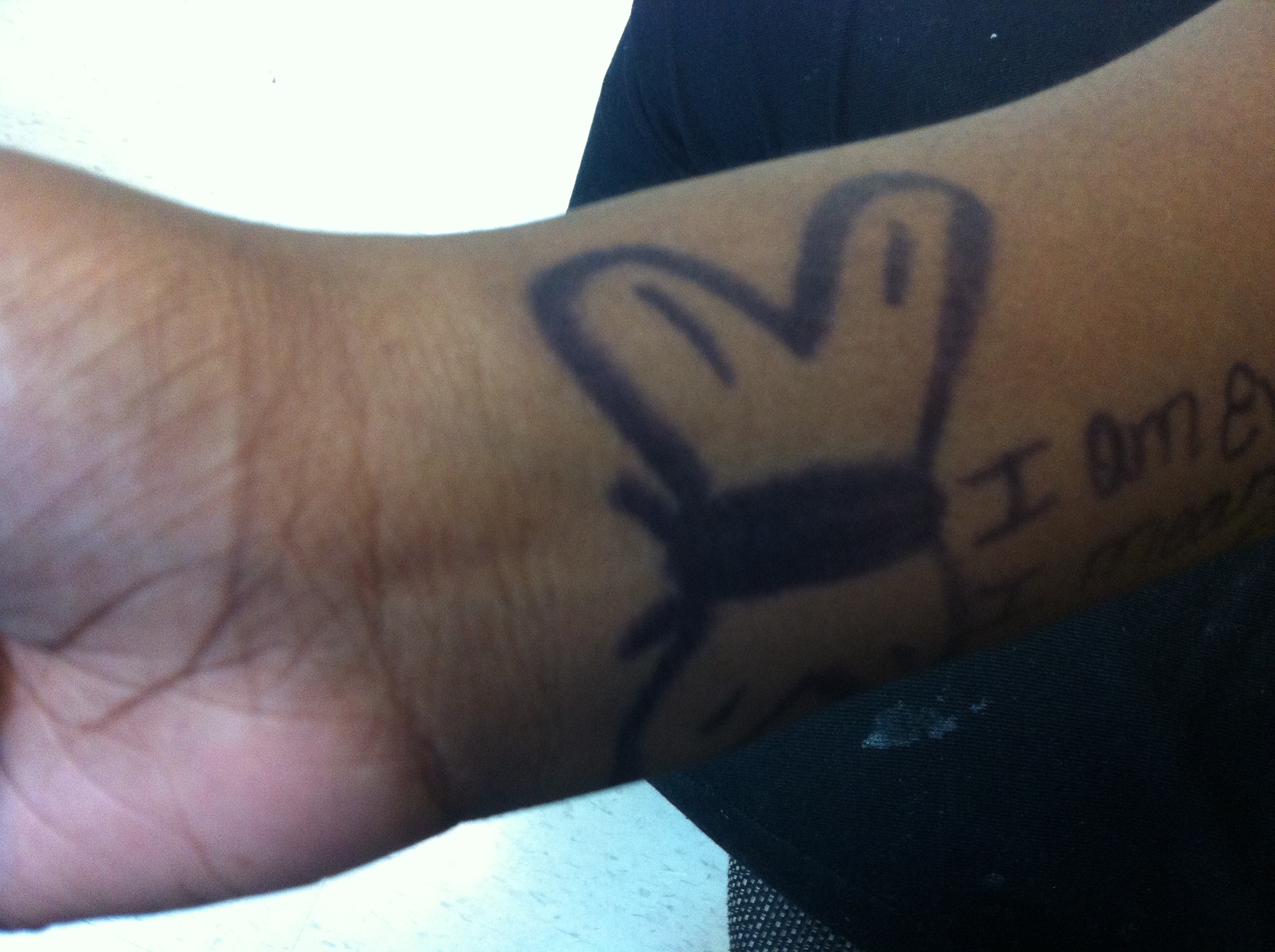
It’s been a few months since I first introduced The Butterfly Project to the high school kids I work with (if you haven’t already, you can check out my post entitled “Saving the Lives of Butterflies”). Well I’m happy to report that over the past two weeks I’ve had a number of them come up to me and show me the butterflies that they drew on themselves in efforts to refrain from cutting themselves! I was so happy to see one or two of them do this, but was overwhelmed to see nearly all of the ones who have issues with self-injury trying this technique and so far it appears to be helping! Some of them even name their butterflies and they have been encouraging each other. It’s a small step, but I am so thrilled by it’s success so far that I just had to share some of the pictures!

With summer coming up, I am really worried about all of the teens I work with at the high school, especially the ones who self-injure, but I am really hoping that everything I’ve taught them over the summer, including cognitive behavioral interventions, emotional self regulation strategies and now the Butterfly Project, will help them make it through whatever they encounter and that they will emerge stronger and more confident. I will also be worried about the ones who use drugs, the ones who make irrational decisions, the ones with anger issues and the ones with severe depression and anxiety. Pretty much, I’ll be worried about all of them, but I have to hope and trust that I’ve helped them all enough or at least did my part in preparing them to better handle life.

Saving the Lives of Butterflies

Self-Injury

The Butterfly Project

Self-injury, also known as self-mutilation and cutting is defined as the intentional, direct injuring of body tissue mostly done without suicidal intentions wikipedia.

Self-injury is unfortunately a very common issue among teenagers. According to research, it mostly effects women from ages 13 to 30.

In a typical year at the high school I work at, I usually only see about one case of self-injury a year. Not to say that there’s only one person at the school that cuts themselves, chances are, the rest are just hiding it better. This year however, I’ve had so many instances of self-injury that I actually have a group comprised mostly of “cutters”, as they refer to themselves. Coinciding with research, three out of the four people in the group are female. Most of them cut on their arms and one cuts on her arms and thighs. All of them cut out of anger, frustration and depression. They express to me that it helps them feel alive and/or that it helps them take out their frustrations on themselves. For all of them, it has become a form of addiction.

During my last meeting with this group, one of the newest members told me about The Butterfly Project. The Butterfly Project basically is a way to try and help those who self-injure and those who know someone who self-injures. It has seven rules.

1. When you feel like you want to cut, take a marker, pen or sharpies and draw a butterfly on your arm or hand.
2. Name the buttery after a loved one, or someone that really wants you to get better.
3. You must let the butterfly fade naturally. NO scrubbing it off.
4. If you cut before the butterfly is gone, you’ve killed it. If you don’t cut, it lives.
5. If you have more than one butterfly, cutting kills all of them.
6. Another person may draw them on you. These butterflies are extra special. Take good care of them.
7. Even if you don’t cut, feel free to draw a butterfly anyway, to show your support. If you do this, name it after someone you know that cuts or is suffering right now, and tell them. It could help.

I thought that this was a very creative and safe alternative to self-injury so my entire group is trying this and maybe it will help others out there who self-injure so definitely pass this on.

The above picture is an actually picture I took of a previous client of mine who self-injures. She actually did much more damage to her arms a few days after I took this picture and required psychiatric hospitalization.