Why Kids Fall Apart After School

Why Kids Fall Apart After School

As the father of an eighth grader and a third grader, I’ve experienced this phenomena firsthand. I’ve often been perplexed when I pick up my child and their teacher tells me they had a great day. They followed directions, completed their work, and got along well with the other children.

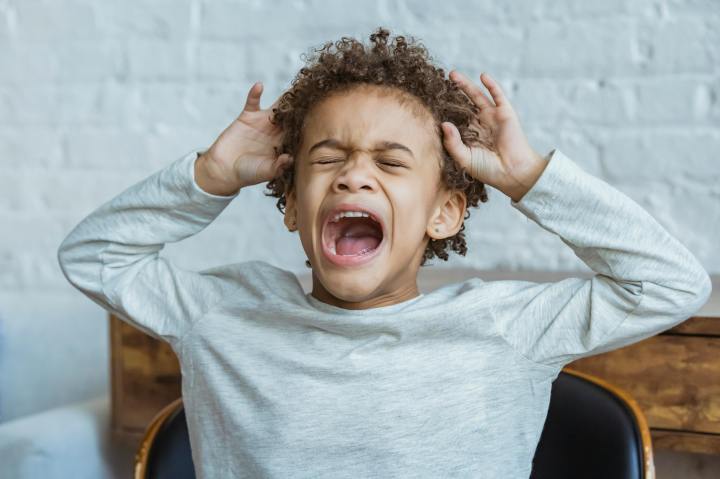
But shortly after we arrive home, they become irritable, argue about everything, or refuse simple requests. Sometimes my third grader ends up crying over something that seems incredibly small.

As a parent, naturally, I wondered: If they can control themselves at school, why can’t they control themselves at home?

It’s easy to interpret this behavior as disrespect, manipulation, or a lack of discipline. Sometimes children do need correction and consequences. But the child who falls apart after school may not be deliberately giving you a hard time.

They may have simply run out of the energy required to hold themselves together.

Keeping It Together Takes Work

A school day asks a lot from a child.

They must wake up on time, get dressed, leave the comfort of home, transition between activities, follow instructions, sit when they would rather move, manage distractions, complete difficult work, and navigate relationships with teachers and other children.

They may have to tolerate a noisy cafeteria, crowded hallways, uncomfortable clothing, unexpected schedule changes, teasing, disappointment, boredom, or the anxiety of being called on when they don’t know the answer.

Throughout the day, they are constantly adjusting their behavior.

Wait your turn.

Raise your hand.

Keep your hands to yourself.

Pay attention.

Walk in a straight line.

Use an inside voice.

Finish your work.

For many children, especially those with anxiety, ADHD, autism, learning difficulties, or sensory sensitivities, meeting all these expectations requires tremendous effort. Some children work so hard to manage their emotions and behavior at school that they have very little emotional energy left by the time they get home.

The pattern is sometimes called after-school restraint collapse. It isn’t a formal diagnosis. It is simply a way of describing what can happen when a child spends the day containing their feelings and then releases them in a place that feels safe.

Why Does It Happen at Home?

Parents sometimes feel insulted when their child behaves better for teachers, coaches, relatives, or other adults.

“I’m the one doing everything for this child, and I get the worst behavior.”

That frustration is understandable. You’ve worked all day too. You may be tired, hungry, overstimulated, and trying to manage dinner, homework, household responsibilities, and several competing demands.

But your child may fall apart around you precisely because home feels safer.

At school, there are social consequences for losing control. At home, your child knows consciously or not, that your relationship can survive their difficult feelings. They may trust that you will still love them when they are loud, tearful, unreasonable, or overwhelmed.

That doesn’t make hurtful or destructive behavior acceptable. Feeling safe is not permission to mistreat the family.

It does, however, give us a different way to understand what is happening.

Instead of immediately asking, “How do I stop this behavior?” we can also ask, “What is this behavior communicating?”

Sometimes the Problem Is Surprisingly Ordinary

Before assuming your child is being defiant, consider what condition they are in when they walk through the door.

They may be hungry.

They may be dehydrated.

They may be tired from sitting, concentrating, socializing, and following directions all day.

They may need movement after being physically restricted.

They may need quiet after several hours of noise.

They may be disappointed about something that happened with a friend but unable to explain it yet.

They may simply need a few minutes in which nobody asks them to do anything.

Adults often need a transition period after work. We may sit in the car for a few extra minutes, change clothes, scroll through our phones, take a shower, exercise, or watch television before we are ready to engage with the next part of the day.

Children need transitions too. They just don’t always know how to create them for themselves.

Connection Before Questions

One of the first things many parents ask at pickup is, “How was school?”

Usually, the response is “Fine,” “Good,” or “I don’t know.”

Then we start asking more questions.

“What did you learn?”

“Do you have homework?”

“What happened with your friend?”

“Why didn’t you eat your lunch?”

“Did you remember to turn in that paper?”

Our intentions are good. We are trying to stay involved. But to an exhausted child, those questions can feel like one more set of demands.

Try beginning with connection instead.

“I’m glad to see you.”

“You look tired. Let’s get you something to eat.”

“You don’t have to tell me about your day right now.”

Some children talk best during the car ride. Others open up while eating, drawing, playing, walking, or getting ready for bed. An invitation to talk is often more effective than an interrogation.

The Centers for Disease Control and Prevention encourages parents to maintain open communication and positive connections with their children. Connection gives children a place to bring their experiences when they are ready, not necessarily the moment they enter the car. (CDC).

Create an After-School Landing Routine

A consistent decompression period may reduce some of the conflict that occurs after school. It doesn’t need to be elaborate.

Your child’s landing routine might include:

  • A snack and water
  • Fifteen to thirty minutes without questions
  • Changing into comfortable clothes
  • Quiet time in their room
  • Music, drawing, or reading
  • Outdoor play or physical movement
  • Sitting with a parent without having to talk
  • A predictable time when homework will begin

Different children need different things. One child may need to run outside. Another may need silence. A teenager may want privacy before joining the family.

The goal isn’t to eliminate expectations. Homework still needs to be completed. Chores may still need to be done. Disrespectful behavior still needs to be addressed.

The goal is to stop demanding immediate performance from a child whose emotional resources may already be depleted.

Predictable routines can help children feel more secure, particularly during transitions and stressful periods. (CDC)

Regulate First, Correct Later

When a child is in the middle of a meltdown, that usually isn’t the best time for a lecture.

You can maintain the boundary without trying to teach the entire lesson at that moment.

“I can see that you’re upset. You still cannot hit your brother.”

“You don’t have to talk right now, but you cannot speak to me that way.”

“We’ll discuss what happened when you’re calmer.”

Keep your voice steady and use fewer words. If possible, reduce stimulation and give the child space to settle. The American Academy of Pediatrics similarly advises parents to remain calm and avoid lengthy lectures while a child is overwhelmed. (HealthyChildren.org).

Later, when everyone is calmer, return to the behavior.

Ask what happened. Name the feeling. Restate the limit. Help the child identify what they can do differently next time.

Understanding a behavior is not the same as excusing it. We can be compassionate about the reason and still hold children responsible for how they treat other people.

Look for Patterns

An occasional difficult afternoon is part of family life. Not every meltdown is evidence of a deeper problem.

But pay attention when the pattern becomes frequent, intense, or disruptive.

Ask yourself:

  • Does this happen every school day or only on certain days?
  • Is it worse when my child hasn’t eaten or slept well?
  • Does it happen after a particular class or activity?
  • Is my child struggling academically?
  • Has something changed in their friendships?
  • Are they being bullied, excluded, or embarrassed?
  • Are they working unusually hard to hide anxiety or attention difficulties at school?
  • Does the behavior also occur on weekends and during school breaks?

Talk with the teacher and compare what each of you is seeing. A child may appear fine at school while using enormous effort to maintain that appearance. In other situations, the teacher may have noticed signs of frustration, withdrawal, distraction, or social difficulty that haven’t yet been communicated.

If the behavior is severe, persistent, getting worse, or interfering with your child’s functioning, consider speaking with their pediatrician, school counselor, or a licensed mental-health professional. Early help can make problems easier to understand and address. (CDC)

Parents Need a Landing Routine Too

There is another person in this situation whose nervous system matters: yours.

If you arrive at pickup already stressed, every complaint may sound like ingratitude. Every delay may feel like defiance. Your child’s dysregulation can quickly activate your own.

Then two exhausted people begin demanding that the other one calm down.

Before responding, take a breath. Lower your voice. Remind yourself that you don’t have to solve the entire problem in the first five minutes.

You can be firm without becoming harsh. You can offer comfort without surrendering the boundary. You can take your child’s feelings seriously without treating every feeling as an emergency.

None of this means parents must remain perfectly calm. We are human. Sometimes we will react badly, raise our voices, or realize that we misunderstood what our child needed.

When that happens, we can repair it.

“I was frustrated, but I shouldn’t have yelled.”

“Let’s try that conversation again.”

That teaches children something important too.

Home Can Be Both Safe and Respectful

The child who falls apart after school may not need a harsher punishment. They may need food, movement, quiet, connection, clearer routines, or help making sense of what they have been carrying all day.

They may also need boundaries.

Those things are not opposites.

A healthy home can be a place where children are allowed to have difficult feelings without being allowed to hurt other people. It can be a place where parents look beneath behavior while still expecting accountability.

So, the next time the teacher describes your child as delightful and that delightful child melts down in your kitchen twenty minutes later, pause before concluding that they saved their worst behavior for you.

Maybe they saved their most exhausted, unguarded self for the place where they feel safest.

That doesn’t make the afternoon easy.

But understanding what is happening may help you respond to the child in front of you and not simply react to the behavior coming from them.

Childhood Bullying Can Have Lasting Psychological Affects

bullying-girls-630x420

It’s back to school time again and while parents are gearing up and are excited about the new school year, I thought it would be a good idea to remind everyone about childhood bullying.

Often bullying is seen as a normal part of growing up, almost as a harmless rite of passage, but we have all seen what bullying can do to some children.Think about the stories that have been in the news such as the boy who committed suicide. In 12 of 15 school shootings in the 1990s, the shooters had a history of being bullied.

These of course are extreme examples, but countless studies continue to show that childhood bullying can cause long-term psychological damage in some individuals.

In a study published in JAMA Psychiatry, a network publication of the American Medical Association, victims of bullying had an increased risk for anxiety disorders and suicide later in life.

The study showed that for some individuals, even when they grow up and are no longer being bullied, the psychological damage is still there and can affect the rest of their lives. That’s why it’s so important to address and stop childhood bullying early in order to prevent future problems.

Kids Who Are Bullied Often Have:

  • changes in sleep and eating patterns
  • loss of interest in activities they once enjoyed
  • health complaints
  • decreased academic performance
  • higher risk of dropping out of school
  • a higher rate of family hardship
  • were 2.7 times more likely to suffer from generalized anxiety disorder
  • 3.1 times more likely to suffer from panic disorder
  • 4.6 times more likely to suffer from agoraphobia
  • had increased risk for depression

Bullying doesn’t just affect the victims either.

Kids Who Bullied Were:

  • 4.1 times more like to end up diagnosed with antisocial personality disorder (which can lead to increased risk of incarceration and delinquent behavior)
  • Abuse alcohol and other drugs in adolescence and as adults
  • Get into fights
  • vandalize property
  • drop out of school
  • Engage in early sexual activity
  • Have criminal convictions as adults
  • Abuse romantic partners, spouses, or children as adults

What About Sibling Aggression?

While parents are usually alarmed to find out that their child is being bullied at school, they often dismiss the bullying that is going on right under their roof. Stopping bullying at home is just as important as stopping bullying at school.

While sibling aggression is often seen as harmless or even good in order to “toughen up” a child, a study done by the American Academy of Pediatric suggests that kids bullied by their siblings end up showing some of the same psychological damage as children bullied by their peers.

It is important that bullying to recognized and stopped early at school, at home and even online in social media when possible.

So as parents are getting excited about the school year, lets not forget to be on the lookout for or ignore childhood bullying. We have lost too many children  to the affects of bullying and are creating too many adults who are psychological damaged from what may have been seen as harmless behavior.


My Fears About What The Sequester Means For Those In Need

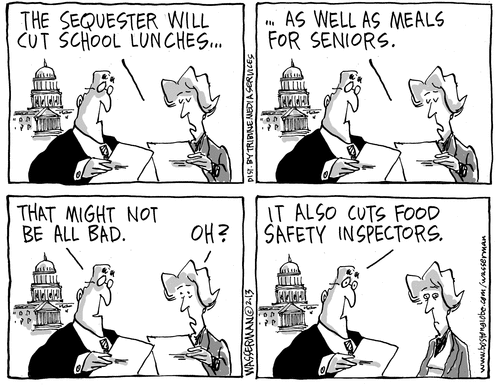
Sequester-resultsI am not a politician and generally pay attention to politics just enough to know what I need to in order to be informed about the world around me, but this sequester has me concerned for a few reasons.

The number one reason is that whenever there are cuts, it seems like the people and places that need the most funding, are the first to lose funding and to feel it the most: the poor, the young, the disabled and the elderly.

About two years ago the state I live in had some major budget cuts that hit the mental health and substance abuse field hard.

In the company I work for, whole programs were shut down including precious juvenile justice and treatment programs. In the program I work in, we lost a handful of good counselors causing several schools to either be without a dedicated mental health/substance abuse counselor or for one counselor to have to split days between two schools when in actuality, most high schools could benefit from two full time mental health/substance abuse counselors on campus.

Nobody was happy about this. Not the counselors, the students or the schools, but due to budget cuts, we all had to find away to survive, as messy as it was. And now here we go again.

I am a mental health counselor, so of course I am always concerned about not only how budget cuts will effect me, but how they will effect society at large.

We were just having a big discussion about gun control and mental health reform a few weeks ago, yet according the the White House, an estimated 373,000 “seriously mentally ill” people may be without care. Where does that lead these people, many who need counseling, housing and medication to keep them from harming themselves or others.

Other programs that are subject to cuts that personally bother me include cuts to aid for Women, Infants, and Children (WIC) and the Low Income Home Energy Assistance Program (LIHEAP), because I know many of my clients and students are on these programs and I know many of them need these programs to be able to keep the lights on in their apartments and food on the table. Most people don’t want to be on these programs, contrary to popular belief, but are on these programs because they need assistance.

On top of that, public housing may be cut by$1.94 billion. Working in an inner-city high school, I know that many of my students benefit from public housing, what does that mean for them and their families? Does that mean they may have to move back in to an overcrowded house with the child molesting uncle, or does it mean they will be homeless.

Speaking of homeless, other programs such as rental assistance and homeless programs are on the chopping blocks. Many of these people have fallen on hard times and are unemployed, did I mention unemployment checks will probably get smaller also?

A program called Head Start that many lower income and inner-city kids need to be able to make up for lack of early exposure to proper education, something that can change the course of a child’s life forever, may get cut by $406 million, which could mean 70,000 kids won’t have access to the program. That’s 70,000 kids that will be robbed of priceless early education experiences.

Special education may be cut by $840 million. I spent some time working in special education, especially with kids with autism and know the hard work and extra funding those kids need, not less.

There are a host of other programs that will be facing budget cuts, but these are the programs that are most near and dear to my heart because of the type of work I do and the population I deal with.

I wish that the Joint Select Committee on Deficit Reduction (the“Supercommittee”) and Congress would sincerely realize that behind the numbers,  figures and politics, are real people with real needs,  just trying to survive.

Acting Out in School as a Way of Hiding a Learning Disability

There are variety of reasons kids act out in school, but they all usually act out to either hide something or as a way of expressing something they don’t know how to express in a more appropriate manner.

Earlier this week I sat in on an executive board meeting with various members of the Department of Juvenile Justice in the state of Florida and was reminded of Dexter Manley’s incredible story. 

Dexter Manley was an American professional football player who liked to give back to his inner-city community. Often he would go to various schools and speak to children about the importance of an education. Well one day after he had gotten through giving an inspiring speech to a group of elementary school kids, he was asked to read to them from an elementary level book. Dexter tried to get out of the situation, but he was cornered and eventually broke down crying. He had been hiding a secret that he was terrified would be exposed. He couldn’t read. Here was a man who had not only graduated from high school, but had also went to college and yet wasn’t able to read beyond a second grade reading level.

In elementary school Dexter realized in the second grade he had learning issues (poor auditory memory) and was often teased by other students. In return he started acting out in class, becoming a “troubled student” and even once pushed one of his teachers against the wall. He was passed on from class to class and grade to grade until he eventually graduated high school with only a second grade reading level. He had become a master at hiding his learning disability so well that he made it through college and much of his adult life without even his children and wife knowing he could barely read or write, but it all started in elementary school where he learned that acting out in class got him out of having to reveal that he was having trouble reading, writing or understanding material his peers were grasping. 

That got me to thinking about the many “troubled” teens I work with and I noticed before that most of them also had failing grades and very poor reading and writing skills, but I had been under the impression that it was mostly due to their lack of participation in class, lack of concentration, attention and motivation. It wasn’t until recently that I started realizing that many of them act out to hide the fact that they are suffering from one learning disability or the other. Now when I am referred a kid by a teacher or guidance counselor for “behavior issues” I also check their academics and their grades usually are very poor. Eventually I usually learn that their reading and writing skills are also extremely poor and I say “eventually” because it is usually hard to get them to write or read anything, they are usually master manipulators and will either change the subject, get angry or deviant. One kid in particular walked around with a stack of books, about five books checked out from the library in her arms at all times. I always thought she was an avid reader, but one day when I called her in my office and she came with her books, I asked her about each book and realized she hadn’t read any of them. When I tried to coach her into reading one to me, she struggled through a line or two and then became very angry and deviant. She stopped reading. She could barely read and she was a 17 year old high school junior.

Although I believe the practice of just passing troubled kids through school to get rid of them is less common today in the age of standardized testing, I am all too aware of many recent and not so recent high school graduates who read and write on elementary grade levels and seem to have slipped through the cracks of our educational system. Often times teachers send me kids they have kicked out of their class for “acting out”, and these kids are usually failing that class and have learned very quickly that if they act out, they will either get left alone or removed from the situation they don’t want to be in anyway. Up until recently, the real situation wasn’t getting dealt with as I had ignored the possible learning issues going on and went straight to trying to solve the cognitive and behavioral problems as I’ve been trained to do. 

Without help, these kids who manage to skate through high school will find that functioning in the real world is much harder. Many of the manipulation, distracting and defense mechanisms that worked in high school will not work in society and may actually get them hurt, arrested or worse. Unlike Dexter Manley who was a star football player and had the athletic talent and financial resources to hide his issues (at least for awhile), most of these young people will be unable to get or keep jobs and will most likely turn to drugs, alcohol, and criminal activities as ways of trying to cope. Ignoring the problem now will only cost everyone more later when these young people are carjacking us, or we are using our tax payers money to feed them in jail.  

If you have or are a parent of a child with a learning disability I would love to hear from you.

If you are a parent and have a child that is acting out and also struggling in school, it would be a good idea to have him or her tested for a learning disability. I think often learning disabilities go undiagnosed because parents are unwilling to have their kids tested. No one wants to have a child with a learning disability, but having that disability identified and attended to will allow that child to learn how to adjust and succeed. Not giving your child that opportunity out of fear of labeling could be detrimental to his/her future.

To read more about Dexter Manley you can click on this link http://findarticles.com/p/articles/mi_m1077/is_n12_v44/ai_8010811/?tag=content;col1