Preteen Sex: Do We Really Need To Have This Conversation?

A lot of times we like to think that sexual activity and behavior doesn’t become a topic for discussion until kids reach their teenage years.

As a matter of fact, I found it frustratingly difficult while doing research on this topic, to find good scholarly information, demonstrating the lack of attention this topic receives.

However, from personal experience as a counselor, I know that preteens as early as 9 years of age are engaging in sexual or precursors to sexual behavior in ways that either often go unnoticed or are overlooked as normal play and socialization.

Preteens at times can be just as curious to what it means to be in a relationship, mature, or desired, as their older peers.

They are often exposed to a host of sexual behaviors either through watching their parents, older siblings, older teens or of course, the media and unfortunately, sexual molestation, usually at the hands of a family member, older teen or adult.

They are often curious about themselves and each other, especially the opposite sex. They often sit, fondle or cuddle in ways that may seem harmless, but are at times precursors to future sexual behaviors.

A lot of preteens I’ve worked with are already “making out” with boys and sexting, two very good predictors to early sexual activity. I’ve met preteens that have already voluntarily engaged in oral and even vaginal sex by the time they were 12 years of age.

Early dating, overly strict parenting as well as lack of parenting are all predictors of early sexual behavior.

Here’s another tip: preteen girls who have a lot of male friends are more likely to be exposed to drugs and alcohol and are much more likely to engage in sexual behaviors.

Also, men 18 and over are responsible for 50% of the babies born to girls 17 and under.

Sure many of these teens grow up in unstable houses, have poor self esteem and are looking for acceptance when they stumble into the world of sexual behavior, but many of them also are just curious, precocious children that have no clue what they are really doing.

Preteens, just like teens, are much more likely to not use any type of sexual protection, so they are at higher risks of being exposed to STDs and pregnancy.

Yes, some preteens can get pregnant. Puberty can happen as early as 9 in “normal” girls and as early as 6 in girls born with abnormalities that cause them to go through puberty extremely early.  In my research, girls as young as 6, 7, 8 and 9 have given birth to children, usually after being molested by a family member.

Parents of preteens and teens need to be proactive and honest with their children about sex. Educate your child and take the mystery out of sex, puberty and love.

Having this sort of talk with your preteen may be uncomfortable, but it’s better to have this educational, proactive talk now than to have it when it’s a little too late and you discover that your child is either pregnant, has an STD or is engaged in sexual behavior, much earlier than you ever expected.

Try to be the type of parent that gives your children all the answers they could ever ask, as detailed and as often as needed, so that they will always get the best advice (at least as much as you have educated yourself) and they don’t have to learn it from their peers or by making huge mistakes.

No parent is perfect, and neither is either child, but through communication you’ll be more likely to help your child make wise and healthy decisions today and for the rest of their lives.

 

On Teenage Suicide

Suicide is definitely one of those unpleasant subjects that many people would like to pretend doesn’t exist or at least can’t happen to someone they know and love.

As a matter of fact, one of the most depressing and yet helpful books I’ve ever read was entitled: Psychotherapy with Suicidal People.

On Suicide

Suicide is the second leading cause of death for people between 14 and 25, and about 30,000 people in the United States commit suicide each year.

Since I’ve been working in the mental health field I’ve counseled literally hundreds of people who have either attempted suicide or have thought about suicide seriously enough that they needed hospitalization to keep themselves safe from themselves.

I’ve also assisted in crisis counseling at various schools. It’s extremely depressing to walk into a huge auditorium filled with grieving students and staff after a young person has taken his or her life.

Why Do People Commit Suicide?

This is a question I get asked very often and the answer is simple, yet complex. According the American Foundation for Suicide Prevention, 90% of people who commit suicide had a diagnosable mental illness, but there are other reasons including:

      • Psychological Disorders (i.e., depression, bi-polar disorder, agression, schizophrenia)
      • Bullying
      • Stress
      • Work
      • Money
      • Relationships

For teenagers, bullying seems to be an increasing reason to why teens commit suicide. It’s truly tragic that we live in a society that today is so connected that bullying takes on a whole new life.

Kids are now not only getting bullied at school, but in cyberspace where everyone can see, and yet no one seems to be doing anything.

On December 27th, 2011, Amanda Cummings, a 15 year old, stepped in front of a bus and killed herself after being tormented mercilessly by her bullies. A suicide note was found in her clothes.

I recently starting counseling a teenage girl who’s 20 year old brother hung himself with a dog leash last week. I didn’t know him, but from what she’s said it sounds like he may have had some struggles with depression.

He had gotten into a fight with his girlfriend and told her he was going to kill himself, something he apparently had threatened many times so she didn’t take him seriously. They found him less than an hour later hanging from a tree in the backyard.

And not too long ago here in Orlando, a man killed himself after getting in a fight with his girlfriend, telling her he was going to kill himself, and then drove the wrong way on the interstate killing himself and another motorist in a head on collision.

Other times, there may seem to be no precipitating events.

Two years ago I went to assist in suicide counseling at a high school where a popular and seemingly happy lacrosse player took his own life.

His friends and family were all blaming themselves for not knowing that he felt so sad and alone, but there weren’t many signs as far as I could tell, he seemed to be hiding his emotional pain and struggles very well.

However, in most cases there are signs to look at for.

Suicide Warning Signs Include:

      • withdrawal from friends and family members
      • trouble in romantic relationships
      • difficulty getting along with others
      • changes in the quality of schoolwork or lower grades
      • rebellious behaviors
      • unusual gift-giving or giving away personal possessions
      • appearing bored or distracted
      • writing or drawing pictures about death
      • running away from home
      • changes in eating habits
      • dramatic personality changes
      • changes in appearance (for the worse)
      • sleep disturbances
      • drug or alcohol abuse
      • talk of suicide, even in a joking way
      • having a history of previous suicide attempts

Sometimes the reasons people don’t recognize the signs of suicide is because they are in denial, especially when it comes to those close to them. When dealing with suicide, denying that someone is in need of help can cost them their life.

Suicide Prevention

If you know someone who is thinking about, talking about or you think may be at risk for suicide don’t ignore them. Often times there is a misconception that people who talk about suicide don’t end up killing themselves, but this is untrue.

Many people who end up killing themselves have mentioned suicide to someone directly or in directly, so take them seriously.

If you believe there is an immediate threat call 911, they may need emergency hospitalization. Otherwise they can seek individual and family therapy and there is always the suicide hotline (1-800-SUICIDE).

Sex Trafficking: Modern Day Slavery

Watching the local news last night I saw where two separate sex trafficking stings saved two teenage girls who had ran away from home and then found themselves forced into sex trafficking by men who controlled them through threats, physical violence and drug use.

One girl was 17 years old and was scared to leave the guy who took her from hotel to hotel advertising her over the internet. The other girl was a 14 year old runaway who was found drugged in the passenger seat of the sex traffickers car.

Both of these operations weren’t done in some shady part of town, but in a tourist area where hotels are often cheap and it’s easy for the sex traffickers to blend in with the multitude of tourists visiting our city.

Whenever I hear the word sex and trafficking put together I get an uneasy feeling in my stomach. Sex trafficking is a form of modern day slavery.

Victims of sex trafficking are usually female, are often under the age of 18 and coerced through force, fraud or coercion to perform sexual acts for money, drugs, favors, etc.,.

Often psychological coercion such as “No one loves you but me”, “Your family doesn’t want you”, “You’re nothing without me”, etc. are used and/or physical coercion such as violence, threats of violence and even physical bondage are used.

Sex traffickers use a number of ways of getting their victims. In foreign countries they are often lured by:

• A promise of a good job in another country
• A false marriage proposal turned into a bondage situation
• Being sold into the sex trade by parents, husbands, boyfriends
• Being kidnapped by traffickers

(Human Trafficking Resource Center)

Here in the United States, sex traffickers often lure runaway teenagers with the promise of love, protection, money and/or drugs.

Sex traffickers frequently subject their victims to debt-bondage, an illegal practice in which the traffickers tell their victims that they owe money (often relating to the victims’ living expenses and transport into the country) and that they must pledge their personal services to repay the debt.

In the United States sex traffickers often tell their victims that they owe them money for drugs, protection or housing.

Sex traffickers often “condition” their victims through confinement, rape, gang rape, beatings, starvation, physical abuse, forced drug use and threats of harm to their families or to shame them by making their family and loved ones aware of their activities.

Physical and Mental Risks

Some of the risks victims face are health risks, mental risk and alcohol and drug addiction.

Physical risks can include concussions, vaginal/anal tearing, broken bones, traumatic brain injury, sexually transmitted diseases, sterility, miscarriages, and forced abortions.

Mental risks include dissociation, depression, anxiety, shame, self-hatred, suicide, suicidal thoughts, distrust, fear, hatred towards men, Post Traumatic Stress Disorder (PTSD) and a sense of helplessness.

Victims may also suffer from traumatic bonding – a form of coercive control in which the perpetrator instills in the victim fear as well as gratitude for being allowed to live.

Types of Sex Trafficking Include

  • prostitution
  • pornography
  • stripping
  • live-sex shows
  • mail-order brides
  • military prostitution
  • sex tourism.

Victims that are forced into prostitution and pornography are usually exploited the most and are at greatest risk of danger.

Sex Trafficking Operations

They can be found in highly-visible places such as on the street with prostitution, on the internet and residential houses. Like I said, here on the news it was discovered in a popular tourist location. Often they take place behind closed doors of massage parlors, strip clubs and other fronts for prostitution.

Some times victims may start off stripping, and then get tricked or persuaded into prostitution or pornography.

Help for Sex Trafficking Victims

If you think you have come in contact with a victim of human trafficking, call the National Human Trafficking Resource Center at 1.888.3737.888.

This hotline will help you determine if you have encountered victims of human trafficking, will identify local resources available in your community to help victims, and will help you coordinate with local social service organizations to help protect and serve victims so they can begin the process of restoring their lives.

For more information on human trafficking visit http://www.acf.hhs.gov/trafficking.

(National Human Sex Trafficking Resource Center)

One Mother’s Experience with Bipolar Disorder and the Importance of Support Groups for Caregivers

The other day I was fortunate to have the opportunity to speak with a former client’s mother about her experiences dealing with her now 19 year old daughter, who was diagnosed with bipolar disorder at the age of 8.

This girl from what I knew of her was extremely unstable, as could be expected from a teenager suffering from bipolar disorder.

Unlike other people suffering from bipolar disorder, teenage girls tend to be even more fickle when you factor in the normal hormones of teenagers as well as social pressures that make even some non-bipolar teens act and feel erratic.

This girl was prone to bouts of depression, mania, impulsivity and explosive anger.

At home her mom had done everything she was supposed to do to support her child including psychotherapy, family therapy and medication, but her daughter was still a hand-full.

When she was in her manic states she tended to have anger directed towards her mother and would at times try to get physical with her and had to be hospitalized several times for suicidal/homicidal ideations.

Her mother tried all she could to pacify her daughter, including painting her room the pretty purple she wanted, only to come home one day and find nearlyevery inch of that wall covered in permanent marker with words directed towards her mother such as “bitch”, “whore” and “I hope you die”.

On top of that she was extremely needy, wanting to be up under her mom 24/7 to the point that she got angry whenever her mom left her and would tear up the house or refuse to go to school.

When she was depressed she would self-mutilate and attempt to kill herself. Her mother would be afraid to leave her alone.

“My biggest fear, even today, is that I will come home and find her dead”, the mother told me.

The biggest thing this mother did that made the most difference was getting educating herself on her daughter’s illness and counseling for herself and joining a support group.

Support groups are invaluable resources that often aren’t utilized enough by those living with or taking care of people with mental illnesses or substance issues.

Through counseling and the support group she learned that she was not alone, that many other parents were on the same roller coaster ride she was on.

She also learned how to change the way she had been dealing with her daughter.

If what you are doing isn’t getting you the results you desire, you have to try something different.

She started accepting that her daughter was going to have good days and bad days, and sometimes within the same day. She also had to understand her role and limitations as the mother of a child with bipolar disorder.

She had to accept that some days she might feel like giving up, or not care when her daughter threatens to hang herself, and that doesn’t make her a bad mother, but it is a sign that she needs to take a break, regroup and seek support herself.

At the end of our reunion I was happy to see that a mother, who just a couple of years ago who was so flustered, angry and exhausted, had turned into a woman not only surviving, but thriving with a daughter suffering from bipolar disorder.

Her and her daughter are doing better, but they are still taking it one day at a time.

Understanding Teenage Girls: Motivations and Psychological Meanings in Relating to Males

The other night I happened to catch a television reunion of the reality show Love & Hip Hop Atlanta.

I stared at the screen in not so much as shock as pity as I watched four different women vie for the love and affection of two guys who treated them more as if they women were merely whores, and the guys were their pimps.

The guys seemed to think the heartache and embarrassment they caused these women by their ongoing cheating, lies and manipulations were funny, while the women basically said that no matter how bad they were being treated, they weren’t going to leave their “man”.

One said it was because of good sex, money and furthering her her music career. Another said it was for love and yet another said it was because she had a child with the guy.

To me, none of these were reasons to stay with a man who obviously saw them as being little more than sexual toys to be used and abused.

Still, this got me to thinking.

Working with teenage girls I am always keenly aware of some of the internal conscious and unconscious motivations that effect their decisions, especially in relation to dating, sex, and self-esteem.

As a girl learns about sex, she is also learning about other things such as giving and receiving affection, self-worth and what she means to others.

She also learns about trusting and honesty (or dishonesty) through the ways she is first introduced to sex, especially through the ways she is protected or not protected from being exploited.

“I learned about sex from my dad. I never had a chance for my first time with my boyfriend. Who knows, maybe I [would have] wanted to wait until I got married. But no, I never got to have that chance. I don’t even remember the first time… I feel it ruined my life.”  -Anonymous Teenage Girl, Young Poor and Pregnant: The Psychology of Teenage Motherhood by Judith Music

Shame, fear and guilt are also valuable lessons, as they will (if she is fortunate) help her learn how to keep herself from situations and feelings that may be too painful for her to deal with physically or emotionally.

When these life lessons are learned and experienced in ways that inappropriately shape her sexuality developmentally, they are likely to have far reaching consequences through out her life in the way she perceives her world and those in it.

This effects such a major part of who she is that it also effects who she thinks she can become, what she is capable of and her ability to show and receive love as well as her ability to take control of her destiny.

For girls who grow up in disadvantaged situations, inappropriate sexual socialization is usually the final breaking point to other risk factors such as poverty, unstable family environment, fatherlessness and lack of appropriate nurturing, that already have made this girl vulnerable to men (and teenage boys) looking to exploit her.

This added with social isolation from other people (outside of her family and community) and institutions, becomes a recipe for disaster (often disadvantaged girls are only exposed to people in their immediate communities where important social services are either absent or insufficient).

Social isolation and psychological vulnerability mean that many disadvantaged young women will be controlled by their relations to men not only in the bedroom, but also in the classroom, the street and eventually even the work environment.

“The adolescent female’s sense of self in relation to males is the internal representation of her past experiences with men and- perhaps equally important- of her mother’s roles and relationships to those and other men.”  -Judith Musick

It’s sad to see teenage girls who grow up with a damaged sense of self because of their past relationships to men either directly or vicariously.

These young girls often turn into teen mothers, get stuck in poverty, abused by men, single mothers with a multitude of children by different fathers, abuse drugs, or get caught up in one of various avenues of the sex world such as prostitution.

It’s important that we protect these young girls as much as possible from being exploited and abused, physically and mentally. It is also important that we help build their self-esteems, educate them and teach them the their value is priceless and doesn’t depend on a boy’s, a man’s, or anyone else opinion of her.

Is Pretending to be Pregnant a Mental Illness: Part 2

In my original  post, Is Pretending to be Pregnant a Mental Illness, I discussed a high school teenager I have known for three, now going on four years, who has been “pregnant” every year and has had a “miscarriage” every year as well.

Last year was no different, but for some reason I believed she was pregnant, even when her closes friends did not. Still I remained skeptical, especially as the “pregnancy” went along and she didn’t get any bigger and refused to tell her mom about it.

Then summer came and I waited anxiously to see her when school started, knowing she should be close to her due time. Yet, when I saw her last week, she was no bigger than she was almost three months ago.

She told me that she had also “lost” that baby (big surprise), but now she is pregnant again and this time she isn’t making it up… and I believe her!

Why would I believe she is pregnant this time when she has lied about being pregnant four previous times?

Well this time she told me she told her mom, something she never did in her previous “pregnancies” even when I offered to talk to her mom with her.

Also, I know she has wanted to get pregnant for the past four years and so it was bound to eventually happen for real. I knew she was having unprotected sex with different guys.

And then today she showed me a picture of her getting a sonogram… a real picture this time and so yes, the girl who pretended to be pregnant for four years is finally pregnant.

It’s so sad because at 18 she is lost, she’s barely passing school, is extremely immature, admitted that her baby’s father is no good, that she doesn’t like him and her family doesn’t either, but yet they are bringing a child into this world.

There is no way she is ready to be a mother and yet, if everything goes right, she will be soon enough.

I’m concerned because this is a young lady with obvious mental issues and if she doesn’t get the help she needs she will raise a child who will potential have further issues because of being raised by an ill-prepared mother.

On top of everything, I really think this girl wanted to get pregnant to fulfill something missing in her life, maybe attention, unconditional love, purpose, who knows, and if having this baby doesn’t meet her conscious or unconscious expectations then where will that leave her and the child?

I see many mothers who had children for the wrong reasons (to keep a man, to fulfill a void, to prove that they can accomplish something, etc.) abandon their children physically, mentally or both when those expectations weren’t met.

Many of those parents end up abusing their kids, resenting them or being negligent in the way they raise their kids.

I’m not saying that this is definitely the case with this young lady, who knows? For a very few, having a baby serves as a catalyst to get them to step up and change their lives for the better so that they can be the best parent they can be for their child.

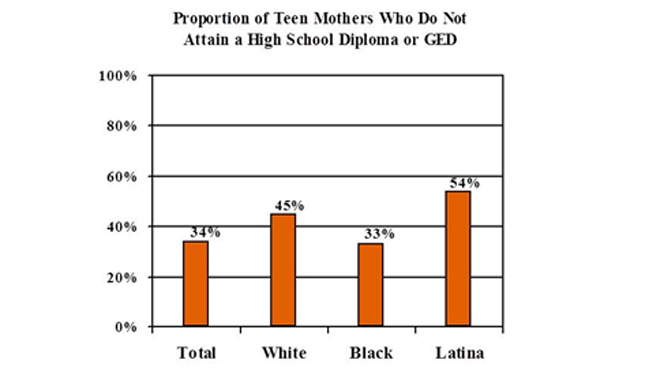
Unfortunately, that is rarely the case. Many impoverished, poorly educated, single, teenage moms end up dropping out of school and remaining in poverty.


The psychological issues that made this young girl persistently pursue to be pregnant for years will probably remain after she gives birth so I won’t be surprised if she isn’t pregnant or “pregnant” again and again even after she gives birth for real.

Parental Favoritism Creates Stress, Anxiety and Depression in Adolescents

It’s very early in the school year and one thing I’ve noticed is that more and more of the students that are getting referred to me for counseling aren’t the typical “bad apples” or “lost” kids, but kids who are good students, are never in trouble, yet are miserable.

How miserable? One cuts herself and thinks about suicide often. Another felt disappointed when she found out she wasn’t pregnant because she thought being pregnant would make her feel alive and purposeful. And one is so depressed that despite appearing to have everything a 17 year old high school girl could ask for, she mopes around campus with her head down.

What do all these students have in common besides being female? They all have a sibling that they are constantly being compared to. A seemingly perfect sibling who makes their accomplishments appear minor in comparison.

These are students, who compared to most other students on campus, are successful. They have mostly A’s and B’s and no disciplinary infractions, yet when compared to a sibling who is making straight A’s , serving as class president and maintaining a thriving social life, they feel inept, especially when their parents are the ones constantly drawing the comparisons.

These students, despite doing their best, are never recognized for it since their best pales in comparison to their sibling’s best. They are often left feeling as if they aren’t good enough and have a diminished sense of self, while the favored child can begin to feel a sense of being special and entitled, often making the less favored child feel even more diminished.

Adolescents tend to be even more sensitive to favoritism by parents than younger children, since they are trying to redefine themselves from being a child to being a young adult.

In doing this they often distance themselves from parents and even have created some tension as they struggle for independence, yet they still want the approval that came along with childhood, approval that the more favored child usually still gets and it can create resentment.

What makes parental favoritism especially harmful is when it is intentional and creates preferential treatment and superiority/inferiority between children.

The disfavored child may begin to believe that they are indeed not as deserving, as good or as smart as the favored child and that could lead to a life time of self-esteem and psychological issues as well as bitterness towards the parents and the other sibling.

So far the students I’m working with, besides complaining about the favoritism and anger towards their parents and sibling, show profound anxiety, depression, self-injurious behavior, low-self-esteem, anger, suicidal thoughts, decrease in self-efficacy and drug use.  And these are the “good” kids.

Imagine if they were kids with more disadvantaged backgrounds and more complex psychosocial issues. They could be drop outs, delinquents, heavy drug users, you name it.

There are many different ways parents can show favoritism, including showing inequitable pride, attention and approval to one child, to giving the favored child more freedom and rewards.

To the disfavored child, they often feel as if their parents care for and think less of them.  This can cause the disfavored child to dislike the favored child and that can come out in the form of resentment that can continue for life.

At times parental favoritism isn’t done on purpose. It is actually very easy to unintentionally start showing favoritism to one child over another.

Parents need to start recognizing, listening to and accepting when one child is claiming to be treated unfair so that they can analyze the situation.

While sometimes it may seem like the child claiming to be treated unfairly is just nagging, they are often trying to tell the parent that they want some attention or are feeling left out.

Parents should try avoiding comparing their children and should let each one know that they are highly valued for their own unique individuality and that they are all favorites because they are all unique.

The period of adolescence is hard enough, the last thing a child needs is to feel discriminated against within their own family unit.

Political Bullying: What Are We Modeling to Our Children?

As the political season heats up, I can’t help but to notice that the ads seem to get nastier and more personal, so much so that it takes me back to some of the countless meditations I’ve done with high school students and initially I couldn’t understand why, but then it hit me, these campaign ads are reminding me of bullying.

Just like a lot of the bullying that goes on around school campuses across the nation (and now across the internet via sites like Facebook and Twitter), these politicians are often attacking each others characters, credibility and other qualities.

Unlike the bullying I see on school campuses, this type of bullying is different, and yet similar. It’s different in that it is much more of a sophisticated type of bullying, but it’s similar in it’s purpose and even worse, it is bullying that is played out across the nation, on television screens several times a day for millions to see, often during the times our young and impressionable children are watching.

These kids may not care about either candidate, and they may not even realize what they are witnessing, yet they are being exposed, often several times a day,  to a form of bullying that they may subconsciously model, especially in situations where they want to make themselves look better than someone else, rather in their social circle, sports or even in running for high school level campaigns.

Two adults bullying each other may sound ridiculous, but that is exactly what politicians do all the time. John Mica, who won the Republican primary House District 7 acknowledged that during a brutal campaign, he was severely affected by the mean spirited ads and statements made not only about him, but his family and integrity.

Although many political analyst believe that negative campaigns are necessary as they tend to get more voters attention than positive campaigns (what does that say about our Nation), at the end of the day I am concerned about how much of that negativity and mean spirited attention truly affects us.

As the campaign season continues to play out and ads are likely to get even more cruel, don’t just turn a blind eye to your child sitting there as it interrupts their television show. You may want to change the channel, or better yet, use it as a teaching and bonding opportunity to discuss with your child anything from bullying, the state of the Nation, the economy, to your political views. After all, they are likely getting all that anyway from watching the campaign ads, just that the information they are getting is likely tainted and smeared in figure pointing and character bashing.

A Quick Glimpse at ADHD in Teenage Girls

As I wrote in a previous post, attention deficit/hyperactivity disorder is 2 to 4 times more common in boys than in girls and thus often doesn’t get discussed much when it comes to teenage and adolescent girls.

In her article Calm Down, Boys, Adolescent Girls Have ADHD Too, Mary Bates discusses how ADHD goes unrecognized in girls because they often don’t present with the stereotypical hyperactivity and attention deficit that boys usually present with and because diagnosing ADHD in itself can prove difficult because teenagers can be impulsive, inattentive and disorganized, but not noticeably hyperactive.

Kathleen Nadeau, a clinical psychologist in Silver Spring, Maryland, and coauthor of Understanding Girls with AD/HD states that girls are less likely to be hyperactive and impulsive, but instead may appear “spacey,” unfocused, inattentive, have trouble staying organized and/or remembering directives or homework.

It wasn’t too long ago that ADHD was two separate disorders, ADHD and ADD (attention deficit disorder), but now they are almost always diagnosed as ADHD with a sub-type of either predominately attention-deficit, predominately inattentive or combined.

Since girls often present with different symptoms, they are often diagnosed five years later than boys or go un-diagnosed altogether, thus missing out on proper treatment for their disorder. “A 16-year-old girl who runs stop signs and can never find her homework might not be a rebel- she could have ADHD” Bates says.

Treatment for ADHD includes stimulant medications, school and family counseling. Families can try ignoring minor annoyances while creating a point or contract system (“Wash the dishes now and I will leave you alone while you play your video games”). ADHD is not a curse, many successful and brilliant people today and in history have ADHD, just look at Michael Phelps.

The Relationship Between Anger, Control and Fear

A lot of times when I am working with people with anger problems, I realize that two of the main sources of their anger come from either the need to control other people and fear.

Anger and fear are part of our natural flight or flight responses. The problem is, we are genetically geared to survive real threats that our ancestors who had to deal with threats to their lives on a daily basis were designed for. Today we don’t have to constantly worry about getting attacked by a leopard or the tribe across the river attacking us, and so our mind often generates fear and anger even when it is unnecessary or the threat is just imagined.

Anger in it’s self is not a bad emotion and can actually motivate people to make changes for themselves and their environment. The Civil Rights leaders in our recent history were angry and so they marched, protested and boycotted to make changes. Anger can make you write a letter voicing your disappointment in a company’s costumer service department or make you search for a new job instead of taking the abuse from a harsh boss. It can make you leave a bad situation, stand up for something you believe or protest against something you don’t.

However, anger can be destructive if it’s not dealt with in a healthy way which is when people run into problems.

Most of my clients with anger problems, once they get to the point where they can verbalize and dissect where their anger is coming from, are actually afraid. They are afraid of losing control, being taken advantage of, being ignored, etc. Take a client of mine who got into a fight while standing in line at a burger joint when he felt someone had blatantly skipped him. Does it make since for a grown man to get in a fight over a $5 hamburger because he had to wait an extra two minutes? Was it worth him going to jail and having to take anger management classes? Of course not, but to him at the time it was. He was eventually able to tell me that the reason he got so angry so quickly is because when he got skipped it made him afraid that he was invisible, that he would be seen as weak, and that he wouldn’t be respected. His fear is what made him so angry and caused him to act in an irrational way. At the same time, his need to be respected caused him to want to control the situation by making the other other person respect him and beating him up until he did.

Often times clients tell me, “She ignored me so I hit her”, “He came home late so I burnt his favorite shirt”, “He didn’t say excuse me when he brushed my shoulder so I had to push him”. All of these statements show both fear and control. Fear of being ignored, fear of being cheated on or left by a spouse and fear of being disrespected. They also show the desire to control the other person, to make them pay attention, come home on time and say “excuse me.” The problem is, we can’t control other people, just ourselves. The desire to control other people will always end up stressing us out, making us angry and causing us to act in irrational ways.

Another example is the constant wars that are waged across the world. People are afraid of losing their religion or xenophobia (the fear of people different from you), and will fight and kill out of that fear and the desire to control other people by either making them convert, conform or leave a region.

Lastly, a client of mine and her teenage daughter got into a very big fight after she found her daughters diary and read it. She didn’t like what she read in her daughter’s diary and decided to confront and punish her for the contents of her diary. Now nothing in that diary was life threatening or even “bad”, they were just her daughter expressing how she really felt about her mother and some of the things her mother did. I felt it was wrong 1) for the mother to have read the diary and 2) for her to try to punish her daughter for her private thoughts. Eventually the mother expressed to me that she felt like she had little control over anything in her life except her daughter, and she was terrified of losing control over her daughter. That need for control was actually pushing her daughter further away as well as causing the mother all kinds of anxiety and anger issues.

We have to understand that the only people we can control is ourselves and that if we can’t change a situation, we have to change the way we think about it. Wasting our time trying to change other people or change a situation instead of changing the way we think about it or removing ourselves from it, will only cause us to develop angry feelings as we try to control what we cant.