Abuse Reports And Pregnancy Scares: My Week In Review

istock_000007374203small2-614x257

This week went by really fast, although it was tiresome and very busy, picking up where last week left off.

Last Friday I had to have a suicidal student Baker Acted (Florida’s statute for involuntary examination/hospitalization), with five minutes of school left, which meant I had to deal with law enforcement and the Department of Children and Families (DCF) for two hours afterwards.

Not the best way to start my weekend.

This week wasn’t as dramatic, but I still had to call DCF on three cases for suspected physical abuse, suspected medical neglect and suspected sexual abuse.

I don’t know why, but I am still at times amazed at the amount of damage done to our kids at the hands of those who are supposed to love, support and watch over them.

Making DCF reports or Baker Acting a client is never the easiest thing to do. Often times clients are initially angry, or scared, but many times they are relieved to finally be getting help, and more often than not, after it’s all over with, they are grateful someone cared enough to get them help.

I even had a mother come in to try to assure me that her daughter is not being abused by her husband, but I tend to believe what her daughter is telling me and will support the daughter psychologically while DCF does their own investigation.

I also had three of my female clients this week tell me that they thought they were pregnant.

I always hate hearing this because I know the affect having a child can have on these inner-city young girls who have enough to overcome already.

Most of the times these young girls think that they can get pregnant and nothing in their lives will change. I remind them that every girl that was in my program last year that got pregnant have dropped out of school.

I was saddened also that these three young girls, all good and intelligent students, weren’t using protection and are potentially pregnant by guys that aren’t even their boyfriends.

It’s one thing to be pregnant by a boy who is supposed to be committed to them, but it’s another thing for a young girl to be pregnant by a boy who has no commitment to them at all.

“Hooking up” seems to be the thing with this generation, in which teens are more likely to have no-strings-attached, physical relationships that could include anything from kissing to intercourse.

Friends with benefits definitely seems to be more popular than actual dating, at least on the campus I work at.

These girls I am referring to, of course really like these boys and want to be with them in a monogamous relationship, but are willing to accept the friends with benefit role, which gives these boys no real reason to commit and give the girl what she truly wants, a relationship with a guy that cares for only her.

These young girls, as much as they would hate to admit it, aren’t emotionally prepared for no-strings attached sex as well as they think, which is one reason many of them are so angry, depressed, emotional and unhappy.

They are clueless about the connection between the body, the heart and the mind.

Luckily, so far one out of the three girls I mentioned has found out she is not pregnant, while the other two are too afraid to take pregnancy tests or go to their family doctor, so they are practicing the wait, see, and pray method.

Two of the girls asked me if I was mad at them (I’ve counseled them numerous times about self-esteem, self-respect, abstinence and using protection if they are going to be sexually active).

I told  them that I wasn’t mad and that I never get mad at them, because it’s true. I did admit to them that I was a bit disappointed in them, because that too is true.

I still care for them and support them unconditionally, even when I don’t like the decisions they’ve made..

Hopefully in the next few days, the other two girls will find out if they are pregnant or not so I can either help them learn to prevent this from happening again anytime soon, or help them prepare to be the best teenage mothers they can be.
Energy Drinks: Are They A Serious Threat to Teens?

For years I’ve been hearing that energy drinks are bad for you, but that never stopped me from consuming them on a regular basis throughout college and especially after grad school when I worked overnight at a psychiatric hospital and felt like I needed to be extra alert at all times.

I personally have never had a bad experience with energy drinks, although once I did take an Extra Strength 5 Hour Energy shot before working out and during my workout felt like my heart was going to jump out of my chest. I never did that again.

Recently there has been a lot of attention given to teens drinking energy drinks, including Anais Fournier, who was 14 and drank two 24-ounce cans of an energy drink and then died six days later after going into cardiac arrest and a coma.

Her death was officially considered to be from cardiac arrhythmia due to caffeine toxicity.

Drinking those two 24 ounce cans, she had consumed 480 milligrams of caffeine, about five times the recommended limit by the American Academy of Pediatrics and about as much as drinking 14 cans of Coca Cola.

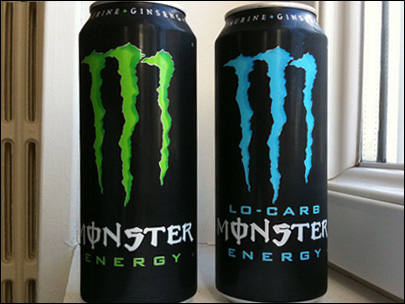
I never really gave a lot of thought to this topic until yesterday when one of my teenage clients came into my office with a huge 24-ounce can of Monster energy drink and suddenly I found myself being a bit concerned for her.

Could drinking energy drinks really have killed the young lady mentioned above and potentially others that are under investigation?  Do they pose a potential risk to the millions of teenagers who drink them on a daily basis?

Caffeine is the most commonly used psychoactive drug in the world. Most teens I know who consume energy drinks do it either to have enough energy needed to make it through the day, to stay up studying, to have increased energy while participating in a physically demanding activity, while partying, and to alter their mood.

Most teens are unaware of the amount of caffeine they are consuming, or don’t care because they think it’s harmless, when in fact it can be harmful if too much caffeine is consumed too quickly and is paired with a pre-existing medical condition.

Many teens are unaware that they have cardiac problems and are at risk for cardiac arrest, thus their caffeine intake should be limited.

Caffeine overdoses have increasingly been on the rise over the past few years with emergency rooms seeing over 12,000 cases last year.

Many researchers believe there is no reason for kids to ingest more caffeine then what is naturally found in the things they already consume, stating that caffeine mixing with the sugar often found in energy drinks can have bad effects on blood pressure and can lead to cardiac problems.

Most teens I know are more at risk when they are out with friends, partying or when they drink energy drinks just before playing a sport. 

Parents should monitor their children’s intake of caffeine and how quickly they consume drinks with caffeine in them.

Preteen Sex: Do We Really Need To Have This Conversation?

A lot of times we like to think that sexual activity and behavior doesn’t become a topic for discussion until kids reach their teenage years.

As a matter of fact, I found it frustratingly difficult while doing research on this topic, to find good scholarly information, demonstrating the lack of attention this topic receives.

However, from personal experience as a counselor, I know that preteens as early as 9 years of age are engaging in sexual or precursors to sexual behavior in ways that either often go unnoticed or are overlooked as normal play and socialization.

Preteens at times can be just as curious to what it means to be in a relationship, mature, or desired, as their older peers.

They are often exposed to a host of sexual behaviors either through watching their parents, older siblings, older teens or of course, the media and unfortunately, sexual molestation, usually at the hands of a family member, older teen or adult.

They are often curious about themselves and each other, especially the opposite sex. They often sit, fondle or cuddle in ways that may seem harmless, but are at times precursors to future sexual behaviors.

A lot of preteens I’ve worked with are already “making out” with boys and sexting, two very good predictors to early sexual activity. I’ve met preteens that have already voluntarily engaged in oral and even vaginal sex by the time they were 12 years of age.

Early dating, overly strict parenting as well as lack of parenting are all predictors of early sexual behavior.

Here’s another tip: preteen girls who have a lot of male friends are more likely to be exposed to drugs and alcohol and are much more likely to engage in sexual behaviors.

Also, men 18 and over are responsible for 50% of the babies born to girls 17 and under.

Sure many of these teens grow up in unstable houses, have poor self esteem and are looking for acceptance when they stumble into the world of sexual behavior, but many of them also are just curious, precocious children that have no clue what they are really doing.

Preteens, just like teens, are much more likely to not use any type of sexual protection, so they are at higher risks of being exposed to STDs and pregnancy.

Yes, some preteens can get pregnant. Puberty can happen as early as 9 in “normal” girls and as early as 6 in girls born with abnormalities that cause them to go through puberty extremely early.  In my research, girls as young as 6, 7, 8 and 9 have given birth to children, usually after being molested by a family member.

Parents of preteens and teens need to be proactive and honest with their children about sex. Educate your child and take the mystery out of sex, puberty and love.

Having this sort of talk with your preteen may be uncomfortable, but it’s better to have this educational, proactive talk now than to have it when it’s a little too late and you discover that your child is either pregnant, has an STD or is engaged in sexual behavior, much earlier than you ever expected.

Try to be the type of parent that gives your children all the answers they could ever ask, as detailed and as often as needed, so that they will always get the best advice (at least as much as you have educated yourself) and they don’t have to learn it from their peers or by making huge mistakes.

No parent is perfect, and neither is either child, but through communication you’ll be more likely to help your child make wise and healthy decisions today and for the rest of their lives.


Is Pretending to be Pregnant a Mental Illness: Part 2

In my original  post, Is Pretending to be Pregnant a Mental Illness, I discussed a high school teenager I have known for three, now going on four years, who has been “pregnant” every year and has had a “miscarriage” every year as well.

Last year was no different, but for some reason I believed she was pregnant, even when her closes friends did not. Still I remained skeptical, especially as the “pregnancy” went along and she didn’t get any bigger and refused to tell her mom about it.

Then summer came and I waited anxiously to see her when school started, knowing she should be close to her due time. Yet, when I saw her last week, she was no bigger than she was almost three months ago.

She told me that she had also “lost” that baby (big surprise), but now she is pregnant again and this time she isn’t making it up… and I believe her!

Why would I believe she is pregnant this time when she has lied about being pregnant four previous times?

Well this time she told me she told her mom, something she never did in her previous “pregnancies” even when I offered to talk to her mom with her.

Also, I know she has wanted to get pregnant for the past four years and so it was bound to eventually happen for real. I knew she was having unprotected sex with different guys.

And then today she showed me a picture of her getting a sonogram… a real picture this time and so yes, the girl who pretended to be pregnant for four years is finally pregnant.

It’s so sad because at 18 she is lost, she’s barely passing school, is extremely immature, admitted that her baby’s father is no good, that she doesn’t like him and her family doesn’t either, but yet they are bringing a child into this world.

There is no way she is ready to be a mother and yet, if everything goes right, she will be soon enough.

I’m concerned because this is a young lady with obvious mental issues and if she doesn’t get the help she needs she will raise a child who will potential have further issues because of being raised by an ill-prepared mother.

On top of everything, I really think this girl wanted to get pregnant to fulfill something missing in her life, maybe attention, unconditional love, purpose, who knows, and if having this baby doesn’t meet her conscious or unconscious expectations then where will that leave her and the child?

I see many mothers who had children for the wrong reasons (to keep a man, to fulfill a void, to prove that they can accomplish something, etc.) abandon their children physically, mentally or both when those expectations weren’t met.

Many of those parents end up abusing their kids, resenting them or being negligent in the way they raise their kids.

I’m not saying that this is definitely the case with this young lady, who knows? For a very few, having a baby serves as a catalyst to get them to step up and change their lives for the better so that they can be the best parent they can be for their child.

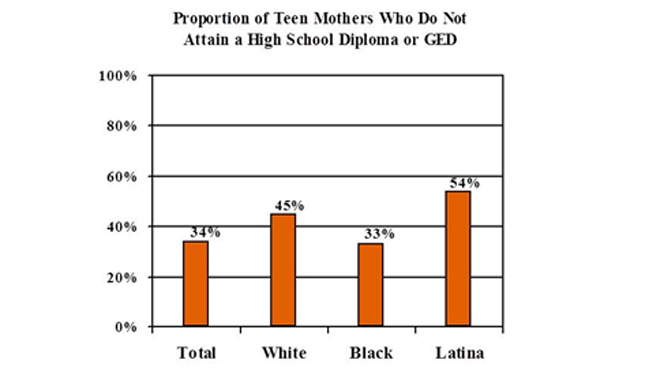
Unfortunately, that is rarely the case. Many impoverished, poorly educated, single, teenage moms end up dropping out of school and remaining in poverty.


The psychological issues that made this young girl persistently pursue to be pregnant for years will probably remain after she gives birth so I won’t be surprised if she isn’t pregnant or “pregnant” again and again even after she gives birth for real.

Parental Favoritism Creates Stress, Anxiety and Depression in Adolescents

It’s very early in the school year and one thing I’ve noticed is that more and more of the students that are getting referred to me for counseling aren’t the typical “bad apples” or “lost” kids, but kids who are good students, are never in trouble, yet are miserable.

How miserable? One cuts herself and thinks about suicide often. Another felt disappointed when she found out she wasn’t pregnant because she thought being pregnant would make her feel alive and purposeful. And one is so depressed that despite appearing to have everything a 17 year old high school girl could ask for, she mopes around campus with her head down.

What do all these students have in common besides being female? They all have a sibling that they are constantly being compared to. A seemingly perfect sibling who makes their accomplishments appear minor in comparison.

These are students, who compared to most other students on campus, are successful. They have mostly A’s and B’s and no disciplinary infractions, yet when compared to a sibling who is making straight A’s , serving as class president and maintaining a thriving social life, they feel inept, especially when their parents are the ones constantly drawing the comparisons.

These students, despite doing their best, are never recognized for it since their best pales in comparison to their sibling’s best. They are often left feeling as if they aren’t good enough and have a diminished sense of self, while the favored child can begin to feel a sense of being special and entitled, often making the less favored child feel even more diminished.

Adolescents tend to be even more sensitive to favoritism by parents than younger children, since they are trying to redefine themselves from being a child to being a young adult.

In doing this they often distance themselves from parents and even have created some tension as they struggle for independence, yet they still want the approval that came along with childhood, approval that the more favored child usually still gets and it can create resentment.

What makes parental favoritism especially harmful is when it is intentional and creates preferential treatment and superiority/inferiority between children.

The disfavored child may begin to believe that they are indeed not as deserving, as good or as smart as the favored child and that could lead to a life time of self-esteem and psychological issues as well as bitterness towards the parents and the other sibling.

So far the students I’m working with, besides complaining about the favoritism and anger towards their parents and sibling, show profound anxiety, depression, self-injurious behavior, low-self-esteem, anger, suicidal thoughts, decrease in self-efficacy and drug use.  And these are the “good” kids.

Imagine if they were kids with more disadvantaged backgrounds and more complex psychosocial issues. They could be drop outs, delinquents, heavy drug users, you name it.

There are many different ways parents can show favoritism, including showing inequitable pride, attention and approval to one child, to giving the favored child more freedom and rewards.

To the disfavored child, they often feel as if their parents care for and think less of them.  This can cause the disfavored child to dislike the favored child and that can come out in the form of resentment that can continue for life.

At times parental favoritism isn’t done on purpose. It is actually very easy to unintentionally start showing favoritism to one child over another.

Parents need to start recognizing, listening to and accepting when one child is claiming to be treated unfair so that they can analyze the situation.

While sometimes it may seem like the child claiming to be treated unfairly is just nagging, they are often trying to tell the parent that they want some attention or are feeling left out.

Parents should try avoiding comparing their children and should let each one know that they are highly valued for their own unique individuality and that they are all favorites because they are all unique.

The period of adolescence is hard enough, the last thing a child needs is to feel discriminated against within their own family unit.

Trying to Understand Teenagers Part I: Psychosocial Development

According to Erik Erikson’s theory of psychosocial development, during the ages of 12 to 18, teenagers are mostly focused on the questions “Who am I?” and “What do I believe and stand for?”

Identity versus confusion is thought to be the psychosocial crisis that teens are dealing with and many of us will probably agree that the teen years are full of trying out different roles and groups of friends to see where we fit in. This is natural and healthy as it helps us develop a sense of self, independence, a sense of belonging and a sense of individualism. If dealt with in an unhealthy way, this stage leads to feelings of confusion, and insecurity about themselves and where they fit into the world. At its worst it can lead to social and psychological impairments such as personality disorders, mood disorders, eating disorders and substance abuse.

Social relationships become the outmost important things to teenagers, which again is natural because humans are social beings and we need to learn how to get along with others and work together, but often times teens will put such great importance into their social relationships that everything else takes a back seat including familial relationships and academics. I see teens all the time whose biggest concern to them is their three month old relationship and not their failing grades and trying to get them to understand what should be important to them is more likely to give me gray hairs than it is to change thier point of view. Teens often sacrifice their relationship with parents to fulfill their needs for social relationships and usually don’t quite understand why we adults won’t just leave them alone to do what they want to do. A teenage girl I work with in individual and family counseling often cries to me that she just wants her mom to leave her alone and stop being worried about her. This young girl has been brought home at two in the morning by the police on a school night when her mom thought she was asleep, has been caught drinking and smoking marijuana and is failing school, yet she wants her mom to just let her “live my life”. This young girl is currently suspended from school after being caught having sexual contact with a boy in a restroom on campus.

It is natural for teens to try on different roles, friends, activities and behaviors to see what fits them and what doesn’t. This at times can be scary for those of us who watch the teens we know and love morph into and out of different roles and characters on their quest of finding their own identity and sense of direction.

With healthy and appropriate encouragement, reinforcement and support during this stage, teens will emerge with a strong sense of who they are, a feeling of independence, confidence and control over their lives. Those who come out of this stage unsure of who they are, what they want and what they believe are at a higher risk of developing the psychological impairments mentioned above as well as continue to feel insecure and confused about who they are into their adult years.

Bipolar Disorder in Children and Adolescents

Often times bipolar disorder is thought of as an illness that effects mostly young adults, and while the average age of bipolar disorder is around the age of 21, younger children and teens can also be effected with the disorder, sometimes referred to as pediatric bipolar disorder.

Working in a high school with students who mostly have anger problems, I hear a lot of them talking about their “mood swings” and some of them even call themselves “bipolar” although they have never been officially diagnosed. But almost everyone has mood swings from time to time, so what exactly is bipolar disorder?

Bipolar Disorder

Bipolar disorder (sometimes called manic-depressive disorder) is a brain illness characterized by episodes of intense mood swings and behaviors known as mania (high energy, elated, impulsive, etc.) and depression that are usually high or low and shift, generally over days or weeks, and sometimes even blend (mixed episodes). It is not the same as the normal ups and down adolescents and teens go through, it is much more severe.

Early onset bipolar disorder happens in adolescence and the early teenage years and may be more severe than bipolar that develops later in life. There was a time in the past when most experts did not believe that bipolar disorder could happen in childhood, but research shows that at least half of bipolar disorder cases start before the age of 25. Children with bipolar disorder often have co-occurring disorders such as attention deficit-hyperactivity disorder and anxiety disorders.

Symptoms

Adolescents and teens exhibiting a manic episode of bipolar disorder may:

  • Feel very happy and act silly in a way that is unusal
  • Talk really fast about a lot of different things
  • Have a short temper
  • Do risky things (i.e. jumping off of things, dashing in front of cars)
  • Have trouble sleeping, yet not feel tired
  • Have trouble staying focused
  • Talk and think about sex more often (if they are sexually active they may actively seek out sexual encounters)
Adolescents and teens exhibiting a depressive episode of bipolar disorder may:
  • Sleep too little or too much
  • Be very sad/depressed
  • Complain about various pains such as stomach and headaches
  • Eat too little or too much
  • Feel very guilty
  • Be overly emotional and/or sensitive
  • Have little energy or interest in doing anything
  • Think/talk about suicide and/or death

Treatments

Treatments for bipolar disorder include medications and psychotherapies including family therapy (it is important that parents taking care of a child with bipolar disorder, just like any other illness, take the time for self-care in order to be healthy and effective caregivers themselves). There is a concern that many children are being over diagnosed with bipolar disorder since in children, bipolar disorder can also look like other disorders such as severe mood dysregulation or temper dysregulation disorder, and some children may not have a disorder at all but be expressing another, normal biopsychological response to life stressors. While there is no way to prevent bipolar disorder, there is ongoing research trying to find a way to delay the onset of symptoms in children with a family history of the disorder.

I currently see 69 adolescents and adults for various reasons and only about three or four I would seriously evaluate for bipoloar disorder and two I have diagnosed with it. One of them is a 15 year old female and her parents are currently in denial of the seriousness of her illness, yet don’t understand why she isn’t getting better although I’ve had to Baker Act (Florida’s statue for involuntary examination of an individual where they are kept up to 72hrs in a hospital for their saftey) due to suicidal thoughts and self-injury. I’ve also referred them repeatedly for medication evaluations, but again, her parents are in denial and think her issue is all behavioral and not a real illness like bipolar disorder. I have another 15 year old girl I diagnosed with bipolar disorder and she is now on medication (Trilecta) and seeing me for cognitive behavioral therapy and is doing a lot better.

Where to go for Help?

As always, your family doctor or mental health professional should be able to direct you to the proper source of help for your child. If not, look up a doctor or mental health facility in your area to have your child evaluated and treated if necessary. If you know someone who is in crisis do not leave them alone, instead get them help, go to an emergency room or call 911 if it is necessary to keep them safe from themselves. If you are in need of help, the same applies and you can also call a free suicide hotline at 1-800-273-TALK (8225). Also, www.thebalancedmind.org . Their “Library” section has terrific information on pediatric bipolar disorder as well as an excellent checklist to help you monitor your child’s behavior.