What It’s Like to Have Borderline Personality Disorder
Category: Popular Psychology
Trending things. New things I notice everyday around me or in the media.
Boy, 9, Kills Himself After Enduring Months Of Bullying, Family Says
Those Left Behind: The Aftermath of Suicide
 Early yesterday morning I got a call from the Health Services Administrator (HSA) at the jail informing me that a nurse had committed suicide overnight.
It was a shock because I knew this nurse and had just saw her two days earlier. The HSA wanted me to come in and help break the news to the other medical staff and offer support to those who needed it.
I prepared myself for that, but what I wasn’t prepared for was getting a call from her grieving fiancé who of course was having a very difficult time dealing with the tragedy.
He had spoken to her before she committed suicide, through text messaging. She had texted him a picture of a bunch of pills, but she had done that before and he thought it was an attention seeking, manipulation game and so he ignored it.
Now that she is gone he is blaming himself.
The night shift nurses, the ones that worked closes with her took it the hardest. Especially one young nurse who had grown attached to her. She broke down and sobbed continuously. She kept talking about how strange it was going to be to come to work and not see her there.
This woman also left behind two young children.
It is estimated that each suicide affects at least six people, including family, close friends, co-workers and neighbors.
After a loved one has committed suicide, it’s not uncommon for those affected by their death to start falling apart from the intense grief and the fruitless search for the answer “why?”.
The people left behind to deal with the impact of suicide often find themselves so emotionally devastated that it’s hard to move forward.
This feelings often include:
- Shock– most people experience shock or a sense of emotional and physical numbness as the first reaction to learning someone they care about has committed suicide. It’s the mind and bodies natural way of trying to slow things down until it can try to make sense of what happened.
- Anger– people often feel anger, either directly or indirectly. They may be angry at the person who committed suicide, angry at themselves for not being able to prevent it, or angry at the persons therapist for not being able to “cure” the person.
- Guilt– Loved ones, in an attempt to find answers to why a person killed themselves often ruminate on signs they may have missed. They may blame themselves for not expressing love, for being too distant, for not believing the person when they said they were depressed for the 1ooth time. The “what ifs” can go on and on.
- Fear– Once someone has committed suicide, it’s not uncommon for family members to become afraid that they will lose someone else to suicide or that even they themselves could possibly commit suicide.
- Relief– It’s also not uncommon for family and friends to feel a sense of relief, especially if the individual suffered from chronic mental or physical illness (i.e, intense pain) or even if they person had been on a long, steady decline of self-destructive behaviors such as drug addiction.
- Depression– While it’s natural to go through grief when you’ve lost someone close to you, it’s not uncommon for grief to turn into depression if that loved one took their own life. The person may experience sleep disturbance, lose of appetite and loss of energy. This can translate into feelings of life being worthless and losing joy in things one once found enjoyable.
In normal grief, all of these feelings will start to ease up overtime, it only becomes concerning when they remain very intense and do not seem to improve with time.
For people affected by an individuals suicide, it’s important that they:
- Stay Close to family and friends– having a good support system is important to keep an individual from isolating themselves and ruminating on the suicide, especially in the first 6 months. The person may not feel like being around others and may not be ready to talk about their feelings, but they still need to have supportive contact.
- Give children special attention– Children especially may have a hard time coping with a loved ones suicide. They need special attention so that they can express their emotions and talk them out. They need to know that grief is a normal process and need the adults in their lives to model healthy grieving for them, including open communication, sharing feelings and reminding them that they are loved and supported.
- Be aware of special occasions– holidays, birthdays, anniversaries, etc., can all be very stressful times.People may need extra support or checking up on.
It takes time to heal from the loss of a loved one, especially when that person has committed suicide. While the pain may feel like it’s never going to go away, it will get better. Having the support of loved ones will help with that process.
Remember to express love for the person that was lost, love for the family and friends that are still here and and love for yourself.
Embracing Your Teens Sexual Orientation
 When I worked as a high school mental health counselor, I worked with a lot of lesbian, gay, bisexual and transgender teens who struggled with telling their parents about their sexual orientation.
Many of them felt like they had to keep their sexual orientation a secret which of course caused them a lot of anxiety and even depression. Most of all, they were terrified of not being accepted by their family.
Some of them were so scared that they would be disowned by their parents that they contemplated suicide. This was especially true when the youth came from a really religious family/background.
Luckily none of my students ever went this far, but I did help do grief counseling at a high school after a teen committed suicide due to the guilt and fear he felt about being gay and not being able to come out to his parents.
Some of the teenagers I worked with turned to drugs and alcohol to deal with their feelings. while others turned to self-injurious behaviors like cutting themselves or acted out behaviorally (running away, skipping school, etc.).
Whenever I could, whenever a teen was ready to come out, I always encouraged them to bring their parents in for a family session. Many of them were too afraid to talk to their parents alone and wanted to do it in an environment where they felt safe.
Unfortunately this was something that rarely happened as many of the teens hadn’t yet worked up the courage to come out to their family.
However whenever it did happen, I always discussed the session beforehand with the teen so that there would be no surprises.
I wouldn’t tell the parents anything the teen didn’t want me to tell them, and I always encouraged the teen to lead the conversation while I would be there primarily as guidance and support.
Most of the parents who came to these family sessions already had some clue that their child wasn’t heterosexual. Many more were in denial. Luckily only a very few were visibly upset or angry.
What I wanted the parents to understand is that they didn’t make their child gay nor can they make them not gay.
This was especially true for male students. Sometimes a single mother would blame herself for not making her son “a man” or the father would blame himself for not being “tougher” on his son.
Parents do not make their children gay and “praying the gay away” or “reparative therapy” only works to temporarily change a child’s behavior at best, while risking permanent damage to their self-esteem and mental health.
It doesn’t work.
Parents often feel angry, sad, and scared when they find out their child is gay. For many of them, they have to grieve over the loss of their ideal child. Maybe little Johnny is not going to marry Suzy and have 2.5 kids. Maybe Little Johnny will marry Billy and they will adopt 2.5 kids.
Many of them fear what their child will have to deal with from society on top of any other prejudices they may already be predisposed to (i.e, being Black and gay). It’s important that parents surround themselves with supportive people including support groups like Parents, Families and Friends of Lesbians and Gays (PFLAG).
While it’s important for the parents to get support, it’s most important that the parents support their child.
The world can be tough enough for the LGBT community, but it’s even tougher for those whose parents reject them.
The teens I’ve worked with who fared the best mentally and emotionally were the teens whose parents supported them when they came out despite their own personal and religious views.
With the support of their parents it made it easier for them to deal with any other negativity they had to face such as depression and bullying. It also allowed them to blossom into the amazing young people they already were.
In the Diagnostic and Statistical Manual of Mental Disorders, being homosexual was once listed as a mental illness. We now know that it is not. It is not something to be cured or prevented. It doesn’t go away if we ignore it.
Get over it.
Embrace it.
One Day At A Time: Dealing With A Highly Suicidal Person:
So this is a delicate post to write about so I will try to do it without giving too much detail. This week I came face to face with a highly suicidal person in possession of a firearm.
As the Director of Mental Health at a county jail I deal with suicidal inmates everyday, but they of course are never in the position of anything as lethal as a firearm.
This individual was very distraught, hopeless, felt worthless, overwhelmed and had a history of mental illness. It was an intense situation because of the firearm and the fact that this person repeatedly said that they wanted to die and had nothing to live for.
What made it more intense is that there were officers near by waiting to see if I could diffuse the situation. The number of officers quickly grew from two to at one point as many as six before I was able to get them to give us some space, yet at least two officers remained nearby at all times.
The funny part is that I was never scared. I think I was shocked when I saw the firearm and at times afraid that I was going to witness someone kill themselves. I was more afraid that this person was going to get shot by the officers either accidentally (by the way they were handling the firearm) or on purpose (suicide by cop).
It definitely was a stressful situation that played out over the course of over an hour in the Florida heat. It was a situation that tried my patience, skills and instincts as a therapist.
I was appreciative that the officers on the scene were also patient and allowed me to pretty much take control of the situation. I knew that I was the only one there who could get that close to the person without feeling threatened myself or causing them to feel threatened.
During this “standoff” of sorts, we talked about everything from this persons depressing home life, dysfunctional childhood, isolation from family and friends, and frustrations at work.
We talked, but mostly what I did was listen and attempt to encourage this person to live just one more day. I said, “If you are convinced you want to kill yourself then no one can really stop you, but don’t kill yourself today.”
One day at a time.
After sometime I convinced this person to contact someone in her family over the telephone, something they had been unwilling to do because they were convinced that they were going to kill themselves that day.
Eventually this person agreed to relinquish position of the firearm and was willingly taken into custody where they were transferred to a mental health hospital for evaluation. The situation ended peacefully. That was all I could ask for.
I received several “thank yous” from the officers involved who were also happy that the situation ended peacefully. They didn’t have to shoot anyone. They weren’t shot at. They didn’t have to notify a family member of this persons death.They told me multiple times that they were worried about my safety, but I never was. I never felt threatened or in danger.
I don’t feel like a hero and I don’t feel like I was brave.
What I saw was someone in emotional pain who needed someone with a level head to guide them and that’s what I did. It almost came natural. It’s something I do at work nearly everyday. The only thing that was different was the firearm and the fact that his person was out in the community and not in jail.
I don’t know what happened to this person after they were taken away. I may never know. What I do know is that at least for that day, they chose to live.
One day at a time.
Childhood Bullying Can Have Lasting Psychological Affects

It’s back to school time again and while parents are gearing up and are excited about the new school year, I thought it would be a good idea to remind everyone about childhood bullying.
Often bullying is seen as a normal part of growing up, almost as a harmless rite of passage, but we have all seen what bullying can do to some children.Think about the stories that have been in the news such as the boy who committed suicide. In 12 of 15 school shootings in the 1990s, the shooters had a history of being bullied.
These of course are extreme examples, but countless studies continue to show that childhood bullying can cause long-term psychological damage in some individuals.
In a study published in JAMA Psychiatry, a network publication of the American Medical Association, victims of bullying had an increased risk for anxiety disorders and suicide later in life.
The study showed that for some individuals, even when they grow up and are no longer being bullied, the psychological damage is still there and can affect the rest of their lives. That’s why it’s so important to address and stop childhood bullying early in order to prevent future problems.
Kids Who Are Bullied Often Have:
- changes in sleep and eating patterns
- loss of interest in activities they once enjoyed
- health complaints
- decreased academic performance
- higher risk of dropping out of school
- a higher rate of family hardship
- were 2.7 times more likely to suffer from generalized anxiety disorder
- 3.1 times more likely to suffer from panic disorder
- 4.6 times more likely to suffer from agoraphobia
- had increased risk for depression
Bullying doesn’t just affect the victims either.
Kids Who Bullied Were:
- 4.1 times more like to end up diagnosed with antisocial personality disorder (which can lead to increased risk of incarceration and delinquent behavior)
- Abuse alcohol and other drugs in adolescence and as adults
- Get into fights
- vandalize property
- drop out of school
- Engage in early sexual activity
- Have criminal convictions as adults
- Abuse romantic partners, spouses, or children as adults
What About Sibling Aggression?
While parents are usually alarmed to find out that their child is being bullied at school, they often dismiss the bullying that is going on right under their roof. Stopping bullying at home is just as important as stopping bullying at school.
While sibling aggression is often seen as harmless or even good in order to “toughen up” a child, a study done by the American Academy of Pediatric suggests that kids bullied by their siblings end up showing some of the same psychological damage as children bullied by their peers.
It is important that bullying to recognized and stopped early at school, at home and even online in social media when possible.
So as parents are getting excited about the school year, lets not forget to be on the lookout for or ignore childhood bullying. We have lost too many children to the affects of bullying and are creating too many adults who are psychological damaged from what may have been seen as harmless behavior.
Dysfunctional Relationships: Emotionally Withholding
 In romantic relationships, we would like to think that it’s always going to be filled with passion and romance, but typically relationships go through phases where the passion and romance seems to die off.
Some of this is natural which is why relationships take work and both individuals have to work on keeping the fire going, but other times this can be deliberate.
Sometimes in relationships, one person will decide to emotionally withhold and this can border on the line of emotional abuse.
I’m not talking about when your partner is upset with you so he or she may not talk to you for a few days, may not want to be touched or gives you the cold shoulder until they get over whatever upset them. I’m talking about something that is much more long term and damaging to a relationship.
Thomas G. Fiffer, in his blog post described emotional withholding as:
Coldness replaces warmth. Silence replaces conversation. Turning away replaces turning towards. Dismissiveness replaces receptivity. And contempt replaces respect.Emotional withholding is, I believe, the toughest tactic to deal with when trying to create and maintain a healthy relationship, because it plays on our deepest fears—rejection, unworthiness, shame and guilt, the worry that we’ve done something wrong or failed or worse, that there’s something wrong with us.”
How Can You Tell If Your Partner is Emotionally Withholding?
If you are in a relationship where you often feel alone, there is a good chance your partner may be emotionally withholding.
There is a difference between someone who is emotionally withholding (a deliberate behavior used to control a person/relationship) and someone who is out of touch with their own feelings due to stress, trauma or other issues.
People who emotionally withhold are purposely withholding love, affection, support and attention in order to control a relationship.
The other person in the relationship may find themselves always pursuing their partner in search of the love, affection and attention that they want. They may find themselves always trying to prove that they deserve love.
People who stay in these types of relationships often do so because it is familiar.
Maybe they grew up in a family where they never felt like they deserved love, were always rejected or felt abandoned. To them, it may feel natural to pursue love and affection, even if it’s painful, because they are not used to it being freely given and without conditions.
Holly Brown, a licensed marriage and family therapist suggests:
Ask yourself how generous your partner is. How invested does he/she seem to be in your well-being, in making sure that you feel positively about yourself? Or is it the opposite–that he/she is maintaining the upper hand by ensuring that you continue to seek approval?“
The person who is emotionally withholding is always trying to keep the balance of the relationship in their favor. They give you just enough to keep you interested. Just enough to keep you searching for the affection that you want and deserve so that you get stuck in this vicious cycle of searching out for their affection.
Most people are not ALWAYS emotionally satisfied in their relationship 100% of the time, but think about how much you feel emotionally satisfied versus how often you feel emotionally starved.
If you feel like you are continuously starving for love, affection, attention and support, then you may have a partner who is emotionally withholding or at the least, emotionally unavailable.
If your partner is emotionally unavailable, consider if this is because he or she is stressed, depressed, going through their own issues that need to be addressed and dealt with, or if it is more malicious and planned out to achieve a power balance in the relationship that benefits them and not you.
Being in this type of relationship can cause the person who is constantly seeking affection to have multiple issues from low self-esteem to anxiety, depression and even sexual dysfunction.
Outside support from friends, family and even a professional may be needed in order for that person to maintain healthy self-love and self-care. It is crucial that you take care of yourself and surround yourself with people who know your worth and value you.
If you are in a relationship where the other person is emotionally withholding then it’s important to remember that you deserve and are worthy of love and it should come freely.
The Narcissistic Parent
 “I do not love; I do not love anybody except myself. That is a rather shocking thing to admit. I have none of the selfless love of my mother. I have none of the plodding, practical love. . . . . I am, to be blunt and concise, in love only with myself, my puny being with its small inadequate breasts and meager, thin talents. I am capable of affection for those who reflect my own world.” – Sylvia Plath
Sylvia Plath, the poet and author of the quote above was a narcissistic parent who committed perhaps the most selfish and narcissistic act of all. She killed herself by sticking her head in a gas oven while her two children were asleep in the same apartment. She did however seal off their rooms with towels so that they would live. Why? Most likely so someone could carry on her memory and mourn for her after death.
How do you think this affected her children? Well her daughter, Freida Hughes is an English poet and painter, but she’s been married three times and is currently divorced. Her son, Nicholas Hughes, suffered from depression and hung himself in 2009.
What Is A Narcissist?
To the outside world, a narcissistic parent may appear to be the perfect example of a gentleman or a loving, supportive mother who is passionate about her kids. However, to the child of a narcissistic parent, they are living a constant nightmare of never being good enough and being constantly reminded of it.
A narcissist is someone who has an inflated sense of self-worth. This is different from what’s considered “healthy narcissism” in which you believe in yourself and your abilities in a realistic fashion. You have good self-esteem, but can empathize with other people and aren’t devastated by mistakes or criticism. Your self worth isn’t dependent on other people admiring you.
On the other hand there is “malignant narcissism”, in which the person has a very fragile sense of self that is dependent on how other people see them. These people have an unrealistic, inflated sense which they use to hide insecurities and shame. They need to be praised, admired and approved by others and are deeply hurt by criticism and honest feedback. Their relationships with others tend to be superficial as they focus mostly on how other people reflect on them with little or no care about the other persons feelings. They believe they are better than everyone else, special even, but can get very sensitive and angry when faced with critique.
For a narcissist, everything is always about them. They are extremely selfish individuals who never give recognition, gratitude or appreciation to those around them. It’s “me, me, me” all day, all the time. If they ask you, “How is your day?” and you reply, “Horrible, I just totaled my new Mustang”, they may reply, “I had a Mustang once. A 1968 convertible. Man I loved that car. Brought it brand new off the showroom floor…”. They really don’t care about you and are only looking for opportunities to talk about and inflate themselves.
Imagine growing up having this type of person as a parent? Someone who is practically incapable of loving anyone other than themselves, when as a parent, you have to give so much love to a child.
Why then would a narcissist have children?
A narcissist does not have a child for the reasons most people do. They do not have children because they want to love and nourish another person, they do so in order to create mirrors of themselves and to create an automatic relationship where they have power and control over someone.
Having control over other people is the narcissists ultimate goal. From an early age the child of a narcissist learns to realize that they exits to please their parent and to be a reflection of them.
Like any child, the children of narcissist will try to please their parent, going through great lengths of anguish and frustration to please someone who will never be pleased for long. One day, if they are lucky, they will realize that it’s the parent who is not quite right, not them.
Until then, these children learn that they are a reflection on their parent and will try to mold themselves, mentally and behaviorally into being that perfect representation their parent wants.
This creates much anxiety as the child is continuously trying to be what they are not in order to please the parent and when they fail, which they will time and time again, they are exposed to punishment that can range from physical to psychological.
These children are often mentally on edge and tormented by the unpredictable and sometimes confusing nature of the narcissistic parent. They may think over and over again that they are a failure, that something is wrong with them . The child may experience a great deal of shame and low self esteem because they don’t feel constantly loved. They are taught that they are only as good as the parent says they are and that they’ll only be loved if they are completely compliant.
Take for example a child who throws a tantrum in the store. Most parents may remove the child, redirect them, or try some other tactic to calm the child down. A narcissistic parent is likely to chastise the child by saying something like, “You’re a spoiled little brat. You always find a way to ruin my life.” Such harsh words for a narcissist are nothing, even directed at their own child.
On the other side of this poor parent-child attachment is neglect. The narcissist parent may be so self-absorbed that the child is neglected and nearly forgotten. Their needs, desires and aspiration always thrown aside for the sake of the parents’ wants and desires.
For example, a daughter going to her high school prom may have all of her desires for the dress she wants and the way she wants her hair styled cast away in favor of what her mom wants her to wear and wants her hair styled. If she doesn’t go along with this and protests, then her mother may call her an ungrateful child and refuse to help her with her big night.
Later in life, these children grow up and often develop narcissism themselves or end up in drama filled relationships with toxic partners because they grew up believing that they were bad and don’t deserve good things to happen to them. They often question if they are deserving of love.
In a healthy relationship with a healthy partner, these individuals wouldn’t know how to respond to unconditional love and would be filled with so much anxiety and discomfort. Understandably they would seek out other individuals who are emotionally unavailable, cold and critical just like the narcissistic parent they grew up with. It’s familiar and sadly, even comfortable to them.
Hopefully, through good relationships, friendships and sometimes therapy, these children are able to recover from the wombs of growing up with a narcissistic parent and not succumb to them.
#orlandostrong
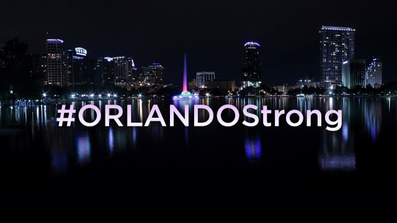
I’ve spent the last couple of weeks undergoing two courses in trauma therapy, not realizing that an incredibly traumatic event would hit the city I live in. What happened in my city of Orlando in the early morning hours of 6/12/2016 was an unimaginable tragedy.
I woke up that morning and saw all the commotion on the news and in my disoriented state, I was trying to figure out part of the world this tragedy had occurred in, not realizing that it was happening in my city, just fifteen minutes from where I live.
Just hours earlier I was on my way home from a night out on the town, not far from where the shooting happened, when I saw all the rescue vehicles headed in the opposite direction. I had no idea that they were going to what would turn out to be the largest mass shooting in recent United States history.
This touched me. It hurts me, not just because so many people got killed, but that it happened in my backyard. It makes me angry. It touched everyone in the city somehow someway. I had never been to Pulse night club, but knew people who did. My nephew knew two of the victims that got killed.
My sister, the Fire Marshall for the City of Orlando got called to that horrific scene and was shaken by the cell phones ringing on the bodies still inside of the club.
I watched on Facebook as many people I knew; fellow therapists and friends, shared pictures of people they knew and loved who were now gone.
Later that day, I was standing in line at the convenience store when the person in front of me found out that one of her friends was among the dead and right there in front of everyone she broke down in sadness and anger. I was caught off guard. I had just gone out to buy some milk and there I was face to face with the impact of such a senseless crime.
I did the best I could verbally to console her so that she could get herself together enough to drive home, but it was an instant reminder of the many families and friends that were impacted by this man-made disaster.
Thinking about this tragedy, the nonsense of it all, the loss of life and the amount of trauma that will affect not only the surviving victims, but also the victims’ families, friends, first responders and the residence of the City Beautiful disheartens me.
This was a hate crime no matter how you slice it. Hatred of Americans, hatred of homosexuals, hatred of religious freedom, etc. We can’t let hate win.
No one should have to go through this. I could go on and write about gun control laws, terrorism, homophobia, religion or even post-traumatic stress disorder since this is a mental health blog, but I won’t.
I could go on about how the killer himself was probably struggling with his sexuality and hated that so many people could live freely and comfortably in their own identity, but I won’t give him that much of my energy .
What I want is this: for everyone to take some time to visit with and get to know someone of a different culture, race, ethnicity, sexual orientation, religion, age, whatever.
Get to know people who may seem different from you.
A few months ago I went to a gay nightclub for the first time just because it was the closes club in walking distance in downtown Minneapolis in negative ten degrees weather and I had a blast! It was something I thought I would never do and was initially uncomfortable with, but I had so much fun I went again the next night.
Stop being xenophobic!
Also take a moment and show love to those you love. My nephew just today told me that if he had not ran into me that Saturday night he had plans on going to that same nightclub and could have been among the dead or injured. Tomorrow is not promised for any of us.
There’s a lot of #prayfororlando going around, but besides praying, do something. If you can’t give blood or contribute to the GoFundMe platform, then at least learn to embrace other human beings and end xenophobia, racism, sexism, religism and any other B.S. that contributes to hate.
On an end note, I am very proud of the way my city, my country and my world are banding together to show support and love for both the LBGTQ community and Orlando as a whole. That’s what love is and that’s the way it should be at all times, not just during times of tragedy.
Why I Became A Certified E-Therapist

When I first started this blog, I had no idea the number of people I would be reaching from not only across the country, but across the world! It wasn’t long before I started getting comments and emails asking for help with a multitude of issues.
As I started to answer questions and provide guidance and referrals, I realized that many people wanted more than a onetime interaction.
Many of them had situational problems and wanted help to solve that problem over the course of a few email exchanges. Others had more in-depth concerns and wanted ongoing contact with me to help move them to a better place.
It literally became overwhelming trying to keep up with all of the inquires, but at the same time, it was some of the most rewarding work I had done.
For instance, I found myself helping a man and his wife in England who didn’t live near any licensed psychotherapists. I found myself helping people who were too ashamed to go to face-to-face counseling or who just wanted the convenience of talking to a professional therapist from their living room.
Just the yesterday I helped a mother and grandmother get their daughter/grand daughter involuntarily hospitalized due to frequent suicide attempts when they were frustrated and thought they had ran out of options. It felt good to be able to do the research, make the contacts and guide them to a resolution even though it was all through telephone contact and they didn’t live anywhere near me.
I realized through helping so many people that I needed to do something that gave these readers turned clients more. That’s why I started Embracing Your Inner Power, LLC (www.embracingyourinnerpower.org) and became a Certified E-Therapist.
E-therapy (electronic therapy/online therapy) is a growing form of delivering therapy that is just as effective as traditional in-office therapy in most cases, while being more convenient.
I had heard about e-therapy several years ago and over the years it has become more and more accepted and I can easily see why.
The family I helped just yesterday lived in a rural area, didn’t know where to turn or even really what they were asking for. I was able to not only help them identify what they needed, but I was also able to help walk them through the steps as they were driving to a graduation.
I’ve found and research suggests that online counseling can be even MORE effective than face-to-face counseling because clients are more relaxed and feel less intimidated than they would in traditional settings.
Don’t get me wrong, I still prefer face-to-face counseling when possible, but I have also embraced technology and the way people are interacting more and more today through social media, chat, email and text messages. People are also becoming more comfortable with technology assisted care.
I’ve helped people with anxiety disorders, social phobias, people who were too busy to drive to a counseling session or just not motivated enough to go to face-to-face therapy, but were willing to turn on their computer and communicate with me. Because of this, the missed appointment rates for online counseling is less than that of traditional counseling.
My main goal as a therapist and my main goal with Embracing Your Inner Power, LLC is to reduce a person’s distress, depression, anxiety or concerns by helping them build on the strengths they already possess.
I’ve found that I am just as effective doing that through online therapy as I am face-to-face. I’ve also found that the people I have helped probably wouldn’t have reached out for help otherwise if it meant physically going somewhere or even inviting a therapist into their home.
Simply put, online counseling works, especially when you’re paired with a therapist who, like myself, works with a limited amount of clients and therefore is able to deliver very professional and personal counseling and not canned or rushed responses and sessions.
Some of the benefits of online counseling include:
- Convenience– you can receive counseling from your living room, while on vacation… virtually anytime that is convenient for you.
- Affordable– Online therapy is a lot less expensive than face-to-face therapy which averages over $100 per hour easily. Even when paying out of pocket, online therapy is usually cheaper than the deductible would be for traditional counseling.
- Licensed– As a Licensed Mental Health Counselor and Certified E-Therapist, I deliver the same professional and high quality service online as I do face-to-face.
- Secure– All information is kept secure and confidential.
- Sigma Free– You can remain as anonymous as you want through message based, email and telephonic counseling.
- Multi-modal– You can choose from video counseling, chat, email or telephone counseling depending on your needs.
- Effective– as I stated earlier, online counseling in general is just as effective as face-to-face counseling in most situations.
As a Certified E-Therapist, I am constantly working on making Embracing Your Inner Power, LLC, the best it can be and it is a work in progress. I am dedicated as always to helping individuals discover their true potential and am appreciative that this blog and my readers have allowed me to grow and share so much with them.
I’ve been able to help individuals and families from 6 continents and it’s been an amazing learning experience.
 Licensed Mental Health Counselor