Parents Who Use Psychological Aggression May End Up With Troubled Children

Father Telling Off Daughter At Home

A University of Minnesota study suggests that mom’s who yell at their babies put them at a much greater risk for conduct problems later in life.

In the study, scientist followed 260 mother’s and their children from birth until first grade and found that roughly handling and harsh speaking lead to more aggression among those kids entering kindergarten.

The study also suggested that spankings and conflict between moms and toddlers lead to more defiance, aggression and other conduct disorders later in life (Child Development, Oct. 26).

While this study focused on the relationship between mother and child, I don’t think it changes much if the dad is present and is the one having negative interactions with the child on a regular basis.

I’ve seen many children who were negatively affected by the way their father’s interacted with them, especially if they were scared of their father or living in domestic violent homes.

Raising children can be very stressful and at times, parents may lose their temper and yell at their child.

Research shows that nearly all parents yell at their children, but it’s the harsh words that come with the yelling that appear to do the most damage.

Many times in public or even in sessions I hear parents call their child stupid, lazy or threaten to hit them. Lot’s of times this happens when parents think their child has the problem, but it becomes immediate to me when I hear the parent talk to their kids in disparaging ways, that the problem started at home.

If you hear yourself in this don’t feel bad, many parents use what is called psychological aggression  as a form of discipline by the time their child is 5 years old. This includes things such as yelling, cursing, screaming, name calling, threats, threatening to hit them or threatening to send them away.

Also, parents who spank their young children tend to continue spanking them, even into their early teens. While there is a lot of controversy about spanking, children who were spanked tend to be more aggressive later in life. Boys who were spanked tend to be more physically aggressive, while girls who were spanked appear to be more willing to put up with abuse from a partner.

Psychological aggression in the form of yelling at their children is the most common form of discipline parents use, which includes shouting and screaming, but many parents also resort to name calling and threats, especially when it comes to teenagers who also are sometimes threatened to be kicked out or sent away.

When a child is treated too harshly, they can become destructive, deviant, angry, withdrawn or insecure. They can end up in troubled relationships later in life or develop risky behaviors such as substance abuse, eating disorders and a host of other mental problems.

Many of the teens I work with who describe to me what I would consider harsh psychological aggression end up with low-self esteem, depression, anxiety, body image issues and self-injurious behaviors. Many of them become scared of and un-trusting of their parents, which means that they end up hiding critical information from them on a regular basis.

The parents may think that they have perfect kids because their kids aren’t given them problems, but some of these same kids are constantly in trouble at school or are having many inter and intrapersonal problems that they keep from their parents.

Does this mean that yelling is a bad thing? Many of us grew up with parents who yelled at us and we turned out okay, but it seems like the harshness and the frequency of the yelling is what makes the difference, combined with how sensitive the child is. Each one is different. You may be able to yell and curse at your first born child and he/she turns out perfectly fine, while your second born child ends up a juvenile delinquent.

It may be unrealistic to think that a parent will never yell at their child, but they can be more conscious of how often and the language they use when they do feel the need to raise their voices. One thing parents can do is learn to condemn the undesired act the child is doing, not the child him or herself.

I’ve written a previous post about setting rules and expectations for your teen that you may find helpful for children of all ages.

Remember that the word discipline means to teach, not to belittle, threaten or abuse physically or psychologically.

Parents: Have The “Sex Talk” With Your Teens Or I Will

istock_000016267513small-dad-and-daughter-talking-400wI don’t really like talking to other peoples kids about sex although as a counselor in a high school it’s something that inevitably happens.

I wrote earlier about talking to preteens about sex, but I’m finding that many teens have never  had the “sex talk” with their parents beyond their parents threatening to kick them out or disown them if they ever got pregnant (although I’ve never known a parent to actually follow through with either  threat).

However, because many teens don’t feel like they can talk to their parents about sex, they are getting their information from some very unreliable sources which usually leaves them unprepared mentally and emotionally for the complexities of sexual activity and vulnerable to sexually transmitted diseases, pregnancy and even abuse.

Last Monday I was counseling a young teenage girl who had just turned 15. She admitted to me nearly a year ago that she not only was having sex, but had been with several partners, most of them not even her boyfriends but guys she was friends with or guys she just liked.

Well now she has a new boyfriend who is a virgin, and although they have been together for a several weeks (which is forever for teenagers), they are thinking about having sex.

Let’s call her Trisha and her boyfriend Zac.

Because Zac is a virgin and apparently has a better relationship with his parents, he told them about him and Trisha’s plans to have sex. Zac’s mom was a little upset, but realistic and instead of scorning her son, she talked to him about sex and protection, a very good call. What she did next however, I’m not so sure how I feel about, but I understand it.

After talking with her son about sex, she then talked to Trisha about sex, assuming that she too was a virgin. She even went as far as to say she would get Trisha birth control, which made Trisha very uncomfortable.

Parents, do you really want someone else talking to your teen about sex and birth control, especially a parent that you do not know?

Well if you don’t talk to your teen about sex, someone else will and they may not have the best information and probably won’t have the same opinions, views or values as you do.

I was concerned because I felt like this was something Trisha should be talking about with her parents, not Zac’s, yet Trisha feels like she can’t talk to her parents about sex because they hold both her and her older sisters to such high standards and even threatened to kick them out if they ever found out they were having sex. By the way, according to Trisha, they are all already having sex.

Because of this fear of not only disappointing her parents, but also of getting kicked out, Trisha doesn’t feel safe talking to her parents about sex at all and has just been getting her information about sex from her friends and sisters, who are all also high school teenagers.

I encouraged Trisha to sit down and talk to her parents, at least her mom about sex.

She wants to get on birth control, but doesn’t think she can talk to her parents about that and definitely doesn’t want to get birth control from Zac’s mom. I even offered to have a family session with her and her mom and/or dad to help facilitate “the talk”, but she’s too scared to even discuss sex with her parents and let them know that she is thinking about sex, let alone already having it.

I know from past experience, because of this fear of talking to her parents about sex, she leaves herself vulnerable.

She’s more likely not to use any protection consistently or properly and to hide everything from her parents, including if she ever feels violated, if she ever thinks she may have a sexually transmitted disease, if she ever gets raped or if she even gets pregnant.

One girl I knew hid her pregnancy from her parents all the way up until she went into labor and had a child at 15. Her parents had never had the “sex talk” with her and it was only then did her parents find out that their daughter was no longer a virgin.

I definitely don’t want that to happen to Trisha and so if she is afraid to have the sex talk with her parents, I feel like it is my responsibility to at least give her valid information about sex, protection and to point her in the right direction for other information and questions she may have.

We talked about condoms, the importance of putting them on correctly and using them each and every time from the beginning to the end. We also talked about birth control for her, but I strongly encouraged her to have the conversation with her parents. I also had the school nurse talk to her and gave her several pamphlets for her and her boyfriend about sex.

She had lots of questions and lots of the information she had was so invalid that she was sure to end up pregnant before graduating from high school, such as standing up right after having sex is a foolproof way to avoid getting pregnant because gravity will prevent the sperm from swimming up.

Another thing I did was encourage her to wait. I talked to her about how sex can change relationships, sometimes for the worst and how there are other things they can do besides having sex, such as holding hands, kissing, hugging,  talking, going for walks, out on dates, etc.

All the while I also kept encouraging her, trying to give her the strength to have this conversation with at least one of her parents. I don’t think a 15 year old should be engaging in intercourse, but she’s already been doing it since she was 14 so we have to be realistic.

Many parents feel like having the “sex talk” will encourage their teens to have sex, but teens are going to be curious about sex and may engage in sex regardless. It’s just a matter of how informed or ill-informed they will be.

Lot’s of parents feel betrayed and hurt when they find out their teenager is having sex, almost as if they just found out their teen was using drugs.

Remember that consensual sex between teenagers is not a crime and your teen is more likely to get pregnant or worse if they feel like they can’t talk to you because you will get mad or upset. It’s important that parents put their emotions aside and consider their teens’ choices and emotions.

I encourage parents to talk to their teens about sex, about being safe and healthy. They can also allow their teen to talk to their doctor about being sexually active and the physical responsibilities that come along with that, if they don’t feel comfortable or knowledgable enough to do it.

It’s important that your teen feels like they can trust you and that you guys have an open relationship where they can talk to you about everything, just remember that even with that, your teen probably won’t tell you every single thing.

The teen years are about trying to discover their own independence and breaking away from their parents some, so accept that there may still be things your teen won’t tell you, but make sure that they know that you will be there for them if they need you.

While I definitely prefer not to be the one having the sex talk with your teen, I’d much rather do that now than to be talking to them about how to get a pregnancy test, being good parents while trying to stay in school or about visiting a free clinic to get tested for a STD,  three conversations I actually have way more often.

Disordered Eating And Body Image Issues In Teenage Girls: Part 1

6a00d8341bf67c53ef014e8c0ffaab970d-800wi (1)Working in a high school with teenage girls, I come across teenage girls with body image issues regularly.

Take for instance, one of my 15 year old clients who is so convinced that she is fat that when I first met her she was only drinking water mixed with apple cider vinegar for breakfast and lunch.

For dinner she would have a very small meal. She was not overweight, but due to teasing about her “putting on some weight” by both her mom and peers, she see’s herself as fat and ugly.

Because of all this, her self-esteem is shot and it’s taken weekly individual therapy sessions and weekly support group sessions to get her to at least start eating a light breakfast and lunch, although she is still struggling with body image and self-esteem issues.

Society Creates Body Image Issues In Girls

Unlike boys, teenage girls are put under immense pressure to be beautiful, thin and feminine in most Western industrialized countries. However, biological changes and weight gain are natural parts of pubertal development.

Like the client I was talking about above, her weight gain seems to be more of a womanly weight gain. She seems to be filling out and taken on the body of a woman, compared to that of a prepubescent child. This natural weight gain that most girls experience during puberty, goes against our cultural’s  view of what being beautiful is, which for women includes extreme thinness.

These are conflicting messages for preteen and teenage girls.

On one hand, they are naturally developing and putting on weight, while on the other hand, they are getting messages from society that says their weight gain is unattractive.

Female identity in one part is defined in relational terms, society says they are supposed to be interpersonal and care about other peoples needs, feelings and interests which makes them more vulnerable than males to other people’s behaviors towards and opinions of them.

Another major part of female identity is beauty. In our culture, physical attractiveness contributes a lot to interpersonal success, which is one of the main reasons females strive to be beautiful, to assure popularity and respect.

Also, physically attractive girls are typically seen as more feminine compared to less attractive girls or girls who challenge our cultures traditional views on femininity through their political views such as feminist, or through their sexual orientation, such as lesbians.

Girls tell our society that they are feminine by being concerned with her looks and trying to achieve our culture’s ideal of beauty.

Because our culture demands that girls care about other people’s opinions and that they are defined by their physical appearance,  which society says includes being very thin, there’s no wonder girls are motivated to pursue thinness, at times by any means necessary including starving themselves to death.

Combine these issues with the natural weight gain of puberty and there’s no wonder many teenage girls develop body image issues.

Many teenage girls I’ve worked with who are physically perfect, not even slightly overweight, some were even underweight,  suffer from intense body image dissatisfaction.

A girl I’ve been working with since last year was naturally thin, yet wanted to be thinner so bad that she starved herself to the point of needing to be hospitalized. Like many of the girls I work with who have body image issues, her pursuit for thinness and beauty was so consuming that almost every other aspect of her life, including her education, goals and future took a back seat.

Eating Disorders

Not all girls with body image issues go on to develop an eating disorder like the young girl I just mentioned above, but many of them will.

Eating disorders are a major concern when it comes to the health of teenage girls with an estimated 1% to 3% likely to meet diagnostic criteria for either anorexia nervosa or bulimia nervosa.

Anorexia nervosa is when someone refuses to maintain a minimal average body weight and has body image disturbances such as feeling fat even when they are very thin, and in females who are menstruating, they may experience amenorrhea if their body weight is low enough.

Bulimia nervosa typically includes periods of binge eating, followed by drastic methods to compensate for the binge eating including excessive exercising, fasting, vomiting, using laxatives, etc., accompanied with body image disturbance such as thinking one is much more overweight or unattractive than they really are.

Besides these two eating disorders, there are some girls who have other patterns of eating that fall under disordered eating, such as laxative abuse, vomiting after eating some meals, extreme calorie restriction, and binge eating.

Eating disorders typically begin in early adolescence with much of it’s symptoms typically evident by the late teen years.

While not all girls with body image issues develop full blown eating disorders, there is little research into why some girls do and others don’t develop an eating disorder.

During part 2 we will look at some of the risk and protective factors for young girls to develop an eating disorder.

Setting Expectations And Rules For Your Teen

istock_000011365905xsmall

As I thought about this post, I watched as four young teens, approximately 13 years of age, two boys and two girls, stood on the corner flirting for a second night past 10pm on a school night.

I started thinking that sooner or later, one or both of those young girls is bound to end up pregnant, and then I started thinking, where are there parents and why are they allowing their young teens to be out so late on a school night unsupervised.

Then I started thinking that there are probably no set rules or expectations in these teens households.

They are probably being raised with inconsistent and even contradictory messages. Yet, when one of these young girls ends up pregnant, their parents will be shocked and angry that these young teens “disappointed them”.

Rules and Expectations

Rules and expectations are two different things that together help guide your teen as they navigate through the murky waters of adolescence.

Expectations help you define the standards of behavior you expect from your teen such as being responsible and making responsible decisions.

Rules on the other hand help to bring your expectations to reality such as requiring your teen to finish their chores before going out with friends. Rules and the consequences of those rules help your child with both understanding your expectations and learning self-control.

As always with teens, communication is key. I am always amazed at parents who come to me disappointed in their teens behavior when they never actually sat down with their teen and discussed their expectations in the first place.

The teenager may have had some idea about how their parents felt about certain issues, but without a clear understanding of what the parents expect, they leave a gray area and teenagers typically don’t do well with gray areas. They like to know exactly where you stand.

Sitting down and speaking with your teenager about your expectations also opens up the door to talk about risky behaviors.

Clearly defined expectations about limits for risk-taking behavior helps your teen be prepared for temptations and challenges that will face them when confronted with risky decisions towards things such as alcohol, drugs and sex.

When you lay down clear expectations, you are letting your teenager know that they are responsible for their behavior.

This discussion also allows for you to hear what and how your teen thinks about certain issues and also gives you the opportunity to help them think more realistically.

A lot of teens think “this can’t happen to me” or that they are immune to many of the perils we as adults know are out there.   Talking to your teen will give you the opportunity to educate them on the possible consequences of their decisions and behaviors.

No matter how clear you think you have made your expectations, your teen may still feel unclear about them. Rules help to enforce your expectations.

Many parents are unsure about how to set rules and what rules are needed. Here is a good starting point.

Besides rules regarding substance use and other risky behaviors, you also want rules regarding:

  • curfew
  • unsupervised time
  • homework
  • chores
  • driving
  • cell phones
  • internet use
  • use of other media such as movies, television and video games

Naturally, most teens are going to try to push back against rules, but teens do want and expect limitations and boundaries.

Be respectful, listen to your teen and explain your reasons for having the rules you do. Some parents feel like they don’t have to explain any rules they set to their children, but children tend to follow rules better when they at least understand, even if they don’t agree with them.

Other tips include:

  • Focus on setting rules for safety based more on guidance than power, control or punishment.
  • Don’t be overly intrusive or restrictive, but still be firm.
  • Give your teen an opportunity to negotiate some of the rules, but remember that you have the final say
  • Be very specific when it comes to substance use. Such as letting your teen know that they are not allowed to use alcohol, tobacco, prescription medication or any other illicit drug at all.
  • You should set very fixed rules regarding health and safety, and then negotiate with your teen about other rules.
  • Be flexible with those other rules (outside of health and safety) and willing to renegotiate as your teen shows maturity and responsibility.

Along with clear rules and expectations, there should also be clear consequences for breaking the rules.

Consequences help teens slow down and think before they make a risky decision and also provides them with the perfect excuse to tell their friends if peer pressure is an issue.

Tips for setting consequences:

  • Consequences should be something the parent can follow through with consistently in order to be effective. Many parents are very inconsistent with following through with consequences which teens pick up on and it makes it more likely that they will disobey your rules. 
  • Consequences should be logical, and more about teaching than about punishing or retaliation.
  • Remember that consequences can be positive. Praise your teen when they are doing something right, when they are following the rules and they are more likely to continue.
  • Award your teen with special privileges or  some other type of award for following the rules.

Without rules and expectations, many teens are lost and parents feel as if they have out of control or disrespectful kids when in reality, the child never learned the rules, expectations or the consequences of breaking those rules and expectations.

How The Internet And Technology Are Affecting Our Teens

black-female-teen-textingToday’s children are using the technology and internet more than ever, with approximately 93 percent of them online and at least 73 percent of them using social networking sites, while 75 percent of them own cell phones according to data from Pew Internet American Life Project.

With this increased presence on the internet and use of smartphones and tablets comes concerns by teachers, parents and counselors  when it comes to what exactly are our kids doing online and on their smart devices.

The media fuels much anxiety when they report on issues such as “sexting” with young people sending provocative photographs of each other back and forth through their cell phones. Images that can end up in the wrong hands. Even videos of risque and sexual activities are spread through cell phones and often end up going viral and creating new avenues for harrassment, bullying and embarrassment that may seem inescapable.

Something that may seem like a good idea five minutes ago can end up haunting a teen for weeks, months, or even a lifetime.

The large majority of children and teens who use the internet and cellphones do so responsibly. It is a rather small segment of children who abuse the internet and technology.

Online bullying, also known as cyber-bullying  is a real concern as it typically targets kids who are already being bullied or harassed in person. They are most likely already facing multiple challenges as is. With online bullying, kids who are bullied already in person, feel like there is no escape from the bullying as they are also targeted online where the bullying can be relentless due to the hidden nature of the internet.

To some adults and parents this may seem silly, but you have to understand to to teens, much of their social life is conducted online so an attack on their online social life is pretty much an attack on their world.

We all know of the horror stories of teens who were bullied to the point of suicide such as Amanda Cummings. Children who are being bullied are more likely to suffer from depression, suicidal thoughts, social problems, substance abuse and are more likely to have poor relationships with their caregivers.

Teen friendships and relationships are more and more online so they depend more on social networking which is one reason cyber-bullying can be so detrimental.

Look at Manti Te’o’s fake girlfriend situation. Here’s a college age young man that reportedly met and fell in love with someone online he never met. I’ve counseled many young teenage girls who were depressed and suicidal after a break up with someone they met online, but never met in person. This just goes to show how entwined the internet, social networking and technology are to the lives of young people and of course, some of us adults as well.

Some research also tries to suggests that the internet is not giving teens more access to sexual content and that they are still finding it the old fashion way through television, movies and music. This may be true when it comes to suggestive and “soft” content such as kissing, hugging and touching or showing a couple having sex under the covers, but the teens I work with look for the more hardcore content found on the internet. They visit free porn sites on their phones and computers often, usually out of curiosity or for amusement, but still it’s through the internet that they access these hardcore porn sites.

It’s frightening to think that many of these same kids viewing porn on the internet, have parents who are in denial about their teens sexual or potential for sexual activity and have not actually had any real conversations with them about relationships or sex and so while watching this porn, they are also getting education, or mis-education that their parents likely would not approve of.

One thing I have noticed, and what made me want to write this post in the first place is that I think in part because of social networking, today’s teens are less private and understand the meaning of privacy less than teens in the past.

So many times when I am talking with a group of teens, outside of the confidentiality of an actual group setting, one of the teens will start talking about something very personal and private such as thinking that they are pregnant, stating that they just had an abortion or miscarriage, or thinking they may have a sexually transmitted disease, you name it, they’ll blurt it out.

At that point I’ll try to stop them and tell them, “I think this is something we need to talk about in private” and sometimes they will still press on and say “No it’s okay, I don’t mind talking in front of them” and I’ll have to continue stating “No, we need to talk about this in private”.

Many of them seem to have lost the sense of privacy and I contribute at least some of that to the amount of private information they share on social networking sites.

The downfall in that is that some of the private information they share to people who don’t value them or their privacy, will be turned around and used against them, sometimes to the point of harassment and bullying.

They may not realize the fact that they just had an abortion should be kept private, until they read about it from someone else on Twitter or a random stranger comes up and asks them. Then they may be shocked and embarrassed, but they were the ones who originally divulged that information to begin with.

You wouldn’t believe the amount of physical and verbal confrontations I’ve seen between high school girls that started this way.

At the same time, research shows that overuse of social media is linked to poor health, poor grades and symptoms of mental health problems such as narcissism.

Part of the reason for this is because young people often wake up to, live the day through and go to sleep with technology. They wake up checking their text messages, their social media sites and continue that throughout the day until they go to sleep at night, which research suggests is making them more prone to mental health problems, poor grades and even being physically sick more often.

Take for example that teens that study for one hour, focusing on their assignment, do better than teens who study, yet check their text messages or social networking sites periodically while they are studying.

I thought about this as I watched my niece who is a high school junior studying the other night. Her text book was in front of her, her cell phone in her hand and periodically it would light up and she would reply to a text and then go back to studying. I think within a thirty minute period she probably did that about seven to ten times.

Researched done by Larry D. Rosen, PhD. that is not yet published shows that “Whether they checked Facebook just one time during a 15 minute observation period even predicted worse grades”.

Besides narcissism, teens who overuse social media sites also show more signs of other mental disorders such as borderline personality disorder, bipolar disorder, and antisocial personality disorder.

The news of course isn’t all bad.

While some research shows that teenagers are less empathetic due to being over sensitized to  pain and misery on the internet, other studies show that teens who engage in social networking are more likely to show “virtual empathy” which can translate to them showing more actual empathy in the real world.

The internet of course offers us much in the forms of information, education and entertainment, but parents should set clear guidelines and limits early on with their teens about the internet and technology they use to avoid overuse and abuse.

Shhh, Let’s Not Talk About It: How Families Are Haunted By Incest And Sexual Abuse

ChildAbuseArticle

Nearly every person I’ve counseled who has been sexually abused was abused by a family member, not a stranger.

In families there is an unspoken trust, one that says we will support and protect each other, especially the children. Child abuse goes against that unspoken trust.

Perhaps that’s one of the reasons, on top of shame and fear, that victims of incest and child abuse often stay silent, making way for more abuse, even generational abuse, depression and addiction to flourish.

Child abuse is devastating and debilitating. It not only causes psychological and behavioral problems that can last a life time, but there is growing evidence that it also causes a number of physiological problems.

You would think that children would always be protected, but unfortunately in many families, the adults are too busy with their own issues such as financial problems and addictions to be effectively attentive to the children. Often, the adults are so happy that someone is “supervising” the kids that they are delighted when another relatively is spending time with them, not knowing that that relative may be molesting their child.

Often the victims of abuse I’ve worked with grew up in complex homes where they often weren’t paid attention to. Many of them were so hungry for attention that they mistook abuse for nurturing, which is another reason they didn’t tell anyone.

Whenever there was an opportunity for abuse and the caring adults in their lives turned away, it left opportunity for abuse to happen right under their roofs. When they were not paying attention to their child, someone else was paying too much attention to them.

Another reason victims don’t talk is because they think that they are the only one being abused and if they have younger siblings, they may not say anything as a way of protecting the younger children from the victimizer.

When there is a child molester in the family, chances are he or she is molesting more than one child and may go on to molest across generations. A lot of the child abuse victims I’ve worked with only came forward when they were either in fear that a younger relative was in danger of being molested or when they found out that their fears were true and a younger relative was being molested.

It’s rare that I talk to a victim of child sexual abuse and incest and they are the only person who has ever been abused by the victimizer. Many times this is not discovered until later in adulthood when as adults they start talking with other family members. This is when they usually realize that they weren’t the only ones being abused and the extent of the nightmare is finally revealed.

Case Example: “Catalina”

One of my adult clients, let’s call her Catalina, was a victim of childhood sexual abuse and incest. She lived under perfect conditions to be molested for years by a family member.

Her mother was an alcoholic and drug addict, her father was no where to be found. Her mother also had seven kids, all of which were eventually taken from her because she couldn’t take care of them. Catalina and her six siblings ended up with their mother’s mother, their grandmother who sounds like she was a real Mother Teresa. She had a kind heart, even took in other kids and always had a house full of relatives around including Catalina’s cousin Walter.

Walter was an adult, married with two children of his own, but he came around Catalina’s grandmother’s house often to hangout with the kids.

Walter would talk to Catalina as if she were his girlfriend, although she was his cousin and prepubescent. Catalina didn’t like it, but never told anyone. He then moved on to hugging her often, always making sure his erect penis pressed against her. Eventually he moved on to showing her his penis and rubbing it against her skin.

Again, she kept this a secret because she believed it was her fault and even thought it was somewhat normal. Thankfully, it ended there, but what Catalina didn’t know and would not know until adulthood is that while Walter was molesting and grooming her, he was already molesting and sleeping with her slightly older sister Michelle.

Michelle also didn’t tell anyone about cousin Walter, but it damaged her to the point that even when Walter stopped molesting Catalina, Michelle started molesting her.

Michelle started making Catalina touch her vagina and eventually made her perform oral sex on her. Catalina knew something wasn’t right, but didn’t tell anyone, she just did as she was told. The abuse lasted for several years, ending only when Michelle started having sex with boys.

This abuse left Catalina confused. She became hypersexual and even had thoughts of molesting her little sister on several occasions. Thankfully she never did and the molestation, at least in that house ended with her.

As a teenager she was very promiscuous and was confused about her sexuality well into adulthood. Now as an adult she is riddled with relationship and trust hangups and is terrified of having and raising children. Other than that, for the most part she has turned into a pretty well-adjusted woman.

The secrecy about the molestation allowed the initial victimizer, Walter to abuse at least two children in the same household. It is likely that he abused more and probably went on to abuse other family members for years since ’til this day no one is really talking about or confronting it.

Catalina and Michelle only recently had a heart to heart where Michelle apologized to Catalina for the abuse and explained that she was doing to her what had been done to her  (Michelle) by Walter. Only then did the two realize that Walt had victimized both of them.

Some of the factors that allowed this abuse to happen besides the secrets and silence include:

  • they both believed that it was there fault
  • both Catalina and Michelle had been raised to believe that children were to be seen and not heard
  • they both believed there were too many problems going on in the home and there was no time for another one
  • they had never been talked to about sex in any capacity so the victimizer taught them what he wanted to
  • as girls they were taught that they were supposed to be passive, peaceful and not cause trouble
  • they were taught directly or indirectly that women are submissive
  • they were also taught that what happens inside of their home stays private
  • their mom always neglected them most when she had a boyfriend and they learned from her many relationships that women existed for pleasure
  • they also unfortunately believed it was normal to be victimized

Catalina’s story unfortunately echoes dozens of stories I could have told from personal experience. For more information on child sexual abuse there are many great books, but I can personally recommend No Secrets, No Lies: How Black Families Can Heal from Sexual Abuse by Robin D. Stone.

If you or someone you know needs help, please contact:

Rape, Abuse and Incest National Network

1 (800) 656-4673 / www.rainn.org

If you are in immediate danger please call 911

A Brief Look At Prescription Drug Use In Teenagers

prescription-drugs-stock-photo-istock (1)I’ve spent a lot of time speaking with parents about teen substance abuse and still find it amazing that most parents are worried more about their child’s friends or a drug dealer exposing them to hard drugs and are still ignorant to the potential for drug abuse the lies right in their own homes.

They still worry about their kids being exposed to alcohol and marijuana, which they should be, but they aren’t worried about what is already in their medicine cabinets, especially prescription painkillers.

With this generation of teenagers, the use of prescription painkiller abuse is up forty percent compared to previous generations according to the University of Colorado Denver researchers, making prescription drug abuse the second most common type of illegal drug use after marijuana.

Teenagers today are turning to Vicodin, Oxycontin and Valium found right at home with prescriptions filled by their parents or other relatives. Many kids often then take these painkillers to school and share/sell them to their peers.

A few schools in my area have a big enough problem with prescription drug use that they do regular searches complete with drug sniffing dogs and all. I’ve worked with a handful of teens addicted to Xanax and Oxycontin that they get right from their own homes.

Often they don’t even know the strength of the drug (or how to read the strength), making the potential for accidentally overdosing extremely high. To top it off, teens often mix taking pills with alcohol which can easily lead to a medical emergency such as respiratory arrest and even death.

According to the Los Angeles Times, 2011, “Drugs exceeded motor vehicle accidents as a cause of death in 2009, killing at least 37,485 people nationwide, according to preliminary data from the U.S. Centers for Disease Control and Prevention.”

Also, some scientist believe that the teenage brain, which is still developing until the early 20’s, is especially susceptible to chemicals which can cause changes in the brain and lead to a lifelong battle with addiction.

Why The Epidemic?

Prescription drugs are more available today than ever, which explains the explosion of prescription drug use in teens.  There are so many prescription pills around the house that it is easy for teens to procure them from family members and friends.

We are not talking about pill mills here where adults go to get their fix to prescription medication from shady doctors, but we are talking about legit doctors who may be over-prescribing medications to people who may or may not need the stronger, more addicting medications.

Some parents may also like the “buzz” they get from their prescription pills although they may not abuse them the way their teens are likely to.

Many teens also think that prescription drugs are harmless because they are prescribed by a doctor, their parents take them and their legal. This false since of safety is a dangerous one as hospital emergency rooms around the country are seeing thousands of teens each year due to prescription drug overdose.

What Can Parents Do?

Parents should talk to their teens about prescription drugs, just as they should about other drugs and alcohol. They should also look for signs of prescription drug use such as sleepiness, weight loss, slurred speech and decrease in academic performance.

Parents who have prescription pills should keep them locked up so not to tempt their teens. Treat them as if they were a loaded gun, locked and hidden out of sight.

Parents should also talk openly with their teens about family history of drug abuse just as they would about a family history of other medical illnesses.

It’s amazing how many parents never talk about the long history of addiction, alcoholism or even mental illness in their families, but are surprised when their child finds themselves using and unable to stop using drugs or alcohol.

It’s only fair that a teen know about their vulnerability to addiction so that hopefully that will be an extra motivation to stay away from potentially life changing behaviors.

On Domestic Violence And Why Women Stay

abuse10Have you been watching the Jodi Arias trial? It’s a fascinating one that’s for sure.

I haven’t so much as watched it as listened to it whenever I am in the car  and while I have my opinions, I’ll save that for after the trial.

The thing that caught my attention today was the domestic violence expert, who testified yesterday, Alyce LaViolette. LaViolette is a psychotherapist who specializes in domestic violence. Although I am not sure if Jodi Arias really was a victim of domestic violence, I do know that what LaViolette said about domestic violence rings true for millions of women.

Both men and women can be victims of domestic violence, but since the majority of domestic violence victims are women, I’ll be referring mostly to women in this post. And I have written about The Cycle of Violence, Power and Control in a previous post if you would like more information.

We Need Never Be Ashamed of Our Tears- Charles Dickens

Women who are abused often don’t tell anyone, even their closes friends and family because they are generally humiliated and ashamed of the abuse. They go through great lengths to hide the fact that they are being abused, even to the point of protecting their abuser and acting out on anyone who says anything bad against him, especially when they don’t want to look like they have made a bad choice in a partner.

On top of that, there is also the halo effect operating. That’s when someone keeps thinking about the one great quality about someone, despite the many bad ones and that keeps them from seeing the total picture. They are living in two different realities and will fight to keep the shame from one reality from entering the other.

Many women are afraid to leave their abuser and rightfully so, as leaving is usually the most dangerous time in the abuse cycle, when the woman is most likely to be severely hurt or killed. Many women also stay in hopes that things will change, despite the evidence that they probably won’t. They will see that their abuser has the potential to be a great mate, only if he wasn’t abusive.

Also, I’ve learned from working with abused women that they actually get brainwashed into believing that no one else will ever love them or want them,  so they stay because they start believing they are so ugly, worthless, fat, stupid, (insert insult here) that they are lucky that their abuser even wants them.

Case Example

I have a teenage client who is dating an older man. She’s over 18 so it’s legal, but this man she is dating has a bad temper problem. He blows up on her unpredictably and has even broken his phone by throwing it against the wall when she didn’t answer one of his phone calls.

He is also extremely controlling. They have only been together for about four months, but already he has isolated her from all of her friends and has her calling him at a particular time everyday or else “he gets really mad”.

He’s even already trying to get her to move away from her family and in with him, another way of isolating her from people who love her and would potentially see her bruises.

He hasn’t hit her, yet, and she doesn’t see anything wrong with their relationship. She loves him and thinks he “just has a temper” and he blames his anger on supplements he is taking which could be true, but I think it’s a cover for his explosive temper. All of her friends are worried about her, but she see’s their concern as unnecessary and even as signs of jealousy.

To me, a professional counselor who has counseled abuse victims and abusers, the writing is all over the walls. She’s already got one foot into a domestic violence relationship without even realizing it. It’s just a short matter of time before he puts his hands on her. He’s even got her thinking about stopping therapy with me because I am a male and he doesn’t like her associating with any males, even if it’s her therapist.

I’ve been working with her on self-esteem issues, but now we are primarily working on this sense she brings it up in therapy all the time, yet doesn’t seem willing or ready to do anything about it. She’s even already thinking of getting pregnant which I am sure he is also pushing on her.

Leslie Morgan Steiner: Why domestic violence victims don’t leave

If you have a few minutes, watch Leslie Morgan Steiner’s personal account of being in an abusive relationship. I’ve inserted the video below. I attempted to show this to the client mentioned above, but after a couple of minutes she refused to listen to any more although everything Steiner was experiencing in the initial stages of her relationship with her abuser, this young lady was experiencing almost exactly.

Steiner talks about the initial stages of abuse which are:

  1. Seduce and charm the victim
  2. Isolate the victim from friends and family
  3. Introduce the threat of violence to gauge their response to potential violence
  4. Actual violence and the continuation of the abuse/power and control cycle

I try not to push clients too hard too fast, after all it’s their lives and their choices, I just try to help them see the signs that say “detour” before they drive off the cliff. However often times we are too blinded by love, our own mess or even other people’s mess to see the signs right in front of us.

brOKen: Why We Hide How We Really Feel

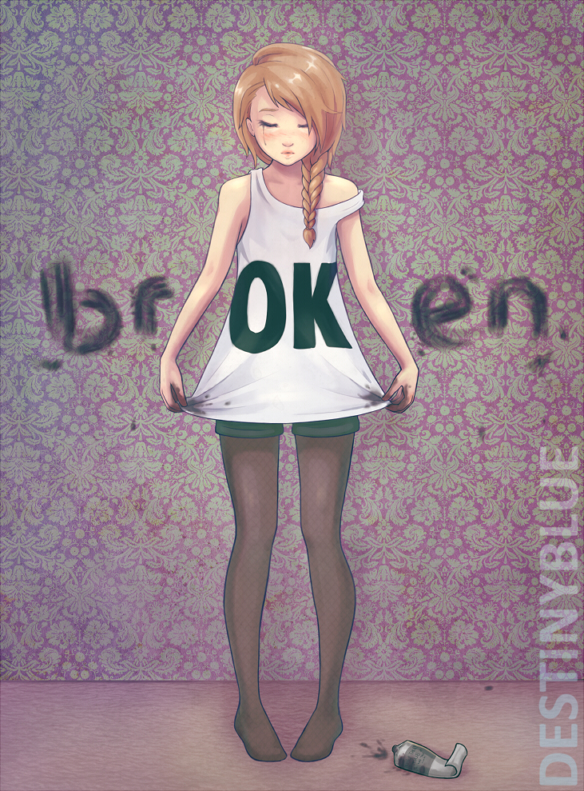
under_the_surface_by_destinyblue-d5r27x4 (1)This incredible piece of art is titled “brOKen” and it’s by a great artist named DestinyBlue. She says that the inspiration for this piece came from an observation she made while on the London Underground.

She saw a girl who was crying quietly, but had on a shirt with the phrase “YOLO” which stands for “You Only Live Once” and is supposed to be a symbol of taking chances and living life to it’s fullest with no regrets.

How ironic that a sad girl crying would have on this shirt? It made the artist of this picture think about how many slogans and things we wear that don’t really represent how we feel and I thought this would be a great topic for a post.

As a counselor, I am trained to hear what is not being said. Many times people will tell me that they are “fine”, “happy” or “confident” when I can see that they are the total opposites of what they are trying to convince me they are feeling.

We do that, put up the fronts and the masks for several reasons including hiding how we really feel so that others will not know when we are weak or vulnerable. It’s natural, which both protects us emotionally, yet it makes it hard for us to fully engage with and understand other people.

This can be especially frustrating when it’s your child or someone you love and it’s clear to you that they are not “fine” yet when you ask them what’s wrong, they say “nothing”.

What if we did wear shirts that said exactly how we felt at this moment. Would your shirt say “Mad?”, “Depressed?”, “Bipolar”, “Scared”, “Unloved?”. Mine would probably say “Indifferent”.

One of my favorite shirts says “Sick of it All” on the back of it, which is actually the name of a band, but most people don’t know that and I tend to wear that shirt when I actually do feel sick of it all. I’ve even worn it to frustrating meetings as a sign of silent protest.

A lot of times, society frowns upon us really expressing and exhibiting how we feel so we learn to put on these masks and some of our masks are very extravagant. 

We put excessive make-up on to look visually attractive while inside we feel disgusting. We talk loud to draw attention to ourselves because we are afraid of  being ignored. We lift weights and take steroids to appear big and intimidating while inside we are scared and insecure. We drive expensive cars and wear expensive clothes to look important because deep down we feel really insignificant. The list can go on and on.

I went to a therapy seminar last year and the presenter kept talking about an angry, intimidating teenage girl in her class who looked like she wanted to beat up everyone, when really deep down, as she put it, “she’s scared as shit”. Of course she couldn’t walk around with a shirt that read “Scared” or “Nervous” so she hide it under a shirt that said “Tough”, “Confident” and “Aggressive”.

Some of the most physically attractive women I’ve ever met, the ones who put a lot of effort into their appearance, have turned out to be some of the most insecure women I have ever met.

Those who don’t wear their masks well are often labeled bipolar, hysterical, over-reacting, sensitive, weak or even crazy.

It’s unlikely that we would really wear shirts that said “Insecure”, “Miserable”, “Confused”, “Rejected” or “Lifeless”. Instead, we are more likely to wear shirts that say “Great”, “Joyous”, “Loving”, “Inspired”  or “Free” even when we feel the total opposite such as the young girl DestinyBlue saw on the London Underground.

Hiding our feelings is a self-protecting mechanism. We don’t want to appear weak or vulnerable like I stated earlier. We may also think that hiding our true feelings keeps us from actually being those feelings. Even more importantly, we tend to hide our true feelings when they aren’t good feelings in order to avoid offending other people with our problems and potentially looking childish and pathetic because we’ve “lost control” over our emotions.

We also hide our feelings to not appear unstable, abnormal or risk the chance of having our true feelings ignored or discounted which would hurt even more. We tend not to trust that others, even those closest to us, will validate our true feelings and safe guard our vulnerability so we hide them to protect ourselves.

Hiding our feelings in many situations makes sense, and society says it’s stoic, courageous and shows character when you can hide your painful emotions. A large part of it is about appropriateness and vulnerability.

A lot of people I work with in therapy hold onto their painful emotions and yet blame their parents, spouses or friends for not being able to empathize with and support them.

Well how can they if they don’t truly know how you feel and what you are going through? This is probably one of the biggest problems I run into in therapy. People expecting their loved ones to be psychic enough to know that under their shirt that reads “Wonderful” is another shirt that says “Heartbroken”.

You have to be at a certain place mentally and emotionally to feel free enough to let out your hurtful feelings in the presence of others. You have to be able to self-soothe and self-validate your feelings. Realize that other people don’t have to validate them in order for them to be valid.

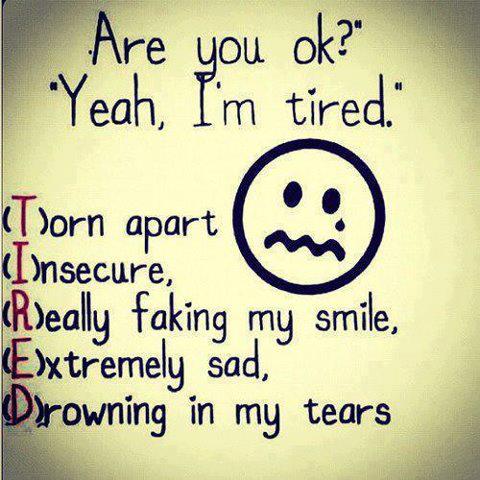
Letting your feelings out doesn’t make you a victim unless you allow yourself to become a victim. Letting them out can actually be freeing and allow those around you to give you the support you need.             tired_by_onedirectionislife-d5lqo2b

Thanks to Kayla for giving me permission to use this image.

Childhood Abuse Linked To Asthma And Obesity In African American Women

Screenshot_2013-03-22-01-52-10-1According to research done at the University School of Medicine and Boston University’s Slone Epidemiology Center, Black women who have been physically and/or sexually abused during childhood and adolescence are more likely to become obese in adulthood as well as are more likely to later go on to develop asthma.

The study appeared in the journal Pediatrics and was based on a longitudinal Black Women’s Health Study which followed a large number of African American women since 1995.

What the study suggests is what many of us already know and that is that experiences during childhood may have long-term affects on our emotional and physical health.

“Abuse during childhood may adversely shape health behaviors and coping strategies, which could lead to greater weight gain in later life,”  says Renee Boynton-Jarrett, MD, who is the lead investigator in the study as well as a pediatric primary care physician at Boston Medical Center.

She goes on to say that metabolic and hormonal disruptions can result from abuse and that childhood abuse could cause other health problems like asthma. “Ultimately, greater understanding of pathways between early life abuse and adult weight status may inform obesity prevention and treatment approaches.” Boynton-Jarrett continued.

The same study found that physical and/or sexual abuse could more than double the chances of African American women developing asthma later in life. According to the study, African American women who suffered abuse in childhood had an increase of about 20 percent of developing asthma.

What’s also interesting is that the link between physical abuse and asthma seems to be stronger than the link between sexual abuse and asthma.

According to Patricia Coogan, the lead author in the study stated,  “The results suggests that chronic stress contributed to asthma onset , even years later.”
I had a professor in graduate school who always said, “Whatever you don’t deal with mentally, you will deal with physically” and this seems to be a prime example.

Stress in childhood experienced from abuse causes physiological consequences. Imagine the amount of stress one experiences living in an abusive situation. That type of stress can have an impact on the body, especially the immune and respiratory system and development.

There are unfortunately high incidents of childhood abuse as well as an increase in the prevalence of asthma with an increase from 7.3 to 8.2 percent, or approximately from 20.3 million to 25.6 million people from 2001 to 2009. The populations that saw the greatest increase in asthma were children from low-income families and African-American children.

I find this study to be very interesting because as a counselor, before I ever read this study, I recognized a link between obesity and sexual abuse in African American teenage girls.

I noticed that a large portion of the obese African American teenage girls I worked with, reported being sexually abused in childhood and early adolescence. I found this to be astounding and the more obese African American teens I worked with, the more it continued to be true.

It got to a point where I could look at an obese African American teen, the way they carry themselves and predict with about a ninety percent  certainty that they had been sexually abused before they ever felt comfortable enough to divulge that information.

I started thinking that maybe obesity and overeating became a unconscious defense  mechanism they used to become less attractive to not only the person who had sexually abused them, but possibly potential abusers in the future. And of course, overeating in itself could have been a coping mechanism used to help self-sooth themselves from the pain of sexual abuse.

I found it fascinating and yet sad, but this new research appears to back up some of what I had been suspecting although they seem to take it from more of a physiological than psychological approach.

What’s also interesting is that in her book Young, Poor and Pregnant, Judith Musick saw a link between sexual abuse and teenage pregnancy, meaning that some young girls who were being sexually abused, consciously or unconsciously sought out to get pregnant in hopes that their pregnancy and having a baby would make them less appealing to their abuser.

It’s obvious that physical and sexual abuse in childhood can have devastating affects on a child’s mental and emotional health well into adulthood, but new research is pointing to physical and sexual abuse also having long lasting physiological affects, making it that much more important that we not only fight to put a end of child abuse, but that we also provide help to those who have been abused.

Many adults I’ve spoken to who have been abused as children think of themselves as being resilient, and to a certain degree they are, but they don’t see the potential ongoing damage the abuse they experienced ten, twenty, or thirty years ago still has on their lives today. They don’t see that their relationship problems stem from lack of trusting or being able to relate well to men, that their depression comes from years of childhood neglect or that their overeating could be a result of past sexual abuse.

So much so that many of them don’t even initially mention being abused early on, although it is one of the first questions I ask. They go on for session after session, week after week, talking about issues that have roots in their childhood abuse, but they don’t recognize that and it’s only when they bring up the abuse and we address it, that they can truly start to heal.