Energy Drinks: Are They A Serious Threat to Teens?

For years I’ve been hearing that energy drinks are bad for you, but that never stopped me from consuming them on a regular basis throughout college and especially after grad school when I worked overnight at a psychiatric hospital and felt like I needed to be extra alert at all times.

I personally have never had a bad experience with energy drinks, although once I did take an Extra Strength 5 Hour Energy shot before working out and during my workout felt like my heart was going to jump out of my chest. I never did that again.

Recently there has been a lot of attention given to teens drinking energy drinks, including Anais Fournier, who was 14 and drank two 24-ounce cans of an energy drink and then died six days later after going into cardiac arrest and a coma.

Her death was officially considered to be from cardiac arrhythmia due to caffeine toxicity.

Drinking those two 24 ounce cans, she had consumed 480 milligrams of caffeine, about five times the recommended limit by the American Academy of Pediatrics and about as much as drinking 14 cans of Coca Cola.

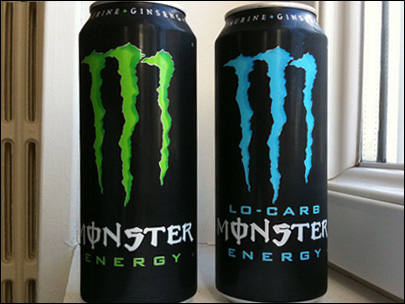
I never really gave a lot of thought to this topic until yesterday when one of my teenage clients came into my office with a huge 24-ounce can of Monster energy drink and suddenly I found myself being a bit concerned for her.

Could drinking energy drinks really have killed the young lady mentioned above and potentially others that are under investigation?  Do they pose a potential risk to the millions of teenagers who drink them on a daily basis?

Caffeine is the most commonly used psychoactive drug in the world. Most teens I know who consume energy drinks do it either to have enough energy needed to make it through the day, to stay up studying, to have increased energy while participating in a physically demanding activity, while partying, and to alter their mood.

Most teens are unaware of the amount of caffeine they are consuming, or don’t care because they think it’s harmless, when in fact it can be harmful if too much caffeine is consumed too quickly and is paired with a pre-existing medical condition.

Many teens are unaware that they have cardiac problems and are at risk for cardiac arrest, thus their caffeine intake should be limited.

Caffeine overdoses have increasingly been on the rise over the past few years with emergency rooms seeing over 12,000 cases last year.

Many researchers believe there is no reason for kids to ingest more caffeine then what is naturally found in the things they already consume, stating that caffeine mixing with the sugar often found in energy drinks can have bad effects on blood pressure and can lead to cardiac problems.

Most teens I know are more at risk when they are out with friends, partying or when they drink energy drinks just before playing a sport. 

Parents should monitor their children’s intake of caffeine and how quickly they consume drinks with caffeine in them.

Wonderful post and I couldn’t agree more. Each year I work with a small number of girls with eating disorders, knowing that there are many more out there who are hiding it or have body image issues that aren’t really to work through yet. It’s sad each time.

Scott Williams's avatar

Something revolutionary happened this week. A woman posted a photograph of herself in her underwear on the Internet. Although there are thousands of pictures of women in their underwear on-line (and in magazines, catalogs, television, billboards, etc…), this picture was different. It was different because this woman is fat (not my word).

Stella Boonshoft is an 18 year-old student at New York University and she loves her body. She is proud of her body and she wanted to use her body as an agent of change. She struggled with hating her body for much of her life. She was bullied and tormented as a child and adolescent. And she learned to make peace with her body. So she posted a semi-nude picture of herself on her blog and opened a nation-wide conversation about body image, misconceptions about health, and acceptance. She is extraordinarily courageous.

Stella posted this picture of…

View original post 620 more words

Facts versus Opinions

I’m an introvert and a very introspective person. That’s no secret to those who really know me.

Most of the time when I go out with people I find myself sitting back, watching and listening. It may seem like I am not engaged in the conversation, when in actuality, I’m probably more engaged than the people talking.

It’s fascinating. I enjoy doing it. I can do this for hours and not say a word, yet am totally absorbed in the entire conversation, not just what is being said, but how it is said and the true meaning behind it.

I’m listening, analyzing, watching mannerisms, expressions, analyzing those. Listening to speech patterns and tones while all the while analyzing the entire conversation.

I learn a lot about people this way, and about myself. That’s why one of my favorite quotes, I forgot where I got it from, is “I hear what is not being said.”

This brings me to tonight.

Tonight I was telling a story and got rudely interrupted in the beginning of the story by two of my friends who felt the need to voice their opinions as if they were facts, before even hearing the entire story.

I sat back, listened to them, analyzing everything, and waiting to see if they would be courteous enough to ask me to continue my story, but they never did. They were so high up on their self-righteous, egotistical horses, that they never came back to my story.

Some people would have found this rude, I found it a bit irritating, but mostly, I found it intriguing because I was learning so much about these people and how they think, even how they think and see me. I was learning more than I think they knew they were teaching me about themselves, which is the beauty of extrospection.

As I sat and listened, I realized that my two friends were making a mistake a lot of us make from time to time, especially in this political environment. They were mistaking their opinions for facts.

Naturally, we are drawn to information that supports our beliefs. Sadly we tend to stick with those beliefs even in the face of evidence that proves them wrong, and may even believe in them more, as a form of protest or as a defense mechanism.

In many cases, factual evidence seems to matter very little.

As I watch the political coverage, this is played out daily, but one doesn’t have to watch CNN or MSNBC to see this. We encounter this all the time, perhaps even within ourselves as I encountered with my friends tonight.

At one point when they were closing the restaurant we were at and we were the only customers left, they were still engaged in idle conversation, sipping their drinks as the staff was waiting for us to leave.

I told my friends that we should probably pick up the pace, but they told me I should just relax. I replied that I like for people to be respectful of my time and I like to respect other peoples time.

They quickly retorted that we were patrons, paying money and that they would gladly wait for us because we were given them business. They then went on a rampage that included something about the economy and the customer is always right, to which as always, I just listened and analyzed and then replied that I was sharing my opinion, not stating a fact.

They then backed off, but I realized that they were stating their opinions as blatant facts, that as long as a drink was on the table, the business should wait patiently for them to leave.

I didn’t try to elaborate on this with them, because like I stated earlier, even if I could present facts on why we should be respectful of the staffs time and leave so that they could clear the last table, I would have been met with more opinionated hostility, but why?

We all know what it feels like to be proven wrong and what that means to our sense of self and even our sense of credibility. It often gets us to question not just that one thing, but a host of our other beliefs and one thing many people are afraid of doing, and will sometimes fight to death before they do it, is to take a real examination of their self.

Many relationships fail or stall because one or both partners have different opinions and neither one is willing to reconsider, change or even tweak theirs. Instead they fight over and over about the same things, pointing the finger at each other.

These are of course largely unconscious thoughts, which make them that much more powerful. Still, stating opinions doesn’t make them right or facts.

People who are more self-confident tend to be more willing to re-examine their opinions and it’s important that fro time to time we all do this to become well-rounded, well-adjusted people who are able to have healthy relationships with not only other people, but with ourselves.

The Basics of Behavior Modification Techniques

Behavior modification techniques have at times been controversial.

Many people believe that they don’t work in the long run, but I know when done correctly, they can be an effective tool to curve undesired behavior and increase desired ones.

A Very Brief History

Behavior modification is largely derived from tenets of a psychological approach known as operant conditioning created by B.F. Skinner, which proposes that behavior can be shaped by reinforcement or lack of reinforcement.

Behavior modification techniques have been used successfully with adults and children to help with conditions such as attention-deficit/hyper-activity disorder (ADHD), obsessive-compulsive disorder (OCD), generalized anxiety disorder (GAD), pervasive developmental disorders, phobias, and many others.

Reinforcing Positive Behavior 

Reinforcing consequences are anything a person receives as a result of their behavior, that increases the likelihood of that behavior occurring again.

For example, if a child gets a laugh from a parent when they swear, they are more likely to do it again. Or if they get praise for bringing home good grades, they are more likely to continue trying to bring home good grades.

Reinforcers, as the name suggest, reinforce behavior. Some good behaviors, some bad behaviors.

We use reinforcers all the time, often without realizing it. As the saying goes, we teach people how to treat us, because we often reinforce their behavior towards us, good or bad.

When people, especially children hear the word consequence, they usually assume that it is something negative, but consequences can also be positive.

Positive reinforcers are consequences a person wants to receive. They are used in behavior modification to increase desired behavior, usually through a reward system.

Behavioral contracts can be used to outline details of the reward system. As an example, a reward could be one hour of video games per day if all homework assignments for that day are complete, or all chores are done.

Sometimes negative behavior is also unintentionally rewarded. As an example, if a child yells enough and the parents gets annoyed and gives in to the child’s demands, that child is being reinforced to yell whenever he/she doesn’t get their way.

In these cases, the unwanted behavior needs to be stopped through what is called “extinction”.

Extinction

Extinction is basically stopping an undesired behavior by removing it’s rewards. Examples of rewards for undesired behavior include getting what they want after:

  • pleading
  • crying
  • throwing a tantrum
  • yelling
  • withdrawing

Time-out is one of many effective techniques used to extinguish undesired behaviors by removing the person from any rewards.

As I stated before, the saying “we teach people how to treat us” comes back to this, even as adults.

In a relationship, if our partner is being insensitive to our needs, yet we cling to them more and shower them with attention, then we are rewarding their behavior.

Negative Consequences for Behavior

Penalties, punishment and negative reinforcement are all forms of negative consequences.

Penalties are when someone loses something as a result of a behavior, such as the removal of a favorite toy or a privilege.

A punishment is when someone receives a consequence for a behavior that they don’t want, such as a spanking.

Negative reinforcers include the withdrawal of a privilege or addition of extra chores/assignments.

Differences Between Negative Reinforcement and Positive Reinforcement

Punishment, penalty and negative reinforcement usually result in minimal effort on part of the person to achieve the desired behavior.

Positive reinforcement is the only method that will encourage people to give voluntary, extra, enthusiastic effort to achieve the desired behavior.

The key to behavior modification is to use negative consequences as necessary, but to focus more on positive reinforcements.

The Five B’s of Effective Parenting

Lastly, the five B’s are very important when it comes to using behavior modification techniques with effective parenting:

  1. Be positive– try using positive consequences more than negative
  2. Be specific– be specific what behaviors are being punished or rewarded
  3. Be certain– your child should know without a doubt what to expect from you        based on their behavior.
  4. Be consistent– if you don’t apply rules consistently, your child can never be certain of what to expect
  5. Be immediate– act immediately when your child deserves a positive or negative reinforcer.

When used correctly, behavior modification techniques are positive tools and great ways for kids to learn in a rather safe environment about consequences.

They learn that in life, often there are no right or wrong decisions, but they have to be able to deal with the consequences (positive or negative) of their decisions.

The Most Commonly Diagnosed Mental Disorders

We are bombarded all the time with the depressing number of people diagnosed with illnesses such as cancer and heart disease, but did you know that mental illness is even more prevalent?

Like cancer and heart disease, mental illness is a medical condition that does not discriminate by age, sex, race/ethnicity or socioeconomic status.

Mental disorders often strike people when they less expect it, when they are in the prime of their lives and are often associated with other high risk behaviors such as gambling and substance abuse.

Like any other illness, they also vary in degree from mild, moderate and severe. In developed countries, these are the top 10 diagnosed mental disorders:

10. Autism Spectrum Disorders (Pervasive Developmental Disorders)

I’ve written a previous post on pervasive developmental disorders. They start when children are very young and are often difficult to diagnose. As a matter of fact, I know a parent who has just acknowledged (after much denial) that  her 17 year old son has Asperger’s, something he should have been tested for and began treatment for years ago.

9. Schizophrenia

To me, schizophrenia is one of the most interesting mental illnesses. I used to enjoy working with schizophrenic patients when I worked in the mental hospital, although I did feel very bad for them.

Imagine being tormented by voices telling you bad things about yourself, thoughts that someone is trying to poison you, or seeing visions of dead bodies everywhere. That’s just some of the things people with schizophrenia I’ve worked with were tortured by.

To be diagnosed with schizophrenia, a person has to have two or more of the following:

  • Delusions
  • Hallucinations
  • Disorganized speech
  • Disorganized or catatonic behavior
  • Emotional flatness

Contrary to popular believes, most people with schizophrenia are harmless.

8. Bipolar Disorder

Most people with bipolar disorder are diagnosed by age 25, although different things can bring out underlying bipolar symptoms, such as pregnancy.

“Bipolar” is a term loosely used these days, usually to describe someone who seems to have mood swings, although in most cases, people with bipolar disorder don’t change their moods from moment to moment, and if you ever get to meet someone with severe bipolar disorder and they are not on their medication, you will know it and probably never forget it.

I’ve seen grown men swinging from trees and women drop from exhaustion after running ragged for four days straight, partying, sleeping with half a dozen men and charging thousands of dollars on credit cards they can’t afford.

7. Panic Disorder

Sweating, rapid heart beat, nausea, shortness of breath, dizziness, fear, loss of control, chest pains, tingling, smothering sensation, these are all symptoms of panic disorder.

Panic disorder and panic attacks are common, and can be triggered by certain events such as riding in an elevator, being in a crowd, having to give a speech or being in a place where there is no easy escape (agoraphobia).

1 out of 3 people with agoraphobia become housebound and are basically held hostage in their own homes by their illness.

6. Anxiety Disorders

Anxiety disorders include obsessive compulsive disorder (OCD), post traumatic stress disorder (PTSD), and generalized anxiety disorder (GAD).

OCD is a combination of reoccurring thoughts (obsessions) and actions (compulsions) that a person performs because they believe it gives them control. For instance, a person may believe they have to take 50 baths a day or they aren’t clean and they may lose their job, friends and family to this behavior.

PTSD occurs after a person experiences a terrifying even in which they face great bodily harm, death, fear or helplessness. They may then have reoccurring thoughts, nightmares, heighten fear and avoidance behaviors. Many rape victims and soldiers coming back from war experience PTSD, but so do people who have been robbed, beaten or in a car accident.

GAD is basically when someone has anxiety, stress and worry for at least 6 months period for no specific reason. Some of these people are considered “worry worts” in layman terms, but their anxiety can cause them to have a host of physical systems and a decreased quality of life.

5. Phobias

Phobias are related to anxiety disorders and there is almost a phobia for everything although social phobia is one of the more common phobias.

In social phobia, everyday situations causes the person to become self-conscious and nervous, often leading to physical responses such as sweating which then causes the person to become even more self-conscious and nervous.

Children with social phobia often go through great lengths to avoid going to school and once at school may either be super anti-social or go to extremes to avoid other students by skipping, or staying in the clinic and feigning and illness.

A person can pretty much have a phobia of anything. Check out http://www.phobalist.com

4. Attention Deficit/Hyper Activity Disorder

This is another one I’ve written about previously. ADHD is very common and most children learn to manage their illness or outgrow it altogether, but some will have ADHD throughout their adult life.

3. Eating Disorders

Anorexia nervosa,  bulimia nervosa and binge-eating are common illnesses, usually affecting females.

People suffering from anorexia, when a person looks in the mirror, no matter how thin they are, all they see is a fat person. They then go through great lengths to restrict their food and burn calories until often they are on the verge of starving themselves to death, and sadly many do just that.

People suffering from bulimia are often of normal body weight, but binge on large quantities of food, then feel guilty about it and then may try to vomit it back up, exercise obsessively, or use laxatives to try to get rid of the food and calories.

People who suffer from binge-eating are caught in a vicious cycle of over-eating, feeling guilty about the over-eating, and then over-eating to try to self-soothe themselves, which all of course leads to weight gain and shame.

2. Personality Disorders

All humans have personality traits, most which are relatively fluid, based on our culture, upbringing and experiences. Many of us even have some traits of personality disorders, but people with true personality disorders have traits that are so rigid that they impair their ability to function and get along with people in their everyday life.

Some of the most common personality disorders diagnosed include:

  • Antisocial personality disorder– these people don’t follow rules of society, often care little about other people unless they can use them for their own gain, they can’t empathize or feel sorry for people, they generally show no remorse. They often have criminal behavior.
  • Avoidant personality disorder– these people are anxious, usually over-controlled and fear criticism, making them hesitant to become involved with other people. There for, they tend to avoid people as much as possible.
  • Borderline personality disorder– these people are generally impulsive, unstable, suicidal at times, fear abandonment while at the same time they tend to push people away from them, resulting in tense, unstable relationships.

1. Mood Disorders

Mood disorders are the number one most diagnosed mental illness in developing countries and something that nearly everyone can relate to in one form or another.

Mood disorders are sustained emotions that go beyond the usual, normal feelings of sadness, to deeper feelings such as dysthymic disorder and major depression.
Is It Okay To Use Different Academic Standards Based on a Students Race?

I was honestly shocked the other day when on the local news I saw a report that the Florida Board of Education, just passed a new race-based standards of academic acceptance which will affect all of the 2.6 million students that are in the state’s public school system.

I was shocked because I don’t remember hearing about this, and yet it has passed. Apparently there was no vote on this from the public and I was even more shocked to hear what the standards are.

The new academic standard says that by 2018, 90% of Asian students, 88% of white students, 81% of Hispanic students and 74% of black students are to be reading at or above grade level.

It also states that 92% of Asian students, 86% of white students, 80% of Hispanic students and 74% of black students will be at or above their math grade level.

Really?

Now some people will say that this is a part of Affirmative Action, but I’d like to argue against that. This is part of goals required from Florida’s waiver of No Child Left Behind. State officials say that these new standards take into account the performance numbers of current students of color.

I say that this is a way the state can take the blame away from where it really should be, and that is on failing schools, inequality of schools and teachers in different communities, poor teachers, bad parenting and failing community services and supports.

It is unconscionable to me that we would expect less of a child based on his or her race/ethnicity. All kids have the ability to learn regardless of race or ethnicity.

It is true that often things such as socio-economic status and parental educational background have a lot to do with a child’s academic performance, exposure and experiences, but to dumb down the expectations of a child based on their race/ethnicity is really backwards.

And where is Florida getting this idea from? Virginia! No offense to Virginians, but Florida is following in Virginia’s footsteps when it comes to educating their students. Some say it’s so that black and Hispanic children won’t feel bad when they don’t perform as well as their white and Asian counterparts. Really?

When I was in high school I had to pass a competency exam to graduate, my race/ethnicity played no part in this. I was expected to get the same passing score as everyone. They same went for the exit exams I took in undergrad and graduate school.

Former Florida Governor Jeb Bush even said that this would send a “devastating message” that Hispanic and black students aren’t as capable as other students.

Palm Beach County School Board Vice-Chair Debra Robinson said she’s “somewhere between complete and utter disgust and anger and disappointment with humanity” because of this.

We do a disservice to our kids when we are basing academic standards on race/ethnicity. We will be placing a black mark on the high school diplomas of every black and Hispanic child.

It would be better to track students individually and not group them by race/ethnicity, but that would cost the state too much, so it’s easier to just make generalized, in my opinion, racist academic standards of achievement.

A long time ago I read a book called The Bell Curve and thought it was the most racist piece of garbage I had ever read. It was largely about whites intellectual superiority over blacks. This isn’t much different.

How can black and Hispanic children feel good about their academic achievements if they are held to a lesser standard, especially in elementary, middle and high school where these poor standards are setting them up for future failure?

In elementary school I always made the honor role until one day I got a “C” and cried. My teacher consoled me by saying “C’s are good for a boy”. After that day, I never made the honor role again until the 11th grade. I was happy with “C’s” and it was only until the end of my sophomore year in high school that I started making all A’s and B’s again.

What changed? I did, not the academic standards, or even the school or teachers, but me.

I learned that “A” stood for excellent, “B” for good, “C” for average, “D” for poor and “F” for failure. I told myself I was above average and aimed to never get below a “B” and from that point on in high school, through undergrad and graduate school, I didn’t.

With Affirmative Action, yes it helps minority students get into college with lower exam scores than whites and Asians, but once in college they are expected to keep up or get out. There’s a difference between that and this.

If we tell our kids it’s okay to be below average because of your race/ethnicity, I think it will have the same affects. Kids won’t try harder, they will accept poor performance as “good for my race/ethnicity”.

Those black/Hispanic kids that are high achievers, will never feel the pride they should feel.

We already have a problem with black/Hispanic kids being stereotyped as “not as good as” whites and Asians, but this is almost like making it official.

We all learn differently and EXPOSURE and EXPECTATION go a long way to defining a child’s self-efficacy. This is not the way of solving a problem, but creating one we all will have to deal with in the future.

Politicians are always saying that they want our nation to be at the top when it comes to math and science, but I guess that doesn’t apply if you are black/Hispanic. We should be encouraging, educating and encouraging all students, regardless of race/ethnicity, to do their absolute best, and not a percentage of what is considered the absolute best.

edit: My 16 year old niece, who is black and attends a predominately black school, just got accepted into the National Honor Society for having a grade point average of or above a 3.5. Imagine if the criteria for the National Honor Society was lowered for her just because she was black. I doubt she would have the same sense of pride and accomplishment she has today. 

Support Groups for College Students

College can be a huge transition for students that usually leads to personal growth, but at times may lead to feelings of loneliness, anxiety and depression.

Many students who I’ve worked with in high school and have graduated and gone off to college, have kept in touch, expressing at times their struggle to adjust or to stay balanced.

Usually I’ll give these students some words of advice or resources I think will help them get back on track, but sometimes they need more attention than I can provide and that’s when I often refer them to a support group on their campus.

There are usually support groups for almost any and every issue a college student may be dealing with including:

Depression and Anxiety

Sudden independence, academic pressure, financial worries and adapting to a new environment are all things that can lead to stress and anxiety, especially among freshman.

Stress and anxiety can lead to depression which can cause a host of other problems including dropping out of school and substance abuse. Most college campuses offer groups such as “Personal Growth” or  “Transitioning into College”  to serve students with these needs.

There are also grief and loss support groups for students dealing with the loss of someone.

Self Esteem

In college, people often start discovering new things about themselves, things they may like, dislike, feel uncomfortable with or are not quite sure of  how to deal with their feelings. This is also the time some people have their first sexual experiences either with the opposite sex or with the same sex.

Some may feel like they don’t fit into the student body on campus for various reasons.

These groups help people suffering with self-esteem and identity issues figure those things out in a safe, confidential environment.

Most college campuses offer support groups, for example, for the gay, lesbian, bisexual and transgender community and for people who have been sexually assaulted. The University of Central Florida, for example has a group called Sister Circle, which gives support to women of color.

Recovery

There are also groups for students dealing with drug and alcohol problems in order to help them stay on the track of recovery. In recovery, it’s very important that a person has a good support system, which is what these groups attempt to provide.

Here is an example of support groups offered at the University of Central Florida and similar groups are found on most college campuses:

  • GLBQ (Gay, Lesbian, Bisexual, Questioning) Growth & Empowerment
  • Sexual Assault Survivors
  • Transgender Bender Group
  • Authentic Connections
  • Women’s Group
  • Creative Connections
  • Exploring your Family
  • Grief and Loss
  • Sister Circle
  • Building Social Confidence

Generally once I’ve connected a student to a support group on campus not only do I feel relieved, but they also tend to improve and make new friends. I’ve always been a proponent of support groups for everyone in need because I know the positive affects they can have on their members.

Rethinking Resiliency In Relation To Teenage Girls: Part 1

Working with inner-city teenagers, I always want them to defy expectations often put upon them by society, their community and even themselves.

Those expectations usually include:

  • getting pregnant
  • dropping out of school
  • being promiscuous
  • abusing drugs and/or alcohol
  • never getting out of the low social economic status they were born in

Resilience is the strength and stress resistance to defy those expectations and to achieve ones dreams.

These are the things I always try to instill in the youth I work with, after all I have faced many of those same societal expectations growing up as an African American male including:

  • going to jail
  • being violent/angry
  • being on drugs/alcohol
  • fathering multiple children with multiple women
  • being lazy and uneducated

Time and time again, especially when it comes to teenage girls, I seem to be facing an uphill battle when asking them to be resilient. Not that I don’t face the same battle with boys, just that the girls often seem to have it all together and then quickly sabotage themselves.

An example of this comes from a 3 year longitudinal study of poor, inner-city adolescent girls called “Understanding adolescents: A study of urban teens considered to be at risk,” directed by Jill McLean Taylor and Deborah L. Tolman.

“Anita” was an African American girl who who stated that she wanted to be a lawyer, and acknowledged in the 8th grade that the only things that could stand in the way of her dream were “kids, kids, kids”.

It’s amazing, that as early as the 8th grade, she realized that having kids that young was a possibility.

In the 9th grade she is still passionate about her goals and dreams to become a lawyer because she felt that there was a need for good African American lawyers, and states “I ain’t going to let nothing get in the way. The only thing that could probably happen is a baby.”

Once again, despite her passion and determination, she is vividly aware that getting pregnant was a real possibility. After all, she had probably seen some of her friends and family members get pregnant at her age. Her mother also had children in her teens.

In the 10th grade she seems even more determined to be a lawyer, stating “there’s a lot of people that I  know that don’t want a Black kid to be somebody.”

That year she still has concerns that a baby might get in the way of her dream, but seems less worried about it. Unfortunately, she also tells the interviewer at this time she has been sexually active and hasn’t been using protection.

By the fall of her 11th grade year, she becomes pregnant and drops out of school.

How could this happen to a young girl that seemed so determined and resilient?

Well, for one, perhaps asking her (and other poor inner-city teens) to be resilient and defy expectations, was also asking her to be different from and possibly even disconnect from people that mean the world to her, including her mother.

Anita and her mother were very close; “(she) is a part of me and I am a part of her… we have trust in each other and rely on each other… we are not that different.”

Her decision to have a baby brings her closer to her mother, although it moves her farther away from he dreams, even if they were dreams both her and her mother shared.

That’s what makes reaching out to poor inner-city teenagers so difficult.

How can we expect them to make better choices, take positive risks and reach for something different and better when doing so also puts them at risk of disconnecting and alienating themselves from important people in their lives.

It’s all mostly subconscious, but I see it all the time. A motivated, successful student gets pregnant and starts missing school more and more to stay at home with her mother, who is not working and is at home with either her own children or one of her other children’s kids.

It is a complex psychological dilemma. On one hand by reaching for and achieving their goals, they may isolate themselves, and betray cultural and family connections. However, by not following through on their dreams and goals, they will be betraying themselves, and possibly the hope and dreams of their family and community.

Asking them to “break the cycle”, is in some ways asking them to distance themselves from people they most love, admire and identify with.

Preteen Sex: Do We Really Need To Have This Conversation?

A lot of times we like to think that sexual activity and behavior doesn’t become a topic for discussion until kids reach their teenage years.

As a matter of fact, I found it frustratingly difficult while doing research on this topic, to find good scholarly information, demonstrating the lack of attention this topic receives.

However, from personal experience as a counselor, I know that preteens as early as 9 years of age are engaging in sexual or precursors to sexual behavior in ways that either often go unnoticed or are overlooked as normal play and socialization.

Preteens at times can be just as curious to what it means to be in a relationship, mature, or desired, as their older peers.

They are often exposed to a host of sexual behaviors either through watching their parents, older siblings, older teens or of course, the media and unfortunately, sexual molestation, usually at the hands of a family member, older teen or adult.

They are often curious about themselves and each other, especially the opposite sex. They often sit, fondle or cuddle in ways that may seem harmless, but are at times precursors to future sexual behaviors.

A lot of preteens I’ve worked with are already “making out” with boys and sexting, two very good predictors to early sexual activity. I’ve met preteens that have already voluntarily engaged in oral and even vaginal sex by the time they were 12 years of age.

Early dating, overly strict parenting as well as lack of parenting are all predictors of early sexual behavior.

Here’s another tip: preteen girls who have a lot of male friends are more likely to be exposed to drugs and alcohol and are much more likely to engage in sexual behaviors.

Also, men 18 and over are responsible for 50% of the babies born to girls 17 and under.

Sure many of these teens grow up in unstable houses, have poor self esteem and are looking for acceptance when they stumble into the world of sexual behavior, but many of them also are just curious, precocious children that have no clue what they are really doing.

Preteens, just like teens, are much more likely to not use any type of sexual protection, so they are at higher risks of being exposed to STDs and pregnancy.

Yes, some preteens can get pregnant. Puberty can happen as early as 9 in “normal” girls and as early as 6 in girls born with abnormalities that cause them to go through puberty extremely early.  In my research, girls as young as 6, 7, 8 and 9 have given birth to children, usually after being molested by a family member.

Parents of preteens and teens need to be proactive and honest with their children about sex. Educate your child and take the mystery out of sex, puberty and love.

Having this sort of talk with your preteen may be uncomfortable, but it’s better to have this educational, proactive talk now than to have it when it’s a little too late and you discover that your child is either pregnant, has an STD or is engaged in sexual behavior, much earlier than you ever expected.

Try to be the type of parent that gives your children all the answers they could ever ask, as detailed and as often as needed, so that they will always get the best advice (at least as much as you have educated yourself) and they don’t have to learn it from their peers or by making huge mistakes.

No parent is perfect, and neither is either child, but through communication you’ll be more likely to help your child make wise and healthy decisions today and for the rest of their lives.


Presidential Election Stress Disorder

The morning after the first presidential debate between President Barack Obama and Governor Mitt Romney, I got a long text message from a very good friend saying that she was extremely stressed about the debate and all the negative things being said in the press about President Obama’s performance.

This friend asked me to give her some encouraging, professional advice. I was a little stunned because I have never had anyone tell me that they were so stressed out about an election that they wanted professional advice to help relax.

Soon afterwards I had an older woman tell me that she couldn’t sleep the night after the debate because she was so stressed and she also watched the cable news channels incessantly.

This got me to start paying more attention to presidential election stress and noticed it was all around me.

At work, coworkers vented about their frustration either with the President or with Mitt Romney. At the barbershop, the car wash, at the grocery store… everywhere I went I seemed to over hear people stressing in one form or another about the upcoming election.

Some people are engrossed in the election almost every waken hour. They are glued to CNN, MSNBC, FOX, or whatever channel. When they aren’t watching television they are online either reading articles or engaged in back and forth bickering in cyberspace.

Even when they aren’t doing those things they are either talking about the election, or spending too much time thinking about it.

If this seems a little obsessive, that’s where presidential election stress goes from normal to presidential election stress disorder.

Even my mother told me that she was stressed about the election and of course her television seems to be stuck on the cable news channels as well. She’s had trouble sleeping because she is worried about the upcoming election and talks about it endlessly to whom ever will listen to her so I gave her the same advice I gave my friend.

1. Disconnect– sometimes we have to turn off the television and get off the internet where we are too easily bombarded by campaign ads, political arguing or other things that can trigger our presidential election stress.

This includes Facebook, Twitter and other social sites where it’s easy to get pulled into political debates. At the least, watch something funny, silly, or interesting that has nothing to do with the election, and the same goes for websites.

2. Get out of the house– exercise, go for a mindfulness walk and appreciate the moment of now. Look at flowers, breath in the air, close your eyes and listen to what’s around you, shutting out all other thoughts about the past or the future, only the present.

3. Focus on you- get back to doing things you enjoy doing such as reading, writing, drawing, knitting, whatever it is you enjoy doing that can take your mind off of the election.

This upcoming presidential election is extremely important, I agree. It makes since that so many people are personally vested in their party or candidate of choice. It’s okay to be passionate, but it’s not okay to be angry, stressed, or depressed over the election and if you are, it’s time to take care of your self and take a break.