Dysfunctional Relationships: Emotionally Withholding

iStock_000020769810Small_0In romantic relationships, we would like to think that it’s always going to be filled with passion and romance, but typically relationships go through phases where the passion and romance seems to die off.

Some of this is natural which is why relationships take work and both individuals have to work on keeping the fire going, but other times this can be deliberate.

Sometimes in relationships, one person will decide to emotionally withhold and this can border on the line of emotional abuse.

I’m not talking about when your partner is upset with you so he or she may not talk to you for a few days, may not want to be touched or gives you the cold shoulder until they get over whatever upset them. I’m talking about something that is much more long term and damaging to a relationship.

Thomas G. Fiffer, in his blog post  described emotional withholding as:

Coldness replaces warmth. Silence replaces conversation. Turning away replaces turning towards. Dismissiveness replaces receptivity. And contempt replaces respect.Emotional withholding is, I believe, the toughest tactic to deal with when trying to create and maintain a healthy relationship, because it plays on our deepest fears—rejection, unworthiness, shame and guilt, the worry that we’ve done something wrong or failed or worse, that there’s something wrong with us.”

How Can You Tell If Your Partner is Emotionally Withholding?

If you are in a relationship where you often feel alone, there is a good chance your partner may be emotionally withholding.

There is a difference between someone who is emotionally withholding (a deliberate behavior used to control a person/relationship) and someone who is out of touch with their own feelings due to stress, trauma or other issues.

People who emotionally withhold are purposely withholding love, affection, support and attention in order to control a relationship.

The other person in the relationship may find themselves always pursuing their partner in search of the love, affection and attention that they want. They may find themselves always trying to prove that they deserve love.

People who stay in these types of relationships often do so because it is familiar.

Maybe they grew up in a family where they never felt like they deserved love, were always rejected or felt abandoned. To them, it may feel natural to pursue love and affection, even if it’s painful, because they are not used to it being freely given and without conditions.

Holly Brown, a licensed marriage and family therapist suggests:

Ask yourself how generous your partner is. How invested does he/she seem to be in your well-being, in making sure that you feel positively about yourself? Or is it the opposite–that he/she is maintaining the upper hand by ensuring that you continue to seek approval?

The person who is emotionally withholding is always trying to keep the balance of the relationship in their favor. They give you just enough to keep you interested. Just enough to keep you searching for the affection that you want and deserve so that you get stuck in this vicious cycle of searching out for their affection.

Most people are not ALWAYS emotionally satisfied in their relationship 100% of the time, but think about how much you feel emotionally satisfied versus how often you feel emotionally starved.

If you feel like you are continuously starving for love, affection, attention and support, then you may have a partner who is emotionally withholding or at the least, emotionally unavailable.

If your partner is emotionally unavailable, consider if this is because he or she is stressed, depressed, going through their own issues that need to be addressed and dealt with, or if it is more malicious and planned out to achieve a power balance in the relationship that benefits them and not you.

Being in this type of relationship can cause the person who is constantly seeking affection to have multiple issues from low self-esteem to anxiety, depression and even sexual dysfunction.

Outside support from friends, family and even a professional may be needed in order for that person to maintain healthy self-love and self-care. It is crucial that you take care of yourself and surround yourself with people who know your worth and value you.

If you are in a relationship where the other person is emotionally withholding then it’s important to remember that you deserve and are worthy of love and it should come freely.

The Narcissistic Parent

3049_how-to-get-hired-at-your-next-job-interview_1“I do not love; I do not love anybody except myself. That is a rather shocking thing to admit. I have none of the selfless love of my mother. I have none of the plodding, practical love. . . . . I am, to be blunt and concise, in love only with myself, my puny being with its small inadequate breasts and meager, thin talents. I am capable of affection for those who reflect my own world.” – Sylvia Plath

Sylvia Plath, the poet and author of the quote above was a narcissistic parent who committed perhaps the most selfish and narcissistic act of all. She killed herself by sticking her head in a gas oven while her two children were asleep in the same apartment. She did however seal off  their rooms with towels so that they would live. Why? Most likely so someone could carry on her memory and mourn for her after death.

How do you think this affected her children? Well her daughter, Freida Hughes is an English poet and painter, but she’s been married three times and is currently divorced. Her son, Nicholas Hughes, suffered from depression and hung himself in 2009.

What Is A Narcissist?

To the outside world, a narcissistic parent may appear to be the perfect example of a gentleman or a loving, supportive mother who is passionate about her kids. However, to the child of a narcissistic parent, they are living a constant nightmare of never being good enough and being constantly reminded of it.

A narcissist is someone who has an inflated sense of self-worth. This is different from what’s considered “healthy narcissism” in which you believe in yourself and your abilities in a realistic fashion. You have good self-esteem, but can empathize with other people and aren’t devastated by mistakes or criticism. Your self worth isn’t dependent on other people admiring you.

On the other hand there is “malignant narcissism”, in which the person has a very fragile sense of self that is dependent on how other people see them. These people have an unrealistic, inflated sense which they use to hide insecurities and shame. They need to be praised, admired and approved by others and are deeply hurt by criticism and honest feedback. Their relationships with others tend to be superficial as they focus mostly on how other people reflect on them with little or no care about the other persons feelings. They believe they are better than everyone else, special even, but can get very sensitive and angry when faced with critique.

For a narcissist, everything is always about them. They are extremely selfish individuals who never give recognition, gratitude or appreciation to those around them. It’s “me, me, me” all day, all the time. If they ask you, “How is your day?” and you reply, “Horrible, I just totaled my new Mustang”, they may reply, “I had a Mustang once. A 1968 convertible. Man I loved that car. Brought it brand new off the showroom floor…”. They really don’t care about you and are only looking for opportunities to talk about and inflate themselves.

Imagine growing up having this type of person as a parent? Someone who is practically incapable of loving anyone other than themselves, when as a parent, you have to give so much love to a child.

Why then would a narcissist have children?

A narcissist does not have a child for the reasons most people do. They do not have children because they want to love and nourish another person, they do so in order to create mirrors of themselves and to create an automatic relationship where they have power and control over someone.

Having control over other people is the narcissists ultimate goal. From an early age the child of a narcissist learns to realize that they exits to please their parent and to be a reflection of them.

Like any child, the children of narcissist will try to please their parent, going through great lengths of anguish and frustration to please someone who will never be pleased for long. One day, if they are lucky, they will realize that it’s the parent who is not quite right, not them.

Until then, these children learn that they are a reflection on their parent and will try to mold themselves, mentally and behaviorally into being that perfect representation their parent wants.

This creates much anxiety as the child is continuously trying to be what they are not in order to please the parent and when they fail, which they will time and time again, they are exposed to punishment that can range from physical to psychological.

These children are often mentally on edge and tormented by the unpredictable and sometimes confusing nature of the narcissistic parent. They may think over and over again that they are a failure, that something is wrong with them . The child may experience a great deal of shame and low self esteem because they don’t feel constantly loved. They are taught that they are only as good as the parent says they are and that they’ll only be loved if they are completely compliant.

Take for example a child who throws a tantrum in the store. Most parents may remove the child, redirect them, or try some other tactic to calm the child down. A narcissistic parent is likely to chastise the child by saying something like, “You’re a spoiled little brat. You always find a way to ruin my life.” Such harsh words for a narcissist are nothing, even directed at their own child.

On the other side of this poor parent-child attachment is neglect. The narcissist parent may be so self-absorbed that the child is neglected and nearly forgotten. Their needs, desires and aspiration always thrown aside for the sake of the parents’ wants and desires.

For example, a daughter going to her high school prom may have all of her desires for the dress she wants and the way she wants her hair styled cast away in favor of what her mom wants her to wear and wants her hair styled. If she doesn’t go along with this and protests, then her mother may call her an ungrateful child and refuse to help her with her big night.

Later in life, these children grow up and often develop narcissism themselves or end up in drama filled relationships with toxic partners because they grew up believing that they were bad and don’t deserve good things to happen to them. They often question if they are deserving of love.

In a healthy relationship with a healthy partner, these individuals wouldn’t know how to respond to unconditional love and would be filled with so much anxiety and discomfort. Understandably they would seek out other individuals who are emotionally unavailable, cold and critical just like the narcissistic parent they grew up with. It’s familiar and sadly, even comfortable to them.

Hopefully, through good relationships, friendships and sometimes therapy, these children are able to recover from the wombs of growing up with a narcissistic parent and not succumb to them.


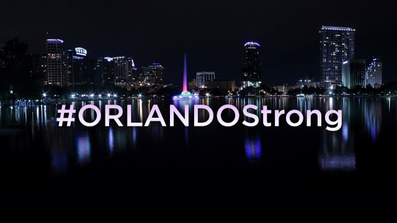
#orlandostrong

Orlando_Strong_1

I’ve spent the last couple of weeks undergoing two courses in trauma therapy, not realizing that an incredibly traumatic event would hit the city I live in.  What happened in my city of Orlando in the early morning hours of 6/12/2016 was an unimaginable tragedy.

I woke up that morning and saw all the commotion on the news and in my disoriented state, I was trying to figure out part of the world this tragedy had occurred in, not realizing that it was happening in my city, just fifteen minutes from where I live.

Just hours earlier I was on my way home from a night out on the town, not far from where the shooting happened, when I saw all the rescue vehicles headed in the opposite direction.  I had no idea that they were going to what would turn out to be the largest mass shooting in recent United States history.

This touched me. It hurts me, not just because so many people got killed, but that it happened in my backyard. It makes me angry. It touched everyone in the city somehow someway. I had never been to Pulse night club, but knew people who did.  My nephew knew two of the victims that got killed.

My sister, the Fire Marshall for the City of Orlando got called to that horrific scene and was shaken by the cell phones ringing on the bodies still inside of the club.

I watched on Facebook as many people I knew; fellow therapists and friends, shared pictures of people they knew and loved who were now gone.

Later that day, I was standing in line at the convenience store when the person in front of me found out that one of her friends was among the dead and right there in front of everyone she broke down in sadness and anger.  I was caught off guard. I had just gone out to buy some milk and there I was face to face with the impact of such a senseless crime.

I did the best I could verbally to console her so that she could get herself together enough to drive home, but it was an instant reminder of the many families and friends that were impacted by this man-made disaster.

Thinking about this tragedy, the nonsense of it all, the loss of life and the amount of trauma that will affect not only the surviving victims, but also the victims’ families, friends, first responders and the residence of the City Beautiful disheartens me.

This was a hate crime no matter how you slice it. Hatred of Americans, hatred of homosexuals, hatred of religious freedom, etc. We can’t let hate win.

No one should have to go through this. I could go on and write about gun control laws, terrorism, homophobia, religion or even post-traumatic stress disorder since this is a mental health blog, but I won’t.

I could go on about how the killer himself was probably struggling with his sexuality and hated that so many people could live freely and comfortably in their own identity, but I won’t give him that much of my energy .

What I want is this: for everyone to take some time to visit with and get to know someone of a different culture, race, ethnicity, sexual orientation, religion, age, whatever.

Get to know people who may seem different from you.

A few months ago I went to a gay nightclub for the first time just because it was the closes club in walking distance in downtown Minneapolis in negative ten degrees weather and I had a blast! It was something I thought I would never do and was initially uncomfortable with, but I had so much fun I went again the next night.

Stop being xenophobic!

Also take a moment and show love to those you love. My nephew just today told me that if he had not ran into me that Saturday night he had plans on going to that same nightclub and could have been among the dead or injured. Tomorrow is not promised for any of us.

There’s a lot of #prayfororlando going around, but besides praying, do something. If you can’t give blood or contribute to the GoFundMe  platform, then at least learn to embrace other human beings and end xenophobia, racism, sexism, religism and any other B.S. that contributes to hate.

On an end note, I am very proud of the way my city, my country and my world are banding together to show support and love for both the LBGTQ community and Orlando as a whole. That’s what love is and that’s the way it should be at all times, not just during times of tragedy.

Why I Became A Certified E-Therapist

Young Man Using Laptop At Home
embracingyourinnerpower.org

When I first started this blog, I had no idea the number of people I would be reaching from not only across the country, but across the world! It wasn’t long before I started getting comments and emails asking for help with a multitude of issues.

As I started to answer questions and provide guidance and referrals, I realized that many people wanted more than a onetime interaction.

Many of them had situational problems and wanted help to solve that problem over the course of a few email exchanges. Others had more in-depth concerns and wanted ongoing contact with me to help move them to a better place.

It literally became overwhelming trying to keep up with all of the inquires, but at the same time, it was some of the most rewarding work I had done.

For instance, I found myself helping a man and his wife in England who didn’t live near any licensed psychotherapists. I found myself helping people who were too ashamed to go to face-to-face counseling or who just wanted the convenience of talking to a professional therapist from their living room.

Just the yesterday I helped a mother and grandmother get their daughter/grand daughter involuntarily hospitalized due to frequent suicide attempts when they were frustrated and thought they had ran out of options. It felt good to be able to do the research, make the contacts and guide them to a resolution even though it was all through telephone contact and they didn’t live anywhere near me.

I realized through helping so many people that I needed to do something that gave these readers turned clients more. That’s why I started Embracing Your Inner Power, LLC (www.embracingyourinnerpower.org) and became a Certified E-Therapist.

E-therapy (electronic therapy/online therapy) is a growing form of delivering therapy that is just as effective as traditional in-office therapy in most cases, while being more convenient.

I had heard about e-therapy several years ago and over the years it has become more and more accepted and I can easily see why.

The family I helped just yesterday lived in a rural area, didn’t know where to turn or even really what they were asking for. I was able to not only help them identify what they needed, but I was also able to help walk them through the steps as they were driving to a graduation.

I’ve found and research suggests that online counseling can be even MORE effective than face-to-face counseling because clients are more relaxed and feel less intimidated than they would in traditional settings.

Don’t get me wrong, I still prefer face-to-face counseling when possible, but I have also embraced technology and the way people are interacting more and more today through social media, chat, email and text messages. People are also becoming more comfortable with technology assisted care.

I’ve helped people with anxiety disorders, social phobias, people who were too busy to drive to a counseling session or just not motivated enough to go to face-to-face therapy, but were willing to turn on their computer and communicate with me. Because of this, the missed appointment rates for online counseling is less than that of traditional counseling.

My main goal as a therapist and my main goal with Embracing Your Inner Power, LLC is to reduce a person’s distress, depression, anxiety or concerns by helping them build on the strengths they already possess.

I’ve found that I am just as effective doing that through online therapy as I am face-to-face. I’ve also found that the people I have helped probably wouldn’t have reached out for help otherwise if it meant physically going somewhere or even inviting a therapist into their home.

Simply put, online counseling works, especially when you’re paired with a therapist who, like myself, works with a limited amount of clients and therefore is able to deliver very professional and personal counseling and not canned or rushed responses and sessions.

Some of the benefits of online counseling include:

  • Convenience– you can receive counseling from your living room, while on vacation… virtually anytime that is convenient for you.
  • Affordable– Online therapy is a lot less expensive than face-to-face therapy which averages over $100 per hour easily. Even when paying out of pocket, online therapy is usually cheaper than the deductible would be for traditional counseling.
  • Licensed– As a Licensed Mental Health Counselor and Certified E-Therapist, I deliver the same professional and high quality service online as I do face-to-face.
  • Secure– All information is kept secure and confidential.
  • Sigma Free– You can remain as anonymous as you want through message based, email and telephonic counseling.
  • Multi-modal– You can choose from video counseling, chat, email or telephone counseling depending on your needs.
  • Effective– as I stated earlier, online counseling in general is just as effective as face-to-face counseling in most situations.

As a Certified E-Therapist, I am constantly working on making Embracing Your Inner Power, LLC, the best it can be and it is a work in progress. I am dedicated as always to helping individuals discover their true potential and am appreciative that this blog and my readers have allowed me to grow and share so much with them.

I’ve been able to help individuals and families from 6 continents and it’s been an amazing learning experience.


Psychological Truama: A Brief Overview

Psychological Truama: A Brief Overview

Psychological trauma is sometimes hard to understand. Because of this, many people who have suffered from it do not realize how it affects their lives. More sadly, many parents who have children that have undergone psychological trauma, do not realize the importance of getting them help because they do not realize the damage that has been caused.

They believe that children are resilient and will get over or forget something traumatic that happened to them when they were one, two, three or four yeas old. Depending on the child, the traumatic event and what protective factors were or weren’t available to the child after the event, that child may suffer psychological damage for life.

Psychological trauma is the unique individual experience of an event in which the individual’s ability to integrate his/her emotional experience is overwhelmed or the individual experiences a threat to their life, body or sanity.

A traumatic event creates an overwhelming feeling within a person where they are not able to cope and are left to feel as if they will be killed, seriously injured or psychologically damaged. The person may feel overwhelmed emotionally, cognitively and/or physically. This type of situation is common with abuse, entrapment, helplessness, betrayal, pain, loss and/or confusion.

Trauma is a very broad definition and includes responses to powerful one time events such as natural disasters like Hurricane Katrina and crime, deaths, and even surgeries.  It can also include responses to repetitive events such as combat, urban violence, concentration camps and abusive relationships.

The key component in trauma is feeling helpless and endangered. No two people will experience the same traumatic event the same. As a matter of fact, what may be traumatic for one person may not be at all traumatic to the next.

For instance, earlier this week I did crisis counseling with four female inmate workers who were out clearing road debris when a man came out of the woods with a machete and chased them back to the van. The man was apprehended, but the four women were brought to me to be evaluated.

Out of the four women, three appeared to be handling the situation relatively well, even able to laugh and joke about the incident while also describing it as terrifying.

One woman however, was obviously more shaken up. She sat nearly stone faced with tears in her eyes, not saying a word during the counseling session. I quickly learned that she was the last woman to make it safely to the van and was the one whose life was most in danger. She also has a history of mental health problems which may make her predisposed to developing signs of trauma which include:

  • Shock, denial, or disbelief.
  • Anger, irritability, mood swings.
  • Guilt, shame, self-blame.
  • Feeling sad or hopeless.
  • Anxiety
  • Fear
  • Nightmares
  • Flashbacks
  • Avoidant behavior

Out of the four women, she is the one I most worry about and the one I will observe closes during the days to come to see how she processes this trauma and to help walk her through it if needed.

That is the interesting part of trauma and why trauma is defined by the experience of the survivor.  We can’t say one event will cause trauma and another will not or that one person will be traumatized by this experience while another will not. Trauma is too broad for such simple explanations.


“Big T” versus  “Little T”

It’s hard to go through life without being traumatized in some way. Most of us have experienced some type of event that has affected us either consciously or subconsciously. It could be the divorce of our parents, being bullied in school, seeing a pet die when we were young.

Many of us don’t even know we walk around caring these traumas with us or how they affect our lives.

For instance, a man whose favorite pet died when he was five may never like pets for the rest of his life and grow angry and anxious when his kids ask if they can have a pet.

These types of traumas are called “Little Ts” or “Little Traumas”. They do not have the severe impact that  “Big Ts” or “Big Traumas” usually have such as flashbacks, avoidant behavior, severe anxiety and nightmares that lead to a diagnosis of PTSD. Still, “Little Ts” can unconsciously disrupt our lives.

Most men I’ve worked with in anger management don’t even realize why they are so angry, why they hit their wives or bully their children. It’s only after some intense introspection that most of them can identify traumatic events in their childhood such as being bullied by their own father, watching their father beat their mother or watching their mother go through abusive relationship with one man after another, that they realize the reason they carry around so much anger.It’s once we deal with the root causes of their anger that they began to truly heal.

I myself as a child watched as my father often abused my mother. I never had any nightmares, flashbacks or anything that would make it a “Big T”. I never felt that my own life was in danger, but I did feel like my mothers’ life was.

Still, one of the affects it had on me was that for many years I thought that’s what love was. That if you loved someone you fought, made up and then fought again. It wasn’t until I was in college that I learned I was wrong. For many years, that “Little T” of watching my parents fight had me living in a world where fighting verbally and physically meant love.

A woman I counseled with was claustrophobic and afraid of the dark. She had no ideal why until one session we processed the fact that her older siblings used to play a game where they would lock her in a closet when she was very young. They thought it was funny, but she was tormented. She never viewed that as a traumatic event until years later, sitting across from me crying.

Trauma doesn’t have to be a negative word. Often times the way we respond to trauma, the way it changes us, the way we adapt to a traumatic event, is natural given the coping skills, circumstances and knowledge we have at the time.

The topic of trauma is too broad to cover in one post. I’ve actually been on a radio talk show discussing trauma twice within the last two months and will likely be on a third time because it is such a huge topic.

My bottom line for this post is to help others realize that you don’t have to go off to war or survive some horrific event to suffer from the affects of trauma. Even “Little Ts” can rob us of our full quality of life and “Big Ts” can devastate us.

Once we recognize this, we can change it through self help, the help of loved ones and even professional help if needed and reclaim the joy and full life we deserve.




Helping Someone Who Has Lost Someone To Suicide

Helping Someone Who Has Lost Someone To Suicide

Earlier this week I was called to talk to a juvenile who had witnessed her boyfriend shoot himself the night before. He didn’t make it. She was obviously upset and making her way through the various stages of grief, but what was most pronounced were denial and anger. She is only 15 and he was 18. His life already over. Her life changed forever. As I listened to her talk, first with disbelief, then with anger at herself for not stopping him, then anger at him for leaving her, until she finally broke down in uncontrollable sobbing before returning back to anger and guilt directed towards herself.

Sadly, during my career I have dealt with a lot of death, but suicides always present their own unique set of challenges. People who have lost someone to suicide often not only feel the grief and tremendous loss that comes along with death in general, but they often also feel guilty that someone they knew decided that whatever they were going through was too much to bear.

A couple of years ago in an auditorium filled with crying high school students, teachers, and parents, after a popular student athlete killed himself, what I heard most was people blaming themselves for not recognizing signs that weren’t there. While sometimes suicides come with warnings, often they are very abrupt.

The irrevocable pain the loved ones of someone who committed suicide feel can cause them to become an emotional and mental wreck. Those of us looking in from the outside often want to help, but are unsure how.

You don’t have to be trained as a mental health professional (trust me, often times all the training in the world doesn’t make it easier), but here are some ways you help someone you know who has lost someone to suicide.

Let them come to you.

supportfriend.jpg

As part of the Crisis team I had to go to several schools over the course of five years after a student had committed suicide. I would walk into a school I didn’t know and come face to face with distraught students, teachers, and parents I didn’t know. It is scary. The best thing I did was to be there and let those who wanted to talk come to me. If I saw that someone was obviously very upset I would go to them, hand them a tissue, sit next to them, and wait for them to open up to me. It always worked.

As a friend, try to normalize things. Let the moment be as natural as possible. When they are ready, they will talk as long as you are there.

Remember the good times.

young-woman-two-friends-female-beach-laughing-fun-summer-660x468

This is a lesson I learned from watching other, more seasoned mental health professionals during those crisis moments. While acknowledging the tragedy of what happened is important, it can be just as important and powerful to help them remember the good times they had with the person they lost. While this may seem counter-intuitive, I’ve seen it work miracles in helping someone stop reflecting on death and to start celebrating someone’s life. I’ve seen people go from sobbing to laughing and from being unable to process the tragedy to opening up completely. So, when they are ready, encourage them remember and talk about happy memories about the person.

Ask good questions.

istock-grief


The young lady I spoke to earlier this week said what most people who lost someone to suicide say at some point; “I don’t understand why he did this.” Naturally I wanted to help her process that, but I knew it was more important that I resist that urge and get her to talk about herself.

It’s important to avoid statements like, “I’m sure you did everything you could”, but instead ask questions like, “Tell me what have you been thinking?”, “What was it like the last few times you were together?”, “What did you see?” These questions allow the person to open up as slowly and as much as they want to.

In the case of the young girl I spoke with earlier in the week, the last question was a big one because she had witnessed the suicide and it allowed us to process that entire scene at her own pace.

Be there, be mindful.

372x247xmentalhelp_istock-21047730_feature-image-300x199.jpg.pagespeed.ic.UaBajVW8cM.jpg

When someone experiences such a tragedy, often they are inconsolable. That is one of the few things that bothers me about getting sudden calls to talk to someone when they have just lost a loved one. I know that generally, with everything so raw, there’s not much I can say that is going to make them feel better in that moment.

What I do, and what you can do as well, is just be there. I sit with them and make myself available. I allow them to cry or to say nothing if they don’t want to. As a friend, you can do the same. You can put your arm around them, hug them, or just be there as a source of comfort. That can be more powerful than trying to find the right words to say.

Find the balance between intrusion and distance.

iStock_000020776112_Large-2559x1061

It is common after someone has lost someone that they will want to be alone so that they can figure out their own emotions and thoughts. You can give someone mental space while still remaining physically present.

What that means is, you can be in the same room with the person, but allow them silence if that is what they want. Allow them some space if that is what they need. You can even be in another room and remind them that you are there for them if they need you.

Offer practical help.

iStock_000016649662_Medium.jpg

After an incredible loss, the person suffering will need help if they realize it or not. After my father died I spent countless days not eating, not showering, and only wanting to sleep. I didn’t even realize I was doing those things, I just remember that my life felt upside down.

Allow the person to go through the natural grief and mourning process, but also offer to help do things to make this time in their lives a little more manageable.

For instance, go grocery shopping for them, pick up the kids, and remind them to eat, to shower, or even ask them how you can be helpful. They may not know that they need help or even have the awareness to be thankful for the help you give them, but trust me, it will help them make it through the darkness.

Allow them to problem solve on their own.

bigstock-emotions-chaos-and-people-con-85205399.jpg

Eventually, the person will ask more of the tough questions about why the person did what they did and what they could have or should have done. Try not to get caught up in problem solving for them, but allow them to work through that themselves. You can be there for them by asking intelligent questions like; “What thoughts did you have when the suicide first happened?” What thoughts do you have now?” But allow them to reflect and figure that out on their own so that they can put it in perspective for themselves.

Suicide is a tragedy and people who have suffered such an extreme lost need good friends to help see them through it.

You Are A Gift

iStock_000018620938_Medium-500x333Earlier today I was speaking with a fifteen year old girl in our juvenile detention center. She is experiencing depression and is 6 weeks postpartum so I was concerned about her. As we talked, I started to understand some of the sources of her depression.

During our session, she revealed that her mother also gave birth to her when she was fifteen and that her biological father has been in prison since she was three years old. Her mother is currently married to a verbally and physically abuse man that she feels her mother places before her in order of importance, attention and affection.

As this young lady and I talked, she described how she grew up feeling like a burden to her young, single mother and how after her mother had other children and multiple boyfriends, she was always made to feel like she was “in the way”.

It became very apparent that this young woman, consciously or unconsciously, had a baby at fifteen years old, partly so that she could have someone in her life that didn’t make her feel like a burden, but gave her the unconditional love she has been yearning for. However, due to her own psychological damage, she now sees her 6 week old baby as a burden and if she doesn’t learn to change the way she views herself, she will pass on that damage to her child.

What I discussed with her this morning and will try to instill in her is this:

We are the greatest gifts we can ever give ourselves. We are also gifts to other people and the Universe. Our children, if we have any, are also gifts.

Too many people grew up being made to feel, even as children, that they were a burden. Maybe they were born to parents who themselves were brought up in painful situations where they did not truly know how to love and appreciate others.

Maybe their parents conceived them as a resolution  to fixing a broken relationship or “save” a troubled marriage. Maybe their parent expects them to be their caretaker, or they were simple born during a difficult time of their parents lives and they were never able to be truly enjoyed, loved, appreciated and viewed as precious gifts as children.

Many of us have grown up never feeling truly accepted and carrying these feelings on unconscious and conscious levels that we were and are a burden.

This is how people can fall into a deep depression or become suicidal, thinking that the World would be better off without them.

This type of thinking is what keeps people from truly connecting with other people on any level or truly enjoying life.

Because of this they end up beating themselves up all the time with negative self-talk, not appreciating themselves, walking around apologizing for themselves, feeling like other people know better and are better than them.

For those of us who have received this terrible message growing up, it’s time to change it.

You are not a mistake. You are not here by accident. You are here because we are supposed to be here.

Our lives have purpose and intention.

We don’t have to apologize for being here or for being ourselves. We don’t have to beat ourselves up over our past mistakes or experiences that have helped create who we are now. We don’t have to be ashamed, apologetic or doubt the beauty that is our unique selves.

We are not a burden and if our parents are the ones who tried to put that on us, it’s time to recognize that it is their issue and not ours. We don’t have to carry that with us. We can let it go.

We are precious gifts and today we will start treating ourselves as gifts to others, the Universe and especially ourselves.

Embracing Your Inner Power

istock dollar inner childSometimes you just have one of those days where it seems like the sun isn’t shining on you. In that darkness it’s easy to beat yourself up over the past and become anxious and negative about the future.

I’ve been there. It used to happen to me a lot actually and sometimes it still does. In the past, I dealt with those days the only ways I knew how which were becoming cling, needy, depressed and anxious. All maladaptive coping mechanisms I had picked up sometime during my life.

In return, I found myself trying to control other people and situations. Wanting people to do what I wanted them to do, think what I wanted them to think and feel the way I wanted them to feel. This rarely worked out in my favor. Usually the people I was trying to control either pulled away or responded negatively which in the end only made me feel worse.

Even when I did get what I thought I wanted, I usually still felt empty and overtime I realize the reason I still felt empty was because the real issue was within me and I couldn’t fix that with people or things.

I realized overtime and from doing therapy clients who suffering from anxiety, depression, and anger issues, that people and things do not stop our pain or move us to a better place. Only we can do that for ourselves.

We are the only ones who have the inner-power to end our suffering and angst. Sure sometimes we need the help of our support systems and/or our spiritual beliefs, but all change truly begins within us. That is when we truly heal and move beyond that pain and darkness.

Once we dig into and heal ourselves, peace, love and trust will return to use easier and quicker than we thought. Trust me. I’ve been there time and time again and it never fails. Our past neurotic attempt to bring back balance and peace to our universe happens much more naturally when it comes from within.

We have to deal with our feelings and accept them as ours. We have to stop our need to control. Peace, love and happiness will return. Remember, a bad day is just a bad day and we don’t have to make it last any longer than absolutely necessary.

I’m not saying it’s easy to stop the pain and anxiety when it comes rushing in. Sometimes even for myself today it takes a moment for me to recognize it, stop from going to my default maladaptive coping mechanisms, and reach inside my own inner-power, but I am better at it today than I was yesterday and will be better at it tomorrow than I am today. That’s all I ask of myself and all I ask of you.

We are much more powerful than we believe we are! We can control not only our thoughts and feeling, but our destinies! We have to learn to harness and embrace our inner power.

It doesn’t matter if you have anger issues, depression, low-self-esteem, whatever it is. The faster you realize you have all the control and no need to try to control other people or situations, the faster you will have the strength to overcome any obstacle that’s in your way, even if that obstacle is yourself.


10 Black Psychologists Who Greatly Impacted The Field: Francis Cecil Sumner

downloadFrancis Cecil Sumner (1895-1954) is better known for being the first African American to ever earn a Ph. D in psychology. What is not so widely known is that he was also the first African American to have earned a doctorate from any American University.

Francis Cecil Sumner was a pioneer for future Black psychologists. He started the psychology program at Howard University and went on to teach other prominent future Black psychologists such as Kenneth Clark. He was also a pivotal leader in education reform and completed vast amounts of research that counteracted racism and bias in psychological studies of African Americans.

Unfortunately, Francis Cecil Sumner died before seeing the end of segregation, something he fought hard for.

Like many Black psychologists, Francis Cecil also did a lot of research in the areas of discrimination and social injustice, but I believe his greatest contribution to the field was becoming the first African American psychologist and paving the way for myself and those before and after me.

His other contributions include:

  • 1916 As a graduate student at Lincoln University he taught psychology of religion, mysticism, rationalism, experimental psychology, social psychology and intermediate and advanced German.
  • 1920-1921 Took his first teaching position at Wilber force University in Ohio.
  • 1921 (summer) Taught at Southern University in Louisiana.
  • 1921 (fall) Accepted an appointment as instructor of psychology and philosophy in the college department at West Virginia Collegiate Institute (now Virginia State College).
  • 1928 Resigned from West Virginia after becoming restless and assumed the acting chairmanship of the department of psychology at Howard University where he remained until his death in 1954.
  • 1931 Had the opportunity to attend the First International Congress for Religious Psychology held at the University of Vienna. There he presented a paper entitled, “Mental Hygiene and Religion” and met many leaders among European psychologists of religion.
  • Served as an official abstractor for both the Journal of Social Psychology and the Psychological Bulletin, where he translated more than three thousand articles from German, French, and Spanish.