What is a Co-morbid Psychiatric Disorder?

ImageA co-morbid psychiatric disorder is any disorder that co-occurs with another psychiatric disorder. Often times we see people as having one issue, when often the truth is they have more than one problem which complicates treatment and recovery.

Recently I started seeing a young man who has both attention deficit/hyperactivity disorder and oppositional defiant disorder. This complicates treatment slightly because both issues have to be taken into consideration at all times sincetotally ignoring one while focusing on the other is seldom successful.

When I worked in the adult unit of a psychiatric hospital, it wasn’t uncommon to see people with depression and alcoholism, or schizophrenia and chronic marijuana use. Often these people use drugs to try to self-medicate and lessen the symptoms of their psychiatric disorders and other times the substances help create or amplify the psychiatric disorder. As a matter of fact, substance abuse and mental health disorders often co-occur in individuals and it’s often hard to tell what came first. Did the alcoholic become depressed the more the disease took over him, or did the depression drive him to drink?People with anxiety disorders for example often turn to illegal substances or prescription pills in attempts to relieve their anxiety. One of my clients who became depressed after losing her baby quickly became addicted to the Xanax given to her by her doctor to help cope with her depression and anxiety.

Definitely some disorders are more likely to co-occur with other disorders. As an example, people with bi-polar disorder are highly susceptible to substance abuse, ADHD, obesity and anxiety disorders.

In the high school setting I generally see teenagers who have depression and an eating disorder, so I work with them to solve both, usually paying more attention to what problem seems to be the most present and severe. With the 15 year old I recently started seeing, he is already receiving medication for his ADHD and while I definitely believe that his ADHD plays a role in his oppositional defiant behavior, I’ll focus on that later since the main reason he was referred for counseling is because of his bad attitude, refusing to follow simple rules, and anger towards his parents and teachers.

Often times teachers and parents are only aware of what condition is rearing it’s ugly head the most and aren’t aware that their are other factors contributing to the behavior. Teenagers rarely drink and smoke just because. Sure there are many who do, but usually once I sit down with them there is more to their substance abuse than peer pressure, usually if it’s not problems at home or self-esteem issues there are signs of a psychiatric disorder such as depression, anxiety or bipolar disorder.

That’s what makes treating and dealing with co-morbidity so difficult. If a patient goes to his family doctor complaining of not being able to sleep at night, he may be prescribed a sleep aid. If he doesn’t tell his doctor that the reason he can’t sleep at night is because he’s worried about his job, the economy, his elderly mother, his doctor in college, etc., then his anxiety will not go away and worse yet, he may become dependent on sleep aids.

It’s isn’t to ignore co-morbidity by focusing on just the problem that we see, but it’s important that we ask, what else may be going on. This will not only help us understand the people we care about, people that we deal with on a regular basis, but also ourselves.

I know all too well the importance of healthy eating on children’s behaviors. So many of the “problem” behaviors I work with could be diminished by healthier eating habits and proper nutrition. Excellent post and great reminder for all of us.

help4yourfamily's avatarhelp4yourfamily

Written by, Kate Oliver, MSW, LCSW-C

It’s the middle of the summer.  Schedules are out of whack and ever-changing.  We have vacations and might be spending more meals on the go or out at restaurants.  Summer can be brutal to a healthy diet, especially if we take the old approach of telling ourselves what not to eat, instead of focusing on what to eat.  It might not seem like a big difference, but focusing on what to eat over what not to eat can make a big difference.  Think of it as looking for abundance rather than deprivation.  Which sounds better to you?  Try this affirmation for the week to see about getting your health back on track or keeping it healthy.

I nourish myself by joyfully eating healthy foods and sharing them with my family.

What does this have to do with parenting?  Two major things happen as…

View original post 414 more words

help4yourfamily's avatarhelp4yourfamily

Written by Kate Oliver, LCSW-C

English: Children at play in the 'Cottage Home...

Boundaries are tough for a lot of people, especially if they were not always honored for you while you were growing up in your family of origin.  They are also ever- changing.  The boundaries you have with your two-year old will be very different from those you have with your teenager.  Extenuating family circumstances and developmental issues can also play a major role in the boundaries we set with our children.

What I would like for each parent to take a moment to do this week is to really think about how your child will have many, many adults go in and out of their lives, but very few parents.  Your role is so special and unique for your child.  They look to you to show them the way to be in the world.  They want you to guide them and teach them how…

View original post 235 more words

Do You Suffer from an iDisorder?

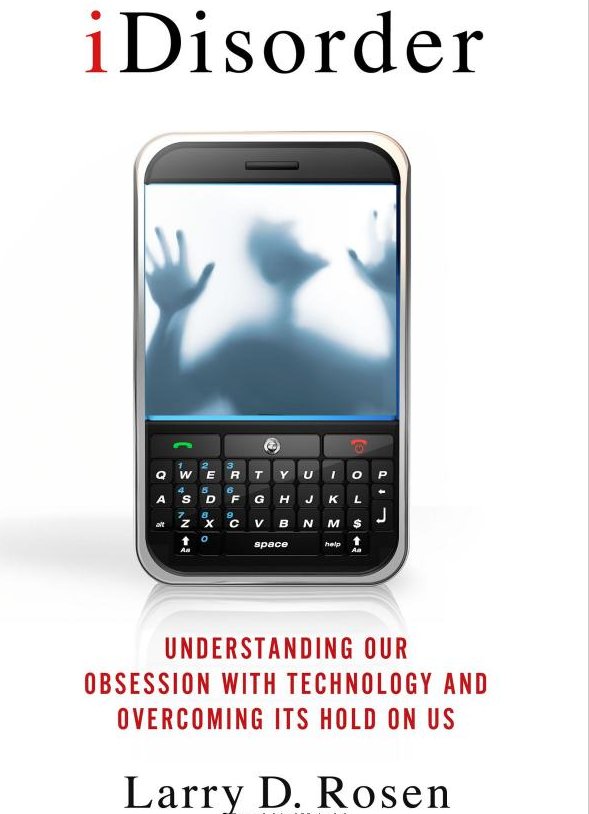
I first heard of the word iDisorder when I came across Larry D. Rosen’s book iDisorder: Understanding Our Obsession With Technology and Overcoming it’s Hold on Us.

While iDisorder is a fairly new term, the idea that our constant and immediate availability to technology causes signs and symptoms that mirror those of some psychological disorders, isn’t.

Most of us have almost immediate and continuous access to either email, our smart phones, our computers or our tablets and often at the same time, using one device to do multiple things like answering phone calls, sending emails, receiving text messages and surfing the web. The thing is, while we use these devices in attempts to control our environment by making everything in immediate access, we also began to become dependent on them.

How many of us have our smart phone with us all the time? Even while on a date or at the dinner table with family we have it next to us, often without thinking, checking text messages or emails instead of being present and engaging with the people right in front of us? Some people find it rude if you are staring at your screen and tapping away instead of making eye contact with them, but it happens so often that I dare to say it is becoming almost socially acceptable.

I remember one time at a restaurant I was people watching as I often do and I saw a couple that looked like they were out on a date, maybe a first date, but instead of sitting across from each other talking, they were both tapping away on their phones and didn’t speak to each other for at least twenty minutes as they waited for their food to be served. At that same restaurant I observed four young ladies all out to dinner together, none of them talking to each other, but all four focused in their smart phones.

There is no doubt that our devices makes it easier for us to get and stay connected with people we might only otherwise communicate with sparingly, but what about the present and those around us. Are we missing out on real life by being too focused on virtual lives?

I have friends who would rather play games on their devices than actually play games with and be around real people. Recently I was co-presenting with another counselor and when I went to turn the presentation over to her I was shocked to see she was texting on her phone. I had to stall until she came back to the here and now. I later asked her what was going on and she laughed it off, saying that it was a text message from one of her kids, nothing was wrong, but she was so used to reading and responding to their text messages that she didn’t think about it even when we were standing in front of hundreds of people.

We get so used to our phones buzzing with phone calls, text messages, emails and other notifications that even when they aren’t going off, our mind is anticipating them going off so much that it triggers our mind and body to think that we feel our phone buzzing in our pockets. These are called phantom vibrations. It’s crazy, I’ve experienced them before and I am sure most of you who are frequent cellphone users have as well.

How many of us are so dependent on our devices that we feel lost without them? Ever leave your house and accidentally left your cell phone? How did you make it through the day or did you turn back around and get it? How many accidents are caused because people are driving and texting. It’s as if that text message has to be read and answered despite the fact we are already engaged in the dangerous activity of driving. Ever watch people who’s smart phone battery is about to die and thy don’t have access to a power source? It’s like watching a drug addicted desperately searching for a fix.

I see kids all the time getting in trouble in school for having their smart phones out, even when they know they aren’t supposed to. And trying to take the phone from them? You’d think you were trying to take a kidney. They throw tantrums, even at times become hostile and risk suspension or worse over a simple device. Can we say addiction?

In his book, Larry Rosen goes on and on connecting our access to technology to things like depression, narcissism, ADHD, hypochondria, voyeurism, eating disorders, anti-social behaviors and a host of other psychological disorders.

On top of that, in teenagers I think it retards their spelling and writing abilities. I’ve seen in teenagers writing that some of them have become so used to short hand text messaging that their spelling suffers and they don’t know when they are writing papers that you can’t just put IMHO when you mean in my humble opinion or txt when you mean text. It’s crazy, but true, so many of the teenagers I work with don’t seem to know when it is and isn’t appropriate to use that type of short hand. One of my teenagers, a very intelligent junior, once wrote me a personal letter I had to decipher. If I didn’t know her I would think she couldn’t read, spell or speak proper for that matter.

The thing is, you can become addicted to anything used in excess and one of the hallmarks of addiction is denial.

As a side note, if you ever have a house party or get together, you may want to thank about banning smart phones as people tend to pull out their phones, start texting, playing games and surfing the internet instead of actually engaging in conversation and activities with people around them. 

It is a good idea for us to unplug every now and then, even if it’s just for a few hours. Put away the cell phone, the tablets, the computers and connect with real people and be present. That would be some thing great for a family to do together although your kids may throw a tantrum at the thought. I think it will help keep us grounded and appreciative of who and what we have surrounding us.

What Your Dreams Are Trying to Tell You

The other day a client came to me with anxiety over the dreams she had been having lately. They were unpleasant dreams about family members, both deceased and alive and left her scared to go to sleep each night. That got me to thinking more about dreams and what they are trying to tell us. I am not a dream analysis, but I will share what I believe and what I know from personal experience and from others experience.

Your Dreams are Trying to Tell You Something?

I truly believe that most of our dreams are not only trying to tell us something from our unconscious, but that they are actually trying to help us understand something. They are also often related to something that happened during the day. Perhaps an unpleasant interaction we had with someone and didn’t really give it much conscious thought, but our subconscious held on to it for whatever reason. As a matter of fact, unresolved issues, feelings and situations play a major part in our dreams. If you are angry with someone and haven’t dealt with it, that anger and those thoughts can find their way into your dreams and play themselves out.

Also certain things like smells or sounds can trigger things in our subconscious that play out during our dreams. Maybe you smelled a hint of a fragrance that reminded you of an old flame and you didn’t give it a second of conscious thought, but later that night you find yourself dreaming about him or her.

The bad part is that our dreams are often complicated, fuzzy or confusing which makes it hard to analyze some of them, but the feeling you have when you wake up from a dream is usually the key to understanding what the dream is trying to tell you and help you with. Did you wake up angry, sad, scared? That is usually the key to what the dream is trying to show and help you with.

Also, something I learned in a graduate school is that many dream analyst believe that EVERYTHING in the dream is YOU. They believe that if you dream about a dog getting hit by a car it was running away from, that it could mean you are afraid of something within yourself and are trying to run away from it. Interesting isn’t it?

Even bad and scary dreams are trying to help us understand or show us something. Lucky some dreams aren’t confusing and are quite easy to understand. Because dreams can be so fleeting and eluding, it is a good idea to keep a dream journal next to your bed so that you can capture those dreams while they are fresh and analyze them later.

Personal Responsibility

Most of the teens I work with have a multitude of problems, but one trend I see a lot of is the lack of personal responsibility. They think of themselves as victims and take on a personality of victimhood where everything happens to them and they have no direct effect on their lives as

Most of the teens I work with have a multitude of problems, but one trend I see a lot of is the lack of personal responsibility. They think of themselves as victims and take on a personality of victimhood where everything happens to them and they have no direct effect on their lives as if they are living life passively and everything that happens is not their fault. If they fail a class it’s the teacher’s fault, other students in the class’ fault or their parents fault… anybody’s fault but their own. The same is true when they get in trouble, despite any evidence provided to them that it’s their fault, their mindset of victimhood makes it hard for them to see reality for what it is.

I spend a large amount of time teaching the teenagers I work with that they are not victims and are not passive participants in life, but that they directly effect their lives every single minute of the day. Even when things are out of their control, they are still in control of their thoughts which in turn gives them control to how they will feel and react to any situation they don’t have direct control over, but more importantly, they have much more control than they realize.

Thoughts, Feelings, Behaviors

Teenagers (and adults) love to say that someone made them mad, sad, angry or whatever feeling you want to insert here. It takes me awhile to get them to understand that they are not victims and no one can make them mad or sad, but that they do it to themselves with their thoughts. I won’t go into much detail here because it can get complicated and probably deserves it’s own post to pay it proper attention, but basically your thoughts control your feelings which in turn control your behaviors. It’s the things we tell ourselves and the thoughts we have about a situation that makes us feel a certain way and then those feelings make us act in a corresponding way… depressed, angry, nervous, etc. Teaching them to control their thoughts is the first step to getting them to take more personal responsibility.

Things I can and Things I can’t Change

One thing I have them do is make a list of things they can control and things they can’t control. This helps them to realize how much power over their lives they actually have. Many times teenagers are stressed and angry at things they can’t control such as their parents, their teachers and their friends. I let them know that everyone was giving one life and they have to learn when to let other people live their lives, despite the paths they chose, so that they can live theirs. I teach them that they can’t control the situation, but they can control the way they think and respond to the situation.Otherwise what happens is that everyone becomes the blame when something doesn’t go right in their lives instead of them taking responsibility for their own life.

Architects 

The other thing I teach them since most of them are trying to figure out what and who they are, is that they are all architects. They are, like all of us, architects, creators and designers of their own lives. They build, create and establish the life they want, no one else does. Sure many of them are born in poverty and have horrible guardians, but unless they learn that they are responsible for getting themselves into a better situation, they will just replay history and be stuck in the same situation over and over again. I tell my kids who I know are in impoverished situations and yet don’t take school or life seriously to look around. I tell them that if they like where they live and how they are living then to keep doing what they are doing, but if they want something better they have to do something different… different for them and definitely different from what others around them have done even if it means they will be doing something no one they know has done such as going to college, the military, trade school or whatever. They design their own lives and as long as they are allowed to believe they are victims then they will never reach for the stars and will blame everyone else for their failures.

CEOs, CFOs and Mission Statements

I also let them know that besides architects they are also already chief executive officers of their lives. They are in charge of the business of them. They are the sole person responsible for them becoming who they want to be. And I also let them know that they will soon be chief financial officers, in charge of their own money and prosperity. I get them to write mission statements because every company has a mission statement and I think ever person should have a mission statement. A mission statement states who you are, what you believe in, what you value and what’s your purpose. Many of them have no clue about these things and further more, never took the time to sit down and think about it so this is the prime time to have them do this.

All of these things combined together add to a greater sense of personal responsibility and loosens the shackles of victimhood. My question to you is, what is your mission statement? Share it with me if you would like and even if you don’t share it, please think about it and make a mission statement even if it’s just for your eyes. I know it will change the way you interact with life for the bette

if they are living life passively and everything that happens is not their fault. If they fail a class it’s the teacher’s fault, other students in the class’ fault or their parents fault… anybody’s fault but their own. The same is true when they get in trouble, despite any evidence provided to them that it’s their fault, their mindset of victimhood makes it hard for them to see reality for what it is.

I spend a large amount of time teaching the teenagers I work with that they are not victims and are not passive participants in life, but that they directly effect their lives every single minute of the day. Even when things are out of their control, they are still in control of their thoughts which in turn gives them control to how they will feel and react to any situation they don’t have direct control over, but more importantly, they have much more control than they realize.

Thoughts, Feelings, Behaviors

Teenagers (and adults) love to say that someone made them mad, sad, angry or whatever feeling you want to insert here. It takes me awhile to get them to understand that they are not victims and no one can make them mad or sad, but that they do it to themselves with their thoughts. I won’t go into much detail here because it can get complicated and probably deserves it’s own post to pay it proper attention, but basically your thoughts control your feelings which in turn control your behaviors. It’s the things we tell ourselves and the thoughts we have about a situation that makes us feel a certain way and then those feelings make us act in a corresponding way… depressed, angry, nervous, etc. Teaching them to control their thoughts is the first step to getting them to take more personal responsibility.

Things I can and Things I can’t Change

One thing I have them do is make a list of things they can control and things they can’t control. This helps them to realize how much power over their lives they actually have. Many times teenagers are stressed and angry at things they can’t control such as their parents, their teachers and their friends. I let them know that everyone was giving one life and they have to learn when to let other people live their lives, despite the paths they chose, so that they can live theirs. I teach them that they can’t control the situation, but they can control the way they think and respond to the situation.Otherwise what happens is that everyone becomes the blame when something doesn’t go right in their lives instead of them taking responsibility for their own life.

Architects 

The other thing I teach them since most of them are trying to figure out what and who they are, is that they are all architects. They are, like all of us, architects, creators and designers of their own lives. They build, create and establish the life they want, no one else does. Sure many of them are born in poverty and have horrible guardians, but unless they learn that they are responsible for getting themselves into a better situation, they will just replay history and be stuck in the same situation over and over again. I tell my kids who I know are in impoverished situations and yet don’t take school or life seriously to look around. I tell them that if they like where they live and how they are living then to keep doing what they are doing, but if they want something better they have to do something different… different for them and definitely different from what others around them have done even if it means they will be doing something no one they know has done such as going to college, the military, trade school or whatever. They design their own lives and as long as they are allowed to believe they are victims then they will never reach for the stars and will blame everyone else for their failures.

CEOs, CFOs and Mission Statements

I also let them know that besides architects they are also already chief executive officers of their lives. They are in charge of the business of them. They are the sole person responsible for them becoming who they want to be. And I also let them know that they will soon be chief financial officers, in charge of their own money and prosperity. I get them to write mission statements because every company has a mission statement and I think ever person should have a mission statement. A mission statement states who you are, what you believe in, what you value and what’s your purpose. Many of them have no clue about these things and further more, never took the time to sit down and think about it so this is the prime time to have them do this.

All of these things combined together add to a greater sense of personal responsibility and loosens the shackles of victimhood. My question to you is, what is your mission statement? Share it with me if you would like and even if you don’t share it, please think about it and make a mission statement even if it’s just for your eyes. I know it will change the way you interact with life for the bette

help4yourfamily's avatarhelp4yourfamily

Words

Written by, Kate Oliver, MSW, LCSW-C

I recently read a book  by Don Miguel Ruiz titled, The Four Agreements.  In this book, the author states that one of the most important things we must all do is to “be impeccable with your words.”  This week, I want us all to use this as our affirmation:

I am impeccable with my words.

When you are using this affirmation, take a moment to think about what it means.  It means that we speak truthfully to and about ourselves and to and about others.  When you find yourself saying out loud or internally, “I am terrible!  That was awful!”  STOP and remember our affirmation this week: I am impeccable with my words.  Are you really terrible?  Was that really awful?  Or perhaps would it be more true to say that you wished you handled something differently?  Look at the difference between saying…

View original post 281 more words

Parents Denial of Child’s Problems Leads to Further Problems

Recently I began working with a young man and the first thing I noticed was that I could barely understand him when he spoke. It didn’t take me long to realize that this young man had a terrible speech problem, but that is not why he was seeing me for counseling as I am not a speech therapist. His mother had asked that he receive counseling because of his low self-esteem. 

Well within a few sessions I was able to link his low self-esteem to his speech problem and asked his mom if she ever thought about getting him a speech therapist. I was shocked when the mom told me that he had been referred to a speech therapist five years ago, but she thought he would grow out of it and never got him help.

Again, denial comes into play here. Her denial of her son’s speech problem caused her to neglect getting him the help he needed and now at twelve years old he is being teased by other children and is uncomfortable speaking so his self-esteem is extremely poor. Imagine if she hadn’t been in denial five years ago and actually got him the help she needed, perhaps he wouldn’t have developed the self-esteem issues that he is currently receiving counseling for. 

When I told the mom that I was pretty sure his self esteem issues were tied to his speech problem and I recommended that he start receiving speech therapy she was shocked and honestly sadden. She had been in denial even up til that day that his speech problem was that serious. She quickly went and got him a speech therapist which she should have done five years ago. Now this young man is working with me on his self-esteem issues and the speech therapist for his speech problems and as his self esteem increases and his speech improves I am positive he will start living his life fully, the way he should have been all along. 

Emotional Detachment

I was speaking with a friend of mine today who is also a fellow counselor when we got on the subject of emotional detachment. It wasn’t until then that I had a sort of “aha moment” and realized that even just the word detachment gives me an ill feeling and saying it feels like I am saying a four letter word.

See, I have an issue with detachment, it’s one of my flaws. I often hold onto people (and things) far too long out of fear of letting go, even when letting go and detaching is exactly what’s needed to free myself and the other person.

I know from my clinical work that many other people also suffer from detaching from bad relationships, bad friends, bad family members and bad situations for many of the same reasons I do. Some people I’ve counseled are so attached to toxic relationships that they can never truly realize their potential if they don’t learn to detach. What ends up happening for me and countless others who stay in situations/relationships that they should have let go is a build up of resentment, anger, and often times decreased self-esteem and self-efficacy.

Detaching can be hard and confusing because there isn’t always a right or wrong time to do it. If we detach from a person too soon we may feel like we didn’t try hard enough to make it work or that we gave up too easily. There is often unclear lines between not trying enough and trying too hard. And sometimes there are control issues at play. We don’t detach from a person or situation because we are trying to control that person or situation. For example, a woman may have a hard time detaching from an abusive husband because she really loves him, thinks that if he just calmed down and quit drinking he’d be an awesome person, so she stays in that volatile situation trying to change/control him although detaching from him would serve her better. A man may stay with a cheating wife who disrespects him over and over because he thinks he can “make her” love him and only him.

And then there are people who detach too easily, never allowing themselves or others the opportunity to nurture relationships and situations. You have to be listen to your heart and know when it’s time to let go, even if letting go is the last thing you want to do.

Detachment to me often times feels wrong even when it’s right and that is something I have to work on. It makes me stay in bad relationships and friendships far too long thinking that detachment is betrayal and telling someone “I don’t care about you any more”.  In reality, detachment is a form of self-care and we all need to know how to care of ourselves and be responsible for ourselves and let other people be responsible for themselves. Detachment is also a form of setting healthy boundaries and not allowing others to take advantage or hurt us and vice-versa.

Detachment is not a bad word or a bad thing to do when it becomes apparent that it is what’s needed. Detachment doesn’t mean that you don’t care about the other person, but that you do care enough about yourself that you won’t allow yourself to keep getting hurt, used or neglected, and that you care enough about the other person to let them go. Sometimes we have to detach ourselves from people we like or even love. Setting yourself and setting someone else free is sometimes the best gift you can give to yourself and that person.

Detachment is easier from some than for others. If you want more information on detachment and letting go, check out The Language of Letting Go by Melody Beattie. It is one of my favorite books.

help4yourfamily's avatarhelp4yourfamily

Written by, Kate Oliver, MSW, LCSW-C

Today I’m going to talk about forgiveness.  It took me a long time to become a convert to this way of thinking.  For quite a few years, especially as I was working with traumatized and abused children, I believed that people, especially abusers, did not deserve forgiveness.  I did not forgive people in my own life as well.  It turns out, I just didn’t understand what forgiving really means.

You know that old saying forgive and forget?  Yeah, that’s not what we are talking about.  Here’s the kind of forgiving I’m talking about.  I’m talking about the kind of forgiving where you decide for yourself that you are going to give over the resentment that you feel about this issue.  There are a few quotes that keep me going when I think about forgiveness that I will share with you now.  Maybe you have…

View original post 688 more words