Bipolar Disorder in Children and Adolescents

Often times bipolar disorder is thought of as an illness that effects mostly young adults, and while the average age of bipolar disorder is around the age of 21, younger children and teens can also be effected with the disorder, sometimes referred to as pediatric bipolar disorder.

Working in a high school with students who mostly have anger problems, I hear a lot of them talking about their “mood swings” and some of them even call themselves “bipolar” although they have never been officially diagnosed. But almost everyone has mood swings from time to time, so what exactly is bipolar disorder?

Bipolar Disorder

Bipolar disorder (sometimes called manic-depressive disorder) is a brain illness characterized by episodes of intense mood swings and behaviors known as mania (high energy, elated, impulsive, etc.) and depression that are usually high or low and shift, generally over days or weeks, and sometimes even blend (mixed episodes). It is not the same as the normal ups and down adolescents and teens go through, it is much more severe.

Early onset bipolar disorder happens in adolescence and the early teenage years and may be more severe than bipolar that develops later in life. There was a time in the past when most experts did not believe that bipolar disorder could happen in childhood, but research shows that at least half of bipolar disorder cases start before the age of 25. Children with bipolar disorder often have co-occurring disorders such as attention deficit-hyperactivity disorder and anxiety disorders.

Symptoms

Adolescents and teens exhibiting a manic episode of bipolar disorder may:

  • Feel very happy and act silly in a way that is unusal
  • Talk really fast about a lot of different things
  • Have a short temper
  • Do risky things (i.e. jumping off of things, dashing in front of cars)
  • Have trouble sleeping, yet not feel tired
  • Have trouble staying focused
  • Talk and think about sex more often (if they are sexually active they may actively seek out sexual encounters)
Adolescents and teens exhibiting a depressive episode of bipolar disorder may:
  • Sleep too little or too much
  • Be very sad/depressed
  • Complain about various pains such as stomach and headaches
  • Eat too little or too much
  • Feel very guilty
  • Be overly emotional and/or sensitive
  • Have little energy or interest in doing anything
  • Think/talk about suicide and/or death

Treatments

Treatments for bipolar disorder include medications and psychotherapies including family therapy (it is important that parents taking care of a child with bipolar disorder, just like any other illness, take the time for self-care in order to be healthy and effective caregivers themselves). There is a concern that many children are being over diagnosed with bipolar disorder since in children, bipolar disorder can also look like other disorders such as severe mood dysregulation or temper dysregulation disorder, and some children may not have a disorder at all but be expressing another, normal biopsychological response to life stressors. While there is no way to prevent bipolar disorder, there is ongoing research trying to find a way to delay the onset of symptoms in children with a family history of the disorder.

I currently see 69 adolescents and adults for various reasons and only about three or four I would seriously evaluate for bipoloar disorder and two I have diagnosed with it. One of them is a 15 year old female and her parents are currently in denial of the seriousness of her illness, yet don’t understand why she isn’t getting better although I’ve had to Baker Act (Florida’s statue for involuntary examination of an individual where they are kept up to 72hrs in a hospital for their saftey) due to suicidal thoughts and self-injury. I’ve also referred them repeatedly for medication evaluations, but again, her parents are in denial and think her issue is all behavioral and not a real illness like bipolar disorder. I have another 15 year old girl I diagnosed with bipolar disorder and she is now on medication (Trilecta) and seeing me for cognitive behavioral therapy and is doing a lot better.

Where to go for Help?

As always, your family doctor or mental health professional should be able to direct you to the proper source of help for your child. If not, look up a doctor or mental health facility in your area to have your child evaluated and treated if necessary. If you know someone who is in crisis do not leave them alone, instead get them help, go to an emergency room or call 911 if it is necessary to keep them safe from themselves. If you are in need of help, the same applies and you can also call a free suicide hotline at 1-800-273-TALK (8225). Also, www.thebalancedmind.org . Their “Library” section has terrific information on pediatric bipolar disorder as well as an excellent checklist to help you monitor your child’s behavior.

Looking at the Five Stages of Grief in Our Daily Lives

Elizabeth Kubler-Ross developed the five stages of grief theory after her work with terminally ill patients. It is a widely used theory used to explain what happens when people are coping with dying and now is even used outside of death to include any experience of loss including divorce, separation and bereavement.  The five stages are:

  1. Denial- “I am fine”
  2. Anger- “Why me! It’s not fair!”
  3. Bargaining- “I’ll do anything for a few more years!” “I promise to go to church everyday!”
  4. Depression- “I’m dying, what’s the point of trying to be happy?”
  5. Acceptance- “I can’t fight it. It’s happening. I might as well be prepared for it the best way I can.”

People often go through these stages in different orders and sometimes from one to the other and back again. For example, someone can be in acceptance and go back to bargaining, or go from denial to depression while skipping anger and bargaining. While this theory has most widely been studied and accepted in dealing with the dying and grieving, in my experience, I’ve notice that it seems to apply outside of these populations.

The Five Stages of Grief Outside of The Grieving Population

  • Substance Abuse

In working with substance abuse users, they often times also experience the five stages of grief. There is a period of denial that there is a problem, anger that there may be a problem, pleading with themselves or a higher power to take away the problem, a period of depression as the reality of the problem starts to set in and then acceptance eventually sets in, more so in those seeking treatment compared to those who do not seek help and seem to remain in the denial stage. Even family members of substance abusers tend to go through the stages of grief in dealing with the family member who is abusing substances.

  • Loss of a Relationship/Affair
Often times the unseen or unwanted end of a relationship sends someone through the five stages of grief. The same sometimes happens when an affair is discovered or sensed. The person first is in denial and then as further evidence is discovered, the person becomes angry and then bargains with themselves, the other person, the universe or whoever for this not to be happening, and then they usually fall into a depression and then eventually acceptance which allows them to try to deal with the reality of the situation in a healthy way.
  • Sexual Abuse
 In cases of sexual abuse, families often go through the five stages of grief. Sometimes it’s a mother who goes through the stages when confronted with evidence or suspicion that one of her kids is being molested by a new boyfriend. Recently I started working with a young girl who was sexually abused by her uncle, who had recently gotten out of prison for sexually assaulting a minor,  but still no one in her family believed her until a year later when her younger sister became pregnant with her uncle’s baby. That tragedy could have been avoided if the family would have not stayed in the denial stage for so long in realizing that her uncle was a sexual predator.
  • Mental Illness
I wrote in a previous post about parents denial of their child’s mental illness. From my experience, parents often go through the five stages of grief when it comes to facing the fact that their child has certain challenges such as ADHD, anxiety or mood disorders or even more severe issues. Mentally ill individuals also sometimes go through the fives stages of grief, not wanting to admit or accept that they may have a depressive disorder, an anger problem, or whatever it may be. This is what usually keeps them from seeking help for years until they finally reach the acceptance stage.
  • Everyday Life
I know there are many other times and situations in which the five stages of grief can be applied, but the ones I named above are the ones I seem to deal with the most. How have the five stages of grief showed up in your life? Have you been diagnosed with an illness and went through a period of denial, anger, bargaining, depression and finally acceptance? I know when I was diagnosed with type II diabetes I went through the five stages of grief and it was only when I reached the acceptance stage that I was able to actively take control of my life.

Can Tanning and UV Rays be Addictive?

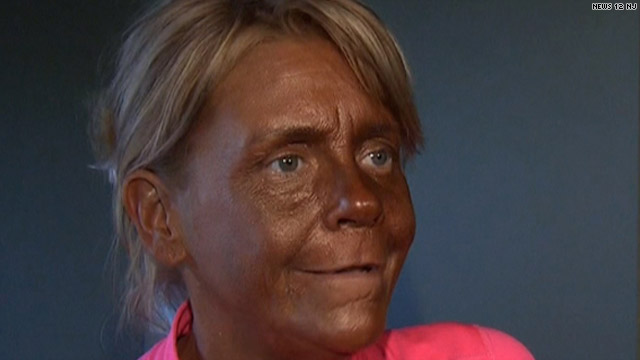
To be honest, before “Tan Mom” I had never ever heard of tanorexia. I assumed that she was a sick woman in need of mental help. I wasn’t judging her, or maybe I was. It just didn’t make sense to me why someone would do that to themselves, but maybe she really has a problem.

Tanorexia is a physical or psychological addiction to tanning. According to a study done by dermatologists, really frequent tanners tend to lose control of their tanning schedules and become a lot like smokers and other substance abusers, wanting more and more. Research says that tanning releases an opioid that tanners can become addicted to and even have withdrawal symptoms from.

Negative side effects of tanorexia include all of the negative things that come along with prolonged exposure to UV rays including cancer. In some cases  of tanorexia, it may even be a form of body dysmorphic disorder (which I originally thought “Tan Mom” had) where the person sees themselves as always too pale no matter how dark their skin gets, and/or finds their pale skin to be disgusting, unattractive and unacceptable. It’s this way it is a lot like anorexia where the person sees themselves as overweight no matter how thin they get.

Currently tanorexia is not an official diagnosis in the Diagnosis and Statistical Manual of Mental Disorders IV (DSM IV), but an updated version of this manual (the DSM V) is scheduled to come out soon and it will be interesting to see if tanorexia will be an official diagnosis. Further more, The Archives of Dermatology appear to make a case for diagnosing the addiction to UV rays as a type of substance abuse disorder so along with alcoholics we may soon have tanaholics.

I’ve always heard that you can become addicted to anything and everything should be done in moderation. Tanorexia seems to prove that statement.

I really like this. Especially as I sit here in my office with students and parents coming for help. I will pass this along and I know it will make a difference to someone today.

help4yourfamily's avatarhelp4yourfamily

From now on, Monday is going to be parent affirmation day at Help 4 Your Family.  Sometimes I  will share affirmations I have created and used, other times I will quote affirmations from teachers I have come to trust.

For this Monday, May 7, 2012 your parenting affirmation is:

My children give me constant opportunities to learn and grow.

Now, you know this one makes you smile, even when you are tired. I would suggest that, to make this part of your self-talk, you repeat it many times throughout the day.  Say it to yourself in the mirror, and mention it to your friends in conversations.

If you have a parenting affirmation that you would like to share, please feel free to let me know.  Maybe you will see it some other Monday 🙂

All the best to your family,

Kate

View original post

Pediatric Autoimmune Neuropsychiatric Disorders Associated with Streptococcal Infections

There is a growing hypothesis that there exist in a small subset of children, a form of rapidly forming obsessive-compulsive disorder (OCD) and/or tic disorder known as PANDAS.

PANDAS is an acronym for Pediatric Autoimmune Neuropsychiatric Disorders Associated with Streptococcal Infections. According to research, these children literally go from “normal” to “abnormal” in the matter of hours. Parents are usually able to pinpoint the exact time and day their child’s behavior changed in the forms of tics (erratic movements or vocalizations), emotional irritability, bed wetting and lose of previous learned motor skills. This is thought to follow exposure to the strep virus (i.e. a strep throat) and appears to be some type of autoimmune reaction.

PANDAS was first proposed during observations and clinical trials by the US National Institute of Health and was verified by further clinical trials, where children, after having been exposed to the streptococcal virus, developed rapid, sudden and dramatic OCD and tic disorder symptoms. There isn’t a 100% cause and effect between streptococcal and PANDAS, or even clear evidence that PANDAS is a separate disorder from Tourettes/OCD, so research is ongoing. Because of this, PANDAS is not yet, or may never be considered a complete disease on it’s on, and there is some discussion that it should be called PANS, an acronym for Pediatric acute-onset neuropsychiatric syndrome to further include not just the sudden onset of tics and OCD symptoms following exposure to a previous infection, but the sudden onset in children regardless of a previous infection or not.

What if I Think My Child Has PANDAS and is There a Cure?

Your family doctor or psychiatrist will be able to access and diagnosis whether your child has PANDAS or not. Treatment for PANDAS right now are the same as the treatment for Tourettes and OCD which include cognitive behavioral therapy and medications such as selective serotonin reuptake inhibitors (SSRIs). As research grows and the PANDAS hypothesis is either further confirmed or denied, other therapies and medication options will become available, but as of right now, there is no cure other than to try to reduce and control the disturbing and undesirable symptoms of PANDAS.

There seems to be a link between previous childhood exposure to infections such as strep throat, to the development of PANDAS, but there isn’t a 100% certain link and you shouldn’t worry too much that exposure to infection in childhood will lead to life long, neuropsychiatric problems. However, there seems to be growing evidence that in some children, this is the case and like with every child, if you notice sudden changes in your child, such as decrease in previous learned motor skills, increased irritability, tics (vocal and/or physical), difficulty sleeping, difficulty eating or any other unusual behaviors, it is very important to have your child seen by a doctor or specialist to not only rule out PANDAS, but also other diseases and pervasive developmental disorders such as Autism, Aspergers and childhood disintergrative disorder.

For more information on PANDAS visit http://intramural.nimh.nih.gov/pdn/web.htm

Is Your Child’s Oppositional Behavior ‘Normal’?

Oppositional behavior is often a normal part of childhood, especially around the ages of two to three years of age and early adolescence. Often oppositional behavior occurs when the child is hungry, tired, stressed or irritated. During these periods they may defy their parents, teachers, other caregivers, argue, talk back and be disobedient. These behaviors may be upsetting to parents, but they usually aren’t too upsetting because they fall into the “normal” realm of oppositional behavior expected in childhood. But when does openly defiant, uncooperative and hostile behavior become abnormal and a need for serious concern? When it stands out when compared to other children of the same age and developmental level and when it is so consistent, frequent and disruptive that it affects the child’s personal, school and family life. That’s when normal oppositional behavior becomes Oppositional Defiant Disorder (ODD).

Oppositional Defiant Disorder

Children with Oppositional Defiant Disorder (ODD) present with an ongoing pattern of defiant, hostile and uncooperative behavior towards authority figures that seriously interferes with the child’s daily life in the form of getting in trouble at school frequently or having to be disciplined regularly. Some symptoms of ODD are:

  • Spiteful attitude and revenge seeking
  • Often being touchy or easily annoyed by others
  • Excessive arguing with adults
  • Frequent temper tantrums
  • Often questioning rules
  • Deliberate attempts to annoy or upset people
  • Active defiance and refusal to comply with adult requests and rules
  • Mean and hateful talking when upset

Usually these symptoms are exhibited in multiple settings such as at school or at home, although they may be more present in one or the other. While the causes of ODD are unknown, one to sixteen percent of school-aged children/adolescents have it. Parents with children who have ODD often say that their child was more rigid and demanding from an early age compared to their other children who didn’t have ODD. It is widely expected that a combination of psychological, biological and social factors contribute to the development of ODD.

What To Do If You Think Your Child Has ODD

If you think your child has ODD, they will need a comprehensive evaluation that will include checking for other disorders such as attention-deficit hyperactivity disorder (ADHD), mood disorders (such as depression or bipolar disorder), learning disabilities and anxiety disorders. If these disorders are also present in your child, they will have to be treated as well because it is nearly impossible to treat ODD without also treating any other coexisting disorders. Some children with ODD can go on to develop conduct disorder, which is a much more pathological and destructive disorder.

Treatments for ODD

They are many treatments for ODD that include Parent Management Training Programs which help parents manage the child’s behavior. Individual therapy where the child can learn anger management skills. Family therapy to help the overall family communicate and work more effectively together. Cognitive Problem-Solving Skills Training and Therapies to assist with problem solving and negativity. Social Skills Training to increase flexibility and improve social skills, increase tolerance and decrease frustration with peers. 

Medication in some cases is helpful when ODD symptoms are extreme or very distressing or if they coexist with other disorders such as ADHD.

Since ODD children can be very difficult, parents of children with ODD need help, support and understanding. They need self care in the forms of:

  • Take a time out if you are being extremely stressed by your child and support your child if they decide to take a time out to prevent from getting more upset
  • Maintain interest in other things besides your child
  • Pick your battles with your child
  • Build on the positives, reinforce desired behaviors
  • Manage your own stress
  • Set up age appropriate rules and consequences for your child
  • Don’t be afraid/embarrassed to ask for help

Most children at different stages in their development will exhibit oppositional behavior, that is normal, but when it becomes abnormal, it’s important to know when and who to turn to for help. The Oppositional Defiant Disorder Resource Center (www.aacap.org) is a great resource and a great place to start if  you want to know more about ODD.

Parents Denial of Their Child’s Mental Health Issues Doesn’t Make It Go Away

ImageThe more family sessions I do, the more concerned I become at the astonishing number of parents who are in denial of their child’s mental health issues.

Recently I was dealing with a teenage girl referred to me by her mother because she was scared to be by herself, “acting weird”, talking and laughing to herself.

After meeting with the girl twice I got her to tell me some information she had ever told anyone else. She was hearing voices and having extreme paranoid delusions of someone putting “voodoo” on her and making her do things against her will.

After further sessions and gathering more collateral information from her mom and sister, I diagnosed the girl with a psychotic disorder, with a rule out of paranoid schizophrenia.  I referred the mom to a local psychiatrist so the young lady could be evaluated further and the mom was extremely hesitant. She questioned my every judgment, and while she was very concerned for her daughter, she hoped that it was “all in her head”. I tried to convince her mother that it wasn’t “all in her head”, but an illness, that according to her records, seemed to run in the family.

Their family history was peppered with undiagnosed mental illnesses.

Needless to say, the mother didn’t follow up on my referral until a few weeks later when her daughter had a psychotic episode that truly scared the mother. It was then she came back and thanked me for recognizing this when I did.

And then last week, I had a girl come to me extremely tearful. She had old and new self-inflicted cuts up and down her arm. She told me that she was suicidal, tried to walk out into traffic the day before but a friend stopped her. She had thoughts that day of hanging herself or jumping off the third floor of the school building.

I called her dad to have a conference and recommend that she be taking to the nearby psychiatric hospital for her safety. I didn’t need his permission to do that, but I thought it would be better for her.

When her dad showed up he was extremely annoyed, yelled at her for not being able to communicate with him, and said that she wasn’t suffering from depression, she was just “lazy”. He said she was failing school because she slept all the time, didn’t do her homework, didn’t want to be involved with her family and seemed aloof.

The more he described her “laziness” to me, the more he re-affirmed my diagnosis of his daughter being depressed. He argued with me that she was depressed because of her failing grades and being behind in her school work, even though she and I both tried to explain to him that the depression is what caused her to start failing school and get behind in her work in the first place.

He didn’t want to hear or believe that his daughter was depressed and suicidal. He said that it was a cry for attention, and it very well may be, but as a mental health professional, my job is the evaluate the situation and keep my client from hurting themselves or other people. I had her involuntarily hospitalized to a mental health facility for her safety. Her dad left with angry, probably thinking we were wasting his time, but I’d prefer him to be angry with me for being overly concerned than to be mad at me for not trying hard enough to prevent her suicide.

Even just recently I have been working with a girl suffering from severe depression and suicidal thoughts. She confessed to me that she had attempted suicide last weekend by taking 18 sleeping pills and was disappointed that it didn’t work. I convinced her to allow me to call her father so that I could recommend psychiatric help, possibly hospitalization. The first thing her father said to me over the phone was, “No, I don’t believe it. We are Christians, we don’t do things like that.”

It took me while to convince her father to actually come into my office so him and I can sit down and talk with his daughter, and even then it took nearly the whole session before he started to accept that his daughter was indeed depressed although he was still in denial about her suicidal thoughts or previous attempt.

Parents can be my biggest allies or worst enemies when it comes to dealing with children and adolescent clients, and their denial of their child’s mental health issues only complicates everything. I see so many kids who can benefit from intense therapy and maybe even medication, but their parents ignore the seriousness of the situation and write it off as defiant behavior, active imagination or they just hope their child will grow out of things such as torturing animals and setting fires. Denial is a defense mechanism and while it’s okay to be skeptical, being in denial is almost always unhealthy in the long run.

How Much Responsibilty Should You Have For Your Friends?

I am a big proponent of everyone being responsible for themselves, and this is largely because of my own personal flaws. I am a codependent. I often feel responsible for other people’s happiness and well being. This often times puts me in situations where I get used or even worst, don’t treat myself right because I’d prefer to see others happy before myself. Still, I think there are times when you should have a responsibility to and for your friends, and of course times when you should not.

The other night, a friend of mine went out drinking with a female friend of his. They both got intoxicated, she more so than he. After the drinking was done, he tried to help her sober up by walking around with her and forcing her to drink water. It was getting late and he was ready to go home so he took her to an establishment and according to him, told them that they were responsible for her and to not allow her to drive. Well, an hour later he got a call from a police officer saying that he had stopped her, was giving her a DUI and wanted to know if he was available to pick up her car from the side of the road.

My friend was devastated. At one end he felt responsible and on the other, felt like he had done all he could do and that she was a grown woman responsible for her own decisions. I agreed with him to a certain extent, except she was intoxicated and intoxicated people usually make very poor decisions. On top of that, as a friend, I felt like he should have placed her in a taxi and make sure she got home safely. When my friends and I go out drinking, we ALWAYS have a designated driver. I thought it was a poor decision on both of their parts to both drink in the first place. And as a man, I thought he should have been extra protective of his female friend.

I watched as he went back and forth from feeling bad, to feeling like he did nothing wrong and I notice I was starting to feel a certain way about him, almost as if I couldn’t trust or count on him in a life or death situation. I wondered if we had been together that night and he was more sober than I was, would he have left me to fend for myself the way he did his female friend. Then I had to start questioning what type of friend was he really? Sure he’s a fun person to hang around, but I was starting to think that he certainly wasn’t someone to count on in a life or death situation. Me, being who I am, would have never left my friend to fend for herself while she was inebriated, but maybe that’s just the codependency in me, or maybe that’s because I think friends should always look out for the best interest of each other.

So I think there is a line between taking responsibility for say, your friends happiness and being so codependent that you are not allowing them to learn to take care of themselves, but in the situation when it comes to your friends safety, especially when they are not in the right frame of mine to look out for themselves, I do think a good friend has the responsibility to make sure that their friend doesn’t do something irreparably foolish that they will certainly regret later.

Are You an Emotional Tampon?

Often men, good men who are emotionally available when so many other men are emotionally unavailable find themselves thrown into the role of being an emotional tampon by the women they care about.

According to Urbandictionary.com, an emotional tampon is “a role taken on by a man in a ‘just friends’ male/female relationship. An emotional tampon is a man who will always be there to provide a woman with the proverbial ‘shoulder to cry on’ or some other outlet for her to otherwise vent her emotional frustration, problems and mental unbalance. Ultimately, he becomes the only person for whom this behavior is reserved as nobody else will tolerate it but him.”  -Gregory Prius

This especially happens when a man is trying to become more than friends with a female who has already delegated him to the “just friends” category. These men usually aren’t aware, or are in denial of their doomed state and think that being friends will lead to more, but it seldom does and usually ends up with many nights of listening to her complain about the no good guys she keeps seeing and trying to make her feel better after her heart has been broken again and again with hopes that their loyalty and and passion will be repaid with equal loyalty and passion, hopefully in the form of a real relationship.

The problem with being an emotional tampon is that this never happens! You get used and once she is feeling better, moved on to a different guy or got back with the same guy, you’re cast aside with no regard until her next period emotional crisis. This usually leaves the guy feeling jilted, bitter and angry towards the female, but usually he says nothing and is all too eager to relegate himself as her emotional tampon the next time she comes crying. These guys hearts are big, they are emotionally over available to an extent, but in the end, they are always left feeling fouled and unappreciated.

The Psychology Behind Men Who Tend to Be Emotional Tampons

These men tend to suffer from lack of self-esteem and confidence. They often are enablers and codependent. They often feel responsible for other people who should be responsible for themselves. And, they are dreamers. Nothing is wrong with being a dreamer, but it’s important to know when to let a dream go, especially when you are being used.

If you recognize yourself as an emotional tampon, you should just stop it! Yes, it’s that simple, stop it! Stop allowing someone to use you. Everyone is given one life and is responsible for it, not you! You are responsible for your own life and that’s it. It won’t be easy, we really care for and often times even love the women we become emotional tampons too, but it’s really just a fuzzy fantasy. It’s okay to be a friend and part of someones support system, but it’s not okay if that relationship is only one way and you don’t benefit from it at all. It will only leave you feeling used and emotionally drained. Save all of that energy for a woman who will appreciate your emotional availability and will reciprocate in one way or the other. Your days of being used for a few days out of the month and then thrown away until needed again are over!

Young, Poor and Pregnant

Why Your Teenaged Girls Get Pregnant

I work with a lot of young teenage girls and they all have a few things in common, including curiosity, misinformation about and pressure to have sex. What I hear a lot in the inner-city school I work at is that “everyone is doing it”, so the pressure to be part of the overall sexual culture becomes very important, at times, more important than the girls own autonomy. Most of these girls are clueless about sex and birth control. They are too afraid to let their parents know that they are sexually active, would die of embarrassment if a condom was found in their purse and would be too ashamed and scared to ask the guy they are having sex with, to put on a condom, if he doesn’t automatically do it. So instead, they open themselves up in more ways than one to everything that comes with precocious sex including sexually transmitted disease and psychological impairment.

Many get pregnant out of simple ignorance, but most get pregnant for more complex and often subconscious reasons. In her book, Young, Poor and Pregnant Judith Musick goes into great details about the psychology of teenage motherhood and why young girls decide to engage in sex, get pregnant and have babies. These girls usually get pregnant because of the lack of some other need. From my personal experience, six out of about forty young women I worked with last school year got pregnant for these reasons:

  • “My mom has been in prison all my life. I’ve never really had a mother. I can be a better mom than she was.” –“Luz”, 15, 10th grade
  • “My mom and I don’t get along. I think me being pregnant and having her grand daughter will bring us closer.” –“Jessica”, 17, 10th grade
  • “I have no idea what I want to do in my life. I’m failing school. I might as well have a baby and marry my boyfriend.” –“Rosaria”, 15, 10th grade
  • “Having a baby will give me someone who will always love and want me.” –“Keyana”, 17, 11th grade
  • “My boyfriend has a baby with another girl. If we have a baby together then I won’t have to worry about him leaving me for his first baby’s momma.” –“Brianna”, 15, 9th grade.
  • “My boyfriend and I have been fighting a lot. I think having a baby will bring us closer together.” –“Laura”, 18, 11th grade.

Only one of these young ladies came back to school after giving birth to their children. The other five dropped out. It’s hard for a young mother to continue her education after having a child, especially with a lack of support. The one girl that did come back  has a lot of support from her family and her baby’s father.

Why African American and Hispanic Teenage Girls Have Babies More Than Their European American Counterparts

European American teenage girls that get pregnant are more likely to have an abortion or give their baby up for adoption than African American or Hispanic teens. A small part of this may be finances, but more so I think is the strong anti-abortion and anti-adoption heritage in these communities. These children are also more likely to grow up in poverty if these young mothers are emulating their family and community. If it is the norm for 16 year old girls to get pregnant, drop out and get on welfare, where is the push for other young girls in the community to be different? If these young girls mothers had them while they were young, had more kids than they could financially and psychologically take care of, and these young girls older siblings repeated the cycle, it is incredibly hard for this young lady to avoid that same trap unless she has a strong will or other safety measures and programs are put in place.

Real Life Example

The other day a good friend of mine called me in shock. His 15 year old daughter is pregnant. She’s only in the 8th grade. This saddened me, but this is a generational curse. Her mother had her when she was 16 which is about the same age her grandmother had her mother. However, my friend and this young ladies mother were doing the best they could to keep her from making those mistakes, but it wasn’t enough. I’m convinced that the psychosocial factors surrounding her getting pregnant and then deciding she wants to keep the baby were even stronger and more prominent than whatever interventions her parents were trying to implement.

The Good News

Despite the popularity of shows like “16 and Pregnant”, The number of teenage girls that are getting pregnant is at its lowest point in nearly two decades according to the Centers for Disease Control and Prevention. Still, according to the CDC, 1,100 teenage women get pregnant each year which means that about one out of every ten babies born are born to teen moms.

Better education and prevention programs need to be put in place and it all starts at home. Don’t be afraid to talk to your teen or preteen about sex. If you are uncomfortable talking to them, they will be uncomfortable talking to you and you both will end up having an uncomfortable conversation when she becomes pregnant. Get sexually active teens on a form of birth control. Yes abstinence is the best way, but birth control AND a condom will hopefully keep your sexually active teen from becoming a teen mother.