Mental Health Struggles After a Hurricane

Mental Health Struggles After a Hurricane

I live in “The Sunshine State”, but unfortunately, it’s not always sunny herein Florida especially during hurricane season. Just last week many Floridians, including myself, were affected by hurricane Ian. While my house in suffered no damage other than to the fence and being out of power for three days, many others faired far worse. Many people lost their homes to the winds and floods. Sadly, many people also lost their lives. At the time of this writing, 103 people in Florida had died from the storm and recovery efforts are still ongoing. I work at a level 3 trauma hospital and have seen patients with injuries indirectly related to the storm such as burn injuries related to generator fires and electrocutions caused by down power lines. Being in a major storm can be terrifying and even after the storm has passed, it’s effects can still linger not just with the damage to the community, but mentally with those who survived.

For many, such natural disasters can trigger a continuing sense of anxiety and depression or worsen long-simmering mental illnesses, mental health experts say. The effects, if left untreated, can linger for years.

Going through a natural disaster like a hurricane can be very traumatic. Thousands of people had to evacuate their homes, and some had no home to return to, losing all of their possessions and some even their businesses and jobs in the process. In Orange County where I live, schools were closed for several days, and one elementary school is damaged so badly because flooding that those kids are now being taught at a high school. Imagine how traumatizing that is for elementary age kids to suddenly lose their school and have to adjust to a whole new environment that no one could have prepared them for. While children are known for being resilient, I have no doubt that many of them will need additional emotional support at this time.

Often people who suffer from a mental health issue will have a worsening of symptoms especially because they tend to lack adequate coping skills as it is. Even those who don’t suffer from mental health issues may find themselves struggling weeks to months later when they realize how difficult it may be to rebuild, the financial toll the storm has taken on them or anxiety whenever another storm may be headed their way. Once power got restored at my house I had to go through my refrigerator and freezer and throw away almost everything which in itself could cause someone on a limited income anxiety and depression as that food has to be replaced somehow. Luckily there are government assisted programs like FEMA that are offering aid to those in need.

Here are some tips for coping with natural disasters like hurricanes from The Anxiety and Depression Association of America:

  • Create a plan: Being prepared can help reduce anxiety before, during and after a big storm. Make a plan to evacuate and put together preparedness kits.
  • Be informed: Keep a close eye on weather information and warnings. That may help you gain a sense of control over the situation.
  • Talk it out: Don’t be afraid to talk about your fears with family members, friends, a counselor, or others who can offer emotional support.
  • Accept what you can’t control: Nobody can control the path of a storm or its damage. Excessive worry will not change anything except your emotional well-being.

Some people may need to stay away from watching too much news coverage of the storm as it can be upsetting. Trying to get back to your normal daily activities as soon as possible can be helpful as well as exercising, sleeping and eating right. It’s really hard to manage your mental health when you’re mentally and physically exhausted.

If you can, after the disasters has passed, consider doing something that may make you feel good such as donating food, money or your time. If, however, you feel extremely overwhelmed, depressed and your symptoms don’t improve in a few weeks, it may be time to seek professional help.

Often people think after a storm or natural disaster only about the clean-up and rebuilding, but it’s important that we don’t neglect the survivor’s mental health.

I’ve attached some personal pictures to show just some of the damage Ian caused across central Florida. Things are much worse in certain areas, especially where the storm made landfall.
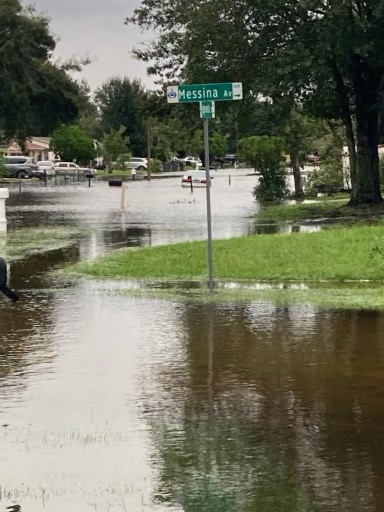
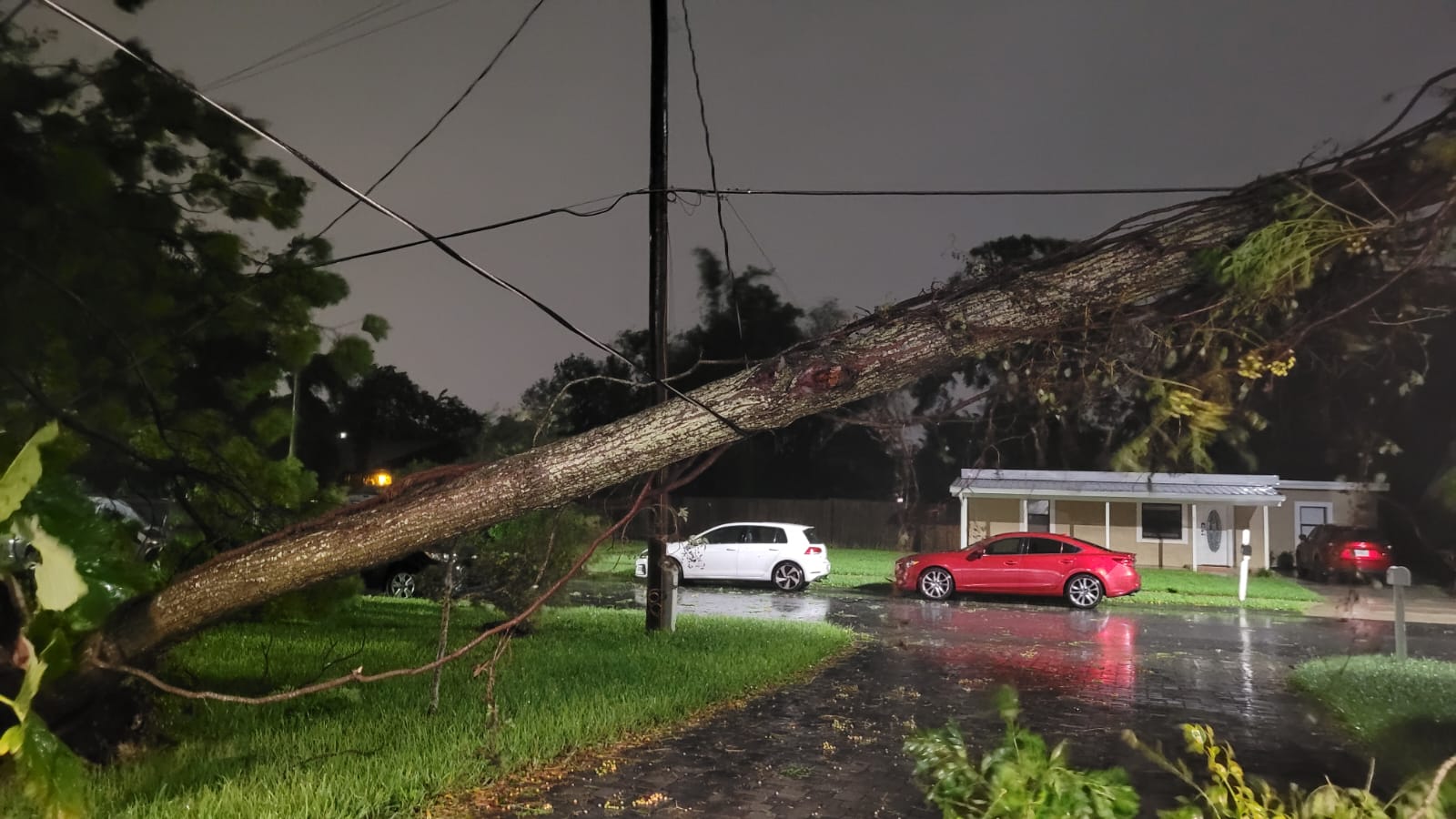
View from my old house in Orlando the day after Ian passed through.
The view from a friend’s house

A picture a friend of mine who is a fire fighter sent me while rescuing people from flooded houses the day after hurricane Ian
The food from my refrigerator and freezer that had to be thrown away due to not having power for over three days

The Trayvon Martin Tragedy And Psychology, Part One: My Personal Thoughts And Experiences With Racial Profiling

trayvon_martin_dad1The Trayvon Martin trial began this week with jury selections that are proving to be difficult for multiple reasons.

The Trayvon Martin case hits home for me for many reasons, not just because I too am an African American, but because the small city this happened in, Sanford, Florida is a suburb of Orlando, the city I live in. As a matter of fact, one of the schools I was offered to transfer to is located in Sanford.

Another reason it hits home for me is because as an African American male I have faced racial profiling many times in my life, especially when I was a teenager.

When I was a young teen it was very common for me to be followed around in stores and I can remember at least twice when I was actually stopped and confronted by a store worker for “stealing” although I wasn’t. My friends and I used to have a joke that once we entered a store they would have a special code they would say over the intercom to alert them that black people were in the store.

When I was young I thought it was a necessary hassle, sometimes I even thought it was funny because the store clerks would try not to be obvious, but they were always obvious to me. I was, even at a young age always aware however that I was seen a a criminal and “guilty” even though I had committed no crimes.

As an older teen things got worse, but still, being a teenager I didn’t take it personal and even thought it was funny at times.

Driving my mother’s car, on a weekly basis I would get pulled over, sometimes searched, but always inconvenienced for absolutely no reason.

I remember my friends and I would go to Dennys and sometimes be there for an hour or longer before we were ever even asked what we wanted to order. At the time I didn’t think anything of it other than bad service, but when I got older, I learned about the discriminatory practices Dennys used in some locations to deter African American customers and have no doubt that is what was going on then, we just didn’t know it.

Being harassed by the police was so common that I started to feel like a criminal whenever I saw one, expecting them to stop and search me for no reason which sometimes they did.

In particularly I remember an incident in which I went to visit with some friends in a gated community and decided to take a walk around the block. Well I didn’t even get half way around the block before I was approached by security and asked what was I doing there. He stated that someone had called about a suspicious person in the neighborhood. I couldn’t help, but to think that the only thing that truly made me suspicious was my skin color, because unlike Trayvon Martin I wasn’t wearing a hoodie and it was daylight out.

The Trayvon Martin case hits so close to home because I, like millions of other black and brown men around our country can identify with his situation. I don’t want to go into detail here because I don’t know all the details, but what I do know is what we know from Mr. Zimmerman himself.

He saw Trayvon Martin and for whatever reason thought that he was up to no good. We know that Trayvon was doing nothing wrong, yet he was viewed as a criminal and guilty automatically, much like I have been multiple times in my life.

For this reason, I will write a bigger, more in-depth article behind some of the psychological reasons I believe this tragic incident happened.

As a young African American male, I took the harassment by store clerks and law enforcement as a necessary price I had to pay for being young and black. I didn’t take it personal, but as I got older and became a college educated adult with a professional job, on the rare occasions I felt harassed because of my skin color, I no longer found it funny or necessary, but extremely irritating and degrading.

About two years ago on my way to work, dressed in a shirt and tie I got pulled over by a police officer. I actually knew he was going to pull me over before he did it because it was just him and me on the road. I didn’t mind the stop because I knew I didn’t do anything wrong and after checking my license and verifying I had no warrants, instead of letting me go he asked me if I had any guns and drugs in the car and if I minded if he searched it.

I was shocked, largely because I had assumed that this type of harassment would stop when I got older and certainly once I went to college and became a professional, but it didn’t, it just became less frequent.

About four months ago I was pulled over by an undercover truck with four police officers, asking me again if I had drugs and guns. It was only when one of the officers recognized me that they eased up and immediately let me go. It was dark and if I had mistakenly took this undercover stop as a carjacking (which I initially was afraid it was) it could have ended tragically for me.

Just yesterday on Facebook, a friend of mine and a successful store manager wrote jokingly, “The first time not getting pulled over for being black I get 2 tickets. I think I prefer them holding me at gunpoint and searching for guns and drugs, it’s cheaper.”

The Trayvon Martin case resonates with me because it could have easily been me or one day, my son.

I think this unfortunate situation has a lot to teach us not just about race relations, but about the way we receive and perceive information through our minds based on preconceived notions which we will explore in my next post.

.

Is It Okay To Use Different Academic Standards Based on a Students Race?

I was honestly shocked the other day when on the local news I saw a report that the Florida Board of Education, just passed a new race-based standards of academic acceptance which will affect all of the 2.6 million students that are in the state’s public school system.

I was shocked because I don’t remember hearing about this, and yet it has passed. Apparently there was no vote on this from the public and I was even more shocked to hear what the standards are.

The new academic standard says that by 2018, 90% of Asian students, 88% of white students, 81% of Hispanic students and 74% of black students are to be reading at or above grade level.

It also states that 92% of Asian students, 86% of white students, 80% of Hispanic students and 74% of black students will be at or above their math grade level.

Really?

Now some people will say that this is a part of Affirmative Action, but I’d like to argue against that. This is part of goals required from Florida’s waiver of No Child Left Behind. State officials say that these new standards take into account the performance numbers of current students of color.

I say that this is a way the state can take the blame away from where it really should be, and that is on failing schools, inequality of schools and teachers in different communities, poor teachers, bad parenting and failing community services and supports.

It is unconscionable to me that we would expect less of a child based on his or her race/ethnicity. All kids have the ability to learn regardless of race or ethnicity.

It is true that often things such as socio-economic status and parental educational background have a lot to do with a child’s academic performance, exposure and experiences, but to dumb down the expectations of a child based on their race/ethnicity is really backwards.

And where is Florida getting this idea from? Virginia! No offense to Virginians, but Florida is following in Virginia’s footsteps when it comes to educating their students. Some say it’s so that black and Hispanic children won’t feel bad when they don’t perform as well as their white and Asian counterparts. Really?

When I was in high school I had to pass a competency exam to graduate, my race/ethnicity played no part in this. I was expected to get the same passing score as everyone. They same went for the exit exams I took in undergrad and graduate school.

Former Florida Governor Jeb Bush even said that this would send a “devastating message” that Hispanic and black students aren’t as capable as other students.

Palm Beach County School Board Vice-Chair Debra Robinson said she’s “somewhere between complete and utter disgust and anger and disappointment with humanity” because of this.

We do a disservice to our kids when we are basing academic standards on race/ethnicity. We will be placing a black mark on the high school diplomas of every black and Hispanic child.

It would be better to track students individually and not group them by race/ethnicity, but that would cost the state too much, so it’s easier to just make generalized, in my opinion, racist academic standards of achievement.

A long time ago I read a book called The Bell Curve and thought it was the most racist piece of garbage I had ever read. It was largely about whites intellectual superiority over blacks. This isn’t much different.

How can black and Hispanic children feel good about their academic achievements if they are held to a lesser standard, especially in elementary, middle and high school where these poor standards are setting them up for future failure?

In elementary school I always made the honor role until one day I got a “C” and cried. My teacher consoled me by saying “C’s are good for a boy”. After that day, I never made the honor role again until the 11th grade. I was happy with “C’s” and it was only until the end of my sophomore year in high school that I started making all A’s and B’s again.

What changed? I did, not the academic standards, or even the school or teachers, but me.

I learned that “A” stood for excellent, “B” for good, “C” for average, “D” for poor and “F” for failure. I told myself I was above average and aimed to never get below a “B” and from that point on in high school, through undergrad and graduate school, I didn’t.

With Affirmative Action, yes it helps minority students get into college with lower exam scores than whites and Asians, but once in college they are expected to keep up or get out. There’s a difference between that and this.

If we tell our kids it’s okay to be below average because of your race/ethnicity, I think it will have the same affects. Kids won’t try harder, they will accept poor performance as “good for my race/ethnicity”.

Those black/Hispanic kids that are high achievers, will never feel the pride they should feel.

We already have a problem with black/Hispanic kids being stereotyped as “not as good as” whites and Asians, but this is almost like making it official.

We all learn differently and EXPOSURE and EXPECTATION go a long way to defining a child’s self-efficacy. This is not the way of solving a problem, but creating one we all will have to deal with in the future.

Politicians are always saying that they want our nation to be at the top when it comes to math and science, but I guess that doesn’t apply if you are black/Hispanic. We should be encouraging, educating and encouraging all students, regardless of race/ethnicity, to do their absolute best, and not a percentage of what is considered the absolute best.

edit: My 16 year old niece, who is black and attends a predominately black school, just got accepted into the National Honor Society for having a grade point average of or above a 3.5. Imagine if the criteria for the National Honor Society was lowered for her just because she was black. I doubt she would have the same sense of pride and accomplishment she has today.