What is a Co-morbid Psychiatric Disorder?

ImageA co-morbid psychiatric disorder is any disorder that co-occurs with another psychiatric disorder. Often times we see people as having one issue, when often the truth is they have more than one problem which complicates treatment and recovery.

Recently I started seeing a young man who has both attention deficit/hyperactivity disorder and oppositional defiant disorder. This complicates treatment slightly because both issues have to be taken into consideration at all times sincetotally ignoring one while focusing on the other is seldom successful.

When I worked in the adult unit of a psychiatric hospital, it wasn’t uncommon to see people with depression and alcoholism, or schizophrenia and chronic marijuana use. Often these people use drugs to try to self-medicate and lessen the symptoms of their psychiatric disorders and other times the substances help create or amplify the psychiatric disorder. As a matter of fact, substance abuse and mental health disorders often co-occur in individuals and it’s often hard to tell what came first. Did the alcoholic become depressed the more the disease took over him, or did the depression drive him to drink?People with anxiety disorders for example often turn to illegal substances or prescription pills in attempts to relieve their anxiety. One of my clients who became depressed after losing her baby quickly became addicted to the Xanax given to her by her doctor to help cope with her depression and anxiety.

Definitely some disorders are more likely to co-occur with other disorders. As an example, people with bi-polar disorder are highly susceptible to substance abuse, ADHD, obesity and anxiety disorders.

In the high school setting I generally see teenagers who have depression and an eating disorder, so I work with them to solve both, usually paying more attention to what problem seems to be the most present and severe. With the 15 year old I recently started seeing, he is already receiving medication for his ADHD and while I definitely believe that his ADHD plays a role in his oppositional defiant behavior, I’ll focus on that later since the main reason he was referred for counseling is because of his bad attitude, refusing to follow simple rules, and anger towards his parents and teachers.

Often times teachers and parents are only aware of what condition is rearing it’s ugly head the most and aren’t aware that their are other factors contributing to the behavior. Teenagers rarely drink and smoke just because. Sure there are many who do, but usually once I sit down with them there is more to their substance abuse than peer pressure, usually if it’s not problems at home or self-esteem issues there are signs of a psychiatric disorder such as depression, anxiety or bipolar disorder.

That’s what makes treating and dealing with co-morbidity so difficult. If a patient goes to his family doctor complaining of not being able to sleep at night, he may be prescribed a sleep aid. If he doesn’t tell his doctor that the reason he can’t sleep at night is because he’s worried about his job, the economy, his elderly mother, his doctor in college, etc., then his anxiety will not go away and worse yet, he may become dependent on sleep aids.

It’s isn’t to ignore co-morbidity by focusing on just the problem that we see, but it’s important that we ask, what else may be going on. This will not only help us understand the people we care about, people that we deal with on a regular basis, but also ourselves.

Do You Suffer from an iDisorder?

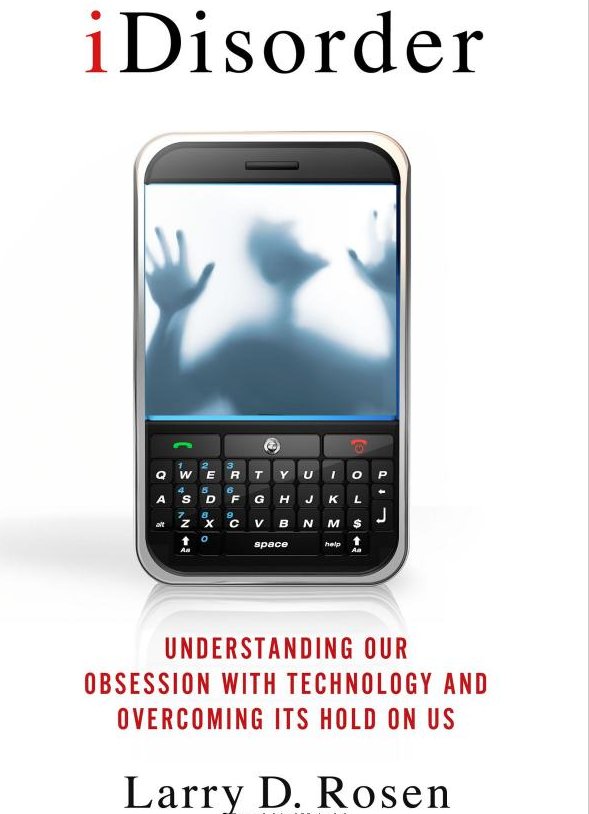
I first heard of the word iDisorder when I came across Larry D. Rosen’s book iDisorder: Understanding Our Obsession With Technology and Overcoming it’s Hold on Us.

While iDisorder is a fairly new term, the idea that our constant and immediate availability to technology causes signs and symptoms that mirror those of some psychological disorders, isn’t.

Most of us have almost immediate and continuous access to either email, our smart phones, our computers or our tablets and often at the same time, using one device to do multiple things like answering phone calls, sending emails, receiving text messages and surfing the web. The thing is, while we use these devices in attempts to control our environment by making everything in immediate access, we also began to become dependent on them.

How many of us have our smart phone with us all the time? Even while on a date or at the dinner table with family we have it next to us, often without thinking, checking text messages or emails instead of being present and engaging with the people right in front of us? Some people find it rude if you are staring at your screen and tapping away instead of making eye contact with them, but it happens so often that I dare to say it is becoming almost socially acceptable.

I remember one time at a restaurant I was people watching as I often do and I saw a couple that looked like they were out on a date, maybe a first date, but instead of sitting across from each other talking, they were both tapping away on their phones and didn’t speak to each other for at least twenty minutes as they waited for their food to be served. At that same restaurant I observed four young ladies all out to dinner together, none of them talking to each other, but all four focused in their smart phones.

There is no doubt that our devices makes it easier for us to get and stay connected with people we might only otherwise communicate with sparingly, but what about the present and those around us. Are we missing out on real life by being too focused on virtual lives?

I have friends who would rather play games on their devices than actually play games with and be around real people. Recently I was co-presenting with another counselor and when I went to turn the presentation over to her I was shocked to see she was texting on her phone. I had to stall until she came back to the here and now. I later asked her what was going on and she laughed it off, saying that it was a text message from one of her kids, nothing was wrong, but she was so used to reading and responding to their text messages that she didn’t think about it even when we were standing in front of hundreds of people.

We get so used to our phones buzzing with phone calls, text messages, emails and other notifications that even when they aren’t going off, our mind is anticipating them going off so much that it triggers our mind and body to think that we feel our phone buzzing in our pockets. These are called phantom vibrations. It’s crazy, I’ve experienced them before and I am sure most of you who are frequent cellphone users have as well.

How many of us are so dependent on our devices that we feel lost without them? Ever leave your house and accidentally left your cell phone? How did you make it through the day or did you turn back around and get it? How many accidents are caused because people are driving and texting. It’s as if that text message has to be read and answered despite the fact we are already engaged in the dangerous activity of driving. Ever watch people who’s smart phone battery is about to die and thy don’t have access to a power source? It’s like watching a drug addicted desperately searching for a fix.

I see kids all the time getting in trouble in school for having their smart phones out, even when they know they aren’t supposed to. And trying to take the phone from them? You’d think you were trying to take a kidney. They throw tantrums, even at times become hostile and risk suspension or worse over a simple device. Can we say addiction?

In his book, Larry Rosen goes on and on connecting our access to technology to things like depression, narcissism, ADHD, hypochondria, voyeurism, eating disorders, anti-social behaviors and a host of other psychological disorders.

On top of that, in teenagers I think it retards their spelling and writing abilities. I’ve seen in teenagers writing that some of them have become so used to short hand text messaging that their spelling suffers and they don’t know when they are writing papers that you can’t just put IMHO when you mean in my humble opinion or txt when you mean text. It’s crazy, but true, so many of the teenagers I work with don’t seem to know when it is and isn’t appropriate to use that type of short hand. One of my teenagers, a very intelligent junior, once wrote me a personal letter I had to decipher. If I didn’t know her I would think she couldn’t read, spell or speak proper for that matter.

The thing is, you can become addicted to anything used in excess and one of the hallmarks of addiction is denial.

As a side note, if you ever have a house party or get together, you may want to thank about banning smart phones as people tend to pull out their phones, start texting, playing games and surfing the internet instead of actually engaging in conversation and activities with people around them. 

It is a good idea for us to unplug every now and then, even if it’s just for a few hours. Put away the cell phone, the tablets, the computers and connect with real people and be present. That would be some thing great for a family to do together although your kids may throw a tantrum at the thought. I think it will help keep us grounded and appreciative of who and what we have surrounding us.

Personal Responsibility

Most of the teens I work with have a multitude of problems, but one trend I see a lot of is the lack of personal responsibility. They think of themselves as victims and take on a personality of victimhood where everything happens to them and they have no direct effect on their lives as

Most of the teens I work with have a multitude of problems, but one trend I see a lot of is the lack of personal responsibility. They think of themselves as victims and take on a personality of victimhood where everything happens to them and they have no direct effect on their lives as if they are living life passively and everything that happens is not their fault. If they fail a class it’s the teacher’s fault, other students in the class’ fault or their parents fault… anybody’s fault but their own. The same is true when they get in trouble, despite any evidence provided to them that it’s their fault, their mindset of victimhood makes it hard for them to see reality for what it is.

I spend a large amount of time teaching the teenagers I work with that they are not victims and are not passive participants in life, but that they directly effect their lives every single minute of the day. Even when things are out of their control, they are still in control of their thoughts which in turn gives them control to how they will feel and react to any situation they don’t have direct control over, but more importantly, they have much more control than they realize.

Thoughts, Feelings, Behaviors

Teenagers (and adults) love to say that someone made them mad, sad, angry or whatever feeling you want to insert here. It takes me awhile to get them to understand that they are not victims and no one can make them mad or sad, but that they do it to themselves with their thoughts. I won’t go into much detail here because it can get complicated and probably deserves it’s own post to pay it proper attention, but basically your thoughts control your feelings which in turn control your behaviors. It’s the things we tell ourselves and the thoughts we have about a situation that makes us feel a certain way and then those feelings make us act in a corresponding way… depressed, angry, nervous, etc. Teaching them to control their thoughts is the first step to getting them to take more personal responsibility.

Things I can and Things I can’t Change

One thing I have them do is make a list of things they can control and things they can’t control. This helps them to realize how much power over their lives they actually have. Many times teenagers are stressed and angry at things they can’t control such as their parents, their teachers and their friends. I let them know that everyone was giving one life and they have to learn when to let other people live their lives, despite the paths they chose, so that they can live theirs. I teach them that they can’t control the situation, but they can control the way they think and respond to the situation.Otherwise what happens is that everyone becomes the blame when something doesn’t go right in their lives instead of them taking responsibility for their own life.

Architects 

The other thing I teach them since most of them are trying to figure out what and who they are, is that they are all architects. They are, like all of us, architects, creators and designers of their own lives. They build, create and establish the life they want, no one else does. Sure many of them are born in poverty and have horrible guardians, but unless they learn that they are responsible for getting themselves into a better situation, they will just replay history and be stuck in the same situation over and over again. I tell my kids who I know are in impoverished situations and yet don’t take school or life seriously to look around. I tell them that if they like where they live and how they are living then to keep doing what they are doing, but if they want something better they have to do something different… different for them and definitely different from what others around them have done even if it means they will be doing something no one they know has done such as going to college, the military, trade school or whatever. They design their own lives and as long as they are allowed to believe they are victims then they will never reach for the stars and will blame everyone else for their failures.

CEOs, CFOs and Mission Statements

I also let them know that besides architects they are also already chief executive officers of their lives. They are in charge of the business of them. They are the sole person responsible for them becoming who they want to be. And I also let them know that they will soon be chief financial officers, in charge of their own money and prosperity. I get them to write mission statements because every company has a mission statement and I think ever person should have a mission statement. A mission statement states who you are, what you believe in, what you value and what’s your purpose. Many of them have no clue about these things and further more, never took the time to sit down and think about it so this is the prime time to have them do this.

All of these things combined together add to a greater sense of personal responsibility and loosens the shackles of victimhood. My question to you is, what is your mission statement? Share it with me if you would like and even if you don’t share it, please think about it and make a mission statement even if it’s just for your eyes. I know it will change the way you interact with life for the bette

if they are living life passively and everything that happens is not their fault. If they fail a class it’s the teacher’s fault, other students in the class’ fault or their parents fault… anybody’s fault but their own. The same is true when they get in trouble, despite any evidence provided to them that it’s their fault, their mindset of victimhood makes it hard for them to see reality for what it is.

I spend a large amount of time teaching the teenagers I work with that they are not victims and are not passive participants in life, but that they directly effect their lives every single minute of the day. Even when things are out of their control, they are still in control of their thoughts which in turn gives them control to how they will feel and react to any situation they don’t have direct control over, but more importantly, they have much more control than they realize.

Thoughts, Feelings, Behaviors

Teenagers (and adults) love to say that someone made them mad, sad, angry or whatever feeling you want to insert here. It takes me awhile to get them to understand that they are not victims and no one can make them mad or sad, but that they do it to themselves with their thoughts. I won’t go into much detail here because it can get complicated and probably deserves it’s own post to pay it proper attention, but basically your thoughts control your feelings which in turn control your behaviors. It’s the things we tell ourselves and the thoughts we have about a situation that makes us feel a certain way and then those feelings make us act in a corresponding way… depressed, angry, nervous, etc. Teaching them to control their thoughts is the first step to getting them to take more personal responsibility.

Things I can and Things I can’t Change

One thing I have them do is make a list of things they can control and things they can’t control. This helps them to realize how much power over their lives they actually have. Many times teenagers are stressed and angry at things they can’t control such as their parents, their teachers and their friends. I let them know that everyone was giving one life and they have to learn when to let other people live their lives, despite the paths they chose, so that they can live theirs. I teach them that they can’t control the situation, but they can control the way they think and respond to the situation.Otherwise what happens is that everyone becomes the blame when something doesn’t go right in their lives instead of them taking responsibility for their own life.

Architects 

The other thing I teach them since most of them are trying to figure out what and who they are, is that they are all architects. They are, like all of us, architects, creators and designers of their own lives. They build, create and establish the life they want, no one else does. Sure many of them are born in poverty and have horrible guardians, but unless they learn that they are responsible for getting themselves into a better situation, they will just replay history and be stuck in the same situation over and over again. I tell my kids who I know are in impoverished situations and yet don’t take school or life seriously to look around. I tell them that if they like where they live and how they are living then to keep doing what they are doing, but if they want something better they have to do something different… different for them and definitely different from what others around them have done even if it means they will be doing something no one they know has done such as going to college, the military, trade school or whatever. They design their own lives and as long as they are allowed to believe they are victims then they will never reach for the stars and will blame everyone else for their failures.

CEOs, CFOs and Mission Statements

I also let them know that besides architects they are also already chief executive officers of their lives. They are in charge of the business of them. They are the sole person responsible for them becoming who they want to be. And I also let them know that they will soon be chief financial officers, in charge of their own money and prosperity. I get them to write mission statements because every company has a mission statement and I think ever person should have a mission statement. A mission statement states who you are, what you believe in, what you value and what’s your purpose. Many of them have no clue about these things and further more, never took the time to sit down and think about it so this is the prime time to have them do this.

All of these things combined together add to a greater sense of personal responsibility and loosens the shackles of victimhood. My question to you is, what is your mission statement? Share it with me if you would like and even if you don’t share it, please think about it and make a mission statement even if it’s just for your eyes. I know it will change the way you interact with life for the bette

Parents Denial of Child’s Problems Leads to Further Problems

Recently I began working with a young man and the first thing I noticed was that I could barely understand him when he spoke. It didn’t take me long to realize that this young man had a terrible speech problem, but that is not why he was seeing me for counseling as I am not a speech therapist. His mother had asked that he receive counseling because of his low self-esteem. 

Well within a few sessions I was able to link his low self-esteem to his speech problem and asked his mom if she ever thought about getting him a speech therapist. I was shocked when the mom told me that he had been referred to a speech therapist five years ago, but she thought he would grow out of it and never got him help.

Again, denial comes into play here. Her denial of her son’s speech problem caused her to neglect getting him the help he needed and now at twelve years old he is being teased by other children and is uncomfortable speaking so his self-esteem is extremely poor. Imagine if she hadn’t been in denial five years ago and actually got him the help she needed, perhaps he wouldn’t have developed the self-esteem issues that he is currently receiving counseling for. 

When I told the mom that I was pretty sure his self esteem issues were tied to his speech problem and I recommended that he start receiving speech therapy she was shocked and honestly sadden. She had been in denial even up til that day that his speech problem was that serious. She quickly went and got him a speech therapist which she should have done five years ago. Now this young man is working with me on his self-esteem issues and the speech therapist for his speech problems and as his self esteem increases and his speech improves I am positive he will start living his life fully, the way he should have been all along. 

Acting Out in School as a Way of Hiding a Learning Disability

There are variety of reasons kids act out in school, but they all usually act out to either hide something or as a way of expressing something they don’t know how to express in a more appropriate manner.

Earlier this week I sat in on an executive board meeting with various members of the Department of Juvenile Justice in the state of Florida and was reminded of Dexter Manley’s incredible story. 

Dexter Manley was an American professional football player who liked to give back to his inner-city community. Often he would go to various schools and speak to children about the importance of an education. Well one day after he had gotten through giving an inspiring speech to a group of elementary school kids, he was asked to read to them from an elementary level book. Dexter tried to get out of the situation, but he was cornered and eventually broke down crying. He had been hiding a secret that he was terrified would be exposed. He couldn’t read. Here was a man who had not only graduated from high school, but had also went to college and yet wasn’t able to read beyond a second grade reading level.

In elementary school Dexter realized in the second grade he had learning issues (poor auditory memory) and was often teased by other students. In return he started acting out in class, becoming a “troubled student” and even once pushed one of his teachers against the wall. He was passed on from class to class and grade to grade until he eventually graduated high school with only a second grade reading level. He had become a master at hiding his learning disability so well that he made it through college and much of his adult life without even his children and wife knowing he could barely read or write, but it all started in elementary school where he learned that acting out in class got him out of having to reveal that he was having trouble reading, writing or understanding material his peers were grasping. 

That got me to thinking about the many “troubled” teens I work with and I noticed before that most of them also had failing grades and very poor reading and writing skills, but I had been under the impression that it was mostly due to their lack of participation in class, lack of concentration, attention and motivation. It wasn’t until recently that I started realizing that many of them act out to hide the fact that they are suffering from one learning disability or the other. Now when I am referred a kid by a teacher or guidance counselor for “behavior issues” I also check their academics and their grades usually are very poor. Eventually I usually learn that their reading and writing skills are also extremely poor and I say “eventually” because it is usually hard to get them to write or read anything, they are usually master manipulators and will either change the subject, get angry or deviant. One kid in particular walked around with a stack of books, about five books checked out from the library in her arms at all times. I always thought she was an avid reader, but one day when I called her in my office and she came with her books, I asked her about each book and realized she hadn’t read any of them. When I tried to coach her into reading one to me, she struggled through a line or two and then became very angry and deviant. She stopped reading. She could barely read and she was a 17 year old high school junior.

Although I believe the practice of just passing troubled kids through school to get rid of them is less common today in the age of standardized testing, I am all too aware of many recent and not so recent high school graduates who read and write on elementary grade levels and seem to have slipped through the cracks of our educational system. Often times teachers send me kids they have kicked out of their class for “acting out”, and these kids are usually failing that class and have learned very quickly that if they act out, they will either get left alone or removed from the situation they don’t want to be in anyway. Up until recently, the real situation wasn’t getting dealt with as I had ignored the possible learning issues going on and went straight to trying to solve the cognitive and behavioral problems as I’ve been trained to do. 

Without help, these kids who manage to skate through high school will find that functioning in the real world is much harder. Many of the manipulation, distracting and defense mechanisms that worked in high school will not work in society and may actually get them hurt, arrested or worse. Unlike Dexter Manley who was a star football player and had the athletic talent and financial resources to hide his issues (at least for awhile), most of these young people will be unable to get or keep jobs and will most likely turn to drugs, alcohol, and criminal activities as ways of trying to cope. Ignoring the problem now will only cost everyone more later when these young people are carjacking us, or we are using our tax payers money to feed them in jail.  

If you have or are a parent of a child with a learning disability I would love to hear from you.

If you are a parent and have a child that is acting out and also struggling in school, it would be a good idea to have him or her tested for a learning disability. I think often learning disabilities go undiagnosed because parents are unwilling to have their kids tested. No one wants to have a child with a learning disability, but having that disability identified and attended to will allow that child to learn how to adjust and succeed. Not giving your child that opportunity out of fear of labeling could be detrimental to his/her future.

To read more about Dexter Manley you can click on this link http://findarticles.com/p/articles/mi_m1077/is_n12_v44/ai_8010811/?tag=content;col1

Trying to Understand Teenagers Part I: Psychosocial Development

According to Erik Erikson’s theory of psychosocial development, during the ages of 12 to 18, teenagers are mostly focused on the questions “Who am I?” and “What do I believe and stand for?”

Identity versus confusion is thought to be the psychosocial crisis that teens are dealing with and many of us will probably agree that the teen years are full of trying out different roles and groups of friends to see where we fit in. This is natural and healthy as it helps us develop a sense of self, independence, a sense of belonging and a sense of individualism. If dealt with in an unhealthy way, this stage leads to feelings of confusion, and insecurity about themselves and where they fit into the world. At its worst it can lead to social and psychological impairments such as personality disorders, mood disorders, eating disorders and substance abuse.

Social relationships become the outmost important things to teenagers, which again is natural because humans are social beings and we need to learn how to get along with others and work together, but often times teens will put such great importance into their social relationships that everything else takes a back seat including familial relationships and academics. I see teens all the time whose biggest concern to them is their three month old relationship and not their failing grades and trying to get them to understand what should be important to them is more likely to give me gray hairs than it is to change thier point of view. Teens often sacrifice their relationship with parents to fulfill their needs for social relationships and usually don’t quite understand why we adults won’t just leave them alone to do what they want to do. A teenage girl I work with in individual and family counseling often cries to me that she just wants her mom to leave her alone and stop being worried about her. This young girl has been brought home at two in the morning by the police on a school night when her mom thought she was asleep, has been caught drinking and smoking marijuana and is failing school, yet she wants her mom to just let her “live my life”. This young girl is currently suspended from school after being caught having sexual contact with a boy in a restroom on campus.

It is natural for teens to try on different roles, friends, activities and behaviors to see what fits them and what doesn’t. This at times can be scary for those of us who watch the teens we know and love morph into and out of different roles and characters on their quest of finding their own identity and sense of direction.

With healthy and appropriate encouragement, reinforcement and support during this stage, teens will emerge with a strong sense of who they are, a feeling of independence, confidence and control over their lives. Those who come out of this stage unsure of who they are, what they want and what they believe are at a higher risk of developing the psychological impairments mentioned above as well as continue to feel insecure and confused about who they are into their adult years.

Teen Mom Wants to Have Another Baby ASAP

What if your 18 year old daughter who is in the 11th grade of high school, already has a two year old child, told you she was planning on having another child by her new boyfriend in order to not be selfish?

Working with teenagers it’s rarely anything I see or hear these days that shock me, however, there are plenty of things I see and hear that leave me dumbfounded, including when one of my favorite teenage clients, who already has a child, told me that she plans to stop taking her birth control so she can get pregnant by her new boyfriend of only about three months. What?!?!

She told me that she thought it was UNFAIR to her son that he didn’t have a sibling and unfair to her new boyfriend that she didn’t have a child by him and that she felt like she was being selfish to everyone by WAITING until the right time (oh, let’s say after she finished high school, started a career, got married) to have another child. I sat listening to her, almost hoping that I had falling off into a daydream and that this was just all part of my imagination, but it wasn’t. This high school junior, soon to be senior, with one child at home already was telling me that she was planning on getting pregnant again as soon as possible! She is already raising this child without the father’s involvement and I shouldn’t say she is raising her child because her parents are actually the ones taking care of her and her current child, yet she wants to go and get pregnant again!

I know part of the psychology of why she wants to get pregnant again is to keep her current boyfriend around. She is thinking that if she gets pregnant by her current beau, they will stay together forever. I am sure she had that same delusional fantasy with her current child’s father who she hasn’t seen in over two years. You would think she would have learned, but the delusional, fantasy world and mind of a teenager is a hard shell to crack, no matter how many times the world gets dropped on it.

As I listened to her, I actually felt a great deal of heartache for her because she was about to go and do something dumb… at least in my professional opinion. The chances of her being 18 with two kids, barely a high school degree, and being successful aren’t in her favor, especially coupled with her history of alcohol and drug use and her impulsive behavior that often leads her to be in dangerous situations.

I tried and hope I spoke some sense into her. I told her that she isn’t being selfish by waiting for the right time (and person) to have another child. I told her that it is OKAY for her to be selfish when it comes to her life. A lot of times we are told so many times about not being selfish that we forget that sometimes being selfish is a form of self-care and self-preservation. I also told her that it wouldn’t be fair to her, her current child or her future children if she once again got pregnant by a man who wouldn’t be around to help her raise the child(ren) they produced together. I definitely tried to convince her that waiting until after high school, after college (which she plans to attend), and hopefully after getting married, would be the time for her to have more children if she so chose to do that. Being a high school senior next year with two kids her and her parents are raising together is not the situation she wants to be in.

I really hope I convinced her that having a child right now, with a guy she’s only known for three months, is not a rational decision, but a large majority of the teenage mind functions irrationally. Their brains are just wired differently at this age and we’ll explore that in a future post. The bottom line is, every high school girl I’ve worked with that got pregnant to keep a boy NEVER ends up with that boy more than a year or so later. Does it happen? I’m sure it does, but I haven’t seen it. Still, it doesn’t stop them from thinking otherwise and even if they already had a child and that child’s father disappeared shortly after the birth of the child, some of them will still be convinced, as this young lady is, that it won’t happen again.

This isn’t the first time I had to deal with something similar to this. Not too long ago one of my high school clients who had a baby less than a year ago, wanted to have another baby right away because that is what her boyfriend (the babys’ father) wanted. A month or so later they broke up because he wasn’t helping her take care of the baby they already had. Imagine if she would have gotten pregnant with a second child like she wanted.

Saving the Lives of Butterflies: Part 2

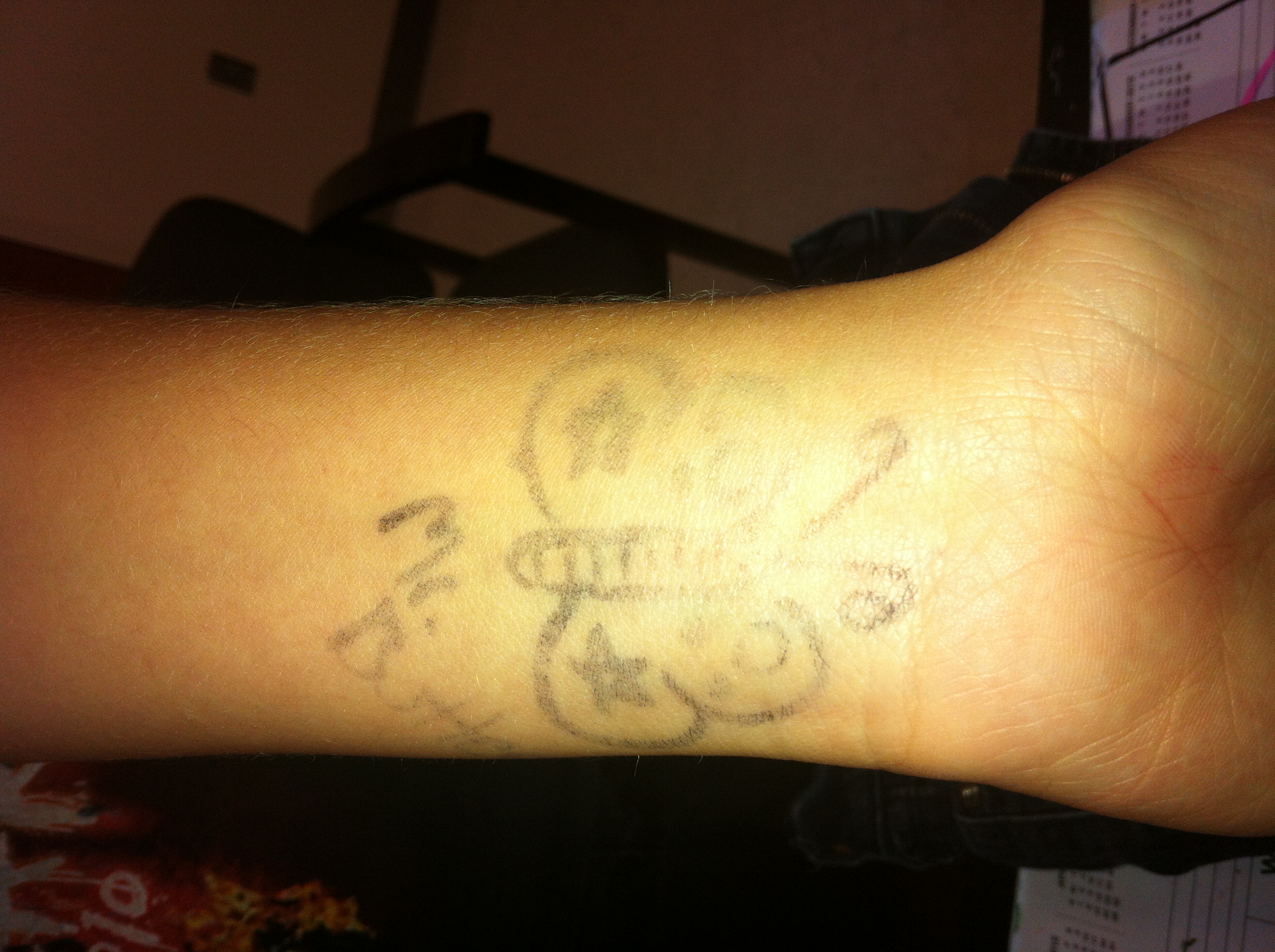
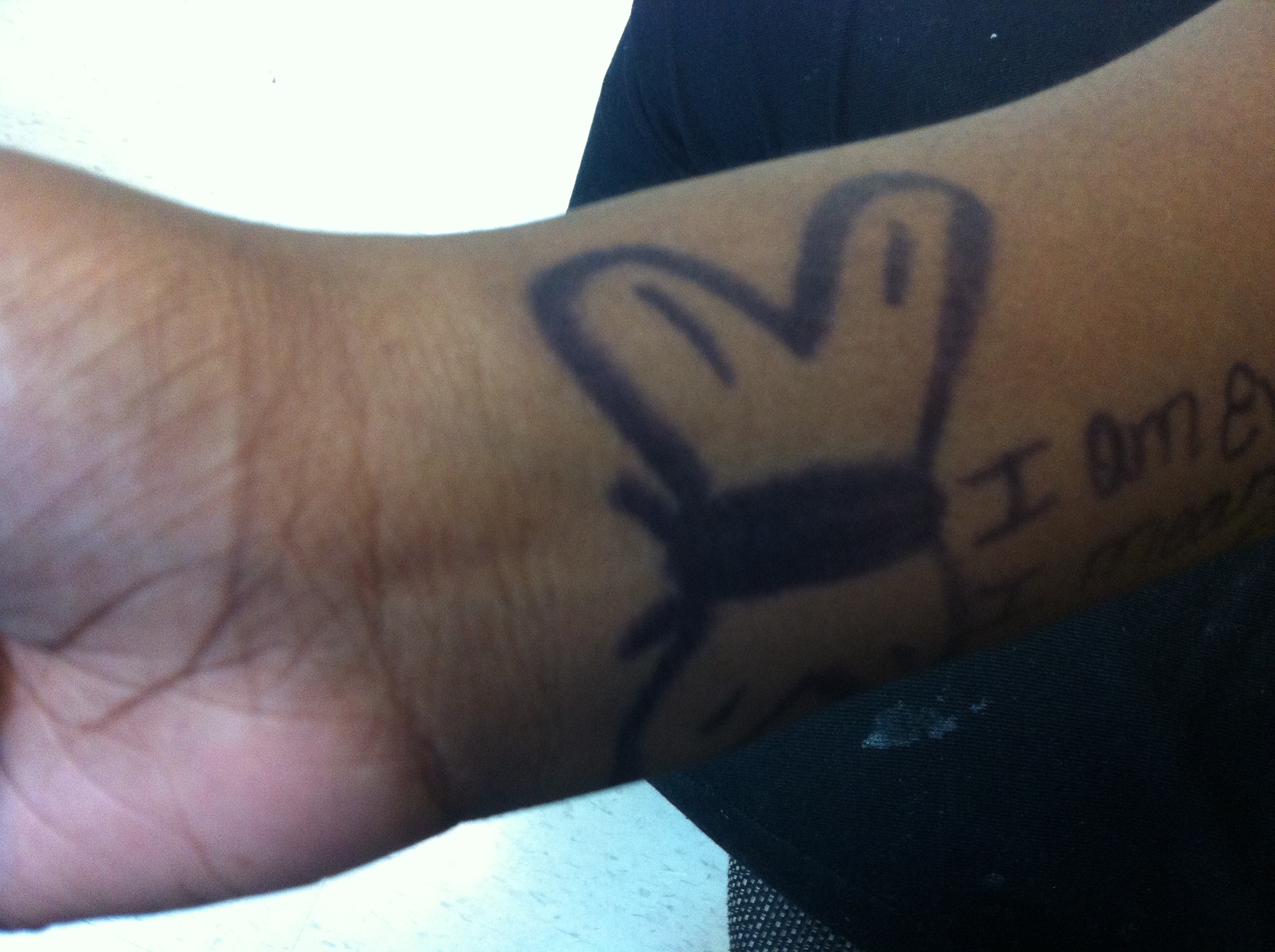
It’s been a few months since I first introduced The Butterfly Project to the high school kids I work with (if you haven’t already, you can check out my post entitled “Saving the Lives of Butterflies”). Well I’m happy to report that over the past two weeks I’ve had a number of them come up to me and show me the butterflies that they drew on themselves in efforts to refrain from cutting themselves! I was so happy to see one or two of them do this, but was overwhelmed to see nearly all of the ones who have issues with self-injury trying this technique and so far it appears to be helping! Some of them even name their butterflies and they have been encouraging each other. It’s a small step, but I am so thrilled by it’s success so far that I just had to share some of the pictures!

With summer coming up, I am really worried about all of the teens I work with at the high school, especially the ones who self-injure, but I am really hoping that everything I’ve taught them over the summer, including cognitive behavioral interventions, emotional self regulation strategies and now the Butterfly Project, will help them make it through whatever they encounter and that they will emerge stronger and more confident. I will also be worried about the ones who use drugs, the ones who make irrational decisions, the ones with anger issues and the ones with severe depression and anxiety. Pretty much, I’ll be worried about all of them, but I have to hope and trust that I’ve helped them all enough or at least did my part in preparing them to better handle life.

On Childhood Disintegrative Disorder


We conclude our discussion on the Pervasive Developmental Disorders with a brief overview of Childhood Disintegrative Disorder.

Introduction

Childhood Disintegrative Disorder (CDD), is also known as Heller’s Syndrome and Disintegrative Pschosis.  It is a rare Pervasive Developmental Disorder that affects about 1 in 100,000 children. CDD resembles many of the other disorders on the Autism spectrum in the fact that it involves developmental delays, impairment in communication and social functioning, but most closely resembles Rett syndrome in that it almost exclusively affects boys whereas Rett syndrome almost exclusively affects girls. New research suggest that while CDD affects boys more than girls at a rate of 4 to 1, it is thought that girls diagnosed with CDD most likely should have been diagnosed with Rett. There is also further talk that in the future Rett and possibly even CDD won’t be separate diagnosis, but that they will both be collapsed into the Autistic category as low functioning forms of Autism.

Symptoms

Children with CDD develop normally up until about ages 2 to 4 years of age (rarely there are cases of delayed onset up to 10 years of age), and then start regressing, losing previously acquired developmental skills with in a few months to years, including language, non-verbal communication skills, motor skills and social skills.

Symptoms include:

    • Delay or lack of spoken language
    • Impairment in nonverbal behaviors
    • Inability to start or maintain a conversation
    • Lack of play
    • Loss of bowel and bladder control
    • Loss of language or communication skills
    • Loss of motor skills
    • Loss of social skills
    • Problems forming relationships with other children and family members

Causes

There are no known causes of CDD although abnormal electroencephalograms (EEG), epilepsy, Lipid storage diseases (excess build up of toxic fats in the brain and nervous system), Tuberous sclerosis (benign tumors that may grow in the brain and other vital organs) and Subacute sclerosing panencephalitis (chronic infection of the brain due to a form of the measles that damage the brain) all appear to be associated with CDD.

Treatment

There is no cure for Childhood Disintegrative Disorder and the treatment for it is similar to the treatment for all of the Pervasive Developmental Disorders with the addition of trials with steroid medications to try to slow down the progress of the disorder.

Diagnosis

Physicians will use some of the same assessment tools used to diagnose the other Pervasive Developmental disorders with the inclusion of all the symptoms listed above and impairment in normal function or impairment in at least two of the following three areas:

  • Social interaction
  • Communication
  • Repetitive behavior & interest patterns

The main symptoms to look for in diagnosing CDD is the loss of previous learned skills in at least two of these areas:

  • Expressive language skills (being able to produce speech and communicate a message)
  • Receptive language skills (comprehension of language – listening and understanding what is communicated)
  • Social skills & self-care skills
  • Control over bowel and bladder
  • Play skills
  • Motor skills

If your child has any developmental delays or starts to lose developmental functions previously learned, it is vital to talk with your physician in order to rule out  CDD or any of the Pervasive Developmental Disorders or mental retardation. The faster any illness is discovered and treatment begins, even if there is no cure, the better the prognosis or at least the slowing of the progress of the disorder. Some children with similar, yet less severe symptoms may have a learning disability or something much less serious than a Pervasive Developmental Disorder, but it is important to have everything ruled out for the best care of your child.

On Rett Syndrome

An Introduction to Rett Syndrome

 What separates Rett syndrome from the other Pervasive Developmental Disorders is that it almost exclusively affects girls, whereas Autistic Disorder affects boys at a much higher rate than girls.

Worldwide Rett Syndrome affects 1 in every 10,000 to 15,000 females of all races and ethnicity. Prenatal testing is possible for families who have had a child born with Rett, but since the chances of developing Rett is so low, the chances of a family having two children born with Rett is less than 1%. Most boys born with the genes thought to be responsible for Rett often die shortly after birth. Because Rett syndrome is thought to be caused by a mutation to the X chromosome, girls are thought to be more able to compensate for the mutation because they have two X chromosomes where boys only have one and aren’t able to compensate.

In Rett Syndrome, similar to Asperger’s, there is normal early development and then a slowing of development, distinctive hand movements, lack of purposeful use of hands, and slowed head and brain growth. Problems walking, seizures and intellectual disability are usually also present. This disorder was first described by Dr. Andreas Rett, an Austrian physician in 1966, but it wasn’t until later in 1983 that it was recognized as a disorder after an article about it was written by Swedish researcher Dr. Bengt Hagbeg.

Like all of the Pervasive Developmental Disorders, the severity of symptoms in Rett varies from child to child, but they all start with relatively normal development, although loss of muscle tone (hypotonia), jerkiness in limb movements and difficulty feeding are often noticeable even in infancy. Gradually more apparent physical and mental symptoms become apparent such as the inability to talk and loss of purposefully movement of hands which is followed by compulsive hand movements such as wringing and washing.  Other symptoms such as problems walking, crawling and lack of eye contact may also be early signs. This period of regression is often sudden. The inability to perform motor functions (Apraxia) is one of the most severe disabilities of Rett syndrome, it effects body movement, eye gaze and speech.

Early stages of Rett syndrome often resemble Autistic disorder or one of the other Pervasive Developmental Disorders.  Some symptoms may also include walking on toes, awkward gait, difficulty chewing, teeth grinding, slowed growth, sleep problems, breathing problems, air swallowing, cognitive disabilities and apnea (holding breath)..

Diagnosis

Rett is typically diagnosed by a developmental pediatrician, pediatric neurologist or clinical neurologist using many of the same neurological, physical and psychological assessments used to diagnose the other Pervasive Developmental Disorders with the inclusion of genetic testing to look for the MECP2 mutation on the child’s X chromosome.

The Diagnostic and Statistical Manual of Mental Disorders also has these criteria for diagnosing Rett Disorder.

  • All of the following:
    • apparently normal prenatal and perinatal development
    • apparently normal psychomotor development through the first 5 months after birth
    • normal head circumference at birth
  • Onset of all of the following after the period of normal development:
    • deceleration of head growth between ages 5 and 48 months
    • loss of previously acquired purposeful hand skills between ages 5 and 30 months with the subsequent development of stereotyped hand movements (i.e., hand-wringing or hand washing)
    • loss of social engagement early in the course (although often social interaction develops later)
    • appearance of poorly coordinated gait or trunk movements
    • severely impaired expressive and receptive language development with severe psychomotor retardation

Causes

According to research, nearly all cases of Rett syndrome are due to a mutation in the metyl CpG binding protein 2 (MECP2) gene. The gene was discovered in 1999 and controls many other genes. It may also be responsible for some of the other Pervasive Developmental Disorders. This gene is needed for brain development and helps other genes increase or decrease their own unique expressions and proteins. This genes malfunction causes other genes to become abnormal. The puzzling thing is, not everyone with MECP2 mutation has Rett syndrome, so other genetic mutations are also thought to be responsible and research is ongoing. Rett syndrome is not thought to be genetic. Only about 1% of Rett syndrome cases are thought to be inherited, which means that in the overwhelming majority of cases, the gene mutations are random.

Treatment

Just like all the other Pervasive Developmental Disorders, there is no cure for Rett Syndrome and treatment is pretty similar including medication and therapy to help control and minimize many of the disabling features of Rett syndrome.

Although Rett syndrome can be very disabling, many people with Rett live to be in their 40’s and 50’s and perhaps even longer . 

Resources

International Rett Syndrome Foundation: www.rettsyndrome.org

National Institute of Child Health and Human Development (NICHD): www.nichd.nih.gov

Office of Rare Diseases: www.rarediseases.info.nih.gov

Rett Syndrome Research Trust: www.rsrt.org