Why Do We Like To Be Scared?

Today is Halloween and millions of people will spend millions of dollars to go to professional haunted houses where they hope to be “scared to death”.

Each year, millions of dollars are spent on Halloween, making it fall just below Christmas as the time of year Americans spend the most money, but why do we like to be scared so much that we’ll pay for it?

There are many different theories on why we like to be scared, but I tend to agree with the theory based on evolutionary psychology.

We all have inherited from our primal ancestors what’s called basic “fight or flight” instincts. When we are faced with a potential deadly situation, we instinctively either prepare to fight for our lives or to run for our lives.

Our ancestors needed this instinct to survive the plethora of dangers they faced on a daily basis, from wild animals to other clans/tribes invading their homes, killing, raping and enslaving them.

Today, most of us don’t live the type of lifestyle that requires daily use of our flight or fight instincts, yet they are still there, in our primal brain and they often need to be massaged.

During the time of flight or fight, our attention becomes more focused, our heart rate increases, breathing quickens, muscle tighten, all in preparation to defend ourselves from or to run away from a threat.

It is stressful, but this same rush of adrenaline, can be experienced when the brain knows there is no real threat and in turn, the brain translates this experience as enjoyable.

Most of us feel the need to scratch the itch of fight or flight our ancestors hard wired into us, yet for most of us, each day is relatively safe and mundane. That’s why many people say that being scared makes them feel alive?

While there are some people that enjoy actually putting themselves in real danger, most people enjoy being scared in relatively safe environments, where everything is in control, but they can still experience a sense that things are out of control, which is what is desired.

So much of what happens in our day to day life is controlled, that every now and then, most people instinctively want to feel a sense that things are out of control and that’s why many people spend money each year not only on haunted houses and scary movies, but on things such as roller coasters.

Halloween, All Hallow’s Eve, gives us a chance to confront and think about our fear of death. The same goes for most things we enjoy scaring ourselves with. We like to approach the edge of death without falling in, and then step back away from it.

One thing that makes humans different from all other animals is that we are aware of our existence and the fact that one day we will stop existing.

Being scared reminds us that we are vulnerable and that life is unpredictable and can change at any moment for the worst. It gives us a rush of adrenaline and makes us feel alive. It allows us to stop taking life for granted and appreciate that we are alive.

Facts versus Opinions

I’m an introvert and a very introspective person. That’s no secret to those who really know me.

Most of the time when I go out with people I find myself sitting back, watching and listening. It may seem like I am not engaged in the conversation, when in actuality, I’m probably more engaged than the people talking.

It’s fascinating. I enjoy doing it. I can do this for hours and not say a word, yet am totally absorbed in the entire conversation, not just what is being said, but how it is said and the true meaning behind it.

I’m listening, analyzing, watching mannerisms, expressions, analyzing those. Listening to speech patterns and tones while all the while analyzing the entire conversation.

I learn a lot about people this way, and about myself. That’s why one of my favorite quotes, I forgot where I got it from, is “I hear what is not being said.”

This brings me to tonight.

Tonight I was telling a story and got rudely interrupted in the beginning of the story by two of my friends who felt the need to voice their opinions as if they were facts, before even hearing the entire story.

I sat back, listened to them, analyzing everything, and waiting to see if they would be courteous enough to ask me to continue my story, but they never did. They were so high up on their self-righteous, egotistical horses, that they never came back to my story.

Some people would have found this rude, I found it a bit irritating, but mostly, I found it intriguing because I was learning so much about these people and how they think, even how they think and see me. I was learning more than I think they knew they were teaching me about themselves, which is the beauty of extrospection.

As I sat and listened, I realized that my two friends were making a mistake a lot of us make from time to time, especially in this political environment. They were mistaking their opinions for facts.

Naturally, we are drawn to information that supports our beliefs. Sadly we tend to stick with those beliefs even in the face of evidence that proves them wrong, and may even believe in them more, as a form of protest or as a defense mechanism.

In many cases, factual evidence seems to matter very little.

As I watch the political coverage, this is played out daily, but one doesn’t have to watch CNN or MSNBC to see this. We encounter this all the time, perhaps even within ourselves as I encountered with my friends tonight.

At one point when they were closing the restaurant we were at and we were the only customers left, they were still engaged in idle conversation, sipping their drinks as the staff was waiting for us to leave.

I told my friends that we should probably pick up the pace, but they told me I should just relax. I replied that I like for people to be respectful of my time and I like to respect other peoples time.

They quickly retorted that we were patrons, paying money and that they would gladly wait for us because we were given them business. They then went on a rampage that included something about the economy and the customer is always right, to which as always, I just listened and analyzed and then replied that I was sharing my opinion, not stating a fact.

They then backed off, but I realized that they were stating their opinions as blatant facts, that as long as a drink was on the table, the business should wait patiently for them to leave.

I didn’t try to elaborate on this with them, because like I stated earlier, even if I could present facts on why we should be respectful of the staffs time and leave so that they could clear the last table, I would have been met with more opinionated hostility, but why?

We all know what it feels like to be proven wrong and what that means to our sense of self and even our sense of credibility. It often gets us to question not just that one thing, but a host of our other beliefs and one thing many people are afraid of doing, and will sometimes fight to death before they do it, is to take a real examination of their self.

Many relationships fail or stall because one or both partners have different opinions and neither one is willing to reconsider, change or even tweak theirs. Instead they fight over and over about the same things, pointing the finger at each other.

These are of course largely unconscious thoughts, which make them that much more powerful. Still, stating opinions doesn’t make them right or facts.

People who are more self-confident tend to be more willing to re-examine their opinions and it’s important that fro time to time we all do this to become well-rounded, well-adjusted people who are able to have healthy relationships with not only other people, but with ourselves.

The Basics of Behavior Modification Techniques

Behavior modification techniques have at times been controversial.

Many people believe that they don’t work in the long run, but I know when done correctly, they can be an effective tool to curve undesired behavior and increase desired ones.

A Very Brief History

Behavior modification is largely derived from tenets of a psychological approach known as operant conditioning created by B.F. Skinner, which proposes that behavior can be shaped by reinforcement or lack of reinforcement.

Behavior modification techniques have been used successfully with adults and children to help with conditions such as attention-deficit/hyper-activity disorder (ADHD), obsessive-compulsive disorder (OCD), generalized anxiety disorder (GAD), pervasive developmental disorders, phobias, and many others.

Reinforcing Positive Behavior 

Reinforcing consequences are anything a person receives as a result of their behavior, that increases the likelihood of that behavior occurring again.

For example, if a child gets a laugh from a parent when they swear, they are more likely to do it again. Or if they get praise for bringing home good grades, they are more likely to continue trying to bring home good grades.

Reinforcers, as the name suggest, reinforce behavior. Some good behaviors, some bad behaviors.

We use reinforcers all the time, often without realizing it. As the saying goes, we teach people how to treat us, because we often reinforce their behavior towards us, good or bad.

When people, especially children hear the word consequence, they usually assume that it is something negative, but consequences can also be positive.

Positive reinforcers are consequences a person wants to receive. They are used in behavior modification to increase desired behavior, usually through a reward system.

Behavioral contracts can be used to outline details of the reward system. As an example, a reward could be one hour of video games per day if all homework assignments for that day are complete, or all chores are done.

Sometimes negative behavior is also unintentionally rewarded. As an example, if a child yells enough and the parents gets annoyed and gives in to the child’s demands, that child is being reinforced to yell whenever he/she doesn’t get their way.

In these cases, the unwanted behavior needs to be stopped through what is called “extinction”.

Extinction

Extinction is basically stopping an undesired behavior by removing it’s rewards. Examples of rewards for undesired behavior include getting what they want after:

  • pleading
  • crying
  • throwing a tantrum
  • yelling
  • withdrawing

Time-out is one of many effective techniques used to extinguish undesired behaviors by removing the person from any rewards.

As I stated before, the saying “we teach people how to treat us” comes back to this, even as adults.

In a relationship, if our partner is being insensitive to our needs, yet we cling to them more and shower them with attention, then we are rewarding their behavior.

Negative Consequences for Behavior

Penalties, punishment and negative reinforcement are all forms of negative consequences.

Penalties are when someone loses something as a result of a behavior, such as the removal of a favorite toy or a privilege.

A punishment is when someone receives a consequence for a behavior that they don’t want, such as a spanking.

Negative reinforcers include the withdrawal of a privilege or addition of extra chores/assignments.

Differences Between Negative Reinforcement and Positive Reinforcement

Punishment, penalty and negative reinforcement usually result in minimal effort on part of the person to achieve the desired behavior.

Positive reinforcement is the only method that will encourage people to give voluntary, extra, enthusiastic effort to achieve the desired behavior.

The key to behavior modification is to use negative consequences as necessary, but to focus more on positive reinforcements.

The Five B’s of Effective Parenting

Lastly, the five B’s are very important when it comes to using behavior modification techniques with effective parenting:

  1. Be positive– try using positive consequences more than negative
  2. Be specific– be specific what behaviors are being punished or rewarded
  3. Be certain– your child should know without a doubt what to expect from you        based on their behavior.
  4. Be consistent– if you don’t apply rules consistently, your child can never be certain of what to expect
  5. Be immediate– act immediately when your child deserves a positive or negative reinforcer.

When used correctly, behavior modification techniques are positive tools and great ways for kids to learn in a rather safe environment about consequences.

They learn that in life, often there are no right or wrong decisions, but they have to be able to deal with the consequences (positive or negative) of their decisions.

The Most Commonly Diagnosed Mental Disorders

We are bombarded all the time with the depressing number of people diagnosed with illnesses such as cancer and heart disease, but did you know that mental illness is even more prevalent?

Like cancer and heart disease, mental illness is a medical condition that does not discriminate by age, sex, race/ethnicity or socioeconomic status.

Mental disorders often strike people when they less expect it, when they are in the prime of their lives and are often associated with other high risk behaviors such as gambling and substance abuse.

Like any other illness, they also vary in degree from mild, moderate and severe. In developed countries, these are the top 10 diagnosed mental disorders:

10. Autism Spectrum Disorders (Pervasive Developmental Disorders)

I’ve written a previous post on pervasive developmental disorders. They start when children are very young and are often difficult to diagnose. As a matter of fact, I know a parent who has just acknowledged (after much denial) that  her 17 year old son has Asperger’s, something he should have been tested for and began treatment for years ago.

9. Schizophrenia

To me, schizophrenia is one of the most interesting mental illnesses. I used to enjoy working with schizophrenic patients when I worked in the mental hospital, although I did feel very bad for them.

Imagine being tormented by voices telling you bad things about yourself, thoughts that someone is trying to poison you, or seeing visions of dead bodies everywhere. That’s just some of the things people with schizophrenia I’ve worked with were tortured by.

To be diagnosed with schizophrenia, a person has to have two or more of the following:

  • Delusions
  • Hallucinations
  • Disorganized speech
  • Disorganized or catatonic behavior
  • Emotional flatness

Contrary to popular believes, most people with schizophrenia are harmless.

8. Bipolar Disorder

Most people with bipolar disorder are diagnosed by age 25, although different things can bring out underlying bipolar symptoms, such as pregnancy.

“Bipolar” is a term loosely used these days, usually to describe someone who seems to have mood swings, although in most cases, people with bipolar disorder don’t change their moods from moment to moment, and if you ever get to meet someone with severe bipolar disorder and they are not on their medication, you will know it and probably never forget it.

I’ve seen grown men swinging from trees and women drop from exhaustion after running ragged for four days straight, partying, sleeping with half a dozen men and charging thousands of dollars on credit cards they can’t afford.

7. Panic Disorder

Sweating, rapid heart beat, nausea, shortness of breath, dizziness, fear, loss of control, chest pains, tingling, smothering sensation, these are all symptoms of panic disorder.

Panic disorder and panic attacks are common, and can be triggered by certain events such as riding in an elevator, being in a crowd, having to give a speech or being in a place where there is no easy escape (agoraphobia).

1 out of 3 people with agoraphobia become housebound and are basically held hostage in their own homes by their illness.

6. Anxiety Disorders

Anxiety disorders include obsessive compulsive disorder (OCD), post traumatic stress disorder (PTSD), and generalized anxiety disorder (GAD).

OCD is a combination of reoccurring thoughts (obsessions) and actions (compulsions) that a person performs because they believe it gives them control. For instance, a person may believe they have to take 50 baths a day or they aren’t clean and they may lose their job, friends and family to this behavior.

PTSD occurs after a person experiences a terrifying even in which they face great bodily harm, death, fear or helplessness. They may then have reoccurring thoughts, nightmares, heighten fear and avoidance behaviors. Many rape victims and soldiers coming back from war experience PTSD, but so do people who have been robbed, beaten or in a car accident.

GAD is basically when someone has anxiety, stress and worry for at least 6 months period for no specific reason. Some of these people are considered “worry worts” in layman terms, but their anxiety can cause them to have a host of physical systems and a decreased quality of life.

5. Phobias

Phobias are related to anxiety disorders and there is almost a phobia for everything although social phobia is one of the more common phobias.

In social phobia, everyday situations causes the person to become self-conscious and nervous, often leading to physical responses such as sweating which then causes the person to become even more self-conscious and nervous.

Children with social phobia often go through great lengths to avoid going to school and once at school may either be super anti-social or go to extremes to avoid other students by skipping, or staying in the clinic and feigning and illness.

A person can pretty much have a phobia of anything. Check out http://www.phobalist.com

4. Attention Deficit/Hyper Activity Disorder

This is another one I’ve written about previously. ADHD is very common and most children learn to manage their illness or outgrow it altogether, but some will have ADHD throughout their adult life.

3. Eating Disorders

Anorexia nervosa,  bulimia nervosa and binge-eating are common illnesses, usually affecting females.

People suffering from anorexia, when a person looks in the mirror, no matter how thin they are, all they see is a fat person. They then go through great lengths to restrict their food and burn calories until often they are on the verge of starving themselves to death, and sadly many do just that.

People suffering from bulimia are often of normal body weight, but binge on large quantities of food, then feel guilty about it and then may try to vomit it back up, exercise obsessively, or use laxatives to try to get rid of the food and calories.

People who suffer from binge-eating are caught in a vicious cycle of over-eating, feeling guilty about the over-eating, and then over-eating to try to self-soothe themselves, which all of course leads to weight gain and shame.

2. Personality Disorders

All humans have personality traits, most which are relatively fluid, based on our culture, upbringing and experiences. Many of us even have some traits of personality disorders, but people with true personality disorders have traits that are so rigid that they impair their ability to function and get along with people in their everyday life.

Some of the most common personality disorders diagnosed include:

  • Antisocial personality disorder– these people don’t follow rules of society, often care little about other people unless they can use them for their own gain, they can’t empathize or feel sorry for people, they generally show no remorse. They often have criminal behavior.
  • Avoidant personality disorder– these people are anxious, usually over-controlled and fear criticism, making them hesitant to become involved with other people. There for, they tend to avoid people as much as possible.
  • Borderline personality disorder– these people are generally impulsive, unstable, suicidal at times, fear abandonment while at the same time they tend to push people away from them, resulting in tense, unstable relationships.

1. Mood Disorders

Mood disorders are the number one most diagnosed mental illness in developing countries and something that nearly everyone can relate to in one form or another.

Mood disorders are sustained emotions that go beyond the usual, normal feelings of sadness, to deeper feelings such as dysthymic disorder and major depression.

Support Groups for College Students

College can be a huge transition for students that usually leads to personal growth, but at times may lead to feelings of loneliness, anxiety and depression.

Many students who I’ve worked with in high school and have graduated and gone off to college, have kept in touch, expressing at times their struggle to adjust or to stay balanced.

Usually I’ll give these students some words of advice or resources I think will help them get back on track, but sometimes they need more attention than I can provide and that’s when I often refer them to a support group on their campus.

There are usually support groups for almost any and every issue a college student may be dealing with including:

Depression and Anxiety

Sudden independence, academic pressure, financial worries and adapting to a new environment are all things that can lead to stress and anxiety, especially among freshman.

Stress and anxiety can lead to depression which can cause a host of other problems including dropping out of school and substance abuse. Most college campuses offer groups such as “Personal Growth” or  “Transitioning into College”  to serve students with these needs.

There are also grief and loss support groups for students dealing with the loss of someone.

Self Esteem

In college, people often start discovering new things about themselves, things they may like, dislike, feel uncomfortable with or are not quite sure of  how to deal with their feelings. This is also the time some people have their first sexual experiences either with the opposite sex or with the same sex.

Some may feel like they don’t fit into the student body on campus for various reasons.

These groups help people suffering with self-esteem and identity issues figure those things out in a safe, confidential environment.

Most college campuses offer support groups, for example, for the gay, lesbian, bisexual and transgender community and for people who have been sexually assaulted. The University of Central Florida, for example has a group called Sister Circle, which gives support to women of color.

Recovery

There are also groups for students dealing with drug and alcohol problems in order to help them stay on the track of recovery. In recovery, it’s very important that a person has a good support system, which is what these groups attempt to provide.

Here is an example of support groups offered at the University of Central Florida and similar groups are found on most college campuses:

  • GLBQ (Gay, Lesbian, Bisexual, Questioning) Growth & Empowerment
  • Sexual Assault Survivors
  • Transgender Bender Group
  • Authentic Connections
  • Women’s Group
  • Creative Connections
  • Exploring your Family
  • Grief and Loss
  • Sister Circle
  • Building Social Confidence

Generally once I’ve connected a student to a support group on campus not only do I feel relieved, but they also tend to improve and make new friends. I’ve always been a proponent of support groups for everyone in need because I know the positive affects they can have on their members.

Rethinking Resiliency In Relation To Teenage Girls: Part 1

Working with inner-city teenagers, I always want them to defy expectations often put upon them by society, their community and even themselves.

Those expectations usually include:

  • getting pregnant
  • dropping out of school
  • being promiscuous
  • abusing drugs and/or alcohol
  • never getting out of the low social economic status they were born in

Resilience is the strength and stress resistance to defy those expectations and to achieve ones dreams.

These are the things I always try to instill in the youth I work with, after all I have faced many of those same societal expectations growing up as an African American male including:

  • going to jail
  • being violent/angry
  • being on drugs/alcohol
  • fathering multiple children with multiple women
  • being lazy and uneducated

Time and time again, especially when it comes to teenage girls, I seem to be facing an uphill battle when asking them to be resilient. Not that I don’t face the same battle with boys, just that the girls often seem to have it all together and then quickly sabotage themselves.

An example of this comes from a 3 year longitudinal study of poor, inner-city adolescent girls called “Understanding adolescents: A study of urban teens considered to be at risk,” directed by Jill McLean Taylor and Deborah L. Tolman.

“Anita” was an African American girl who who stated that she wanted to be a lawyer, and acknowledged in the 8th grade that the only things that could stand in the way of her dream were “kids, kids, kids”.

It’s amazing, that as early as the 8th grade, she realized that having kids that young was a possibility.

In the 9th grade she is still passionate about her goals and dreams to become a lawyer because she felt that there was a need for good African American lawyers, and states “I ain’t going to let nothing get in the way. The only thing that could probably happen is a baby.”

Once again, despite her passion and determination, she is vividly aware that getting pregnant was a real possibility. After all, she had probably seen some of her friends and family members get pregnant at her age. Her mother also had children in her teens.

In the 10th grade she seems even more determined to be a lawyer, stating “there’s a lot of people that I  know that don’t want a Black kid to be somebody.”

That year she still has concerns that a baby might get in the way of her dream, but seems less worried about it. Unfortunately, she also tells the interviewer at this time she has been sexually active and hasn’t been using protection.

By the fall of her 11th grade year, she becomes pregnant and drops out of school.

How could this happen to a young girl that seemed so determined and resilient?

Well, for one, perhaps asking her (and other poor inner-city teens) to be resilient and defy expectations, was also asking her to be different from and possibly even disconnect from people that mean the world to her, including her mother.

Anita and her mother were very close; “(she) is a part of me and I am a part of her… we have trust in each other and rely on each other… we are not that different.”

Her decision to have a baby brings her closer to her mother, although it moves her farther away from he dreams, even if they were dreams both her and her mother shared.

That’s what makes reaching out to poor inner-city teenagers so difficult.

How can we expect them to make better choices, take positive risks and reach for something different and better when doing so also puts them at risk of disconnecting and alienating themselves from important people in their lives.

It’s all mostly subconscious, but I see it all the time. A motivated, successful student gets pregnant and starts missing school more and more to stay at home with her mother, who is not working and is at home with either her own children or one of her other children’s kids.

It is a complex psychological dilemma. On one hand by reaching for and achieving their goals, they may isolate themselves, and betray cultural and family connections. However, by not following through on their dreams and goals, they will be betraying themselves, and possibly the hope and dreams of their family and community.

Asking them to “break the cycle”, is in some ways asking them to distance themselves from people they most love, admire and identify with.

Understanding Teenage Girls: Motivations and Psychological Meanings in Relating to Males

The other night I happened to catch a television reunion of the reality show Love & Hip Hop Atlanta.

I stared at the screen in not so much as shock as pity as I watched four different women vie for the love and affection of two guys who treated them more as if they women were merely whores, and the guys were their pimps.

The guys seemed to think the heartache and embarrassment they caused these women by their ongoing cheating, lies and manipulations were funny, while the women basically said that no matter how bad they were being treated, they weren’t going to leave their “man”.

One said it was because of good sex, money and furthering her her music career. Another said it was for love and yet another said it was because she had a child with the guy.

To me, none of these were reasons to stay with a man who obviously saw them as being little more than sexual toys to be used and abused.

Still, this got me to thinking.

Working with teenage girls I am always keenly aware of some of the internal conscious and unconscious motivations that effect their decisions, especially in relation to dating, sex, and self-esteem.

As a girl learns about sex, she is also learning about other things such as giving and receiving affection, self-worth and what she means to others.

She also learns about trusting and honesty (or dishonesty) through the ways she is first introduced to sex, especially through the ways she is protected or not protected from being exploited.

“I learned about sex from my dad. I never had a chance for my first time with my boyfriend. Who knows, maybe I [would have] wanted to wait until I got married. But no, I never got to have that chance. I don’t even remember the first time… I feel it ruined my life.”  -Anonymous Teenage Girl, Young Poor and Pregnant: The Psychology of Teenage Motherhood by Judith Music

Shame, fear and guilt are also valuable lessons, as they will (if she is fortunate) help her learn how to keep herself from situations and feelings that may be too painful for her to deal with physically or emotionally.

When these life lessons are learned and experienced in ways that inappropriately shape her sexuality developmentally, they are likely to have far reaching consequences through out her life in the way she perceives her world and those in it.

This effects such a major part of who she is that it also effects who she thinks she can become, what she is capable of and her ability to show and receive love as well as her ability to take control of her destiny.

For girls who grow up in disadvantaged situations, inappropriate sexual socialization is usually the final breaking point to other risk factors such as poverty, unstable family environment, fatherlessness and lack of appropriate nurturing, that already have made this girl vulnerable to men (and teenage boys) looking to exploit her.

This added with social isolation from other people (outside of her family and community) and institutions, becomes a recipe for disaster (often disadvantaged girls are only exposed to people in their immediate communities where important social services are either absent or insufficient).

Social isolation and psychological vulnerability mean that many disadvantaged young women will be controlled by their relations to men not only in the bedroom, but also in the classroom, the street and eventually even the work environment.

“The adolescent female’s sense of self in relation to males is the internal representation of her past experiences with men and- perhaps equally important- of her mother’s roles and relationships to those and other men.”  -Judith Musick

It’s sad to see teenage girls who grow up with a damaged sense of self because of their past relationships to men either directly or vicariously.

These young girls often turn into teen mothers, get stuck in poverty, abused by men, single mothers with a multitude of children by different fathers, abuse drugs, or get caught up in one of various avenues of the sex world such as prostitution.

It’s important that we protect these young girls as much as possible from being exploited and abused, physically and mentally. It is also important that we help build their self-esteems, educate them and teach them the their value is priceless and doesn’t depend on a boy’s, a man’s, or anyone else opinion of her.

Is Pretending to be Pregnant a Mental Illness: Part 2

In my original  post, Is Pretending to be Pregnant a Mental Illness, I discussed a high school teenager I have known for three, now going on four years, who has been “pregnant” every year and has had a “miscarriage” every year as well.

Last year was no different, but for some reason I believed she was pregnant, even when her closes friends did not. Still I remained skeptical, especially as the “pregnancy” went along and she didn’t get any bigger and refused to tell her mom about it.

Then summer came and I waited anxiously to see her when school started, knowing she should be close to her due time. Yet, when I saw her last week, she was no bigger than she was almost three months ago.

She told me that she had also “lost” that baby (big surprise), but now she is pregnant again and this time she isn’t making it up… and I believe her!

Why would I believe she is pregnant this time when she has lied about being pregnant four previous times?

Well this time she told me she told her mom, something she never did in her previous “pregnancies” even when I offered to talk to her mom with her.

Also, I know she has wanted to get pregnant for the past four years and so it was bound to eventually happen for real. I knew she was having unprotected sex with different guys.

And then today she showed me a picture of her getting a sonogram… a real picture this time and so yes, the girl who pretended to be pregnant for four years is finally pregnant.

It’s so sad because at 18 she is lost, she’s barely passing school, is extremely immature, admitted that her baby’s father is no good, that she doesn’t like him and her family doesn’t either, but yet they are bringing a child into this world.

There is no way she is ready to be a mother and yet, if everything goes right, she will be soon enough.

I’m concerned because this is a young lady with obvious mental issues and if she doesn’t get the help she needs she will raise a child who will potential have further issues because of being raised by an ill-prepared mother.

On top of everything, I really think this girl wanted to get pregnant to fulfill something missing in her life, maybe attention, unconditional love, purpose, who knows, and if having this baby doesn’t meet her conscious or unconscious expectations then where will that leave her and the child?

I see many mothers who had children for the wrong reasons (to keep a man, to fulfill a void, to prove that they can accomplish something, etc.) abandon their children physically, mentally or both when those expectations weren’t met.

Many of those parents end up abusing their kids, resenting them or being negligent in the way they raise their kids.

I’m not saying that this is definitely the case with this young lady, who knows? For a very few, having a baby serves as a catalyst to get them to step up and change their lives for the better so that they can be the best parent they can be for their child.

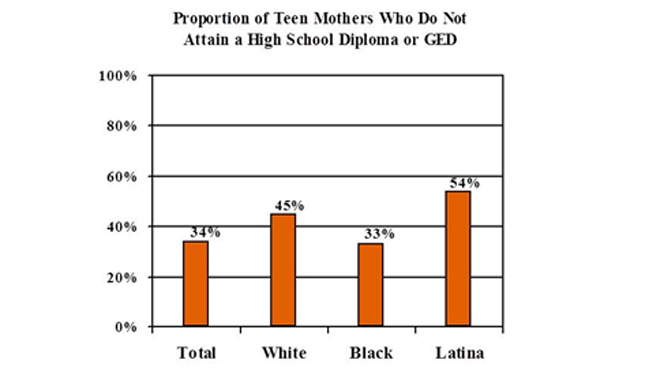
Unfortunately, that is rarely the case. Many impoverished, poorly educated, single, teenage moms end up dropping out of school and remaining in poverty.


The psychological issues that made this young girl persistently pursue to be pregnant for years will probably remain after she gives birth so I won’t be surprised if she isn’t pregnant or “pregnant” again and again even after she gives birth for real.

My New Intern Part 2

Well I’ve been working with my new intern for a couple of weeks now and I have to admit, although I had a bunch of apprehension about it, I kinda like having her around! 

Unlike some people I haven’t forced her to be my secretary by doing all the paper work like intakes and assessments, or had her make coffee runs for me although the idea sounds good 🙂 I’ve taken on more of a mentorship role, which feels appropriate. 

Things I Do Like So Far

I can assign her female clients I know would benefit from a close, therapeutic relationship with another female.

I also like the idea of assigning her some of the borderline personality type female clients who are difficult to deal with, yet I think would respond more to a female. 

It’s not like I am trying to give her all of the difficult female clients, especially since I have to supervise and guide her anyway, but I know for a fact that some clients respond better to same sex therapists and so I will assign those clients to her and she seems fine with the idea so far. 

I also like having a partner. I mentioned before that most therapists work alone and like it, and so do I, but I never thought I’d enjoy the company of another person basically 7 hours a day. I enjoy being able to bounce ideas off of each other, exchange knowledge, and share experiences.

For instance, I had a treatment plan guide I use, but never purchased the treatment plan homework companion book (honestly because I didn’t want to spend the money for it), but she has it and was able to give me an electronic copy of it! In exchange I was able to share some of my books with her. 

What I Don’t Like So Far

The things I don’t like are actually very few. 

Being in graduate school she is still very “fresh”, meaning almost everything she knows comes from books or what she has been told, and very little from experience.  

When we’ve worked with clients and discussed situations, everything she often says and suggests is very theoretical, but often not actually practical. 

She talks and sounds very academic.

Being still in school, much of the lexicon used in psychology is very fresh to her, which isn’t a bad thing. Often times she says words I haven’t used in awhile and in some cases totally forgot because when working with the general population those words get replaced with words that are clearer. 

This isn’t a complaint as much as it is annoying. I think most people fresh into the field think they know everything because they just took a class in Neuropsychology or something, and I am sure I was pretty much the same way and as annoying, but the truth of the matter is, all of the jargon of psychology and many of the things learned in books gets quickly replaced with more real world language and procedures.  

You can read all you want about psychological disorders like bipolar disorder, self-injury, and depression, but until you have someone in your office bouncing off the walls, with two dozen still bleeding self inflicted cuts and telling you they are going to kill themselves, it’s a whole different ball game.  

Sure textbooks have their place, they can be great guides and they definitely teach you the jargon of psychology. I still go to books to inform me on many things, but there is no education like real life experience, so listening to an intern who thinks she knows what to do with every client because she read about their problem in a text book, is a bit annoying. 

I look forward to helping her as she realizes more and more that textbooks and lectures haven’t 100% prepared her for everything she will face. We’ve already had several instances where she didn’t know what to say or do, and I kinda smiled to myself and was happy to guide her through the situation. 

Overall, I am happy with her and realize that the things that annoy me are things I also did when I was still wet behind the ears and thought I was the brightest new therapist to enter the field because I made an “A” in every class, until I was face to face with a wide eyed, screaming, crying, shaking, scary, paranoid schizophrenic who thought a killer was in the hospital looking for her.

No book can prepare you for situations like sitting across from a tourist from Australia, just released from the hospital although her face is as red as a tomato from the broken blood vessels because she tried to hang herself with her bikini after finding out her husband was having an online affair.

No book prepares you for what to do or say to try to instill hope in that moment, but then again, that’s why internships are so important, to expose people to the real world and prepare them for the unpredictable nature of human behavior. 

**Side Note: I now keep my Dictionary of Psychology Book at the office** 🙂

Cognitive Behavioral Therapy, A Brief Primer Part 1: Automatic Thoughts, Assumptions and Personal Schemas

Cognitive Behavioral Therapy (CBT) is one of the most popular forms of therapy used in the Western world. The premise behind CBT is that stressful states such as depression, anxiety and anger are often maintain or exacerbated by exaggerated or biased ways of thinking. The role of the therapist is to help the patient recognize his or her idiosyncratic style of thinking and modify it through the application of evidence and logic.

One of the key components of CBT is getting the person to start recognizing their automatic thoughts which usually serve to maintain their undesired state.

Automatic thoughts come spontaneously, so much so that we often give no thought to them, and they appear to be true even when distorted, which often lead to problematic behaviors and disturbing emotions.

Some forms of automatic thoughts include fortune tellingdichotomous (all or nothing thinking), catastrophizing, personalizing, mind-reading and labeling.

Automatic thoughts could be true or false. For example, someone may have the mind-reading thought that “My boss doesn’t like me” and that could be true. However, the problem is that without sufficient evidence, we usually believe our automatic thoughts to be totally accurate, even when they aren’t. Combine this with the other underlying assumptions and rules that we all have, which tend to be rigid, over-inclusive, almost impossible to attain and ascribe vulnerability into the future, and we have a recipe for repeated disappointment, anger, depression, anxiety and a host of other unhealthy feelings and thoughts (Leah, 2003).

For example, if the person who has the automatic thought “My boss doesn’t like me”, also has the underlying rule that “Everyone must like me or I am a bad person”, will be deeply upset over the thought that his/her boss doesn’t like them. The same is true with rejection which partially explains why some people do not take rejection as well as others. One person can ask someone out on a date and if that person politely says “no”, that person goes on with their day, giving little thought to the rejection. But if another person has the rule and automatic thought “If she rejects me, that means I am undesirable to all women and will spend the rest of my life alone”, they will handle the rejection totally differently.

Underlying assumptions are deeply linked to personal schemas. Personal schemas are basically the core beliefs of what we belief about ourselves. We all have personal schemas, some positive and some negative, which influence the way we interpret information filtered through our automatic thoughts.

Back to our example. If someone has the personal schemas, “I am undesirable”, “I am worthless”, “I am unattractive”, they will have selective attention and memory as they look to validate their core beliefs about themselves and thus their automatic thoughts will also work to validate their core beliefs. So if the person already has the personal schema “I am undesirable”, and the automatic thought “this person will probably reject me” (mind reading), if they get rejected it will validate their personal schema and thus send them into a tail spin of self-pity, depression and anxiety, building on the strength of their erroneous thinking, assumptions, and schema.

(The ego always wants to be in balance with you and wants to make you happy. “The ego’s mission is to take the beliefs of the self and turn them into the experiences of the self.” – Falco, 2010)

This person, like many people with depression or anxiety, will filter out any information that contradicts their negative personal schemas and assumptions. For example, they may not notice the cute guy that flirts with them, but will fall to pieces at the person who makes a disapproving comment about her hair or her dress.

The goal of a CBT therapist would be to get the person to start recognizing all of these erroneous patterns of thinking, unravel them and replace them with more accurate forms of thinking.

We will discuss in a later post how thoughts create feelings.