Human Rights Violations, Psychological Damage and Caster Semenya

Most of us know Mokgadi Caster Semenya as the South African middle-distance runner who’s gender came into question after she blew away her competition during the women’s 800 meters at the 2009 World Championships with a then world record time of 1:55.45.

I remember when her gender came into question first in the media, then among my peers who insisted due to Semenya’s masculine appearance, voice and astonishing athletic feats, that she had to be a man, or at the minimum, not all woman.

The International Associate of Athletics Federation (IAAF) reported that they had to investigate Semenya after she made improvements in both her 800 and 1500 meter times by 8 seconds and 25 seconds respectfully, improvements in performance that usually arouse suspicions of performance enhancement drugs (PEDs) use. At this time, the IAAF also tricked Semenya and performed a gender test without her permission, something she confirmed during an interview with NBC before her Olympic race in London. Semenya stated that she knew she was being tested for PEDs, something she was used to, but didn’t know she was going through a gender test until the testing became more of a violation, poking and probing in areas she knew weren’t part of any PEDs test she had ever been through.

If this is true, which various sources confirm, it is a violation of her human rights. Furthermore, she had to seek the legal services of Dewey & LeBoeuf who are acting pro bono to make sure her legal, human and civil rights will not be further violated.

After more gender tests and speculation over her eligibility to compete as a woman, the IAAF finally cleared her in July 2010 to return to competition as a woman and has yet to release their findings from her gender tests. Since her medical records are private, it may never be known if much of the embarrassment and scrutiny Semenya was subjected to was all for nothing, but one would suspect that if the IAAF had enough evidence to suggest Semenya wasn’t “technically” a woman, they would have released it.

I have to imagine that this young lady, at the time this all began she was only 18, suffered imaginable psychological damages having the world not only question who she was as a person, but to be examined like an animal with the world waiting for the results.

Since returning to international racing Semenya hasn’t been her self. During her 800 race in the London Olympics she got silver after trailing most of the race and only running hard towards the end to secure a second place finish. Many commentators, sport analyst and spectators commented that Semenya seemed to lose the race on purpose, saying that she didn’t seem tired after the race, much like she had in an earlier international race where she got a silver. If this is true, it is sad, but can you see why someone who previously fell under world scrutiny after finishing first, would purposely opt out of being in that position again.

In an interview after the race, Semenya stated that her head just wasn’t into it. This is the Olympics, what professional athlete’s head is not into their Olympic event? Maybe one who had her human rights violated and was kept out of competition while the IAAF tried to verify her gender which indeed caused an untold amount of psychological damage.

In that same interview with NBC, Semenya asked the interviewer, Mary Carillo how she would feel if she was subjected to the same scrutiny while the world watched through a microscope and the interviewer had no response. Semenya stated “you might even think about taking a suicide” which to me suggests at some point, Semenya did indeed think about committing suicide.  I am so glad that she was strong enough, confident enough and resilient enough to overcome that destructive and irreversible thought. Now if only her psychological damages can be healed enough where she can feel free to race at her best and win without fear of once against being cast into the world spotlight for anything other than being one of the best women 800 meters runners ever.

How to Resuscitate Your Life

The other day as I was sitting in a CPR recertification class, I couldn’t help but to think how could I apply the principles of CPR to my daily life.

Compressions

In the CPR recertification class we were taught that compressions are the most important part of CPR, keeping the blood flowing through the body. That got me to thinking that when it comes to resuscitating your life, perhaps the most important thing is to find, or rediscover the things you love and actually do them.

Many of us have hobbies or things we love to do, yet often allow the stressors of daily life to rob us of those joys and before we know it, it’s been weeks, months and sometimes even years since we’ve done those very things we claim to love. As a result we often find ourselves feeling drained, burnt out and unhappy as our time is spent more and more with obligations and less and less with the things that actually make us excited about life. This leads many of us to feel like we have lost a part of ourselves and sometimes don’t even know who we are because the real us has been smothered by this other person who doesn’t have time to do the things that actually make our hearts beat with joy.

Breathing

The second part of CPR is breathing, and I take that to mean breathing life back into yourself. Sometimes it’s easy to just come home from work and do nothing because we are tired and before we know it, a whole year has passed by without us accomplishing many of our goals or developing our personal lives the way we would have wanted to. We have to find motivation and inspiration to actually live life, be active participates in life and not just participate in it passively. What is it you need to do to breath life back into yourself? Maybe it’s getting up and going for a walk instead of taking a nap, or calling a friend instead of texting. Maybe it’s registering for a class you’ve always wanted to take, but never find the time or motivation to actually do it. Our maybe it’s surrounding yourself with people you know will help breath life back into you.

AED

Lastly, if all else fails in CPR, an Automatic External Defibrillator may be required to try to shock the person back into life. Do you need a jolt? Do you need to jump in head first in order to get past your initially trepidation? I know a friend who was afraid of heights and he signed up to sky dive as a way to overcome his fear. I’m not suggestion something so drastic, but what I am suggesting is that you push yourself out of your comfort zone if you know the reward for that is worth it. I know overweight people who are afraid to join gyms because they think people will look at them. Truth is, most people in a gym could care less and will actually compliment them when they start seeing results. They could find encouragement there, make friends, find motivation, but they can’t get over that initial fear enough to even step foot into the gym. Do you need to push yourself through that door, step into that uncomfortableness, recognize and accept that you feel uncomfortable, but know that it will pass and you will be a better person because of it?

Here is a very short list of suggestions, I would like to hear more from you and you can always create your own personalized list. Now, go out and reclaim your life!

  1. Eat some chocolate
  2. Go for a walk
  3. Take a three minute breathing space
  4. Do something pleasureable
  5. Meditate
  6. Be mindful of yourself and surroundings (mindfulness is something we will talk about in another post)
  7. Keep a gratitude journal
  8. Go to a movie
  9. Go for a walk
  10. Call an old friend

The Relationship Between Anger, Control and Fear

A lot of times when I am working with people with anger problems, I realize that two of the main sources of their anger come from either the need to control other people and fear.

Anger and fear are part of our natural flight or flight responses. The problem is, we are genetically geared to survive real threats that our ancestors who had to deal with threats to their lives on a daily basis were designed for. Today we don’t have to constantly worry about getting attacked by a leopard or the tribe across the river attacking us, and so our mind often generates fear and anger even when it is unnecessary or the threat is just imagined.

Anger in it’s self is not a bad emotion and can actually motivate people to make changes for themselves and their environment. The Civil Rights leaders in our recent history were angry and so they marched, protested and boycotted to make changes. Anger can make you write a letter voicing your disappointment in a company’s costumer service department or make you search for a new job instead of taking the abuse from a harsh boss. It can make you leave a bad situation, stand up for something you believe or protest against something you don’t.

However, anger can be destructive if it’s not dealt with in a healthy way which is when people run into problems.

Most of my clients with anger problems, once they get to the point where they can verbalize and dissect where their anger is coming from, are actually afraid. They are afraid of losing control, being taken advantage of, being ignored, etc. Take a client of mine who got into a fight while standing in line at a burger joint when he felt someone had blatantly skipped him. Does it make since for a grown man to get in a fight over a $5 hamburger because he had to wait an extra two minutes? Was it worth him going to jail and having to take anger management classes? Of course not, but to him at the time it was. He was eventually able to tell me that the reason he got so angry so quickly is because when he got skipped it made him afraid that he was invisible, that he would be seen as weak, and that he wouldn’t be respected. His fear is what made him so angry and caused him to act in an irrational way. At the same time, his need to be respected caused him to want to control the situation by making the other other person respect him and beating him up until he did.

Often times clients tell me, “She ignored me so I hit her”, “He came home late so I burnt his favorite shirt”, “He didn’t say excuse me when he brushed my shoulder so I had to push him”. All of these statements show both fear and control. Fear of being ignored, fear of being cheated on or left by a spouse and fear of being disrespected. They also show the desire to control the other person, to make them pay attention, come home on time and say “excuse me.” The problem is, we can’t control other people, just ourselves. The desire to control other people will always end up stressing us out, making us angry and causing us to act in irrational ways.

Another example is the constant wars that are waged across the world. People are afraid of losing their religion or xenophobia (the fear of people different from you), and will fight and kill out of that fear and the desire to control other people by either making them convert, conform or leave a region.

Lastly, a client of mine and her teenage daughter got into a very big fight after she found her daughters diary and read it. She didn’t like what she read in her daughter’s diary and decided to confront and punish her for the contents of her diary. Now nothing in that diary was life threatening or even “bad”, they were just her daughter expressing how she really felt about her mother and some of the things her mother did. I felt it was wrong 1) for the mother to have read the diary and 2) for her to try to punish her daughter for her private thoughts. Eventually the mother expressed to me that she felt like she had little control over anything in her life except her daughter, and she was terrified of losing control over her daughter. That need for control was actually pushing her daughter further away as well as causing the mother all kinds of anxiety and anger issues.

We have to understand that the only people we can control is ourselves and that if we can’t change a situation, we have to change the way we think about it. Wasting our time trying to change other people or change a situation instead of changing the way we think about it or removing ourselves from it, will only cause us to develop angry feelings as we try to control what we cant.

What is a Co-morbid Psychiatric Disorder?

ImageA co-morbid psychiatric disorder is any disorder that co-occurs with another psychiatric disorder. Often times we see people as having one issue, when often the truth is they have more than one problem which complicates treatment and recovery.

Recently I started seeing a young man who has both attention deficit/hyperactivity disorder and oppositional defiant disorder. This complicates treatment slightly because both issues have to be taken into consideration at all times sincetotally ignoring one while focusing on the other is seldom successful.

When I worked in the adult unit of a psychiatric hospital, it wasn’t uncommon to see people with depression and alcoholism, or schizophrenia and chronic marijuana use. Often these people use drugs to try to self-medicate and lessen the symptoms of their psychiatric disorders and other times the substances help create or amplify the psychiatric disorder. As a matter of fact, substance abuse and mental health disorders often co-occur in individuals and it’s often hard to tell what came first. Did the alcoholic become depressed the more the disease took over him, or did the depression drive him to drink?People with anxiety disorders for example often turn to illegal substances or prescription pills in attempts to relieve their anxiety. One of my clients who became depressed after losing her baby quickly became addicted to the Xanax given to her by her doctor to help cope with her depression and anxiety.

Definitely some disorders are more likely to co-occur with other disorders. As an example, people with bi-polar disorder are highly susceptible to substance abuse, ADHD, obesity and anxiety disorders.

In the high school setting I generally see teenagers who have depression and an eating disorder, so I work with them to solve both, usually paying more attention to what problem seems to be the most present and severe. With the 15 year old I recently started seeing, he is already receiving medication for his ADHD and while I definitely believe that his ADHD plays a role in his oppositional defiant behavior, I’ll focus on that later since the main reason he was referred for counseling is because of his bad attitude, refusing to follow simple rules, and anger towards his parents and teachers.

Often times teachers and parents are only aware of what condition is rearing it’s ugly head the most and aren’t aware that their are other factors contributing to the behavior. Teenagers rarely drink and smoke just because. Sure there are many who do, but usually once I sit down with them there is more to their substance abuse than peer pressure, usually if it’s not problems at home or self-esteem issues there are signs of a psychiatric disorder such as depression, anxiety or bipolar disorder.

That’s what makes treating and dealing with co-morbidity so difficult. If a patient goes to his family doctor complaining of not being able to sleep at night, he may be prescribed a sleep aid. If he doesn’t tell his doctor that the reason he can’t sleep at night is because he’s worried about his job, the economy, his elderly mother, his doctor in college, etc., then his anxiety will not go away and worse yet, he may become dependent on sleep aids.

It’s isn’t to ignore co-morbidity by focusing on just the problem that we see, but it’s important that we ask, what else may be going on. This will not only help us understand the people we care about, people that we deal with on a regular basis, but also ourselves.

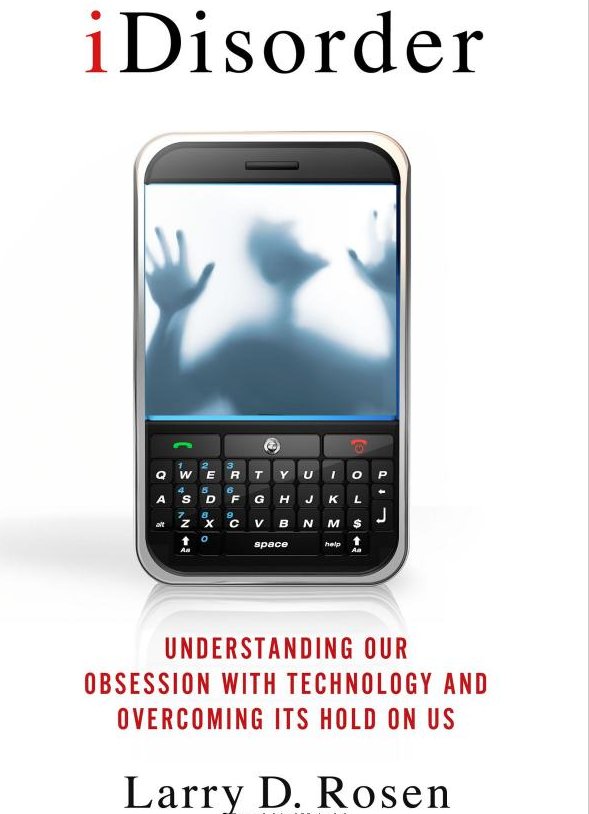
Do You Suffer from an iDisorder?

I first heard of the word iDisorder when I came across Larry D. Rosen’s book iDisorder: Understanding Our Obsession With Technology and Overcoming it’s Hold on Us.

While iDisorder is a fairly new term, the idea that our constant and immediate availability to technology causes signs and symptoms that mirror those of some psychological disorders, isn’t.

Most of us have almost immediate and continuous access to either email, our smart phones, our computers or our tablets and often at the same time, using one device to do multiple things like answering phone calls, sending emails, receiving text messages and surfing the web. The thing is, while we use these devices in attempts to control our environment by making everything in immediate access, we also began to become dependent on them.

How many of us have our smart phone with us all the time? Even while on a date or at the dinner table with family we have it next to us, often without thinking, checking text messages or emails instead of being present and engaging with the people right in front of us? Some people find it rude if you are staring at your screen and tapping away instead of making eye contact with them, but it happens so often that I dare to say it is becoming almost socially acceptable.

I remember one time at a restaurant I was people watching as I often do and I saw a couple that looked like they were out on a date, maybe a first date, but instead of sitting across from each other talking, they were both tapping away on their phones and didn’t speak to each other for at least twenty minutes as they waited for their food to be served. At that same restaurant I observed four young ladies all out to dinner together, none of them talking to each other, but all four focused in their smart phones.

There is no doubt that our devices makes it easier for us to get and stay connected with people we might only otherwise communicate with sparingly, but what about the present and those around us. Are we missing out on real life by being too focused on virtual lives?

I have friends who would rather play games on their devices than actually play games with and be around real people. Recently I was co-presenting with another counselor and when I went to turn the presentation over to her I was shocked to see she was texting on her phone. I had to stall until she came back to the here and now. I later asked her what was going on and she laughed it off, saying that it was a text message from one of her kids, nothing was wrong, but she was so used to reading and responding to their text messages that she didn’t think about it even when we were standing in front of hundreds of people.

We get so used to our phones buzzing with phone calls, text messages, emails and other notifications that even when they aren’t going off, our mind is anticipating them going off so much that it triggers our mind and body to think that we feel our phone buzzing in our pockets. These are called phantom vibrations. It’s crazy, I’ve experienced them before and I am sure most of you who are frequent cellphone users have as well.

How many of us are so dependent on our devices that we feel lost without them? Ever leave your house and accidentally left your cell phone? How did you make it through the day or did you turn back around and get it? How many accidents are caused because people are driving and texting. It’s as if that text message has to be read and answered despite the fact we are already engaged in the dangerous activity of driving. Ever watch people who’s smart phone battery is about to die and thy don’t have access to a power source? It’s like watching a drug addicted desperately searching for a fix.

I see kids all the time getting in trouble in school for having their smart phones out, even when they know they aren’t supposed to. And trying to take the phone from them? You’d think you were trying to take a kidney. They throw tantrums, even at times become hostile and risk suspension or worse over a simple device. Can we say addiction?

In his book, Larry Rosen goes on and on connecting our access to technology to things like depression, narcissism, ADHD, hypochondria, voyeurism, eating disorders, anti-social behaviors and a host of other psychological disorders.

On top of that, in teenagers I think it retards their spelling and writing abilities. I’ve seen in teenagers writing that some of them have become so used to short hand text messaging that their spelling suffers and they don’t know when they are writing papers that you can’t just put IMHO when you mean in my humble opinion or txt when you mean text. It’s crazy, but true, so many of the teenagers I work with don’t seem to know when it is and isn’t appropriate to use that type of short hand. One of my teenagers, a very intelligent junior, once wrote me a personal letter I had to decipher. If I didn’t know her I would think she couldn’t read, spell or speak proper for that matter.

The thing is, you can become addicted to anything used in excess and one of the hallmarks of addiction is denial.

As a side note, if you ever have a house party or get together, you may want to thank about banning smart phones as people tend to pull out their phones, start texting, playing games and surfing the internet instead of actually engaging in conversation and activities with people around them. 

It is a good idea for us to unplug every now and then, even if it’s just for a few hours. Put away the cell phone, the tablets, the computers and connect with real people and be present. That would be some thing great for a family to do together although your kids may throw a tantrum at the thought. I think it will help keep us grounded and appreciative of who and what we have surrounding us.

What Your Dreams Are Trying to Tell You

The other day a client came to me with anxiety over the dreams she had been having lately. They were unpleasant dreams about family members, both deceased and alive and left her scared to go to sleep each night. That got me to thinking more about dreams and what they are trying to tell us. I am not a dream analysis, but I will share what I believe and what I know from personal experience and from others experience.

Your Dreams are Trying to Tell You Something?

I truly believe that most of our dreams are not only trying to tell us something from our unconscious, but that they are actually trying to help us understand something. They are also often related to something that happened during the day. Perhaps an unpleasant interaction we had with someone and didn’t really give it much conscious thought, but our subconscious held on to it for whatever reason. As a matter of fact, unresolved issues, feelings and situations play a major part in our dreams. If you are angry with someone and haven’t dealt with it, that anger and those thoughts can find their way into your dreams and play themselves out.

Also certain things like smells or sounds can trigger things in our subconscious that play out during our dreams. Maybe you smelled a hint of a fragrance that reminded you of an old flame and you didn’t give it a second of conscious thought, but later that night you find yourself dreaming about him or her.

The bad part is that our dreams are often complicated, fuzzy or confusing which makes it hard to analyze some of them, but the feeling you have when you wake up from a dream is usually the key to understanding what the dream is trying to tell you and help you with. Did you wake up angry, sad, scared? That is usually the key to what the dream is trying to show and help you with.

Also, something I learned in a graduate school is that many dream analyst believe that EVERYTHING in the dream is YOU. They believe that if you dream about a dog getting hit by a car it was running away from, that it could mean you are afraid of something within yourself and are trying to run away from it. Interesting isn’t it?

Even bad and scary dreams are trying to help us understand or show us something. Lucky some dreams aren’t confusing and are quite easy to understand. Because dreams can be so fleeting and eluding, it is a good idea to keep a dream journal next to your bed so that you can capture those dreams while they are fresh and analyze them later.

The Symbiotic Relationship of Counseling and Unconditional Positive Regard

As another school year ends I look back at all the clients I’ve worked with during the school year and a good majority have made major changes. I’ve seen teens who could barely stay in school for a month because of getting suspended, end up having zero discipline issues for the last five months or more. I’ve seen kids with alcohol and marijuana problems minimize and some totally quit using and even more importantly I’ve seen kids I thought would take years to make positive gains make dramatic changes over a few months. 

I give all my clients surveys before discharging them so that they can voice how I have helped them or didn’t help them so that I could better myself in the future and this year I became emotional as I read over some of their responses. Some kids wrote things such as

  • “You helped me have a better relationship with my mother”
  • “You helped me realize that killing myself isn’t the answer”
  • “You helped me learn to love myself”
  • “You helped me learn how to get along with my baby’s father and take better care of my baby”
  • “I’ve learned to control my anger and how to express my emotions”
  • “You helped me learn how to get along with my baby’s mother and get more into my son’s life”
  • “You helped me realize how valuable my life is and how stupid and irresponsible ending it would be”
  • “I don’t smoke or drink any more and started liking myself”


This comments really touched me and made me feel blessed to have had such an impact on these kids and they have had major impacts on me as well. I’ve learned just as much about them about patience and the importance of bringing the family into counseling whenever possible and appropriate. I look back and try to reflect on all the things and activities I’ve done with these kids and while I’ve used a lot of counseling techniques, I think the one thing that made the biggest impact is the unconditional positive regard I’ve showed these kids. Unconditional positive regard is accepting someone as they are and not judging them and I showed these kids throughout the year that I liked and accepting them despite anything they did or said. Sure they often did things I didn’t approve of, but I always let them know that it was the act that I disapproved of and not them. A lot of these kids have never had anyone they could just talk to who accepted and didn’t judge them and I think building on that relationship overtime had the greatest impact.

A lot of times I hear interns and new counselors saying that they are afraid that they are afraid that they won’t always know what to say and I always tell them that it’s okay, sometimes I don’t know what to say and so I say nothing, I just listen and show unconditional positive regard and empathy instead of not being present in the situation because I am busy searching for the right thing to say when there likely isn’t. In a good counseling relationship it is symbiotic. I learn from them and they learn from me and that is one of the things I love best about being a counselor. I learn from even the most difficult of clients and hopefully they learn from me as well. 

Trying to Understand Teenagers Part I: Psychosocial Development

According to Erik Erikson’s theory of psychosocial development, during the ages of 12 to 18, teenagers are mostly focused on the questions “Who am I?” and “What do I believe and stand for?”

Identity versus confusion is thought to be the psychosocial crisis that teens are dealing with and many of us will probably agree that the teen years are full of trying out different roles and groups of friends to see where we fit in. This is natural and healthy as it helps us develop a sense of self, independence, a sense of belonging and a sense of individualism. If dealt with in an unhealthy way, this stage leads to feelings of confusion, and insecurity about themselves and where they fit into the world. At its worst it can lead to social and psychological impairments such as personality disorders, mood disorders, eating disorders and substance abuse.

Social relationships become the outmost important things to teenagers, which again is natural because humans are social beings and we need to learn how to get along with others and work together, but often times teens will put such great importance into their social relationships that everything else takes a back seat including familial relationships and academics. I see teens all the time whose biggest concern to them is their three month old relationship and not their failing grades and trying to get them to understand what should be important to them is more likely to give me gray hairs than it is to change thier point of view. Teens often sacrifice their relationship with parents to fulfill their needs for social relationships and usually don’t quite understand why we adults won’t just leave them alone to do what they want to do. A teenage girl I work with in individual and family counseling often cries to me that she just wants her mom to leave her alone and stop being worried about her. This young girl has been brought home at two in the morning by the police on a school night when her mom thought she was asleep, has been caught drinking and smoking marijuana and is failing school, yet she wants her mom to just let her “live my life”. This young girl is currently suspended from school after being caught having sexual contact with a boy in a restroom on campus.

It is natural for teens to try on different roles, friends, activities and behaviors to see what fits them and what doesn’t. This at times can be scary for those of us who watch the teens we know and love morph into and out of different roles and characters on their quest of finding their own identity and sense of direction.

With healthy and appropriate encouragement, reinforcement and support during this stage, teens will emerge with a strong sense of who they are, a feeling of independence, confidence and control over their lives. Those who come out of this stage unsure of who they are, what they want and what they believe are at a higher risk of developing the psychological impairments mentioned above as well as continue to feel insecure and confused about who they are into their adult years.

Not Catching the Ball: A Form of Self-Care

I’m not the first to say this. Matter of fact, I heard this from one of my mentors who is a successful therapist, but even before her, I can swear I might have heard it on Oprah or somewhere, but the fact remains it is a powerful statement that has helped me in many situations.

Often in life we get swamped with obligations that we’d rather not do. I don’t mean the things that we have to do like take care of our kids or pay the bills, but I mean things such as running an errand for a friend that would really inconvenience us, or dealing with someones emotional instability that we know will suck us of any energy we have, but we may feel obligated to listen, or help, or volunteer, or say “yes” when we really want to say “no”.

The thing is, these things asked of us by friends, family, neighbors, co-workers, or who ever, is like them throwing a ball to us and we often feel obligated to catch it, but we don’t have to. We can say no, we can politely turn down that invitation to a Christmas party we really don’t want to go to, quite simply, we can just let the ball pass or bounce on by us instead of feeling obligated to catch it.

I had to explain this to a client recently who gave a guy her number when she didn’t really want to, but didn’t know how to say no, and now when he calls she doesn’t really want to answer, but does so to not be rude. I had to tell her that just because he was throwing the ball to her, didn’t mean she had to catch it. The same goes for someone giving you a bad attitude, negative energy or whatever. Just because they throw that negative ball your way, you don’t have to catch it and throw it back, you can just let it pass on by you.

Many times we feel the need to, and sometimes out of habit (or reflex) catch balls we really shouldn’t and sometimes even throw them back. People will always throw balls at us and if we try to catch them all we’ll eventually end up dropping everything.

So I think it’s important from time to time to practice not catching the ball, which will allow us more time and energy for what we feel is most important to us.

On Childhood Disintegrative Disorder


We conclude our discussion on the Pervasive Developmental Disorders with a brief overview of Childhood Disintegrative Disorder.

Introduction

Childhood Disintegrative Disorder (CDD), is also known as Heller’s Syndrome and Disintegrative Pschosis.  It is a rare Pervasive Developmental Disorder that affects about 1 in 100,000 children. CDD resembles many of the other disorders on the Autism spectrum in the fact that it involves developmental delays, impairment in communication and social functioning, but most closely resembles Rett syndrome in that it almost exclusively affects boys whereas Rett syndrome almost exclusively affects girls. New research suggest that while CDD affects boys more than girls at a rate of 4 to 1, it is thought that girls diagnosed with CDD most likely should have been diagnosed with Rett. There is also further talk that in the future Rett and possibly even CDD won’t be separate diagnosis, but that they will both be collapsed into the Autistic category as low functioning forms of Autism.

Symptoms

Children with CDD develop normally up until about ages 2 to 4 years of age (rarely there are cases of delayed onset up to 10 years of age), and then start regressing, losing previously acquired developmental skills with in a few months to years, including language, non-verbal communication skills, motor skills and social skills.

Symptoms include:

    • Delay or lack of spoken language
    • Impairment in nonverbal behaviors
    • Inability to start or maintain a conversation
    • Lack of play
    • Loss of bowel and bladder control
    • Loss of language or communication skills
    • Loss of motor skills
    • Loss of social skills
    • Problems forming relationships with other children and family members

Causes

There are no known causes of CDD although abnormal electroencephalograms (EEG), epilepsy, Lipid storage diseases (excess build up of toxic fats in the brain and nervous system), Tuberous sclerosis (benign tumors that may grow in the brain and other vital organs) and Subacute sclerosing panencephalitis (chronic infection of the brain due to a form of the measles that damage the brain) all appear to be associated with CDD.

Treatment

There is no cure for Childhood Disintegrative Disorder and the treatment for it is similar to the treatment for all of the Pervasive Developmental Disorders with the addition of trials with steroid medications to try to slow down the progress of the disorder.

Diagnosis

Physicians will use some of the same assessment tools used to diagnose the other Pervasive Developmental disorders with the inclusion of all the symptoms listed above and impairment in normal function or impairment in at least two of the following three areas:

  • Social interaction
  • Communication
  • Repetitive behavior & interest patterns

The main symptoms to look for in diagnosing CDD is the loss of previous learned skills in at least two of these areas:

  • Expressive language skills (being able to produce speech and communicate a message)
  • Receptive language skills (comprehension of language – listening and understanding what is communicated)
  • Social skills & self-care skills
  • Control over bowel and bladder
  • Play skills
  • Motor skills

If your child has any developmental delays or starts to lose developmental functions previously learned, it is vital to talk with your physician in order to rule out  CDD or any of the Pervasive Developmental Disorders or mental retardation. The faster any illness is discovered and treatment begins, even if there is no cure, the better the prognosis or at least the slowing of the progress of the disorder. Some children with similar, yet less severe symptoms may have a learning disability or something much less serious than a Pervasive Developmental Disorder, but it is important to have everything ruled out for the best care of your child.