How Your Teen Gets In Their Own Way And How To Help Them Stop Sabatoging Themselves

istock_stockphoto4u-1-teen-girl-hugging-knees-looking-sad-cWorking with teenagers for as long as I have, I realize that many of them come with various challenges, from emotional and educational challenges to family issues that seem to drag them down. However, in a majority of the cases I’ve worked with, the teens themselves are usually the ones who are getting in their own way of success and happiness.

They often don’t see it that way and will blame their family, their friends, their environment, any and everything, but themselves and it will take many sessions before I am able to help them realize that they themselves are indeed the cause of their problems through self-destructive and self-defeating behaviors and thus are also the answer to their problems.

Most people who have been around adolescence know that many times they get in their own way and do things that are self-defeating or self-destructive. Self-defeating behaviors are behaviors that get in the way of constructive action while self-destructive behavior generally causes some type of harm to the person.

In early adolescence for example, teens often start focusing more on friends, fighting with their parents and other adults as they try to discover their own identity and may end up struggling in school in response to paying more attention to friends than to their grades.

During this time of conflict, (ages 9-13), it is common for certain self-injurious behaviors to start occurring, such as cutting as a way to deal with much of the psychological conflict and pain, especially with teenager girls while teenage boys may do things such as punching walls, getting into fights or destroying property even if it’s their own.

During mid adolescence, ages 13-15, friends are generally ultra important and so is being accepted by your peers. This is the age that teens are going to high school for the first time and can be overwhelmed by the pressure to fit in.

When a teenagers faces feelings of inadequacy about their self-image they may shy away from their peers and develop anxiety issues and/or depression or even self-destructive behaviors such as eating disorders and suicidal thoughts.

During late adolescence, ages 15-18, teenagers may engage in self-defeating behaviors that include more risk taking such as drugs, alcohol, and sex simply for the excitement of it and not considering the dangers that can happen.

This is the age that I worked with the most to either help them stop drinking or using drugs, or to help them with issues surrounding sex including pregnancies, sexually transmitted diseases and even rape.

As someone who has worked with teens for a long time, it can be very frustrating to see a young lady with endless potential, waste it because she wants to be liked by her friends or a boy or she doesn’t like herself. The same rings true for many of the young men I worked with who were more concerned about having a  “tough guy” image, than actually doing something positive with their lives.

Parents indeed find this self-defeating and self-destructive behavior frustrating, but what can they do? Often times teenagers are too defensive to actually take and listen to advice from their parents so parents often would bring their children to me and then wonder what it was about me, or what did I say that got through to their teenager that they couldn’t and I would always tell them that they had to practice objective parenting.

They had to work on not telling their teenager what to do and think or what not to do or think, to not judge, but instead simply draw conclusion between their choices and the consequences of their choices in an empathetic and objective way, and then let their teen decide to either continue the behavior or to try something different.

This is often hard for parents to do because they would like to control their teenagers choices, but they can’t. They have to allow their teenager to make their own choices, however, parents can continuously attempt to put healthier and more constructive choices in front of their teenager for them to accept or not to accept.

The more healthy options you place in front of a teen, the more likely they are to accept at least some of them. As a therapist that is what I did. I would know that I wanted a teen to stop doing a particular self-destructive or self-defeating behavior, I would share my observations about what they are doing and what they are getting (or not getting) from their actions and then attempt to continuously give them multiple alternatives in hopes that they would try at least one.

For example, one teenage girl was obsessed with trying to get pregnant simply because she wanted a baby. I tried to help her see how having a baby would hinder many of her plans and goals for the future, but she didn’t really see that. I then gave her many other things she could be doing instead of trying to get pregnant and she finally decided to try one which is playing softball. She tried out for the team, made the team and two years later graduated from high school with a scholarship to play softball and never got pregnant.

While her mother thought I had worked some type of miracle (she was sure her daughter wouldn’t finish high school without getting pregnant) all I did was give her an opportunity to try something new and that ended up being self-affirming and she basically did the rest.

As a therapist, it is easy for me to be non-judgmental, to allow teenagers to continue making mistakes and learning from them while still giving them healthy alternatives until they finally realize that what they are doing isn’t working and are ready to try something different.

For parents, it’s hard for them to have that same amount of patience because the attachment they have with their teen makes it much more painful for them to witness their teenager continuously sabotage themselves by making poor choices. It’s very difficult for them to be as objective as I try to be.

Because this is very difficult for most parents to do, seeking help from a therapist is often the best solution, especially if the behavior is self-destructive such as cutting, suicidal thoughts, eating disorders, etc.

A book I recommend for teenagers who are constantly self-sabotaging themselves is How to Get Out of Your Own Way by Tyrese Gibson.

Mental Health Awareness Week: Miriam Carey And Postpartum Psychosis

4071This week is Mental Health Awareness Week which was established by the U.S. congress in 1990 to recognize the National Alliance of Mental Illness’ efforts to raise the awareness of mental illness. It just so happens that last week’s police chase and subsequent shooting and killing of Miriam Carey has brought mental illness and postpartum psychosis into the spotlight.

What Is Postpartum Psychosis?

Many people have heard of postpartum depression, but not many people have heard of it’s evil sister, postpartum psychosis. When I was in graduate school I was so fascinated by postpartum psychosis that I actually did a 20 page research paper on the phenomenon.

It isn’t uncommon for women, after giving birth to feel down, sad or even somewhat depressed. This is what is known as “baby blues” and approximately 70-80% of mothers feel this contradicting negative thoughts and sadness after experiencing the joy of giving birth.

Many women don’t talk about it because they feel guilty or “bad” because of these feelings, but it’s important that they talk about the way they feel so that the “baby blues” don’t progress into something deeper like postpartum depression.

Postpartum depression basically is a much more intense and prolonged feeling of negativity, depression and mood swings when compared to the “baby blues”.  This can last weeks, months or even longer.

Postpartum psychosis is the most severe and extreme form of postpartum depression and not only does it typically include the intense sadness, negativity and mood swings of postpartum depression, but it also includes the onset of psychotic symptoms after childbirth.

An example taken from a personal experience I had dealing with a client I diagnosed with postpartum psychosis is that she was extremely depressed at times and then highly erratic and impulsive other times. She was extremely irritable and was having hallucinations which included voices and delusions that her newborn was evil and needed to be killed.

Like a lot of women who deal with the “baby blues”, postpartum depression and postpartum psychosis, she tried to hide the way she was feeling and mask her psychotic symptoms until it got to the point that she was about to drown her child in the bathtub. It was then she went to her family for help and was taken to the psychiatric hospital.

This particular young lady ended up being okay after treatment which included therapy and a brief period of taking lithium. Her child was subsequently raised by the maternal grandparents although legally this young woman still has full custody and spends time with her daughter often.

Postpartum psychosis is extremely rare which is one reason it is not often talked about and another reason many people who suffer from it try to hide it because they are struggling to try to understand exactly what it is they are going through and may feel alone.

Symptoms

Symptoms of postpartum psychosis Include, but are not limited to:

  • euphoria
  • overactivity (hyper)
  • decreased sleep
  • talkative (loquaciousness/hyperverbal)
  • flight of ideas
  • disinhibition
  • irritability
  • violence
  • delusions
  • grandiose thinking or behavior
  • religiously preoccupied
  • delusions
  • hallucinations
  • depression
  • mood swings
  • mutism

Other Famous Examples of Postpartum Psychosis

Melanie Blocker-Stokes

melanie&sam
Melanie and her husband Sam.

Although postpartum psychosis is rare, some popular cases include Melanie Blocker-Stokes, a successful pharmaceutical sales manager happily married to a physician.

On June 11, 2001 she gave birth to a baby girl and soon developed severe depression, stopped eating and drinking and no longer could swallow just four weeks after giving birth.

She became paranoid and thought her neighbors closed their blinds because they thought she was a bad mother and although she was in and out of several hospitals, was on several medications and even received electroconvulsive therapy, she killed herself by jumping off of the roof top of a Chicago hotel. Her daughter was only 3 and a half months old.

Melanie always wanted to become a mother and it’s a tragedy that becoming a mother ultimately took her life. She had written in her journal before her death: “How can I explain to anybody how something has, literally, come inside my body…I’m no good to anyone. No good to myself.” 

She called some her friends and family and left what they now know were her final goodbyes and to her husband she left a note that simply read: “Sam, I adore you, Sommer and Andy, Mel.” Andy was her husband Sam’s son and her stepson and Sommer (Sommer Skyy) was her newborn child.

Her battle with postpartum psychosis helped congress pass the Melanie Blocker-Stokes Postpartum Depression Research and Care Act in 2010 aimed at increasing research, education and screening of postpartum depression and postpartum psychosis. Sadly not much has been done since it was passed, but this is the story that sparked me to write my research paper in graduate school and got me interested in postpartum psychosis.

Andrea Yates

Perhaps most famously there was Andrea Yates whose mental health seemed to deteriorate with each child she gave birth to. She had attempted suicide twice and was urged against not having any more children after being hospitalized in a psychiatric hospital after her fourth child. Never-the-least she gave birth to a fifth child and three months later she was hospitalized again twice and warned not to be left alone with her children.

However, one day she was left alone for only an hour and tragically drowned all five of her children. She’s currently committed to a high-security psychiatric hospital.

Miriam Carey

Miriam Carey was a 34 year old mother of a one year old little girl. She was a dental hygienist with plans on going to dental school. Last week she made the decision to drive from her home in Conneticut to Washington, D.C. Some reports say that she was mad with President Obama for listening to her phone conversations.

Miriam Carey
Miriam Carey

In any case, with her young daughter in tow, she drove to Capitol Hill, crashing into barricades around the White House, police cars and speeding recklessly down Pennsylvania Avenue before she was shot and killed by law enforcement after attempting to use her car as a weapon.

It’s unfortunate that Miriam Carey was shot and killed, especially with her one year old daughter in the car. After listening to her family talk on CNN last week talk about her struggles with postpartum psychosis and a family history of mental illness including schizophrenia, I wish something could have been done sooner although she was apparently taking medication for an unknown mental illness.

It’s possible that although her family knew she was having some mental problems, they didn’t know how severe they were or even what they were because she was most likely keeping them in the dark and the Health Insurance Portability and Accountability Act (HIPPA) keeps doctors and mental health professionals from being able to discuss a persons medical and mental issues with family members which helps explain why her family members and friends where all shocked that she was behaving so erratically and reckless especially with her daughter in the car. They were all shocked to learn that she had even driving to Washington, D.C. out of the blue.

They may have known she had issues, but never suspected that they were as severe as they turned out to be.

According to everything I have read as reported by her family members and her boyfriend, her main symptoms were paranoia and delusions. It’s a good chance that her mental health problems existed before she was pregnant and that her pregnancy exacerbated the condition and developed into postpartum psychosis.

For example, she could have been suffering from bipolar disorder or a mood disorder previously and possibly stopped taking her medication to prevent them from having side effects on the baby and then everything just snow balled out of control with the natural hormonal and mood changes that occur with pregnancy.

Many women who develop postpartum psychosis already have other underlying mental health issues

Her death however is not in vain as it helps bring attention to postpartum complications like “baby blues”, postpartum depression and postpartum psychosis so that maybe more women who are suffering silently will speak out and reach out for help.

If you or someone you know is suffering from postpartum depression of any kind, have them speak with their doctor. For more information visit http://www.postpartum.net/ or call 1-800-944-4PDD.

Sensitive People: Absorbing Other People Emotions

Teenage girl looking thoughtful about troublesI’m highly sensitive to other people emotions and energy. I have been for probably all of my life, but it is something I have just become aware of in the past few years. I can be having a good day, feeling happy and all it can take is an interaction without someone close to me, to bring me down.

When I discovered this sensitivity, it was quite alarming. It seemed like my mood and even the way I felt about myself were dependent on how the people around me were feeling and even how they felt towards me at that moment. You can imagine the amount of stress, anxiety and uncertainty it would cause me and often times I didn’t understand why. Looking back I think I thought that they’re mood and feelings had something to do with me. It took a lot of introspection before I realized a few things:

  1. Rarely if ever did the other persons mood, feelings or behavior have absolutely anything to do with me and,
  2. I can not control other people’s feelings.

A large part of it boiled down to control. I wanted everyone around me to be happy, to like me, to treat me the way I would treat them, and when they didn’t, I automatically assumed it was my fault and whatever joy or happiness I had would go away and turn into either self-blame, dysthymia or anger, especially when the people were close to me such as a girlfriend or close friend.

It took a long time for me to start working on not allowing other people emotions to affect mine, and honestly it is something I still struggle with on nearly a daily basis. Some days are better than others and when I do find myself losing my inner peace to someone else’s energy, I get discouraged because I know it’s not about me and that I can’t control their emotions nor should I allow them to have power over mine.

I learned however that if I beat myself up too bad for allowing someone to move me from my inner peace, I end up doing more emotional harm than good because I become negative towards myself for being “weak” or even “stupid” (negative self-talk never helps and is almost always a recipe for increased anxiety and depression).

I’m starting to realize that one way to stop giving so much power to other people over my emotions is by not expecting things from them that they can not give me, such as unconditional love, unconditional positive regard or fulfilling any of my various needs that can only be filled by me and God. By not expecting those needs to be met by others I have taken back much of my power, but still at times, it’s a struggle just like when trying to undo any bad habit physically or mentally.

Some Negatives to Being Hypersensitive

As I stated above, being hypersensitive to other people emotions makes it very easy to be affected by others emotions, usually not for the better. This can be very draining and overwhelming and can easily lead to anxiety and depression. This can cause us to withdraw so that we can process and deal with our emotions, which other people may not understand and take it negatively that we need time and space alone, especially since we live in a culture that devalues sensitivity. Lastly, hypersensitive people may have unrealistic expectations of perfectionism towards themselves (i.e., everyone is supposed to like me).

Some Positives About Being Hypersensitive

Just like most things that are negative, there are of course positive things about being hypersensitive emotionally. I think evolutionarily it helps us to pick up slight shifts in someones temperament or even the energy around us. I’ve been in rooms where everyone around me was talking, yet no one noticed the sudden shift in tension, or how someone else became emotional, angry or nervous during a certain topic. I would sometimes leave those situations knowing more about a person I didn’t even talk to just by watching the subtle changes in their expressions.

I think being hypersensitive to other people emotions help me to be more in touch with my own emotions. I’m always amazed at how many people aren’t in touch with their emotions and as a counselor, often it’s my job to help them to get in touch with their true emotions so that they can start living a real, authentic life. We hide from our emotions, mask our emotions (even from ourselves) and often don’t know why we feel or act in certain ways because we are not used to being in touch with that part of us. Hypersensitive people are almost always, sometimes neurotically checking in with their thoughts and emotions.

I think being hypersensitive also leads to being more creative, to being able to express ones emotions more through music, art, dance, poetry and writing for example. It also makes us more empathetic to others which in the field of mental health is a must.

Some Tips for Hypersensitive People

  1. You have to recognize and acknowledge that you are absorbing other people emotions. I’ve been doing it for years and until I actually realized it, I wasn’t doing anything different to try to stop it.
  2. When you start feeling a certain way after an encounter with someone, ask yourself if what you are feeling is really your emotion or theirs. You’ll be surprised to find out that most of the time it’s not yours and if it’s theirs then immediately release it. This alone will make you feel better most of the time.
  3. Remember that you are not responsible for nor can you control other people emotions so don’t worry over it because in doing so, you’ll just be absorbing it into your own emotional state.
  4. Identify what/who is making you feel a certain way and try to distance yourself if you can. If you can’t, go back through steps 1 to 3. Sometimes it’s a particular friend or group of coworkers that are the main source. Putting some distance between you and them can help alleviate the problem.
  5. When you start to feel overwhelmed by other people emotions, even if you can’t get away, try mindfulness or deep breathing techniques to help bring you back to your own inner peace.
  6. Speaking of inner peace, always try to work on building up your own inner peace by being good to yourself, exercising, eating right, maintaining good emotional, physical and mental health and surrounding yourself with people who bring you good and positive energy. BE GOOD TO  YOURSELF!

Being hypersensitive to other people emotions is both a gift and a curse, but look at it like a power that you have to master so that you are in control of your emotions and able to use all of the positive qualities that come along with being sensitive to other people emotions.


The Face of Mental Illness

girl-in-shadows-istockI love working in a psychiatric hospital because it’s rarely boring. The type of people who come through the door are everyday people, no different from you or me, it’s just that what they are dealing with at the time is more than they or most likely any of us can handle.

I remember when I first started working here, a senior co-worker said that the only thing separating us from the patients is that we have the keys that let us in and out.

That’s one reason customer service, even in a mental hospital is so important. We strive on treating everyone, no matter what their circumstances or mental state, fairly and therapeutically because you never know when we or one of our family members or friends will end up in a place like this and it’s fairly easy.

Say the “magic words” to the right person and you may find yourself involuntarily hospitalized. Have an over exaggerated emotional or behavioral reaction and you may end up placed in a mental hospital to help you calm down.

Since I’ve been here I’ve seen correction officers, police officers, teachers, college students, professional athletes, lawyers, daughters of politicians, doctors, nurses and business owners come through our doors under involuntary hospitalization statuses.

People are placed here everyday who feel like they shouldn’t be and some may very well not be, but the majority at least need a cool down period.

For example, last week a college student got into a fight with his girlfriend and someone reported he threatened to kill himself. He denied does accusations, but he was emotionally upset enough that law enforcement thought it was best that he was brought here for his safety and the safety of those around him.

Now that he was here he didn’t want to be here and wanted to leave. He kept trying to convince me and everyone that he didn’t need to be here, but in doing so, he was getting more and more upset and therefore appearing more and more like he needed to be here for his safety and those around him.

I kept trying to talk to him and tell him that if he truly didn’t think he should be hospitalized then he needed to be calm and relaxed, otherwise he was risking looking like every other patient in the hospital who truly needed to be there.

However, he was so agitated and insistent on leaving that we had to place him on an elopement risk which lessened the chance of him being released sooner than he would have been otherwise.

When people think of the patients in a mental hospital, they almost automatically get an image in their head as if mental illness has a face. Those of us who work in the field or know someone or are ourselves suffering from a mental illness know that this couldn’t be further from the truth.

This morning I spoke with the mother of one of our patients who just graduated with an advanced degree and has an extremely high IQ, but has a long history of bipolar disorder and hasn’t been on her medication in over a year.

This is a beautiful young lady who was found sitting outside naked, stating that her old self had died and given birth to her new self with a new name she was calling herself by and a new age. She also believed she had God like powers.

Here at the hospital, for the most part, this young lady was selectively mute and at times appeared catatonic. We even had to carry and pose her limp body at one point when we had to transport her to another part of our facility.

She was definitely in need of some medication to help her start getting back to her “normal” self.

I was really hoping to speak with her, I throughly enjoy talking to people who both have a long history of mental illness and the ability and awareness to really talk about it and analyze their experiences, but she wasn’t speaking to anyone, so I spoke with her mother for a while about her history of treatment and tried to help calm her mother’s fears about her daughter’s recent deterioration.

This young lady reminds me that mental illness is all around us and it’s nothing to be ashamed of or to run from. Sometimes it’s in your face like the guy talking to himself while begging for change or it’s wrapped in the package of a pretty grad school graduate who on most days could hold the most intellectual conversations, but today she’s just staring into out of space unresponsive to the world around her.


Treatment Of The Mentally Ill In A War Torn Country

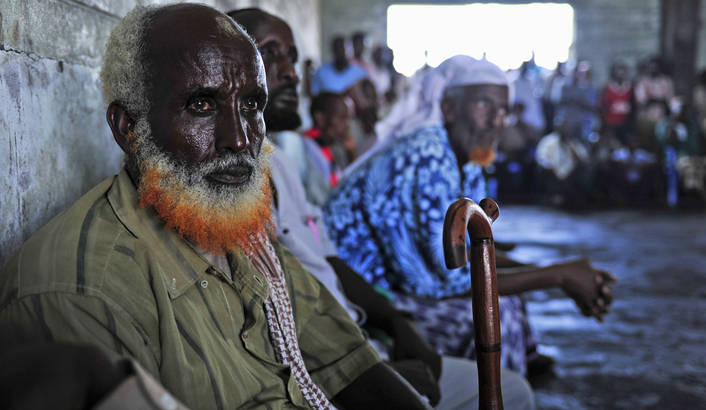
706x410q70simon-somalia-subbedMThe other day I was reading a very interesting article about how mentally ill people are treated in Somalia where they have one of the highest numbers of mentally ill people in the world.

Somalia is a country that’s been plagued by war, famine and disease for decades. As a result, at least 1 out of 3 of their 10 million citizens are affected with a mental illness, including many former soldiers, some who joined various armies and fractions at as early as 7 years old and are suffering from post traumatic stress disorder (PTSD).

On top of all this, a very large number of the population uses a drug called Khat, which is a plant that you can chew and it causes psychedelic effects. It’s legal and addicting although it can cause both health and mental damage.

Things are further complicated for the mentally ill in Somalia because of the lack of qualified mental health professionals. Many of the mental health workers in Somalia have only received 3 months of training through the World Health Organization (WHO), which is advocating for the humane and proper treatment of the mentally ill in Somalia and worldwide.

WHO officials have rescued mentally ill people from some very poor conditions. Families who have mentally ill family members in Somalia often don’t know what to do or where to turn for help so they chain them to beds in the house or to trees in the yard, including one lady who was chained by her husband to a tree for eight years and gave birth to three children.

Faith and folklore also play a role in treating the mentally ill in Somalia, with individuals sometimes being flogged to get rid of the “evil spirits”, locked in a room with a hyena for three day stretches in hopes that the hyena would eat away the “evil spirits”, or simply just beaten to death by villagers.

The streets of Mogadishu, Somalia’s capital, are littered with the mentally ill sleeping under bridges or wandering around aimlessly chewing on Khat. Most of these individuals are suffering from some sort of mental trauma and are receiving no help.

Something that makes this story even sadder is that Somalia’s only trained psychiatrist died last year in a car crash. It’s one thing to have one psychiatrist in a country of 10 million people, but when that person dies and there is no one else to take their place, the fate of the mentally ill seems that much dimmer.

A lot of money is going into rebuilding Somalia and helping with diseases like HIV, TB and diarrhea, but not enough funding is going into helping the mentally ill.

I can only imagine that it will be nearly impossible to build a stronger country, economically, educationally and health wise, if such a large portion of the population is suffering from mental trauma.

Where will these workers come from? How can they function if they are suffering from a mental illness without being treated? How will the children who are suffering learn and grow up to be productive citizens?

This is only a snap shot about mental illness in a third world, war torn country and similar terrible conditions are played out everyday around the world.

Hearing about these deplorable conditions initially made me wish I could go to Somalia to help out, but I realized that it also makes me want to advocate even stronger for the rights and proper treatment of the mentally ill here in the United States and across the world through education, information and community service.

Involuntary Hospitalization

depression_woman_640Last week I did my very first involuntary hospitalization (or as we call it here in Florida, a Baker ACT) of an adult.

Involuntary hospitalization or commitment is actually a legal procedure where an individual who is showing severe signs of a mental illness such as suicidal thoughts, homicidal thoughts, self-neglect or any other potential to intentionally or unintentionally harm themselves or others is placed into a hospital even if they don’t want to go.

Here in Florida it’s generally a 72 hour hold where the person is evaluated by a nurse and other mental health professionals and then a psychiatrist who will decide if that person is well enough to be released or should stay longer. Technically a 72 hour hold can be extended for as long as a week to much longer in severe cases including state hospitalization which is typically months. It’s a major responsiblity because it’s basically taking away part of someone libery and forcing them into treatment.

In Florida, a doctor, a police officer, a physicians assistant and licensed social workers, marriage and family counselors and mental health counselors all have the authority to put someone involuntarily into the hospital if they feel that person is a threat to themselves or someone else.

I personally don’t take this responsibility lightly, especially working in my new job where I work mostly with adults who’s circumstances generally aren’t as black and white when it comes to meeting criteria to be placed into involuntary hospitalization compared to children. However I know that sometimes it is necessary to keep people safe from themselves, other people and even their illness.

Most of the children and adolescents I had to place into involuntary hospitalization were fairly easy decisions for me. They usually came straight out and told me that they wanted to kill themselves, wanted to kill a parent, or was doing something so outrageous that it was obvious they were imminent dangers to themselves. Most of them, once I told them I was going to have to have them put into the hospital for observation didn’t fight it much. Some cried, but most knew it was for their own good.

Adults however are different. Yes there are plenty of adults who are as obvious as the adolescents, but when it comes to adults, most of them won’t say that they want to kill themselves or someone else, but will skate around it and it becomes not black or white, but grey.

Working in a mental hospital makes it even worst because many of the adults present with some signs of psychosis and it’s not illegal to show sings of psychosis or to be symptomatic, meaning, I can’t hospitalize a schizophrenic just because she’s hearing voices and talking to herself, or a manic woman just because she’s speaking at a thousand miles an hour and bouncing from topic to topic driving her husband and kids up the wall, not as long as both of those people aren’t homicidal or suicidal and are oriented which is the majority of the case.

Often times people will want these people placed into the hospital against their will because they are acting “crazy”, but that doesn’t meet criteria to take away someones liberty and placing them into the hospital.

Because adults have been much more complicated than children when it comes down to deciding if they meet criteria for involuntary hospitalization or not, I was always nervous about writing my first adult involuntary hospitalization order, but when I got this current job, I knew it was only a matter of time. At least 2 to 3 times a week I was asked to evaluate an adult to see if they met criteria for involuntary hospitalization, but most of the time the adults were just symptomatic, maybe in need of some medication, but didn’t meet criteria for involuntary hospitalization.

That was until last week. Last week I was in a training when I got asked me to come evaluate a woman because her therapist thought she may need to be placed into the hospital for her safety.

I met with and evaluated the woman who was obviously in distress. Through my evaluation she told me she hadn’t eaten, slept or bathed in days, nor has she taken her medication because “demons” were telling her not to and were physically holding her down at night.

She then started telling me about being commanded by her deceased mother to do things like book an airplane ticket to another state. She also did not know where she was or what year it was. It was obvious to me that she needed to be hospitalized for her own safety so I had to write an involuntary hospitalization order and she was subsequently placed into our hospital where she would be evaluated, stabilized and released to go back home with a follow up plan of both medication and therapy.

I was nervous as I wrote it, but this one was obvious enough where I felt confident that I wasn’t violating anyones rights and where the power I have to place someone in the hospital against their will was being used for the right reason.

So that was my first adult involuntary hospitalization and I know there will be many more to come because as a licensed mental health counselor I evaluate people’s mental state everyday and working in a large mental health hospital where people come for medication appointments and therapy appointments, but sometimes end up presenting in ways that suggests they need to be placed in the hospital for stabilization, writing involuntary hospitalization orders is part of my job and it’s a responsibility I don’t take likely.

Young Stars Bright Futures Cut Short By Suicide

GTY_lee_thompson_young_dm_130819_16x9_992
Lee Thompson

I have been a fan of Lee Thompson since my college days when I would find myself watching The Famous Jett Jackson on the Disney channel despite it being meant for teens between the ages of 12 and 16.  After all, here was an African-American movie star/spy who lived with his father and grandmother and got into various adventurous with his friends, how could I not find that interesting?

Lee also starred in the movie Friday Night Lights and was in Akeelah and The Bee .

Tragically however, Lee, who was currently starring in TNTs police drama Rizzoli & Isles, committed suicide on August 19th. He was just 29 years old.

I personally was shocked by the news of his death because he was a fairly low key actor. I never heard about him getting into trouble with the law, abusing drugs or alcohol or even much about him having any mental or emotional instability. I always assumed he was just doing fine and that is the danger when it comes to suicide.

As I have stated before, I have done a lot of crisis counseling in the aftermath of people who have committed suicide and often the words I hear from family members and friends is that they thought the person was doing just fine and their suicide came as a huge shock.

And this is where some of the stigma that surrounds mental illness comes into play. According to sources, Lee may have been battling depression quietly for a long time. Some are saying that he really changed once he started practicing an African religion called Yoruba, but it’s very likely that in an attempt to ease his depression, he sought refuge in religion and when that failed to lighten his depression, he unfortunately thought his only alternative was death.

Sources say that his mom was worried about him because many of his friends that lived in Los Angeles with him had moved and that he was surrounded mostly by “industry types” and not real friends. If this is true, definitely having a lack of a support system/network increases the chances of someone with suicidal thoughts to actually act on them.

Apparently Lee was close to his mother and sister, but probably out of pride and/or shame (stigma even), never told them about his depression or at least about how bad it really was. Many times men feel weak for feeling depressed and will hold it in and take their lives without anyone knowing how long they had been suffering.

His coworkers on the set of the show Rizzoli & Isles got suspicious when he didn’t show up for work and sent an officer to his house to check on him and that is where he was found dead. Jackson didn’t leave behind a suicide note, but sources say that he took his life with a gun.

This comes right after reality television star Gia Allemand (who was also 29) of Bachelor and Maxim modeling fame committed suicide by hanging herself with a vacuum cleaner cord two hours after her NBA boyfriend Ryan Anderson told her that he didn’t love her any more on August 12th.

102538232
Gia

According to Gia’s father, she had a long history struggling with dealing with rejection when it came to friends and boyfriends.

Honestly I didn’t know much about Gia until this happened. I remember getting ready for work when it came on the morning news show and I paused to listen to the story. It’s troubling to me when anyone who commits suicide, but it’s especially painful when people who are in the spot light commit suicide because that often sends a message to their fans and others that it’s okay to end your life if you think there is no other solution.

There are ALWAYS other solutions.

Unfortunately when you are in the middle of a deep depression or a mental/emotional/psychological break down, it’s easy to imagine that life will never get better, that it will never be as you want it to be and that death is an easy escape.

Suicide is a permanent decision to a temporary problem is a popular saying, but unfortunately suicidal people ususally believe that their problem is indeed permanent even when it’s not.

**If you or someone you know needs help, please call the National Suicide Prevention Lifeline at 1-800-273-TALK (8255)**

Attachments: How Our Very Earliest Relationships Impact Our Current Relationships

20130805_194648
Photo Courtesy of Sylvia Olson

Recently a friend of mine and I had an intellectual and introspective conversation about the way we act when it comes to relationships. We discussed the ways we react to love, to break ups, to trust issues and to abandonment.

It was during this conversation that I started trying to identify our attachment styles because it was clear to me that ours were different, yet neither one of us had what I felt was a healthy attachment style.

As a clinician, I’ve always been aware of attachment styles, especially when it came to attachment disorders  like reactive attachment disorder (RAD), but I never really gave them much thought when it came to my own life until I was having this conversation with someone who seemed so opposite, yet familiar.

What Exactly Are Attachment Styles?

Attachment styles are patterns of relating to others that develop early in childhood and they consciously and/or unconsciously continue to play a role in our relationships throughout life. We base much of our attachment style on the very early relationships we had with our parents (especially our mothers) or guardians.

The attachment style we operate from influences how we go about getting our needs met and how we meet or don’t meet the needs of others.

When we have a healthy attachment style we are confident, secure and easily interact with other people in a balanced relationship.

When we have an unhealthy attachment style we tend to be insecure, anxious, and/or detached and tend to find other people who fit into our unhealthy attachment style which generally means making bad choices in relationships because the people we choose tend to lack the capability to be good partners for us in the relationship.

We typically tend to project our sense of how we think relationships are, through our attachment style.

For instance, someone who has an insecure attachment style will likely seek out other relationships that confirm to them that they should be insecure. They will unconsciously seek out people who are unfaithful and friends who aren’t trustworthy, even when those relationships are clearly hurtful and destructive.

It’s helpful to understand what your attachment style is so that you can be aware of some of the unconscious factors that may be playing major roles in your adult relationships.

There are four basic patterns of attachment  and we’ll discuss each one briefly in efforts to help you identify which style mostly resembles the way you relate to others, especially in your love life.

Secure Attachment

Lucky, the majority of of us have what is called secure attachment, which means that we grew up seeing our parents or caregiver as a safe and secure place, which allowed us to go out and explore our world as an individual.

People with secure attachment tend to have better relationships compared to the other attachment styles. They tend to find romantic partners who also have secure attachment. They feel connected, secure and do not try to control their partners or cut off their partners independency.

As adults they are supportive and aren’t afraid to ask for support when they feel they need it. Their relationships are generally more open, honest and fair because while they like feeling independent, they also like being connected with those in their life without hampering their independence.

The way they relate and love other people is usually more genuine and they act out of places of love, rather than fear or anger more often than those who have other attachment styles.

Anxious Preoccupied Attachment

People who have this type of attachment are often “starving” for love or attention. They tend to cling to people even when there is no real love and trust isn’t present. These people are usually looking for someone who “completes” them because they don’t feel complete by themselves and feel safer when they are in some sort of relationship. At the same time as they are clinging to others, they tend to do things that push them away.

Because these individuals are afraid of abandonment, they come off as anxious, insecure and desperate and do things to confirm their believe that they should feel this way such as becoming possessive, super clingy, demanding of time and attention and trying to control their partners independence. As a matter of fact, they may see their partners independence as rejection and confirming that they should be feeling anxious and insecure.

They may for instance see their best friends interest in other people as signs that they don’t want to be friends any more and will hurt them or if they’re in a relationship, they may see their partners interest in a “boys night out” as a sign that he doesn’t love her and wants to be with other women, therefor confirming their believes that they should be insecure and anxious.

Dismissive Avoidant Attachment

People who have this type of attachment seem to be emotionally detached, especially when it comes to people they are supposed to love and care about. They tend to isolate themselves and create a false sense of independence, often times isolating themselves from family and friends. These are the people that may seem totally wrapped up in themselves and their own well-being.

However, their false sense of independency is just that, it’s not real and they crave real relationships with others just like all humans do. We are social creature by nature. People with dismissive avoidant attachments will deny the importance of real relationships with family, friends and other loved ones and will detach easily from the people in their lives often for little to no reason at all.

This is a psychological defense that they use to shut off their emotions, usually to prevent from getting hurt, feeling rejected or having to be vulnerable in anyway. For example, even when they are really angry or sad, they may look unfazed. They have an uncanny ability to not react and just shut off all emotions.

They may repeatedly chose relationships with unhealthy people so that they will be forced to detach and affirm that they need to be detached and distant because they will only get hurt if they allow themselves to be vulnerable. Even if they are in a good relationship, they are likely to run or cut off all communication at the slightest hint that they are allowing themselves to be exposed.

Fearful Avoidant Attachment

People who have fearful avoidant attachment are always at a point where they are trying not to be too close to other people and at the same time, they don’t want to be too distant from them either. They try to maintain this balance by hiding their fear,  but it’s nearly impossible to do for very long.

These people sometimes come off as unpredictable or even “bipolar” as they try to maintain that balance and often react in overly emotional ways. They usually believe that you have to go towards other people if you want to get your needs met (love, attention, security, etc.), but also believe that if you get too close you will get burned.

The very people they want to run to and turn to for love and support end up being the same people they are extremely afraid of being too close to. You can imagine how this type of attachment would play out in familial and romantic relationships and the turmoil it could cause. Because of this, they usually aren’t very successful at truly getting their needs met by others.

For instance, a wife with this type of attachment may feel like she needs her husband to be more attentive to her, but is too afraid to admit it and therefore never tells him and is bitter when he continues to be inattentive.

In the worse situations, these people tend to be more likely than the other attachment styles to end up in abusive relationships. They tend to like the dramatic type of relationships that are like emotional roller coasters as they fear being abandoned by their partner, but at the same time have difficulty being emotionally available and intimate.

Knowing your attachment style, even understanding some of the dynamics that helped develop it, can help you learn to change the way you relate to others so that you can have more genuine, fulfilling and valuable relationships with others.

I believe my attachment style most closely resembles anxious preoccupied attachment. Now that I know that I can not only analyze my past relationships, but change my future ones for the better.

By recognizing the defenses that we use to avoid being emotionally connected with other people and challenging ourselves to enter into friendships and relationships with people who have secure attachment styles, we can work on our issues in those relationships.

If you want more information, there are plenty of good books on attachment, but I personally recommend Attachments: Why You Love, Feel, and Act the Way You Do by Dr. Tim Clinton and Dr. Gary Sibcy.


Working Around Your Abyss

SONY DSCI’m always amazed at the lengths some people will go through to hide their pain. All of us have pain, disappointments, regrets, wounds, and parts of us we wish we could hide forever, but many times those very issues are the things we need to address in order to move on and live truly fulfilled and happy lives.

The other night I was watching Beyond Scared Straight on A&E and there was a kid on there whose father committed suicide when he was younger and it looked like the kid had never really talked to anyone about it or dealt with it in any sort of healthy way. Instead he turned to drugs, violence and other petty criminal behaviors as a way of acting out and dealing with what I believe must be anger towards his dad coupled with immense depression.

Most people would look at this kid and see a juvenile delinquent, but all I saw was a kid crying out for someone to see past the walls he had erected around his pain and help him navigate his way around it.

This young kid wasn’t unlike many of the high school kids I dealt with that teachers thought were just bad apples, but they were really acting out because of the pain they were holding on to, such as coming from poverty stricken, sometimes violent and unstable broken homes. Especially the boys who would hold on to their pain so tight, not wanting to show any weaknesses, and yet the pain was literally destroying them by causing them to constantly get in their own way by fighting, failing out of school or getting involved in illegal activities that were sure to lead to incarceration.

We all have stuff. We all have issues. That is something I say all the time when people open up to me, no matter if they are clients or friends. I always encourage talking about those pains because I believe that talking about them, even just a little bit, helps ease some of the tension, stigma, shame, and fear people attach to their pain.

While some people try drastic measures to consciously or unconsciously hide from, ignore, deny or cover up their pain (sex, drugs, alcohol, cutting, eating disorders, continued bad relationships, etc.), some people are so absorbed in their pain that can’t even enjoy moments of happiness when they happen. They can’t see anything except for their pain. They live in constant depression, anxiety, suspicion, and pessimism.

It may be something that happened a long time ago, yet they are never living in the moment, they are constantly living in the past and their pain. They are constantly unconsciously telling themselves stories which for the most part are untrue. Stories about themselves, their pain and their lives. Stories that hold them hostage to turmoil and they will hold on to those stories with a death grip even in the face of evidence that their stories are at least partially untrue.

The stories we tell ourselves include things such as, “My dad left because I was a bad kid”, or “My husband cheated because I wasn’t enough for him” and “I fail at everything I try”. The list goes on and on, but you can imagine how someone who is telling themselves these stories will live their lives in the present and future if they continue to believe these stories about themselves.

They will hold on to those stories, sometimes because it is the only story that they know and it’s much easier to believe in the story that you know than to try to create a better story where there may be unexpected surprises even if some of the surprises include very pleasant ones.

One of my favorite books is entitled The Inner Voice of Love: A Journey Through Anguish To Freedom by Henri Nouwen. It was given to me as a gift several years ago and I have since given it away, brought it again and given it away again no less than eight times.

The first passage in that book is called Work Around Your Abyss and it says:

There is a deep hole in your being, like an abyss. You
will never succeed in filling that hole, because your
needs are inexhaustible. You have to work around it
so that gradually the abyss closes.
Since the hole is so enormous and your anguish
so deep, you will always be tempted to flee from it.
There are two extremes to avoid: being completely
absorbed in your pain and being distracted by so
many things that you stay far away from the wound
you want to heal.

When I first read that passage about six years ago, I almost cried because I felt like it was talking directly to me. I was holding on to a lot of pain and not doing anything about it. Pain about my fathers death, pain about our relationship, pain about the romantic relationship I was in and fear of not being completely loved and fear of failure.

Holding on to and not addressing those pains was leading to anxiety, depression, low self-esteem and agitation. It was until I read this passage that I started to address and work around my abyss which slowly, but surely started to close and this passage is probably the #1 reason I have shared this book so many times with people who have shared some of their pain with me.

All of us have issues, or what I like to call “stuff”, but it doesn’t have to define us and we don’t have to wear it like a scarlet letter nor pretend like it’s not there. We define ourselves and our situations, our situations do not define us. Let’s all make a commitment to start working around our abyss so that we can start living fully and completely, the way we were all meant to live.

Bipolar Disorder: A Snap Shot Through A Clients’ Eyes

The other day I was privileged to work with a client who had been battling bipolar disorder for over 30 years. This remarkable woman, we’ll call her Jane, first started experiencing symptoms of bipolar disorder at the age of 17.

In high school Jane was popular and on her way to be the school valedictorian, and then suddenly she was struck with a deep, deep depression. She describes that depression as feeling like someone had taken a dark veil and wrapped it all around her. It was suffocating.

During this depression Jane slept and ate as much as possible, gaining a large amount of weight. Her father, whom she lived with and was very close to, had no idea how to handle this situation. Instead of getting her help, he let her wade through this depression which she eventually came out of and went on to graduate from high school despite having a very rough year.

Then she started college, and the other side of bipolar disorder showed up, mania. She was extremely hyper, unfocused, partying all the time, exhausting her friends and boyfriend who eventually broke up with her and she quickly failed out of college.

Her father, still confused about what was going on with his daughter and maybe in denial or frustration, sent her to live with relatives on the other side of the country, telling her to get herself together.

By the time Jane was relocated with other family members, the depression was back and so was the binging and the weight gain. Jane reported that she slept as much as possible to try to avoid the intensely deep depression.

The mania and depressive episodes continued and eventually Jane left her family, ended up living on the street abusing drugs and alcohol like so many people who have a mental illness, but feel misunderstood do.

Eventually she was arrested and later hospitalized where she was diagnosed with bipolar disorder and put on Lithium, which she still takes to this day.

After she got treatment for her disorder, Jane was able to be her true self again. As she describes it, “Lithium allows me to be me”. She became fully functioning, got married, had children and obtained a job making six figures.

However, eventually her husband and her started having marital problems and she felt as if she had lost the bark she used to have when she wasn’t on lithium and was in one of her manic states. She felt as if the lithium was dulling her ability to stand up for herself so she stopped taking it.

In a short matter of time she fell back into a manic state which caused her to drive halfway across the country where she was eventually hospitalized after she was found wandering the streets telling people she was Jesus and they should follow her.

She was hospitalized and put back on Lithium, but by then she had lost her husband. Now however, she knows that bipolar disorder is something that she is going to have to live with, deal with and respect her whole life.

Now she doesn’t have a six figure job, or a husband, but she has her life back and she goes around speaking to groups about bipolar disorder in hopes to help get rid of the stigma of mental illness through recognition and education about mental illness.

There is a lot of stigma that goes with mental illness which causes those who are affected with it to refuse to talk about it and get help, and family members and friends to live in denial, refusal or misunderstanding about it.

Jane is helping people talk about mental illness so that someone doesn’t have to go through the things she went through before finally getting help.

She is a remarkable and strong person like most people who battle a mental disorder are once given the tools and support they need.