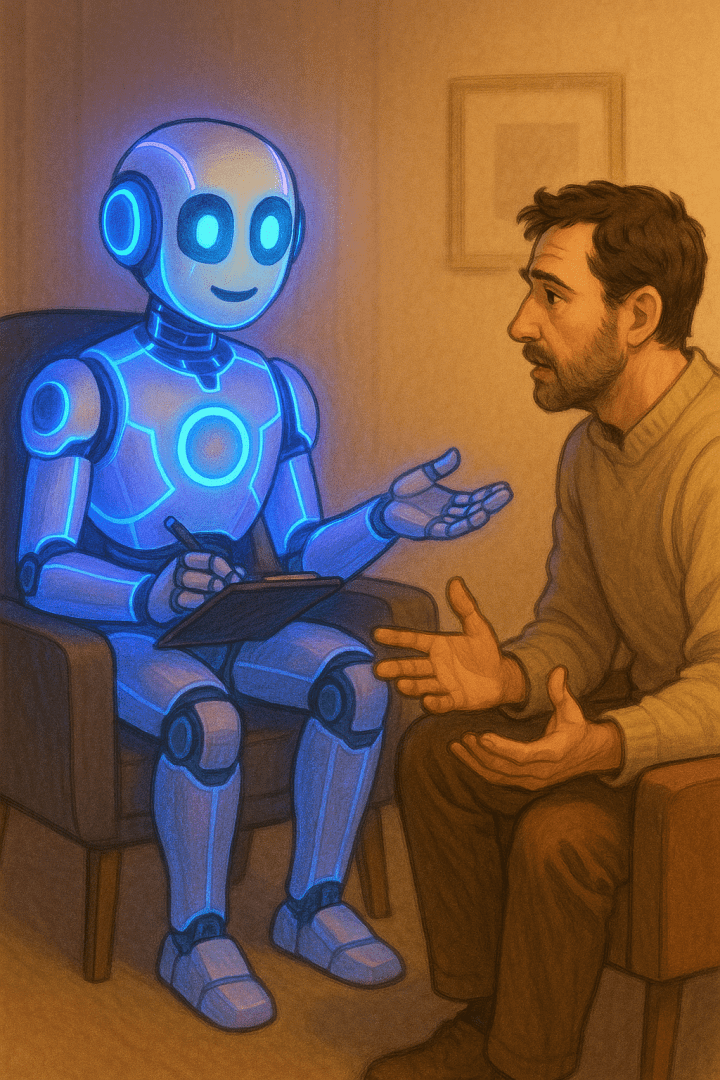
AI: Its Impact on Mental Health

AI: Its Impact on Mental Health

Artificial intelligence (AI) has gone from a futuristic concept to being a part of our everyday lives. From Siri to self-driving cars, AI is reshaping how we interact with the world. One area that’s seeing rapid AI integration is mental health.

AI is revolutionizing how mental health support is delivered, but it also has the potential to change the way we experience our emotions, relationships, and even our sense of self. So, what’s the real impact of AI on mental health


Positive Impacts of AI on Mental Health

1. AI-Driven Therapy Apps: Accessibility and Immediate Support
One of the biggest breakthroughs in mental health care has been the development of AI-driven therapy apps. Apps like Woebot, Wysa, and Replika use AI to provide users with cognitive behavioral therapy (CBT), emotional support, and mental wellness guidance. These apps can be used 24/7, offering instant support when someone feels overwhelmed or anxious.

For individuals who may not have access to in-person therapy due to financial constraints, geographic limitations, or the stigma of seeking mental health care, these AI tools are a game-changer. However, it’s important to remember that while AI can provide immediate relief, it doesn’t replace the nuanced, empathetic care provided by a human therapist.

2. Personalized Mental Health Tools: Custom-Tailored Support
Another exciting development is the use of AI to create personalized mental health strategies. By analyzing data such as sleep patterns, mood tracking, and even activity levels, AI can offer individualized wellness plans. For example, AI can recommend mindfulness exercises, cognitive reframing techniques, or journaling prompts based on a person’s emotional state or behavior patterns.

These tools can empower people to take control of their mental health and tailor their self-care routines to their unique needs. It’s a more proactive approach, putting users in the driver’s seat of their emotional well-being.

Honestly, this is one of the major way I have been using AI, as sort of a life coach or motivational coach when I need a little nudge to get me out of my head and for this, I think AI can be invaluable.

3. Early Detection and Improved Diagnostics
AI is also improving mental health diagnostics. For instance, machine learning algorithms are being used to analyze speech patterns, facial expressions, and even physiological responses to detect early signs of mental health issues like depression, anxiety, and PTSD. This early detection can be important in providing timely interventions before issues escalate.

In clinical settings, AI tools are being used to assist professionals in identifying patterns that may otherwise go unnoticed, helping to catch problems earlier and potentially save lives.

I sometimes use AI to help me differentiate between different diagnosis or to help me come up with an improved treatment plan for a patient. It’s not always perfect, but it usually will at least help me generate some new ideas I may have not come up with on my own.


Negative Impacts of AI on Mental Health

1. Social Media Algorithms and Mental Health
While AI has revolutionized mental health support in many ways, it’s also behind some of the negative aspects of modern life. One of the biggest culprits is social media. AI-driven algorithms determine what we see in our feeds, often pushing content designed to keep us scrolling content that can negatively impact our mental health.

Studies have shown that social media can contribute to feelings of inadequacy, anxiety, and depression, particularly among younger users. AI tends to prioritize engagement, meaning posts that generate strong emotional reactions, whether positive or negative, are more likely to be seen. This can create a cycle of comparison, unrealistic beauty standards, and constant validation-seeking, all of which can undermine self-esteem and mental well-being.

2. Job Insecurity and Stress
The rise of AI in the workplace has also led to concerns about job security. As AI systems become more advanced, more jobs are being automated, leading to uncertainty in industries like manufacturing, retail, and even healthcare. This economic shift can contribute to increased stress, anxiety, and depression, especially for workers in industries that are at risk of disappearing.

The fear of job loss due to automation can lead to feelings of obsolescence and anxiety, making it harder for individuals to cope with their personal and professional futures.

I have had therapists and students , tell me that AI will take our jobs. Well, in my opinion, AI is not likely to take our jobs as much as it will make therapy more available to those who otherwise would not seek therapy. A major part of my job in my current role as a trauma therapist is holding space. Holding space is it’s own concept I will write about at a later time, but it can be essential in therapy and holding space is something that AI can’t effectively do.

3. The Loss of Human Connection
While AI can offer emotional support and guidance, it’s not a substitute for genuine human connection. Research shows that deep, empathetic human interactions are essential for emotional well-being. As AI tools replace more human-driven roles, especially in customer service, therapy, and caregiving, there’s a risk of losing that vital connection.

Though AI can simulate empathy, it lacks the true understanding and warmth of a human being. Over-relying on AI for emotional support could lead to social isolation, where people feel disconnected from the world around them. This can be especially damaging for young people, people with certain disabilities or people who are more vulnerable to feeling disconnected.

4. Over-reliance on AI for Emotional Support
One of the more subtle risks of AI is that people may begin to rely on it too much. For example, some individuals may use AI chatbots as a way to “talk” through their problems instead of seeking human interaction. While these tools can offer support in the short term, they may prevent people from addressing underlying issues with friends, family, or professionals.

Additionally, AI-driven tools cannot provide the same level of emotional intelligence and personalized care that a trained therapist or counselor can offer although at times it can do a very good job mimicking it.


Finding Balance: Using AI Responsibly for Mental Health

1. The Need for Human Touch
AI can be a powerful tool for mental health, but it should complement, not replace, human care. The best approach is a hybrid one: using AI for accessibility, immediacy, and personalized support, but ensuring that there’s a human connection to guide, listen, and offer the empathy that AI simply can’t.

2. Setting Boundaries with Technology
As AI becomes more integrated into our lives, it’s essential to set healthy boundaries. It’s easy to fall into the trap of checking AI-driven apps or social media constantly, seeking validation or support. But to protect mental health, it’s crucial to take breaks, set time limits, and engage in face-to-face conversations with loved ones.

3. Data Privacy and Mental Health
As AI tools collect sensitive mental health data, it’s important to ensure that privacy and security are prioritized. People need to feel confident that their mental health data is being protected and used ethically. When choosing AI tools, look for platforms that value data security and are transparent about how they use your information.


Conclusion: The Future of AI and Mental Health

AI is reshaping the way we think about mental health care. It has the potential to make mental health support more accessible, personalized, and immediate. However, it also poses new challenges, from social media addiction to the loss of human connection.

I believe that the goal should be to integrate AI in a way that complements traditional mental health practices while maintaining the irreplaceable value of human empathy and connection. It’s important to be mindful of how AI impacts our mental well-being and how we can use it responsibly for both our mental health and society’s overall emotional health.


Questions: Are you using AI for mental health support? What are your thoughts on its role in your well-being? Leave a comment below to share your experiences or ask questions!
How The Internet And Technology Are Affecting Our Teens

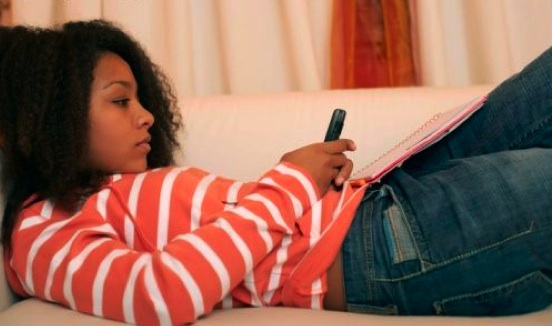
black-female-teen-textingToday’s children are using the technology and internet more than ever, with approximately 93 percent of them online and at least 73 percent of them using social networking sites, while 75 percent of them own cell phones according to data from Pew Internet American Life Project.

With this increased presence on the internet and use of smartphones and tablets comes concerns by teachers, parents and counselors  when it comes to what exactly are our kids doing online and on their smart devices.

The media fuels much anxiety when they report on issues such as “sexting” with young people sending provocative photographs of each other back and forth through their cell phones. Images that can end up in the wrong hands. Even videos of risque and sexual activities are spread through cell phones and often end up going viral and creating new avenues for harrassment, bullying and embarrassment that may seem inescapable.

Something that may seem like a good idea five minutes ago can end up haunting a teen for weeks, months, or even a lifetime.

The large majority of children and teens who use the internet and cellphones do so responsibly. It is a rather small segment of children who abuse the internet and technology.

Online bullying, also known as cyber-bullying  is a real concern as it typically targets kids who are already being bullied or harassed in person. They are most likely already facing multiple challenges as is. With online bullying, kids who are bullied already in person, feel like there is no escape from the bullying as they are also targeted online where the bullying can be relentless due to the hidden nature of the internet.

To some adults and parents this may seem silly, but you have to understand to to teens, much of their social life is conducted online so an attack on their online social life is pretty much an attack on their world.

We all know of the horror stories of teens who were bullied to the point of suicide such as Amanda Cummings. Children who are being bullied are more likely to suffer from depression, suicidal thoughts, social problems, substance abuse and are more likely to have poor relationships with their caregivers.

Teen friendships and relationships are more and more online so they depend more on social networking which is one reason cyber-bullying can be so detrimental.

Look at Manti Te’o’s fake girlfriend situation. Here’s a college age young man that reportedly met and fell in love with someone online he never met. I’ve counseled many young teenage girls who were depressed and suicidal after a break up with someone they met online, but never met in person. This just goes to show how entwined the internet, social networking and technology are to the lives of young people and of course, some of us adults as well.

Some research also tries to suggests that the internet is not giving teens more access to sexual content and that they are still finding it the old fashion way through television, movies and music. This may be true when it comes to suggestive and “soft” content such as kissing, hugging and touching or showing a couple having sex under the covers, but the teens I work with look for the more hardcore content found on the internet. They visit free porn sites on their phones and computers often, usually out of curiosity or for amusement, but still it’s through the internet that they access these hardcore porn sites.

It’s frightening to think that many of these same kids viewing porn on the internet, have parents who are in denial about their teens sexual or potential for sexual activity and have not actually had any real conversations with them about relationships or sex and so while watching this porn, they are also getting education, or mis-education that their parents likely would not approve of.

One thing I have noticed, and what made me want to write this post in the first place is that I think in part because of social networking, today’s teens are less private and understand the meaning of privacy less than teens in the past.

So many times when I am talking with a group of teens, outside of the confidentiality of an actual group setting, one of the teens will start talking about something very personal and private such as thinking that they are pregnant, stating that they just had an abortion or miscarriage, or thinking they may have a sexually transmitted disease, you name it, they’ll blurt it out.

At that point I’ll try to stop them and tell them, “I think this is something we need to talk about in private” and sometimes they will still press on and say “No it’s okay, I don’t mind talking in front of them” and I’ll have to continue stating “No, we need to talk about this in private”.

Many of them seem to have lost the sense of privacy and I contribute at least some of that to the amount of private information they share on social networking sites.

The downfall in that is that some of the private information they share to people who don’t value them or their privacy, will be turned around and used against them, sometimes to the point of harassment and bullying.

They may not realize the fact that they just had an abortion should be kept private, until they read about it from someone else on Twitter or a random stranger comes up and asks them. Then they may be shocked and embarrassed, but they were the ones who originally divulged that information to begin with.

You wouldn’t believe the amount of physical and verbal confrontations I’ve seen between high school girls that started this way.

At the same time, research shows that overuse of social media is linked to poor health, poor grades and symptoms of mental health problems such as narcissism.

Part of the reason for this is because young people often wake up to, live the day through and go to sleep with technology. They wake up checking their text messages, their social media sites and continue that throughout the day until they go to sleep at night, which research suggests is making them more prone to mental health problems, poor grades and even being physically sick more often.

Take for example that teens that study for one hour, focusing on their assignment, do better than teens who study, yet check their text messages or social networking sites periodically while they are studying.

I thought about this as I watched my niece who is a high school junior studying the other night. Her text book was in front of her, her cell phone in her hand and periodically it would light up and she would reply to a text and then go back to studying. I think within a thirty minute period she probably did that about seven to ten times.

Researched done by Larry D. Rosen, PhD. that is not yet published shows that “Whether they checked Facebook just one time during a 15 minute observation period even predicted worse grades”.

Besides narcissism, teens who overuse social media sites also show more signs of other mental disorders such as borderline personality disorder, bipolar disorder, and antisocial personality disorder.

The news of course isn’t all bad.

While some research shows that teenagers are less empathetic due to being over sensitized to  pain and misery on the internet, other studies show that teens who engage in social networking are more likely to show “virtual empathy” which can translate to them showing more actual empathy in the real world.

The internet of course offers us much in the forms of information, education and entertainment, but parents should set clear guidelines and limits early on with their teens about the internet and technology they use to avoid overuse and abuse.

Do You Suffer from an iDisorder?

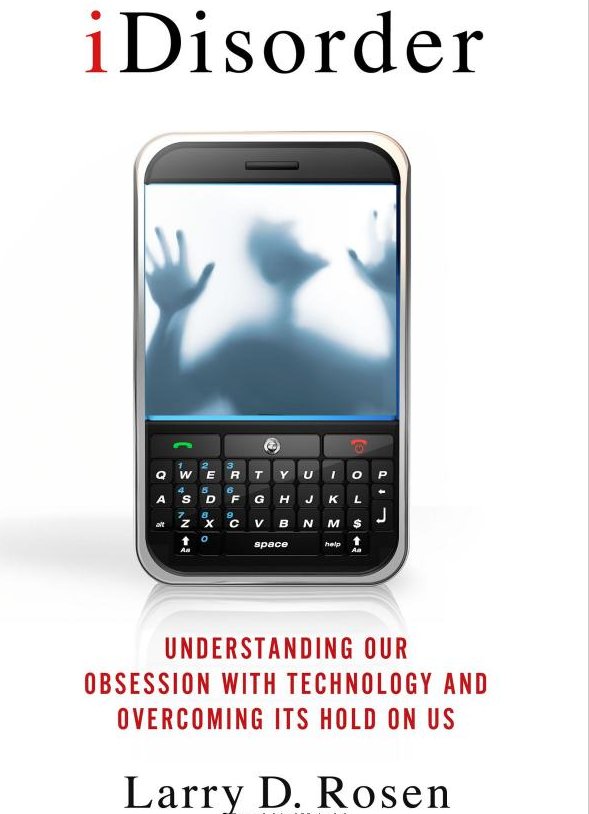
I first heard of the word iDisorder when I came across Larry D. Rosen’s book iDisorder: Understanding Our Obsession With Technology and Overcoming it’s Hold on Us.

While iDisorder is a fairly new term, the idea that our constant and immediate availability to technology causes signs and symptoms that mirror those of some psychological disorders, isn’t.

Most of us have almost immediate and continuous access to either email, our smart phones, our computers or our tablets and often at the same time, using one device to do multiple things like answering phone calls, sending emails, receiving text messages and surfing the web. The thing is, while we use these devices in attempts to control our environment by making everything in immediate access, we also began to become dependent on them.

How many of us have our smart phone with us all the time? Even while on a date or at the dinner table with family we have it next to us, often without thinking, checking text messages or emails instead of being present and engaging with the people right in front of us? Some people find it rude if you are staring at your screen and tapping away instead of making eye contact with them, but it happens so often that I dare to say it is becoming almost socially acceptable.

I remember one time at a restaurant I was people watching as I often do and I saw a couple that looked like they were out on a date, maybe a first date, but instead of sitting across from each other talking, they were both tapping away on their phones and didn’t speak to each other for at least twenty minutes as they waited for their food to be served. At that same restaurant I observed four young ladies all out to dinner together, none of them talking to each other, but all four focused in their smart phones.

There is no doubt that our devices makes it easier for us to get and stay connected with people we might only otherwise communicate with sparingly, but what about the present and those around us. Are we missing out on real life by being too focused on virtual lives?

I have friends who would rather play games on their devices than actually play games with and be around real people. Recently I was co-presenting with another counselor and when I went to turn the presentation over to her I was shocked to see she was texting on her phone. I had to stall until she came back to the here and now. I later asked her what was going on and she laughed it off, saying that it was a text message from one of her kids, nothing was wrong, but she was so used to reading and responding to their text messages that she didn’t think about it even when we were standing in front of hundreds of people.

We get so used to our phones buzzing with phone calls, text messages, emails and other notifications that even when they aren’t going off, our mind is anticipating them going off so much that it triggers our mind and body to think that we feel our phone buzzing in our pockets. These are called phantom vibrations. It’s crazy, I’ve experienced them before and I am sure most of you who are frequent cellphone users have as well.

How many of us are so dependent on our devices that we feel lost without them? Ever leave your house and accidentally left your cell phone? How did you make it through the day or did you turn back around and get it? How many accidents are caused because people are driving and texting. It’s as if that text message has to be read and answered despite the fact we are already engaged in the dangerous activity of driving. Ever watch people who’s smart phone battery is about to die and thy don’t have access to a power source? It’s like watching a drug addicted desperately searching for a fix.

I see kids all the time getting in trouble in school for having their smart phones out, even when they know they aren’t supposed to. And trying to take the phone from them? You’d think you were trying to take a kidney. They throw tantrums, even at times become hostile and risk suspension or worse over a simple device. Can we say addiction?

In his book, Larry Rosen goes on and on connecting our access to technology to things like depression, narcissism, ADHD, hypochondria, voyeurism, eating disorders, anti-social behaviors and a host of other psychological disorders.

On top of that, in teenagers I think it retards their spelling and writing abilities. I’ve seen in teenagers writing that some of them have become so used to short hand text messaging that their spelling suffers and they don’t know when they are writing papers that you can’t just put IMHO when you mean in my humble opinion or txt when you mean text. It’s crazy, but true, so many of the teenagers I work with don’t seem to know when it is and isn’t appropriate to use that type of short hand. One of my teenagers, a very intelligent junior, once wrote me a personal letter I had to decipher. If I didn’t know her I would think she couldn’t read, spell or speak proper for that matter.

The thing is, you can become addicted to anything used in excess and one of the hallmarks of addiction is denial.

As a side note, if you ever have a house party or get together, you may want to thank about banning smart phones as people tend to pull out their phones, start texting, playing games and surfing the internet instead of actually engaging in conversation and activities with people around them. 

It is a good idea for us to unplug every now and then, even if it’s just for a few hours. Put away the cell phone, the tablets, the computers and connect with real people and be present. That would be some thing great for a family to do together although your kids may throw a tantrum at the thought. I think it will help keep us grounded and appreciative of who and what we have surrounding us.