Are You In Tune With Your Teenager?

teens_parents_istock_000003860067sma-fullWhile working with teens I’ve noticed that there are certain differences between those who are doing well academically, socially and mentally and those who aren’t.

For the most part, teens that are doing well have parents/guardians that show interest in them and their ideas and actually listen to them.

Teens who are doing well report that they feel connected to their parents/guardians, not only because they show an interest in their teens, but because their parents/guardians take time to  find out what is going on in their lives.

Of course this makes sense, because teens who feel connected to their parents/guardians have more at risk when it comes to making decisions or taking risks.

When these teens are faced with risky decisions such as using a substance, skipping school or having sex, they are more likely to think about how their decision will affect their parents/guardians and their relationship with them.

These teens don’t want to disappoint their parents or lose their trust and are more likely to be open to their parents advice, compared to teens who don’t feel connected to their parents/guardians.

Teens who don’t feel as connected to their parents/guardians or don’t believe that their parents/guardians are genuinely interested in them, are more likely to take more risks without thinking about the consequences those risks may have on their relationship with their parent/guardian.

They are less likely to be interested in school, to be open and honest with their parents/guardians, to be well-adjusted or to avoid the many traps that await them as teenagers.

When parents are responsive, connected and supportive with their teens, it makes it easier to tackle some of the tougher issues such as discipline and setting rules/boundaries.

Even if you are a really strict parent, your rules won’t receive much lasting respect from your teenager, unless they also believe that you care about them.

I meet parents everyday who are strict on their teens, but their teens have major academic and discipline problems outside of the home. When I sit down with these families, it’s usually clear to me from the start, that they are not connected.

A large part of my job then becomes trying to bridge that gap and create a connection between the parents/guardian and their teenager.

It’s not enough to simple parent a teenager, and you don’t have to be their friend, but you have to engage them, connect with them and make them feel supportive.

You can take advantage of everyday opportunities to connect with your teen, such as while watching television, driving to/from school, dinner time or even setting specific times for a “date” with your teen.

Find out what’s going on in your teen’s life. Make sure to ask questions about their activities and interests. It may seem strange or even uncomfortable at first, but with time it will become easier and feel more natural.

Connecting with your teen may be harder than you expect, depending on the nature of your relationship. Some teens can be tough to get through to and are resentful or argumentative.

The teen years are largely about trying to find independence, so it’s only natural that your teen will challenge things you have taught or are trying to teach them as they try to form their own identity.

Your teen may think that you are being nosy and initially become resistant if you haven’t had a good relationship before this, but be genuine and eventually they will respond in-kind.

Don’t give up however. Chances are they are listening, even when you think they aren’t, and they will remember the lessons you are trying to get through to them. Keeping your messages brief will help with some of that resistance, as teens generally don’t like to be lectured to.

Learn to understand your teen through observing them and learn to respect your teen by listening to what they have to say.

Some other things you can do to foster a close relationship with your child according to theantidrug.com:

  • Spend time together regularly, doing things your teen enjoys
  • Talk openly and honestly
  • use positive communication skills, especially when there is conflict. For example, think before you speak and acknowledge your teen’s point-of-view so he or she knows you are listening.
  • Acknowledge the positive qualities and behaviors of your teenager.

A quick self-check includes:

  • Do you praise your teen for accomplishments, even the small ones?
  • Do you spend time each day talking with your teenager?
  • Do you regularly have meals with your teen and other family members?
  • Are you familiar with your teen’s favorite interest and hobbies?
  • Do you know your teen’s friends?

As I stated in a previous post, the teen years is not the time to stop parenting your teen, but your role as a parent changes just as your child changes from a kid to a young adult. They still need your guidance and for you to effectively guide them, you have to be connected with them.

Your Teenager Needs and Wants Your Guidance

Group of Teens_397

If you are a parent of a teenager, you probably have worried at one point in time about the many issues that face them including drugs, alcohol and tobacco use, dangerous driving, sexual activity, school, peer and social issues.

You’ve probably also worried about losing the influence you have over your teen as they start trying to branch out and find their own identity in the world.

We all know that teenagers face many challenges and changes in the world, and many teenagers like to act as if they can face and deal with these challenges alone.

As a matter of fact, many teens may actually believe that they don’t need any help, but as adults that care about the teens in our lives, we know that’s not always the case.

Teens need guidance. Teens actually want (although they may never admit to it) your help and guidance (just as they actually want rules and limitations).

As a parent, you may think that once your child becomes a teenager, you can sort of step back and let them grow up on their own, stepping in only when they get into trouble, but that is the wrong approach.

Your job as a parent isn’t over, it’s just changing.

Many parents who think like what I just described above, end up with spoiled kids who take no real responsibility for their lives and their actions.

They often believe that they are entitled to many things others have to work hard for and end up becoming young adults and adults with a host of intra and interpersonal problems.

There is some good news however.

If you watch the news or work with a certain population of teens as I do, it’s easy to think that teens today are worse than teens have ever been in history, but that’s actually not true.

Compared to their parents generation, teens today are less likely to become pregnant, smoke, use drugs and alcohol, drop out of school, or commit a violent crime.

They are more likely to volunteer and explore their spiritual side than ever. They are also more tolerant and are more likely to have friends of different races, socio-economic status, religion and ethnic groups.  They are also more likely to say tey have positive relationships with their parents.

All the hard work society has put into improving teens is paying off, but not without the help and involvement of parents.

Research shows that teens want and expect their parents to play key roles in their lives. They want advice and guidance and they remember your wise words, even when they act as if they are not listening.

The troubled teens I work with usually come from households where they are lacking parenting or have a parent or parents that don’t know how to be parents. Some are just “bad” parents while others are too busy with their own lives to actively parent their teens.

Despite all the good news about teens, the fact is, the dangers are still there. Any parent can attest to that. If they weren’t, there would be no need for my services  and I and all the counselors I know who work with teens, are largely overwhelmed with the number of teens that need counseling.

The problems facing teens are often similar and yet different for each one, and some may surprise you.

Like the fact that rural teens tend to have more drug and alcohol problems than urban teens, and that 30% of high school teens reported driving with someone who has been drinking at least once in the last month.

The teens years are much like when your child first learned to walk. Remember how they would look for something to hold onto such as a table or your leg to help steady themselves?

Sometimes they even freaked out when they couldn’t find something to hold on to, but you were usually their to help guide and protect them and make sure that they didn’t hurt themselves.

Although you stayed close enough to help them not hurt themselves if they started to fall, you also gave them enough room to learn and practice their new abilities and watched with joy as they grew in confidence from crawling, to walking, and eventually running.

Adolescence is very similar.

Your teen needs you to be there as they try to find themselves in the world, or they will find something else to hold onto just as they did as toddlers learning how to walk.

If you are not there for them to hold on to, they will potentially find drugs, alcohol, sex, bad influential friends, crime, you name it.

If you are lucky they will find good friends, healthy and safe adults, teachers, counselors, etc., but you want to be the person who guides your child.

You want to be the person that helps your child navigate through the barriers, which means you have to be close enough to give advice and to answer their questions honestly, but far enough away to allow them to start making and learning from their own decisions.

The adolescence are an exciting and scary part of life. Your teens are changing and growing and although they may start to look like adults, their decision making, risk/reward system are far from fully developed, so they still need you to be their for them, or they will look for and find something/someone else, good or bad.

Inside The Mind Of A Potential Psychopath

As promised, here is a letter from someone I believe could be a potential budding psychopath.

A brief background:

This is a 16 year old male that came to see me for feelings of hatred and anger towards “everyone” as well as potential auditory hallucinations and symptoms of depersonalization.

He is currently in danger of failing school and follows none of the rules set for him at home and receives little to no consequences for that. I asked him to start keeping a record of his thoughts so I could help him analyze them.

This is a sample of his thought journal:

I feel irritated. I swear people are trying to make me gun them down. I’m trying very hard to keep my cool, but it’s thinning really fast. Everyone here disgusts me. The teacher is getting on my fucking nerves. I just want to pop a bottle in her face.

She makes me sick. Her voice is getting on my nerves. If I had telekinesis  I would use it to spin everyones heads. I hate you all. It’s hard for me to focus on my work. I’m just not capble of doing it. I wanna go home. I am trying to do my work but I can’t focus.

I am not in the mood to do anything. God I hate everything. The guy [teacher] is asking for binders. I want to take the binder and smack him with it. If I had the power to burn things it wouldn’t be good for anybody because if I burned somebody I don’t think I would feel sorry.

I am writing this while I shoud be doing my work, but I don’t think I give a shit. Fuck the life. This is fucking stupid. I hate the people, the class, the school. I don’t dislike, I hate everything and I don’t know why. If these people were to die tomorrow I wouldn’t give a damn.

Class is almost done and this bitch is wasting my time. Fuck her. In class people talking and i just wanna slash their throats. They including the teacher are all useless to me. They’re all disgusting. Why am I in a classroom filled with imbeciles, morons, idiots, everyone I hate.

I was sad because my friend wasn’t here today. I usually see him in second period, but he’s absent. I was sad because out of everyone I talk to, he’s the one I’m most comfortable with. He’s kinda like the twin I wish I had.

Ever since the 7th grade, way before that, I had been having daydreams of a different life, one I had control over. In those daydreams I have a brother named ______. He’s my heart, the one I feel connected to and when I’m not having those daydreams I feel depressed and want to cause people harm and sometimes for no reason.

Sometimes I imagine myself being God and other times I start to believe it. If I were God I would cause a great flood and take out the people I hate in the world and replace them with people I don’t. I don’t see why people are laughing. If I were to slit their throats I bet they wouldn’t any more. I’m tired of these stupid people.

I want to make them know that I am better than them. I’m sitting in tech class and I want to take the keyboard and slap the two students in front of me in the head until I get tired. These people underestimate my powers because if they knew what I could do they would be afraid.

These people are nothing to me, but ants. I could just stomp them with my foot and they would be dead, but I’m too nice and theres no point to go to jail for these dirty people. They are not worth my time. I fucking hate people. Their shit is so stupid.

Why is everything this way. I’m talking and thinking, but it’s disorganized. I can’t remember much of most things that I am thinking. I just want to go somewhere that I can just do whatever I want with no consequence because if I were to kill someone I wouldn’t want to get in trouble for it.

I’m not ready to clearly say that this guy is a psychopath as his symptoms are also typical of a couple of other personality disorders.

However, it’s obvious from his writing that he hates people, finds it almost unbearable to be around most people and feels as if he is better than everyone. He talks about hurting and killing people and saying he would probably feel nothing.

He also talks about people as if they were just insignificant insects. As if other peoples existence alone irritates him.

He has daydreams where he imagines himself as God and even starts to feel like God in real life with thoughts of destroying everyone.

Sure, he says he would never do these things, not because they are wrong or he would feel bad, but because he doesn’t want to suffer the consequences. Probably much like many of the mass murderers who committed suicide after their crimes felt.

I’m not going to say that this guy will hurt, none the less murder anyone, but I am saying that he is showing clear signs of psychopathic traits that need to be dealt with before he ever gets to that point.

I’ve been working with him on this for the past few weeks, helping him analyze his feelings and thoughts and challenging them,  but I am getting his family involved because I think he may need more intensive treatment than I can provide in the current setting I am working with him in.

He really is a good kid with lots of potential, but if he falls through the cracks he can easily end up spending the rest of his life incarcerated and/or ruin other peoples lives. I’m determined to do my best to not allow that to happen.

I Want To Have A Light-Skinned Baby: The Affects Of Colorism On Black Adolescent Females

ts-134028063-african-american-girl-school-istock-14259556-dean-mitchellToday in a small group of teenage girls that consisted of one Asian-Haitian-American female, one Haitian-American female and one African-American female, seemingly out of nowhere, the Haitian-American (a chestnut complected girl) blurted out, “I date White boys because I want to have a light-skinned baby.”

She didn’t say that she wants to marry a loving man and have healthy children, but that she wants to have a light-skinned baby.

Before I could comment, the African-American girl in the group (she’s about copper complected) quickly agreed with her (although her current boyfriend is deep chestnut complected), that she too wanted light-skinned babies.

I then turned to the the Asian-Haitian-American girl and asked her if she too wanted to have light-skinned children. She replied with the sensible answer, that she didn’t care how her kids came out. The other two girls quickly jumped in and said, “That’s because she is already light-skinned.”

I was shocked by their statements. Not because it was the first time I had ever heard Black teens make that comment, but because just on Sunday night I had watched CNN’s Who is Black in America with Soledad O’Brien, which explored colorism and identity in the Black community.

Some of the things that stuck out to me during the show, was how some darker skinned Blacks often did not like their skin tone and wanted lighter skin and how some lighter skinned Blacks didn’t want to identify with being Black at all.

These were more the exception than the rule, but a common enough trend to cause deep contemplating for not only Black people, but other people of color and those who teach, counsel or mentor people of color.

After watching that thought provoking show, I was a bit alarmed to have two of my teenage students basically say, “I don’t like my complexion and don’t want to have kids that look like me.”

I could go into the many different theories behind this sort of thinking, including brainwashing by the media, European standards of beauty and what is called Post Traumatic Slave Syndrome, but those are all too extensive topics to cover here.

My main concern, is the affects this type of thinking has on these teenage girls self-esteem, self-value and self-worth.getty_rm_photo_of_africanamerican_teen_girl_in_mirror

When Black girls make comments like, “I want to have a light-skinned baby”, they are basically consciously or subconsciously rejecting vital parts of their self and their identity.

What they are saying at the most basic level is, “I don’t like my skin color, it is undesirable. I don’t like my hair, it is ugly. I want to make sure that my child comes out with lighter skin so that they will be prettier and better than I am.”

There is no way that a person with this type of latent thinking, can truly feel good about herself, her family or those that look like her.

This is a form of self-hate that she probably isn’t even aware she is influenced by, yet it shows up daily in her life through automatic thoughts, the way she feels about herself and the way she interacts with her world.

Black males are also affected by this.

Many Black males, especially athletes, entertainers and rappers quickly gravitate to and praise lighter skinned Black women, White women or women of other races. This sends a message to both young Black boys and girls.

To young Black boys it says that you have to have a light-skinned Black, Hispanic, White or other woman on your arm to truly show you are successful or have “made it”. To darker skinned Black girls, it says that you are ugly and undesirable. It says to light-skinned girls that you are coveted, not for your uniqueness, personality or intelligence, but for your appearance.

It’s sickening to me because most of these people are operating subconsciously under the influences of our countries painful history of racism. They have been brainwashed and don’t even know it.

It is hard for a people to feel good about themselves collectively, succeed collectively and grow collectively when there are so many of us that don’t feel comfortable in our own skin.

I believe this causes an increase in a multitude of issues including academic problems, violence, substance abuse and mental illness. stock-footage-an-angry-sad-girl-shows-her-frustration-black-and-white

Colorism doesn’t only affect Black people, but most people of color around the world who are influenced by European standards.

There have been many studies on the length some Hispanic cultures have gone through to guarantee that darker genes don’t enter (contaminate) their gene pool, so much so, that some families insisted on cousins marrying cousins.

In Brazil, before the rise of a pro Afro-Brazilian movement, many Black Brazilians didn’t identify as Black, and preferred to be identified as mulatto. Brazil even went through a period of “White washing” a few decades ago where the government was afraid that Brazilians were too African/dark-skinned and aggressively urged Europeans to migrate to the country to help lighten the face of Brazil.

Being identified as Black, around the world, has a very negative connotation behind it and many people try to escape that by denying they are Black all together if possible, preferring to be called Latino, Dominican, Puerto Rican, or whatever their nationality, despite their obvious African heritage.

I am not an expert on this subject from the Latino point of view, but I would refer you to the actress Zoe Saldaña, who is a Dominican-American and proudly calls herself a Black woman. And the Dominican-American author Junot Diaz who talks frequently about colorism in the Dominican community in his works.

In America, at least in the Black community, we seem to have to face and deal with colorism more often, most likely because we are only about 13% of the population and have such a long history of racism and prejudice.

I told these young girls not to date a guy because of the color of his skin or his potential to help her have lighter-skinned children with “good hair”, but to date a guy because he respects her, loves her and treats her like a queen.

This post is not about race, but it’s about how this type of thinking negatively affects many aspects of these girls lives.

These girls are all in counseling because of anger, self-esteem and depression issues. If I didn’t like my skin complexion, the texture of my hair or my self, I would have problems with anger, self-esteem and depression too.

I will continue working with these girls on accepting and loving themselves and plan on showing them this video (below) during our next group session, in hopes that it will help open up their eyes to some of the subliminal messages they have been receiving about themselves.

The video is only about ten minutes, if you have the time, take a look at it and tell me what you think. It talks about the Clark Doll Experiment, but it goes deeper with a personal touch.

Teens, Marijuana and Nutella

The other day during a group therapy session, one of my teenage clients told me she had been tempted to use marijuana for the very first time.

I questioned her about why she was tempted to smoke marijuana and she informed me that she wasn’t going to smoke it, she was going to eat it. She had been offered some marijuana sprinkled on a cracker covered with Nutella.

This was the first time I had ever heard of teens eating marijuana on a cracker with Nutella, but that’s not the point of this post. Most teens believe marijuana is harmless, and I spend a lot of my time trying to convince them that it’s not.

From my experience, working in the field of substance abuse, I tell them that in a lot of cases, marijuana zaps motivation. Teens I work with who use marijuana usually start failing classes, missing school and eventually dropping out or getting kicked out of school.

Also, there is growing evidence supporting a correlation between marijuana use and schizophrenia.

Marijuana doesn’t cause schizophrenia, but it does seem to activate schizophrenia and other mental illnesses in individuals with a predisposition to mental illnesses, especially schizophrenia.

In the book The Center Cannot Hold: My Journey Through Madness by Elyn Saks she shares intimately about her battle with schizophrenia that all started after her first experience with marijuana.

She thought the hallucinations and thoughts that came and stayed for days were all normal and so she didn’t tell her parents out of fear of being punished for having smoked marijuana.

I’ve worked with a handful of schizophrenic patients who had their first schizophrenic experience after smoking marijuana and initially thought that their experience was typical until much later when the hallucinations and delusions didn’t go away for days, weeks or never.

These people all had a predisposition to schizophrenia which seemed to be activated after they started smoking marijuana. If they hadn’t started smoking marijuana, that doesn’t mean some other life event wouldn’t have activated the gene, but who knows.

Teens argue with me that marijuana is not addicting, but it is. Marijuana is psychologically addicting, why else do people who are regular marijuana users do the some of the same things people addicted to harder drugs do when they are addicted?

Some of the signs of being addicted to anything is when that thing starts to interfere with and effect your life negatively.

Teens I’ve worked with who claim not to be addicted to marijuana have:

  • Missed numerous days of school to stay home and smoke mariuana
  • Come to school high and thus got expelled
  • Got caught smoking marijuana at school and thus got expelled
  • Got pulled over while driving and smoking marijuana
  • Have violated their probation for smoking marijuana after being on probation for marijuana in the first place
  • Have lost jobs for smoking marijuana on their lunch break
  • Have stolen from family and friends to support their marijuana use
  • Have damaged relationships with family and friends over their marijuana use
  • Can’t get jobs because they can’t refrain from marijuana long enough to pass a drug test

These are all signs of addiction. These are all the same things people with cocaine, crack, heroin, alcohol and crystal meth addictions do. Yet these teens still think they aren’t and can’t be addicted to marijuana.

Then they argue that marijuana should just be legal. I’m not going to argue that point here, but even if marijuana was legal it still wouldn’t be available to people under 18 and most likely, not to people under 21.

Even then, employers would probably put in place rules where you couldn’t either test positive for marijuana or at the least, not come to work high. Same goes for places of higher education, the department of motor vehicles and such.

So while teens think legalizing marijuana will mean a free pass to smoke at will, it actuality won’t.

Marijuana use also leads to a higher risk of experimenting with other drugs and I’ve seen enough teens using hard drugs that started with marijuana to know that this is indeed true.

No teen I know who smokes weed can imagine smoking crack, but most people I know who smoke crack started off by smoking weed and didn’t see the day coming when they would be smoking crack or shooting heroin.

I’m not saying marijuana is all bad or trying to bash people who use it, but I do know one think for certain, and that’s that no teenager should be smoking or experimenting with marijuana, especially as their brains are still developing and they have enough trouble making good decision when they aren’t influenced by substances as it is.

Rethinking Resiliency In Relation To Teenage Girls: Part 1

Working with inner-city teenagers, I always want them to defy expectations often put upon them by society, their community and even themselves.

Those expectations usually include:

  • getting pregnant
  • dropping out of school
  • being promiscuous
  • abusing drugs and/or alcohol
  • never getting out of the low social economic status they were born in

Resilience is the strength and stress resistance to defy those expectations and to achieve ones dreams.

These are the things I always try to instill in the youth I work with, after all I have faced many of those same societal expectations growing up as an African American male including:

  • going to jail
  • being violent/angry
  • being on drugs/alcohol
  • fathering multiple children with multiple women
  • being lazy and uneducated

Time and time again, especially when it comes to teenage girls, I seem to be facing an uphill battle when asking them to be resilient. Not that I don’t face the same battle with boys, just that the girls often seem to have it all together and then quickly sabotage themselves.

An example of this comes from a 3 year longitudinal study of poor, inner-city adolescent girls called “Understanding adolescents: A study of urban teens considered to be at risk,” directed by Jill McLean Taylor and Deborah L. Tolman.

“Anita” was an African American girl who who stated that she wanted to be a lawyer, and acknowledged in the 8th grade that the only things that could stand in the way of her dream were “kids, kids, kids”.

It’s amazing, that as early as the 8th grade, she realized that having kids that young was a possibility.

In the 9th grade she is still passionate about her goals and dreams to become a lawyer because she felt that there was a need for good African American lawyers, and states “I ain’t going to let nothing get in the way. The only thing that could probably happen is a baby.”

Once again, despite her passion and determination, she is vividly aware that getting pregnant was a real possibility. After all, she had probably seen some of her friends and family members get pregnant at her age. Her mother also had children in her teens.

In the 10th grade she seems even more determined to be a lawyer, stating “there’s a lot of people that I  know that don’t want a Black kid to be somebody.”

That year she still has concerns that a baby might get in the way of her dream, but seems less worried about it. Unfortunately, she also tells the interviewer at this time she has been sexually active and hasn’t been using protection.

By the fall of her 11th grade year, she becomes pregnant and drops out of school.

How could this happen to a young girl that seemed so determined and resilient?

Well, for one, perhaps asking her (and other poor inner-city teens) to be resilient and defy expectations, was also asking her to be different from and possibly even disconnect from people that mean the world to her, including her mother.

Anita and her mother were very close; “(she) is a part of me and I am a part of her… we have trust in each other and rely on each other… we are not that different.”

Her decision to have a baby brings her closer to her mother, although it moves her farther away from he dreams, even if they were dreams both her and her mother shared.

That’s what makes reaching out to poor inner-city teenagers so difficult.

How can we expect them to make better choices, take positive risks and reach for something different and better when doing so also puts them at risk of disconnecting and alienating themselves from important people in their lives.

It’s all mostly subconscious, but I see it all the time. A motivated, successful student gets pregnant and starts missing school more and more to stay at home with her mother, who is not working and is at home with either her own children or one of her other children’s kids.

It is a complex psychological dilemma. On one hand by reaching for and achieving their goals, they may isolate themselves, and betray cultural and family connections. However, by not following through on their dreams and goals, they will be betraying themselves, and possibly the hope and dreams of their family and community.

Asking them to “break the cycle”, is in some ways asking them to distance themselves from people they most love, admire and identify with.

Preteen Sex: Do We Really Need To Have This Conversation?

A lot of times we like to think that sexual activity and behavior doesn’t become a topic for discussion until kids reach their teenage years.

As a matter of fact, I found it frustratingly difficult while doing research on this topic, to find good scholarly information, demonstrating the lack of attention this topic receives.

However, from personal experience as a counselor, I know that preteens as early as 9 years of age are engaging in sexual or precursors to sexual behavior in ways that either often go unnoticed or are overlooked as normal play and socialization.

Preteens at times can be just as curious to what it means to be in a relationship, mature, or desired, as their older peers.

They are often exposed to a host of sexual behaviors either through watching their parents, older siblings, older teens or of course, the media and unfortunately, sexual molestation, usually at the hands of a family member, older teen or adult.

They are often curious about themselves and each other, especially the opposite sex. They often sit, fondle or cuddle in ways that may seem harmless, but are at times precursors to future sexual behaviors.

A lot of preteens I’ve worked with are already “making out” with boys and sexting, two very good predictors to early sexual activity. I’ve met preteens that have already voluntarily engaged in oral and even vaginal sex by the time they were 12 years of age.

Early dating, overly strict parenting as well as lack of parenting are all predictors of early sexual behavior.

Here’s another tip: preteen girls who have a lot of male friends are more likely to be exposed to drugs and alcohol and are much more likely to engage in sexual behaviors.

Also, men 18 and over are responsible for 50% of the babies born to girls 17 and under.

Sure many of these teens grow up in unstable houses, have poor self esteem and are looking for acceptance when they stumble into the world of sexual behavior, but many of them also are just curious, precocious children that have no clue what they are really doing.

Preteens, just like teens, are much more likely to not use any type of sexual protection, so they are at higher risks of being exposed to STDs and pregnancy.

Yes, some preteens can get pregnant. Puberty can happen as early as 9 in “normal” girls and as early as 6 in girls born with abnormalities that cause them to go through puberty extremely early.  In my research, girls as young as 6, 7, 8 and 9 have given birth to children, usually after being molested by a family member.

Parents of preteens and teens need to be proactive and honest with their children about sex. Educate your child and take the mystery out of sex, puberty and love.

Having this sort of talk with your preteen may be uncomfortable, but it’s better to have this educational, proactive talk now than to have it when it’s a little too late and you discover that your child is either pregnant, has an STD or is engaged in sexual behavior, much earlier than you ever expected.

Try to be the type of parent that gives your children all the answers they could ever ask, as detailed and as often as needed, so that they will always get the best advice (at least as much as you have educated yourself) and they don’t have to learn it from their peers or by making huge mistakes.

No parent is perfect, and neither is either child, but through communication you’ll be more likely to help your child make wise and healthy decisions today and for the rest of their lives.


Understanding Teenage Girls: Motivations and Psychological Meanings in Relating to Males

The other night I happened to catch a television reunion of the reality show Love & Hip Hop Atlanta.

I stared at the screen in not so much as shock as pity as I watched four different women vie for the love and affection of two guys who treated them more as if they women were merely whores, and the guys were their pimps.

The guys seemed to think the heartache and embarrassment they caused these women by their ongoing cheating, lies and manipulations were funny, while the women basically said that no matter how bad they were being treated, they weren’t going to leave their “man”.

One said it was because of good sex, money and furthering her her music career. Another said it was for love and yet another said it was because she had a child with the guy.

To me, none of these were reasons to stay with a man who obviously saw them as being little more than sexual toys to be used and abused.

Still, this got me to thinking.

Working with teenage girls I am always keenly aware of some of the internal conscious and unconscious motivations that effect their decisions, especially in relation to dating, sex, and self-esteem.

As a girl learns about sex, she is also learning about other things such as giving and receiving affection, self-worth and what she means to others.

She also learns about trusting and honesty (or dishonesty) through the ways she is first introduced to sex, especially through the ways she is protected or not protected from being exploited.

“I learned about sex from my dad. I never had a chance for my first time with my boyfriend. Who knows, maybe I [would have] wanted to wait until I got married. But no, I never got to have that chance. I don’t even remember the first time… I feel it ruined my life.”  -Anonymous Teenage Girl, Young Poor and Pregnant: The Psychology of Teenage Motherhood by Judith Music

Shame, fear and guilt are also valuable lessons, as they will (if she is fortunate) help her learn how to keep herself from situations and feelings that may be too painful for her to deal with physically or emotionally.

When these life lessons are learned and experienced in ways that inappropriately shape her sexuality developmentally, they are likely to have far reaching consequences through out her life in the way she perceives her world and those in it.

This effects such a major part of who she is that it also effects who she thinks she can become, what she is capable of and her ability to show and receive love as well as her ability to take control of her destiny.

For girls who grow up in disadvantaged situations, inappropriate sexual socialization is usually the final breaking point to other risk factors such as poverty, unstable family environment, fatherlessness and lack of appropriate nurturing, that already have made this girl vulnerable to men (and teenage boys) looking to exploit her.

This added with social isolation from other people (outside of her family and community) and institutions, becomes a recipe for disaster (often disadvantaged girls are only exposed to people in their immediate communities where important social services are either absent or insufficient).

Social isolation and psychological vulnerability mean that many disadvantaged young women will be controlled by their relations to men not only in the bedroom, but also in the classroom, the street and eventually even the work environment.

“The adolescent female’s sense of self in relation to males is the internal representation of her past experiences with men and- perhaps equally important- of her mother’s roles and relationships to those and other men.”  -Judith Musick

It’s sad to see teenage girls who grow up with a damaged sense of self because of their past relationships to men either directly or vicariously.

These young girls often turn into teen mothers, get stuck in poverty, abused by men, single mothers with a multitude of children by different fathers, abuse drugs, or get caught up in one of various avenues of the sex world such as prostitution.

It’s important that we protect these young girls as much as possible from being exploited and abused, physically and mentally. It is also important that we help build their self-esteems, educate them and teach them the their value is priceless and doesn’t depend on a boy’s, a man’s, or anyone else opinion of her.

Is Pretending to be Pregnant a Mental Illness: Part 2

In my original  post, Is Pretending to be Pregnant a Mental Illness, I discussed a high school teenager I have known for three, now going on four years, who has been “pregnant” every year and has had a “miscarriage” every year as well.

Last year was no different, but for some reason I believed she was pregnant, even when her closes friends did not. Still I remained skeptical, especially as the “pregnancy” went along and she didn’t get any bigger and refused to tell her mom about it.

Then summer came and I waited anxiously to see her when school started, knowing she should be close to her due time. Yet, when I saw her last week, she was no bigger than she was almost three months ago.

She told me that she had also “lost” that baby (big surprise), but now she is pregnant again and this time she isn’t making it up… and I believe her!

Why would I believe she is pregnant this time when she has lied about being pregnant four previous times?

Well this time she told me she told her mom, something she never did in her previous “pregnancies” even when I offered to talk to her mom with her.

Also, I know she has wanted to get pregnant for the past four years and so it was bound to eventually happen for real. I knew she was having unprotected sex with different guys.

And then today she showed me a picture of her getting a sonogram… a real picture this time and so yes, the girl who pretended to be pregnant for four years is finally pregnant.

It’s so sad because at 18 she is lost, she’s barely passing school, is extremely immature, admitted that her baby’s father is no good, that she doesn’t like him and her family doesn’t either, but yet they are bringing a child into this world.

There is no way she is ready to be a mother and yet, if everything goes right, she will be soon enough.

I’m concerned because this is a young lady with obvious mental issues and if she doesn’t get the help she needs she will raise a child who will potential have further issues because of being raised by an ill-prepared mother.

On top of everything, I really think this girl wanted to get pregnant to fulfill something missing in her life, maybe attention, unconditional love, purpose, who knows, and if having this baby doesn’t meet her conscious or unconscious expectations then where will that leave her and the child?

I see many mothers who had children for the wrong reasons (to keep a man, to fulfill a void, to prove that they can accomplish something, etc.) abandon their children physically, mentally or both when those expectations weren’t met.

Many of those parents end up abusing their kids, resenting them or being negligent in the way they raise their kids.

I’m not saying that this is definitely the case with this young lady, who knows? For a very few, having a baby serves as a catalyst to get them to step up and change their lives for the better so that they can be the best parent they can be for their child.

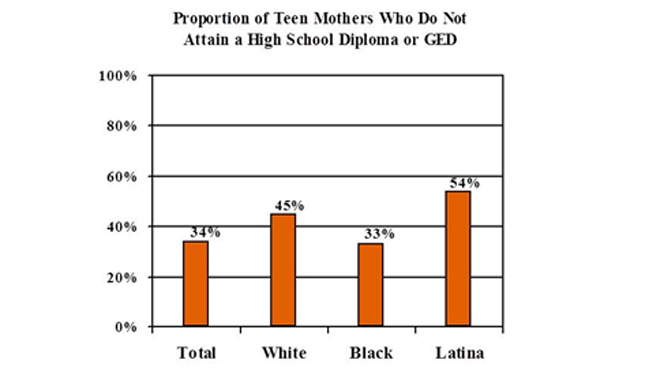
Unfortunately, that is rarely the case. Many impoverished, poorly educated, single, teenage moms end up dropping out of school and remaining in poverty.


The psychological issues that made this young girl persistently pursue to be pregnant for years will probably remain after she gives birth so I won’t be surprised if she isn’t pregnant or “pregnant” again and again even after she gives birth for real.

Personal Responsibility

Most of the teens I work with have a multitude of problems, but one trend I see a lot of is the lack of personal responsibility. They think of themselves as victims and take on a personality of victimhood where everything happens to them and they have no direct effect on their lives as

Most of the teens I work with have a multitude of problems, but one trend I see a lot of is the lack of personal responsibility. They think of themselves as victims and take on a personality of victimhood where everything happens to them and they have no direct effect on their lives as if they are living life passively and everything that happens is not their fault. If they fail a class it’s the teacher’s fault, other students in the class’ fault or their parents fault… anybody’s fault but their own. The same is true when they get in trouble, despite any evidence provided to them that it’s their fault, their mindset of victimhood makes it hard for them to see reality for what it is.

I spend a large amount of time teaching the teenagers I work with that they are not victims and are not passive participants in life, but that they directly effect their lives every single minute of the day. Even when things are out of their control, they are still in control of their thoughts which in turn gives them control to how they will feel and react to any situation they don’t have direct control over, but more importantly, they have much more control than they realize.

Thoughts, Feelings, Behaviors

Teenagers (and adults) love to say that someone made them mad, sad, angry or whatever feeling you want to insert here. It takes me awhile to get them to understand that they are not victims and no one can make them mad or sad, but that they do it to themselves with their thoughts. I won’t go into much detail here because it can get complicated and probably deserves it’s own post to pay it proper attention, but basically your thoughts control your feelings which in turn control your behaviors. It’s the things we tell ourselves and the thoughts we have about a situation that makes us feel a certain way and then those feelings make us act in a corresponding way… depressed, angry, nervous, etc. Teaching them to control their thoughts is the first step to getting them to take more personal responsibility.

Things I can and Things I can’t Change

One thing I have them do is make a list of things they can control and things they can’t control. This helps them to realize how much power over their lives they actually have. Many times teenagers are stressed and angry at things they can’t control such as their parents, their teachers and their friends. I let them know that everyone was giving one life and they have to learn when to let other people live their lives, despite the paths they chose, so that they can live theirs. I teach them that they can’t control the situation, but they can control the way they think and respond to the situation.Otherwise what happens is that everyone becomes the blame when something doesn’t go right in their lives instead of them taking responsibility for their own life.

Architects 

The other thing I teach them since most of them are trying to figure out what and who they are, is that they are all architects. They are, like all of us, architects, creators and designers of their own lives. They build, create and establish the life they want, no one else does. Sure many of them are born in poverty and have horrible guardians, but unless they learn that they are responsible for getting themselves into a better situation, they will just replay history and be stuck in the same situation over and over again. I tell my kids who I know are in impoverished situations and yet don’t take school or life seriously to look around. I tell them that if they like where they live and how they are living then to keep doing what they are doing, but if they want something better they have to do something different… different for them and definitely different from what others around them have done even if it means they will be doing something no one they know has done such as going to college, the military, trade school or whatever. They design their own lives and as long as they are allowed to believe they are victims then they will never reach for the stars and will blame everyone else for their failures.

CEOs, CFOs and Mission Statements

I also let them know that besides architects they are also already chief executive officers of their lives. They are in charge of the business of them. They are the sole person responsible for them becoming who they want to be. And I also let them know that they will soon be chief financial officers, in charge of their own money and prosperity. I get them to write mission statements because every company has a mission statement and I think ever person should have a mission statement. A mission statement states who you are, what you believe in, what you value and what’s your purpose. Many of them have no clue about these things and further more, never took the time to sit down and think about it so this is the prime time to have them do this.

All of these things combined together add to a greater sense of personal responsibility and loosens the shackles of victimhood. My question to you is, what is your mission statement? Share it with me if you would like and even if you don’t share it, please think about it and make a mission statement even if it’s just for your eyes. I know it will change the way you interact with life for the bette

if they are living life passively and everything that happens is not their fault. If they fail a class it’s the teacher’s fault, other students in the class’ fault or their parents fault… anybody’s fault but their own. The same is true when they get in trouble, despite any evidence provided to them that it’s their fault, their mindset of victimhood makes it hard for them to see reality for what it is.

I spend a large amount of time teaching the teenagers I work with that they are not victims and are not passive participants in life, but that they directly effect their lives every single minute of the day. Even when things are out of their control, they are still in control of their thoughts which in turn gives them control to how they will feel and react to any situation they don’t have direct control over, but more importantly, they have much more control than they realize.

Thoughts, Feelings, Behaviors

Teenagers (and adults) love to say that someone made them mad, sad, angry or whatever feeling you want to insert here. It takes me awhile to get them to understand that they are not victims and no one can make them mad or sad, but that they do it to themselves with their thoughts. I won’t go into much detail here because it can get complicated and probably deserves it’s own post to pay it proper attention, but basically your thoughts control your feelings which in turn control your behaviors. It’s the things we tell ourselves and the thoughts we have about a situation that makes us feel a certain way and then those feelings make us act in a corresponding way… depressed, angry, nervous, etc. Teaching them to control their thoughts is the first step to getting them to take more personal responsibility.

Things I can and Things I can’t Change

One thing I have them do is make a list of things they can control and things they can’t control. This helps them to realize how much power over their lives they actually have. Many times teenagers are stressed and angry at things they can’t control such as their parents, their teachers and their friends. I let them know that everyone was giving one life and they have to learn when to let other people live their lives, despite the paths they chose, so that they can live theirs. I teach them that they can’t control the situation, but they can control the way they think and respond to the situation.Otherwise what happens is that everyone becomes the blame when something doesn’t go right in their lives instead of them taking responsibility for their own life.

Architects 

The other thing I teach them since most of them are trying to figure out what and who they are, is that they are all architects. They are, like all of us, architects, creators and designers of their own lives. They build, create and establish the life they want, no one else does. Sure many of them are born in poverty and have horrible guardians, but unless they learn that they are responsible for getting themselves into a better situation, they will just replay history and be stuck in the same situation over and over again. I tell my kids who I know are in impoverished situations and yet don’t take school or life seriously to look around. I tell them that if they like where they live and how they are living then to keep doing what they are doing, but if they want something better they have to do something different… different for them and definitely different from what others around them have done even if it means they will be doing something no one they know has done such as going to college, the military, trade school or whatever. They design their own lives and as long as they are allowed to believe they are victims then they will never reach for the stars and will blame everyone else for their failures.

CEOs, CFOs and Mission Statements

I also let them know that besides architects they are also already chief executive officers of their lives. They are in charge of the business of them. They are the sole person responsible for them becoming who they want to be. And I also let them know that they will soon be chief financial officers, in charge of their own money and prosperity. I get them to write mission statements because every company has a mission statement and I think ever person should have a mission statement. A mission statement states who you are, what you believe in, what you value and what’s your purpose. Many of them have no clue about these things and further more, never took the time to sit down and think about it so this is the prime time to have them do this.

All of these things combined together add to a greater sense of personal responsibility and loosens the shackles of victimhood. My question to you is, what is your mission statement? Share it with me if you would like and even if you don’t share it, please think about it and make a mission statement even if it’s just for your eyes. I know it will change the way you interact with life for the bette