123 Mentally Ill People Killed By Police So Far This Year

In the first six months of the year, nationwide police have shot and killed 462 people. Out of those 462 people, 123 of them were in the midst of a mental or emotional crisis according to a Washington post analysis. c07_jd_02jul_shootinggraphic-640x230

To be fair, most of these individuals were armed, but mostly with weapons less lethal than a firearm such as toy guns, knives or a machete. Only 3 officers have been killed by a knife or machete in the past decade according to the FBI.

Below I have included a video of a mentally ill man shot and killed by police only seconds after they arrive on the scene. The mans mother called because her mentally ill son was acting erratic. He was armed with a screw driver. You can watch the video with caution and judge for yourself.

The police who responded weren’t usually called to respond to a crime, but were called by concerned family members, bystanders and neighbors because a person was acting erratically. 50 of them were outright threatening suicide.

In more than half of those killings, the officers who responded did not have adequate training in dealing with persons with a mental illness. Most of them actually responded with tactics that escalated the already volatile situation.

Yelling and pointing guns at a person with a mental illness is like pouring gasoline on a fire. A person in the middle of a mental crisis is not going to respond like someone else would, they have too much going on in their heads.

Almost a dozen of these individuals killed by the police were military veterans, many who suffered from post-traumatic stress disorder (PTSD). One was even a former California Highway patrolman who was forced into retirement after a severe beating during a traffic stop lift him suffering from depression and PTSD.

Forty five of these cases involved someone who was seeking medical treatment or had been turned away from medical treatment.

John Guillory, a 32 year old father of two had worked as a contractor in Afghanistan. He was having what his wife called a mental health emergency. He went to the Veterans Affairs hospital in Arizona, but was turned away because they were too busy. He went home and called 911 twice, hanging up both times. When the police showed up to his house he pulled a gun out of his waistband saying, “I bet I can outdraw you”. The police shot him six times killing him.

Suicide by cop is real thing and accounts for a number of these killings.

One individual in San Francisco who pulled a BB gun out on a group of officers and was shot and killed, had left a message on his phone telling the officers “You did nothing wrong. You ended the life of a man who was too much of a coward to do it himself.”

On average, police have killed someone who was mentally ill every 36 hours so far this year. Police are starting to acknowledge the lack of effective tools and trainings they have in dealing with this population. Without large-scale retraining and a nationwide increase in mental health services, these deadly encounters will continue.

While officers on average spend 60 hours in firearm training, they only spend 8 hours on learning to de-escalate a tense situation and 8 hours on handling mentally ill individuals. Otherwise they use tactics that are counterproductive and increase the risk of violence when they encounter these individuals. Most of these individuals end up dead within minutes of encountering the police.

Some of these killings probably couldn’t have been avoided. In some of the situations the individuals had guns pointed at the police. However, a large number of these individuals could still be alive if the officers had proper crisis intervention training.

Drawing From Emotional Pain: One Artist’s Struggle With Mental Illness

DestinyBlue's photo.
In psychology there has long thought to be a link between mental illness and creativity. While disorders like depression tend to affect many people, creative types such as writers, musicians, inventors and dancers seem to get hit twice as hard.
I will follow this post with a discussion on mental illness and creativity later, but today I would like to share something special.
One of my favorite artists, Destiny Blue recently shared with her fans her struggle with anxiety and depression. Her story was touching and powerful. The fact that she shared it on her birthday, May 22nd made it even more special as she was giving such a great gift to so many other people. She wanted her story shared and with her permission, I am thankful that she is allowing me to share it here in hopes that it will help others who think they are suffering alone or are ashamed of their illness. We both hope it will inspire others to reach out and seek help.

Destiny Blue

Hi I’m Blue, and I struggle with mental illness.

Some of you will dismiss me, some of you will be scared of me, some of you will blame me, but a surprising amount of you will understand me, because 1 in 4 people experience mental health issues. Considering so many people experience it, we hear so little about it; it’s the family secret you can’t tell anyone, the fake smile so know one knows, the calling in sick but blaming food poisoning. It’s hard for me to write about, but I write this hoping it makes it easier for the next person to speak about it.

I am going to tell you my story, of my path with mental illness. I don’t know if it has a happy ending yet…

It began with a tough situation at home, which triggered the anxiety. It’s hard to explain the exact feeling. It’s kind of like where you’re leaning back on your chair, and go that bit too far and you just about to fall back. That sudden jolt of panic inside your chest, that half second spike that makes you fling your hands forward and grab the desk infront of you to steady yourself. That ‘oh shit’ moment. It’s that. Only it didn’t last for half a second, for even a minute, it lasted years. I thought I’d just have to live with it until the situations improved, but even when it did anxiety still clung to me like a scarf of live electricity. That feeling could come when I was alone in a room, sitting comfortably, with nothing to do and a clear day ahead. The world would spin and tumble, and I’d want to put my hands out to grab the desk and steady myself, but there was nothing there. Nothing to grab onto. Over and over.

And so, through anxiety’s hot trickery depressions cold crept in, it sat at the back of my mind and laughed at me. “Why are you even trying? It’s useless anyway” and when you’re fighting a non-existent force from a chair you’re not even really sitting on it’s hard to argue with that. And this feeling spread.

It wasn’t that I couldn’t feel happy, and it wasn’t total sadness per-se, I did feel sad, but the harshness of depression is that it makes the process of living excruciating. It’s like walking through thick treacle, every movement pushed against and held back by sticky tar. Suffocating and exhausting. Even when there’s no energy left you still have to walk. This same tar is in your brain, slowing your thoughts, numbing your feelings, even when there’s no energy left, you can never stop thinking. Then everything feels overwhelming. Even the small things, one task in particular for me, washing my clothes, was a mountain, even to think about it required so much energy, I could wash my clothes, but then I’d have to pick up the dirty clothes, taken them to the washer, open the washer, put the clothes in the washer, close the door, open the detergent bottle, put the detergent in. It was just too much. So the clothes sat there. And you know it’s absurd, everyone else can do it no trouble, so, I thought, maybe I’m just lazy, I should push on, I’m a strong person, so I pushed. Now you can push yourself do enough to look like your functioning normally, but it doesn’t get rid of the tar, the sticky molasses in your veins, on the outside I was normal enough, inside I was decaying. My mind was ablaze trying to grab a desk and my soul was swallowed in the bitter treacle. The worst thing, was that I never felt at peace, however still I sat, however beautiful the morning, however hard it was searched for, no peace arrived. It was torture, and my own mind was the torturer.

I didn’t -want- to kill myself, that’s messy, and probably involved going out of the house, a body, sad friends. I just wanted to be dead. My brain fantasized about it. That sweet release of deep restful unexistence, it seemed so much better than existing like this. If only, I thought, there weren’t people who loved me. It’s a sick twisted logic you don’t have control over; to you it all makes sense. I didn’t even know I was depressed, I thought what I was feeling was justified, life -was- meaningless, I -would- be better off dead. It had been a slow decline into darkness, the light wasn’t just switched off, I had no ‘oh shit it’s dark’ moment, I didn’t even realise I couldn’t see properly, my eyes had adjusted to the dark as the light faded, my mind replacing reality with it’s own twisted night vision, of strange shadows and dark half logic.

Yeah, I won’t go out today, no I don’t need to do my essay yet, it can wait, they probably don’t want to hang around with me anyway, It’s not worth it, I’m not worth it, I’m worthless.

So I hurt myself. Mostly to feel better, or to feel something, I’m not sure, but it proved a point. When I saw what I had done to my own skin, I had a thought: “This is what sick people do” The thought turned over a few times in my head and twisted into a lump in my throat “Am -I- sick?” That was the first time I really realised. Despite crippling depression, despite feeling suicidal, being unable to properly care for myself, I had barely thought I was ill, I’d just thought I was lazy, or sad, or worthless. But I looked at the blood, and the damage I’d done, and knew I needed help.

So I went to the doctor, and yes, I was sick, and the slow process began. Full of relapse and recovery. It’s not over, and it may never be for me, it’s more complicated than I can say here. But now I can recognise the signs and know what to look out for and I have learned how to manage my condition. I took a break at the start of this year, and didn’t do any conventions, just focused on getting better and giving myself a steady foundation to stand on for the rest of this year. At the moment I am doing well, and I appreciate the peace in my head so much more now I’ve known such darkness. But life is worth living, and I try and do it with vitatily.

Depression is so disgusting because it erodes the you-ness of you, the qualities you like in yourself are taken over, even the things you enjoy doing you have to do in the tar. It is not your fault, though it can feel like it is, and others may think it is. I hate that some people think it shows weakness. It shows no more weakness than walking up a mountain with a broken leg shows weakness. Your brain’s broken and you must get on -despite- that, doing the washing can be a huge victory, higher than climbing a mountain with a broken leg, and a lot more sensible. People congratulate me for creating a piece of art, or running my own business. No one congratulated me when I did my washing. But really, in my darkest time, it was one of my greatest achievements. And, on some future day where I’m feeling bad, putting another load of washing on will be a big achievement again.

I juts wanted to let you guys know that you were a small light in the huge darkness. Thank you so much for all your comments and notes, I treasure each one of you. Thank you for always being there for me. It’s a wonderful feeling to know I can reach out and so many people would grab my hand to help. I know many of you are suffering with the same thing I did. Please reach out, and for those of you willing to, please offer a hand to someone when they reach out, they probably need it more than you know, they might even need it more than they know.

It’s my birthday, and if I have a birthday wish, it’s for this message to be shared.

Peace, love, and mental well-being,

Blue x

Signs Your Teen May Need To See A Counselor

Bored-teenage-girl-on-couch-jpgVery often I have parents ask me if I think their teen needs counseling. They will tell me about different behaviors they have observed and pretty much ask me if it is “normal”.

The advice I normally give is, if you think your teen needs counseling, they probably do. I have seen more instances of teens not receiving mental health help or receiving it once the issue has gotten out of hand, then I have of parents bringing their teens in for counseling when they are perfectly “normal”.

Don’t get me wrong, I have seen parents who have brought their teens in for counseling only for me to soon realize that it was the parent that actually needed help, and not their teen.

In any case, it never hurts to schedule a session for your teen if you think they may need help. A trained mental health professional will be able to tell you in a couple of sessions or so if your teen needs further help or if the issue extends further into the family system.

Some signs that your teenager may need counseling

  • Mood swings– Yes we all know that teenagers have mood swings. It is definitely part of that developmental age, but as a parent, you should have a general baseline of your teens mood swings. If their mood swings seem extreme or are way outside of your teens normal mood swings (too depressed, too elated, too labile, etc.) trust your gut, it may be worth looking into with a trained professional.
  • Self-medicating– Some teens will try to hide or control their issues, especially when they don’t understand why they think or feel a certain way. Many will turn to drugs, alcohol, sex, self-mutilation, or eating disorders just to name a few, in an effort to make themselves feel better. If you notice your teen involved in any of these things it’s almost a guarantee that they are trying to mask something else, that could be anything from low self-esteem to sexual abuse and it’s worth investigating.
  • Changes in friends– many times when a teen is suffering from a mental illness it will impact their ability to maintain healthy friendships. They may push friends away or become too clingy. You may see some of your teens friends start wanting to avoid them or your teens choices of friends may drastically change.
  • Changes in school performance– is another sign that your teen may be suffering from some form of mental illness. It’s generally hard to concentrate and focus when one is in a poor mental state and this can affect a teens grades and/or conduct.
  • Physical symptoms– if your teen suddenly starts to care less about their appearance, stops taking showers, gains or loses a lot of weight or starts complaining of psychosomatic symptoms like backaches, headaches or stomach aches, these are all possible signs that your teen is dealing with something they can’t handle alone.
  • Behavior changes– behavior like mood can change a lot during the teenage years, but for the most part, if you teens starts presenting as a totally different person to you then it may indicate either a mental illness or substance abuse issue.

Being a teenager is hard and most teens will try their best to hide their problems from their parents, which is why it is imperative that parents are attune with their teenagers. Today it’s even easier for teens to hide how they really feel through social media so parents have to be vigilant to monitor their social media pages as well in order to gain insight into what is really going on with their teen.

With the appropriate help, all mental and emotional issues can be treated and managed so if you  have to ask the question, “Is this normal”, chances are you should contact a qualified mental health professional for a further evaluation.


Reasons You Should Keep An Online Journal

Young Woman Typing on a Laptop at HomeI’ve wrote before about the importance of  journaling and keeping a diary in my post setting up a coping toolbox. Many famous people throughout history have kept journals such as Anne Frank, Kurt Cobain and poet Sylvia Plath.  I’ve kept journals off and on since high school and it’s great to go back and look through some of the old ones to see how things have changed.

The other day I went back through an old journal and realized that in some situations where at the time I thought I was right, I was actually wrong, selfish and insensitive. That doesn’t mean I went and beat myself up over the past, it just gave me a better understanding of the situation and the person I was then compared to the person I am now and the person I want to become.

Journaling is a great way to express yourself, to relieve stress, to work out emotional and relationship problems from the past and present, to better understand yourself, capture life events and become more mentally and emotionally healthy. Check out 100 Benefits of Journaling.

One of main problems of keeping a traditional journal or diary is privacy. I know I’ve been reluctant to truly express myself in paper-bond journals out of fear of someone else reading it. I’ve also had the misfortune of  breaking the trust and privacy of someone I love by reading their personal journal, so I understand the fear of invasion of privacy that keeps many people from journaling altogether.

Thankful there are now many different ways to keep a journal and I encourage everyone to at least try an online journal. Sure you can keep a journal as an encrypted text file on your computer, but it is not as easily available as an online journal that is available from any computer that has internet access.

Many people try to keep journals using Google Docs or similar programs, but most good online journals have close to military grade encryption where no one, including the site owners can/will read your private thoughts. They also have easy ways you can add pictures, print your pages if you so choose to, email them to yourself, even email a page to someone else, annonymously if you want.

When it comes to online journals, there are many to choose from and feel free to do your own research, but here I’ve put my top three recommendations:

  1. Penzu– it’s what I am currently using. They offer a free and easy way to keep an online journal and promise military-grade encryption and 256-bit SSL encryption. You can upgrade to the Pro version of Penzu for $20 a year which for the most part just allows more customization, but it’s not necessary to upgrade or pay. The free version still offers many features and gives you a great place to record your private thoughts. Penzu is one of if not the most popular online journal and I highly recommend it.
  2. 750 Words– encourages you to write 750 words a day, which is about 3 pages. It is private and a simple way to just get your thoughts out. Their tag line is “Private, unfiltered, spontaneous, daily”. I like 750 words a lot and they send you simple emails everyday to remind you to write, I just couldn’t get into the habit of using it as much as I use Penzu.
  3. My Therapy Journal– this online journal is unique in the fact that it is therapy oriented and can be used by those with and without issues they may be in therapy for. For those who are actively in therapy, this is an absolutely great tool and one I actually encourage over Penzu. The one thing I do not like about My Therapy Journal is that you have to pay for a one month ($5.99 per month renewed and billed monthy), three month ($4.99 per month renewed and billed every 3 months) or annual ($2.99 per month renewed and billed annually) membership. I’m not too keen on an online journal that forces you to pay, but like I said, if you are actively in therapy then this is definitely worth it and you get 14 days to try it for free.

There are many different options out there, but these are my top three. If you have any others you would like to add please post them in the comments section.

Regular writing has many, many benefits from improved mental health to creativity. Finding a place you can trust with your thoughts is important and I hope this helps with that discovery.

Treatment Of The Mentally Ill In A War Torn Country

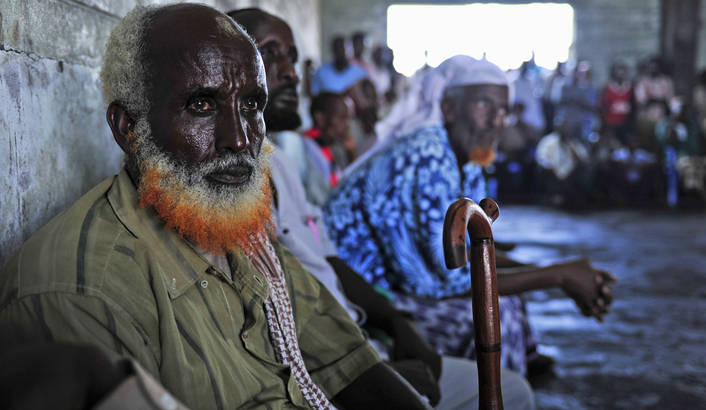
706x410q70simon-somalia-subbedMThe other day I was reading a very interesting article about how mentally ill people are treated in Somalia where they have one of the highest numbers of mentally ill people in the world.

Somalia is a country that’s been plagued by war, famine and disease for decades. As a result, at least 1 out of 3 of their 10 million citizens are affected with a mental illness, including many former soldiers, some who joined various armies and fractions at as early as 7 years old and are suffering from post traumatic stress disorder (PTSD).

On top of all this, a very large number of the population uses a drug called Khat, which is a plant that you can chew and it causes psychedelic effects. It’s legal and addicting although it can cause both health and mental damage.

Things are further complicated for the mentally ill in Somalia because of the lack of qualified mental health professionals. Many of the mental health workers in Somalia have only received 3 months of training through the World Health Organization (WHO), which is advocating for the humane and proper treatment of the mentally ill in Somalia and worldwide.

WHO officials have rescued mentally ill people from some very poor conditions. Families who have mentally ill family members in Somalia often don’t know what to do or where to turn for help so they chain them to beds in the house or to trees in the yard, including one lady who was chained by her husband to a tree for eight years and gave birth to three children.

Faith and folklore also play a role in treating the mentally ill in Somalia, with individuals sometimes being flogged to get rid of the “evil spirits”, locked in a room with a hyena for three day stretches in hopes that the hyena would eat away the “evil spirits”, or simply just beaten to death by villagers.

The streets of Mogadishu, Somalia’s capital, are littered with the mentally ill sleeping under bridges or wandering around aimlessly chewing on Khat. Most of these individuals are suffering from some sort of mental trauma and are receiving no help.

Something that makes this story even sadder is that Somalia’s only trained psychiatrist died last year in a car crash. It’s one thing to have one psychiatrist in a country of 10 million people, but when that person dies and there is no one else to take their place, the fate of the mentally ill seems that much dimmer.

A lot of money is going into rebuilding Somalia and helping with diseases like HIV, TB and diarrhea, but not enough funding is going into helping the mentally ill.

I can only imagine that it will be nearly impossible to build a stronger country, economically, educationally and health wise, if such a large portion of the population is suffering from mental trauma.

Where will these workers come from? How can they function if they are suffering from a mental illness without being treated? How will the children who are suffering learn and grow up to be productive citizens?

This is only a snap shot about mental illness in a third world, war torn country and similar terrible conditions are played out everyday around the world.

Hearing about these deplorable conditions initially made me wish I could go to Somalia to help out, but I realized that it also makes me want to advocate even stronger for the rights and proper treatment of the mentally ill here in the United States and across the world through education, information and community service.

Young Stars Bright Futures Cut Short By Suicide

GTY_lee_thompson_young_dm_130819_16x9_992
Lee Thompson

I have been a fan of Lee Thompson since my college days when I would find myself watching The Famous Jett Jackson on the Disney channel despite it being meant for teens between the ages of 12 and 16.  After all, here was an African-American movie star/spy who lived with his father and grandmother and got into various adventurous with his friends, how could I not find that interesting?

Lee also starred in the movie Friday Night Lights and was in Akeelah and The Bee .

Tragically however, Lee, who was currently starring in TNTs police drama Rizzoli & Isles, committed suicide on August 19th. He was just 29 years old.

I personally was shocked by the news of his death because he was a fairly low key actor. I never heard about him getting into trouble with the law, abusing drugs or alcohol or even much about him having any mental or emotional instability. I always assumed he was just doing fine and that is the danger when it comes to suicide.

As I have stated before, I have done a lot of crisis counseling in the aftermath of people who have committed suicide and often the words I hear from family members and friends is that they thought the person was doing just fine and their suicide came as a huge shock.

And this is where some of the stigma that surrounds mental illness comes into play. According to sources, Lee may have been battling depression quietly for a long time. Some are saying that he really changed once he started practicing an African religion called Yoruba, but it’s very likely that in an attempt to ease his depression, he sought refuge in religion and when that failed to lighten his depression, he unfortunately thought his only alternative was death.

Sources say that his mom was worried about him because many of his friends that lived in Los Angeles with him had moved and that he was surrounded mostly by “industry types” and not real friends. If this is true, definitely having a lack of a support system/network increases the chances of someone with suicidal thoughts to actually act on them.

Apparently Lee was close to his mother and sister, but probably out of pride and/or shame (stigma even), never told them about his depression or at least about how bad it really was. Many times men feel weak for feeling depressed and will hold it in and take their lives without anyone knowing how long they had been suffering.

His coworkers on the set of the show Rizzoli & Isles got suspicious when he didn’t show up for work and sent an officer to his house to check on him and that is where he was found dead. Jackson didn’t leave behind a suicide note, but sources say that he took his life with a gun.

This comes right after reality television star Gia Allemand (who was also 29) of Bachelor and Maxim modeling fame committed suicide by hanging herself with a vacuum cleaner cord two hours after her NBA boyfriend Ryan Anderson told her that he didn’t love her any more on August 12th.

102538232
Gia

According to Gia’s father, she had a long history struggling with dealing with rejection when it came to friends and boyfriends.

Honestly I didn’t know much about Gia until this happened. I remember getting ready for work when it came on the morning news show and I paused to listen to the story. It’s troubling to me when anyone who commits suicide, but it’s especially painful when people who are in the spot light commit suicide because that often sends a message to their fans and others that it’s okay to end your life if you think there is no other solution.

There are ALWAYS other solutions.

Unfortunately when you are in the middle of a deep depression or a mental/emotional/psychological break down, it’s easy to imagine that life will never get better, that it will never be as you want it to be and that death is an easy escape.

Suicide is a permanent decision to a temporary problem is a popular saying, but unfortunately suicidal people ususally believe that their problem is indeed permanent even when it’s not.

**If you or someone you know needs help, please call the National Suicide Prevention Lifeline at 1-800-273-TALK (8255)**

Allow Yourself To Have Fun

istock_000015814289xsmallThe other day I found myself feeling a lot of anxiety. It was even manifesting itself in the form of physical symptoms like a slight headache and uneasy stomach. It took sitting with myself in introspection to realize that part of the anxiety I was feeling came from me taking things too seriously and not allowing myself to relax and have fun.

These things included situations in both my personal and professional lives. I wanted everything to be so perfect, afraid of making any mistakes, that I wasn’t truly enjoying what should be great and nurturing experiences.

I had become rigid and so critical of myself that I was feeling trapped and suffocated in the same way I have seen many people who are so afraid of making a mistake, looking like a fool, taking a chance or letting people see them vulnerable that they walk around stoic and detached or anxious and miserable. I was afraid to turn left or right, to get out of my lane, so I just kept moving forward even when I didn’t like or care for the direction I was headed.

I’ve never been the adventurous type, I’ve  always been afraid of taking risks, big or small. I always felt like I had to do the right thing, even if that right thing meant living a boring, safe, unfulfilled life.  I’ve never been spontaneous and have always admired people who are.

I’ve always been afraid of what other people may think or say if I did something unexpected or that put me first.

In many ways those other-imposed and self-imposed rigid boundaries were preventing me from living my best life, a full life, something I am always advocating for in the people I work with.

Last night I was watching the final episodes of season two of In Treatment, a show about a therapist and his clients that used to come on HBO. In one of the episodes, one of the therapist’s clients, Walter, a 68 year old man who had spent his whole life caring for and worrying about everyone else while maintaining rigid parameters while putting himself last, discovered that despite everything he had done his whole life, he had never truly lived or been happy. It was a depressing discovery and he felt like he was too old to start living, but his therapist, Paul, assured him that it was never too old to start focusing on himself and living a full live, but it had to start now.

I don’t want to be that way. I don’t want to discover one day at the age of 48, 58 or 68 that I have never truly lived because I have been so busy worrying about other people, what they think about me and not living the life I was meant to live, never truly being happy.

So many of us are living, but aren’t truly living. We aren’t fully participating in life. We are too afraid of making a mistake. We have to allow ourselves to be spontaneous, take risk and to not always worry about being appropriate or what other people may say or think.

We were not meant to be this rigid, this repressed and afraid of living the life we have been given. We have to find away to relax, enjoy life and have fun, to stop taking ourselves and everything so seriously so that we can see the true beauty of life. Many of us live with guilt and shame that has been placed on us by others or ourselves that keep us from moving forward and enjoying life. We have to let that go. We have to get out and enjoy life, experience life so that we can live a full life in touch with our whole self.

Sure there will be mistakes we make, lessons learned, but those will only serve to help us discover our boundaries and learn discipline, but for us to discover those parts of ourselves we have to loosen up, stop punishing ourselves and allowing others to punish us.

Life is meant to be lived, to be fully experienced, not to be so inhibited and rigid that we are just going through the day to day motions until the day we die.

Today, do something different, step out side of your comfort zone, of the boundaries that have been set for you by yourself and others. Live life and trust yourself that you won’t fall off the deep in, but will discover what life was meant to be. Start today and hopefully you and I both will continue to make really enjoying life and having fun with less inhabitions and fear, an essential part of our existence.

Working Around Your Abyss

SONY DSCI’m always amazed at the lengths some people will go through to hide their pain. All of us have pain, disappointments, regrets, wounds, and parts of us we wish we could hide forever, but many times those very issues are the things we need to address in order to move on and live truly fulfilled and happy lives.

The other night I was watching Beyond Scared Straight on A&E and there was a kid on there whose father committed suicide when he was younger and it looked like the kid had never really talked to anyone about it or dealt with it in any sort of healthy way. Instead he turned to drugs, violence and other petty criminal behaviors as a way of acting out and dealing with what I believe must be anger towards his dad coupled with immense depression.

Most people would look at this kid and see a juvenile delinquent, but all I saw was a kid crying out for someone to see past the walls he had erected around his pain and help him navigate his way around it.

This young kid wasn’t unlike many of the high school kids I dealt with that teachers thought were just bad apples, but they were really acting out because of the pain they were holding on to, such as coming from poverty stricken, sometimes violent and unstable broken homes. Especially the boys who would hold on to their pain so tight, not wanting to show any weaknesses, and yet the pain was literally destroying them by causing them to constantly get in their own way by fighting, failing out of school or getting involved in illegal activities that were sure to lead to incarceration.

We all have stuff. We all have issues. That is something I say all the time when people open up to me, no matter if they are clients or friends. I always encourage talking about those pains because I believe that talking about them, even just a little bit, helps ease some of the tension, stigma, shame, and fear people attach to their pain.

While some people try drastic measures to consciously or unconsciously hide from, ignore, deny or cover up their pain (sex, drugs, alcohol, cutting, eating disorders, continued bad relationships, etc.), some people are so absorbed in their pain that can’t even enjoy moments of happiness when they happen. They can’t see anything except for their pain. They live in constant depression, anxiety, suspicion, and pessimism.

It may be something that happened a long time ago, yet they are never living in the moment, they are constantly living in the past and their pain. They are constantly unconsciously telling themselves stories which for the most part are untrue. Stories about themselves, their pain and their lives. Stories that hold them hostage to turmoil and they will hold on to those stories with a death grip even in the face of evidence that their stories are at least partially untrue.

The stories we tell ourselves include things such as, “My dad left because I was a bad kid”, or “My husband cheated because I wasn’t enough for him” and “I fail at everything I try”. The list goes on and on, but you can imagine how someone who is telling themselves these stories will live their lives in the present and future if they continue to believe these stories about themselves.

They will hold on to those stories, sometimes because it is the only story that they know and it’s much easier to believe in the story that you know than to try to create a better story where there may be unexpected surprises even if some of the surprises include very pleasant ones.

One of my favorite books is entitled The Inner Voice of Love: A Journey Through Anguish To Freedom by Henri Nouwen. It was given to me as a gift several years ago and I have since given it away, brought it again and given it away again no less than eight times.

The first passage in that book is called Work Around Your Abyss and it says:

There is a deep hole in your being, like an abyss. You
will never succeed in filling that hole, because your
needs are inexhaustible. You have to work around it
so that gradually the abyss closes.
Since the hole is so enormous and your anguish
so deep, you will always be tempted to flee from it.
There are two extremes to avoid: being completely
absorbed in your pain and being distracted by so
many things that you stay far away from the wound
you want to heal.

When I first read that passage about six years ago, I almost cried because I felt like it was talking directly to me. I was holding on to a lot of pain and not doing anything about it. Pain about my fathers death, pain about our relationship, pain about the romantic relationship I was in and fear of not being completely loved and fear of failure.

Holding on to and not addressing those pains was leading to anxiety, depression, low self-esteem and agitation. It was until I read this passage that I started to address and work around my abyss which slowly, but surely started to close and this passage is probably the #1 reason I have shared this book so many times with people who have shared some of their pain with me.

All of us have issues, or what I like to call “stuff”, but it doesn’t have to define us and we don’t have to wear it like a scarlet letter nor pretend like it’s not there. We define ourselves and our situations, our situations do not define us. Let’s all make a commitment to start working around our abyss so that we can start living fully and completely, the way we were all meant to live.

Bipolar Disorder: A Snap Shot Through A Clients’ Eyes

The other day I was privileged to work with a client who had been battling bipolar disorder for over 30 years. This remarkable woman, we’ll call her Jane, first started experiencing symptoms of bipolar disorder at the age of 17.

In high school Jane was popular and on her way to be the school valedictorian, and then suddenly she was struck with a deep, deep depression. She describes that depression as feeling like someone had taken a dark veil and wrapped it all around her. It was suffocating.

During this depression Jane slept and ate as much as possible, gaining a large amount of weight. Her father, whom she lived with and was very close to, had no idea how to handle this situation. Instead of getting her help, he let her wade through this depression which she eventually came out of and went on to graduate from high school despite having a very rough year.

Then she started college, and the other side of bipolar disorder showed up, mania. She was extremely hyper, unfocused, partying all the time, exhausting her friends and boyfriend who eventually broke up with her and she quickly failed out of college.

Her father, still confused about what was going on with his daughter and maybe in denial or frustration, sent her to live with relatives on the other side of the country, telling her to get herself together.

By the time Jane was relocated with other family members, the depression was back and so was the binging and the weight gain. Jane reported that she slept as much as possible to try to avoid the intensely deep depression.

The mania and depressive episodes continued and eventually Jane left her family, ended up living on the street abusing drugs and alcohol like so many people who have a mental illness, but feel misunderstood do.

Eventually she was arrested and later hospitalized where she was diagnosed with bipolar disorder and put on Lithium, which she still takes to this day.

After she got treatment for her disorder, Jane was able to be her true self again. As she describes it, “Lithium allows me to be me”. She became fully functioning, got married, had children and obtained a job making six figures.

However, eventually her husband and her started having marital problems and she felt as if she had lost the bark she used to have when she wasn’t on lithium and was in one of her manic states. She felt as if the lithium was dulling her ability to stand up for herself so she stopped taking it.

In a short matter of time she fell back into a manic state which caused her to drive halfway across the country where she was eventually hospitalized after she was found wandering the streets telling people she was Jesus and they should follow her.

She was hospitalized and put back on Lithium, but by then she had lost her husband. Now however, she knows that bipolar disorder is something that she is going to have to live with, deal with and respect her whole life.

Now she doesn’t have a six figure job, or a husband, but she has her life back and she goes around speaking to groups about bipolar disorder in hopes to help get rid of the stigma of mental illness through recognition and education about mental illness.

There is a lot of stigma that goes with mental illness which causes those who are affected with it to refuse to talk about it and get help, and family members and friends to live in denial, refusal or misunderstanding about it.

Jane is helping people talk about mental illness so that someone doesn’t have to go through the things she went through before finally getting help.

She is a remarkable and strong person like most people who battle a mental disorder are once given the tools and support they need.

Absent Fathers Can Lead To Depression In Teenage Girls

0e1380145_istock000002757055mFather’s Day is coming up and I recently read a study out of the United Kingdom published in the journal Psychological Medicine that suggests that young girls who grow up without their fathers turn into depressed teenagers later in life.

It’s well known that depression tends to effect teenage girls much more than teenage boys and that trend stays the same throughout adulthood. New research is suggesting that when young girls  grow up without their fathers, the risk of depression increases with 23% of teenage girls showing signs of tiredness or sadness if they’re separated from their father before the age of five.

According to the study, it also makes them 50% more likely to develop other mental health problems compared to girls whose fathers remained in their lives.

Preschoolers are especially vulnerable with dealing with divorce and separation poorly because they generally do not have a support system of peers or family members.

I took a quick survey of five teenage girls I am working with who have been diagnosed with depression, anxiety, bipolar disorder, bulimia  and substance abuse and four out of five of them were abandoned by or separated from their father at an early age. Some through death, others through divorce or separation.

Many of the teenage girls I work with are suffering from “daddy issues” and are dealing with them in unhealthy ways. Some through self-hatred, others through drugs and alcohol or being extremely promiscuous and unstable in terms of dating and relationships.

Boys tend to handle absent fathers better according to the study, but I would like to suggest that they just express themselves differently and may not show signs of depression we typically look for. Instead boys may be angry, “troubled kids”, or become more withdrawn and reckless. I also think boys have more outlets to let out their frustrations through rough housing, sports and other physical activities.

Both older boys and girls tend to handle separation and divorce better with less instances of depression later in their teenage years, but working with teenagers I have no doubt that the effects of growing up without an attentive and active father are powerful and far reaching.

This is not to say that separation from their father at an early age definitely leads to depression in teenage girls. There are too many other factors such as economic  and social factors that also need to be taken into consideration. Also, girls tend to be more susceptible to personal negative events than boys which can lead to episodes of depression.

I think the take away from this research is not to stay in unhealthy or undesired relationships for the sake of the children because that can also have detrimental effects, but I think it suggests that we need to pay closer attention to young girls who have been separated from their fathers as parents and as those who work with children.

Fathers should stick around and be active in their daughters lives, even if the relationship with the mother has failed. A lot of time men think that they don’t have to be as involved with their daughters, but nothing could be further from the truth.

Mothers on the other hand shouldn’t gloss over the fact that their young girl is growing up without a father and should start looking for signs of emotional or behavioral stress or changes that may warrant attention such as individual, family or group counseling.

The most erratic and unstable young women I work with tend to be the ones who grew up without their fathers and I can only wonder that if they still had good relationships with an active and supportive father, if they wouldn’t be more stable and focused.