How Early Is Too Early To Implant Self-Consciousness Into A Child?

istock_000014209545xsmallThis morning as I watched Good Morning America I saw an interview with “Teen Mom” star, Farrah Abraham, talking about how she waxes her three year old daughter’s (Sophia) uni-brow.

On her blog, sulia.com, Farrah, who is 20 years wrote:

“Recently I could not ignore it, like I know I’ve seen madonna’s duaghter have a stand out uni brow, I remember when I was little I had a unibrow, but I couldn’t remember if there was an age limit, a rule!”

“So here I am faced with a standout historical moment in motherhood when I can confirm to myself that my little, adorable,most cuddle-able cutie, baby girl has a Unibrow 😦 , I felt bad for her, and I started asking friends…. is this hair just going to fall out… is it just hormones at this age?, well the hair didn’t go away and others started saying it was here to stay.”

In an interview, Farrah said that she was also worried about her three year old daughter being teased about her uni-brow, so she talked to her daughter about waxing it, and even waxed her own eyebrows to show her daughter how it’s done.

“So I tryed to wax her, the second a dab hit the Uni, she touch it with the towel she had in her hand, UHHH so now, wax was in the towel, and I yanked it back ASAP, but fuzz was not stuck to the wax stuck to her Uni, OMG moment, So now sophia was freaking out, so I had to act like it was a cool science project to get the wax off,” Abraham said.

Once Sophia fell asleep, Farrah says she used tweezers to remove the rest.

“The next morning I showed her and told her how well she did and she didn’t even know, She was more intrigued now to be ok with upkeeping her non-unibrow. I could tell she was proud,”.

Farrah says she felt like a good mom afterwards, but some of her fans were shocked and appalled at her post.

As I heard about this story, I wish I could say I felt shocked, but I didn’t. It felt more like deja vu. Like I had heard this story, or something similar to it before.

And then of course I thought about the New Jersey mom who took her five year old daughter to a tanning booth, and the Georgia mom who allowed her ten year old son to get a tattoo.

In almost all of these and similar cases, the mothers seemed to be either clearly unstable, ignorant, uneducated or superficial.

Farrah Abraham, not to pick on her, but she doesn’t come across to me as the most educated and profound person.

At 20 years old, she is in many ways still a child herself. According to Good Morning America, she recently had a breast augmentation, a chin implant and rhinoplasty, which not only implies to me that she is superficial, but that she is also very self-conscious and may be passing this on to her daughter.

I seriously doubt that any three, four or five year old will tease her daughter over a uni-brow, but it’s much more likely that Farrah is self-conscious about it herself and is more worried about what her friends, other people or the media will say about her daughter’s uni-brow than Sophia’s peers.

What does waxing your daughters eyebrows when she is 3 years old say to her anyway? How does that affect her self-esteem and self-consciousness now and in the future?

Teaching your toddler that you should change the way you look to avoid being teased doesn’t sound like a great recipe for a healthy self-esteem and stable personality in the future.

Teaching them to love and accept themselves for who they are does. She can always do whatever makes her feel comfortable once she is old enough to understand what she is doing and why.

Many people may see nothing wrong with this story, or getting their 3 year old’s eyebrows waxed, a five year old tanned or a 10 year old tattooed.

Some comments I have read online say that it’s no big deal and that helping Sophia wax her eyebrows at 3 years old will help her get used to it and help her avoid getting teased in later years.

I don’t think this is the right approach. We all know that kids can be cruel and will tease each other about any and everything.

If they start teasing about her teeth, her hair, the way she walks, the way she talks, should she alter those things as well?

The reality of the situation is to each his own, but every decision has a consequence, positive or negative and even when you think you are doing what is in the best interest of your child, you may be implanting something in them you didn’t expect.


Your Teenager Needs and Wants Your Guidance

Group of Teens_397

If you are a parent of a teenager, you probably have worried at one point in time about the many issues that face them including drugs, alcohol and tobacco use, dangerous driving, sexual activity, school, peer and social issues.

You’ve probably also worried about losing the influence you have over your teen as they start trying to branch out and find their own identity in the world.

We all know that teenagers face many challenges and changes in the world, and many teenagers like to act as if they can face and deal with these challenges alone.

As a matter of fact, many teens may actually believe that they don’t need any help, but as adults that care about the teens in our lives, we know that’s not always the case.

Teens need guidance. Teens actually want (although they may never admit to it) your help and guidance (just as they actually want rules and limitations).

As a parent, you may think that once your child becomes a teenager, you can sort of step back and let them grow up on their own, stepping in only when they get into trouble, but that is the wrong approach.

Your job as a parent isn’t over, it’s just changing.

Many parents who think like what I just described above, end up with spoiled kids who take no real responsibility for their lives and their actions.

They often believe that they are entitled to many things others have to work hard for and end up becoming young adults and adults with a host of intra and interpersonal problems.

There is some good news however.

If you watch the news or work with a certain population of teens as I do, it’s easy to think that teens today are worse than teens have ever been in history, but that’s actually not true.

Compared to their parents generation, teens today are less likely to become pregnant, smoke, use drugs and alcohol, drop out of school, or commit a violent crime.

They are more likely to volunteer and explore their spiritual side than ever. They are also more tolerant and are more likely to have friends of different races, socio-economic status, religion and ethnic groups.  They are also more likely to say tey have positive relationships with their parents.

All the hard work society has put into improving teens is paying off, but not without the help and involvement of parents.

Research shows that teens want and expect their parents to play key roles in their lives. They want advice and guidance and they remember your wise words, even when they act as if they are not listening.

The troubled teens I work with usually come from households where they are lacking parenting or have a parent or parents that don’t know how to be parents. Some are just “bad” parents while others are too busy with their own lives to actively parent their teens.

Despite all the good news about teens, the fact is, the dangers are still there. Any parent can attest to that. If they weren’t, there would be no need for my services  and I and all the counselors I know who work with teens, are largely overwhelmed with the number of teens that need counseling.

The problems facing teens are often similar and yet different for each one, and some may surprise you.

Like the fact that rural teens tend to have more drug and alcohol problems than urban teens, and that 30% of high school teens reported driving with someone who has been drinking at least once in the last month.

The teens years are much like when your child first learned to walk. Remember how they would look for something to hold onto such as a table or your leg to help steady themselves?

Sometimes they even freaked out when they couldn’t find something to hold on to, but you were usually their to help guide and protect them and make sure that they didn’t hurt themselves.

Although you stayed close enough to help them not hurt themselves if they started to fall, you also gave them enough room to learn and practice their new abilities and watched with joy as they grew in confidence from crawling, to walking, and eventually running.

Adolescence is very similar.

Your teen needs you to be there as they try to find themselves in the world, or they will find something else to hold onto just as they did as toddlers learning how to walk.

If you are not there for them to hold on to, they will potentially find drugs, alcohol, sex, bad influential friends, crime, you name it.

If you are lucky they will find good friends, healthy and safe adults, teachers, counselors, etc., but you want to be the person who guides your child.

You want to be the person that helps your child navigate through the barriers, which means you have to be close enough to give advice and to answer their questions honestly, but far enough away to allow them to start making and learning from their own decisions.

The adolescence are an exciting and scary part of life. Your teens are changing and growing and although they may start to look like adults, their decision making, risk/reward system are far from fully developed, so they still need you to be their for them, or they will look for and find something/someone else, good or bad.

Inside The Mind Of A Potential Psychopath

As promised, here is a letter from someone I believe could be a potential budding psychopath.

A brief background:

This is a 16 year old male that came to see me for feelings of hatred and anger towards “everyone” as well as potential auditory hallucinations and symptoms of depersonalization.

He is currently in danger of failing school and follows none of the rules set for him at home and receives little to no consequences for that. I asked him to start keeping a record of his thoughts so I could help him analyze them.

This is a sample of his thought journal:

I feel irritated. I swear people are trying to make me gun them down. I’m trying very hard to keep my cool, but it’s thinning really fast. Everyone here disgusts me. The teacher is getting on my fucking nerves. I just want to pop a bottle in her face.

She makes me sick. Her voice is getting on my nerves. If I had telekinesis  I would use it to spin everyones heads. I hate you all. It’s hard for me to focus on my work. I’m just not capble of doing it. I wanna go home. I am trying to do my work but I can’t focus.

I am not in the mood to do anything. God I hate everything. The guy [teacher] is asking for binders. I want to take the binder and smack him with it. If I had the power to burn things it wouldn’t be good for anybody because if I burned somebody I don’t think I would feel sorry.

I am writing this while I shoud be doing my work, but I don’t think I give a shit. Fuck the life. This is fucking stupid. I hate the people, the class, the school. I don’t dislike, I hate everything and I don’t know why. If these people were to die tomorrow I wouldn’t give a damn.

Class is almost done and this bitch is wasting my time. Fuck her. In class people talking and i just wanna slash their throats. They including the teacher are all useless to me. They’re all disgusting. Why am I in a classroom filled with imbeciles, morons, idiots, everyone I hate.

I was sad because my friend wasn’t here today. I usually see him in second period, but he’s absent. I was sad because out of everyone I talk to, he’s the one I’m most comfortable with. He’s kinda like the twin I wish I had.

Ever since the 7th grade, way before that, I had been having daydreams of a different life, one I had control over. In those daydreams I have a brother named ______. He’s my heart, the one I feel connected to and when I’m not having those daydreams I feel depressed and want to cause people harm and sometimes for no reason.

Sometimes I imagine myself being God and other times I start to believe it. If I were God I would cause a great flood and take out the people I hate in the world and replace them with people I don’t. I don’t see why people are laughing. If I were to slit their throats I bet they wouldn’t any more. I’m tired of these stupid people.

I want to make them know that I am better than them. I’m sitting in tech class and I want to take the keyboard and slap the two students in front of me in the head until I get tired. These people underestimate my powers because if they knew what I could do they would be afraid.

These people are nothing to me, but ants. I could just stomp them with my foot and they would be dead, but I’m too nice and theres no point to go to jail for these dirty people. They are not worth my time. I fucking hate people. Their shit is so stupid.

Why is everything this way. I’m talking and thinking, but it’s disorganized. I can’t remember much of most things that I am thinking. I just want to go somewhere that I can just do whatever I want with no consequence because if I were to kill someone I wouldn’t want to get in trouble for it.

I’m not ready to clearly say that this guy is a psychopath as his symptoms are also typical of a couple of other personality disorders.

However, it’s obvious from his writing that he hates people, finds it almost unbearable to be around most people and feels as if he is better than everyone. He talks about hurting and killing people and saying he would probably feel nothing.

He also talks about people as if they were just insignificant insects. As if other peoples existence alone irritates him.

He has daydreams where he imagines himself as God and even starts to feel like God in real life with thoughts of destroying everyone.

Sure, he says he would never do these things, not because they are wrong or he would feel bad, but because he doesn’t want to suffer the consequences. Probably much like many of the mass murderers who committed suicide after their crimes felt.

I’m not going to say that this guy will hurt, none the less murder anyone, but I am saying that he is showing clear signs of psychopathic traits that need to be dealt with before he ever gets to that point.

I’ve been working with him on this for the past few weeks, helping him analyze his feelings and thoughts and challenging them,  but I am getting his family involved because I think he may need more intensive treatment than I can provide in the current setting I am working with him in.

He really is a good kid with lots of potential, but if he falls through the cracks he can easily end up spending the rest of his life incarcerated and/or ruin other peoples lives. I’m determined to do my best to not allow that to happen.

The End Of A Long Week

GETTY_H_030811_SadDepressedYouthTeenI recently just heard about the shooting at Sandy Hook Elementary School and I feel so stuck in a box right now because I am still at the high school I work at and can’t get access to television.


Yes I can read it and see pictures on the internet, but it is not the same.

I’ve been busy myself this week with a number of suicidal kids, one suicide attempt and now I am watching a suicidal teenager (yes while writing this) as we wait for a sheriff deputy to come so I can brief them on what’s going on and have them take him to the local psychiatric hospital.

It’s been one of those weeks.

This particular client is hearing voices, has been so for about a year, the same amount of time he has been getting headaches, so I think it’s possible his hearing voices could be medically based.

He’s also states he’s been depressed since he was 8 years old so it’s possible his depression is causing his auditory hallucinations as well.

I don’t know, all I know is that I would like for him to get a full medical evaluation and kept safe from harming himself for the moment, which aren’t things that can be done here so I have to refer him and his family to places where that can be done.

Talking this his family on the phone, they knew that he has been complaining of hearing voices, but never thought enough of it to try to get him help.

Once again, there goes the whole denial of mental illness again.

It’s torturous, almost abusive to deny help to a kid hearing voices that are irritating him, causing him not to be able to concentrate or focus, and causing him to yell out things like “shut up” in the middle of church (talking to the voices).

So on the phone when the family said, “Oh, he’s been hearing voices for awhile”, I stressed to them the immediate importance that he get evaluated if they didn’t want to find him dead over the weekend due to killing himself.

A little shock therapy? Maybe, but I can’t take the chance on this young man killing himself because he is so depressed and can’t take hearing the voices in his head any more. Sure, many people hear voices and aren’t suicidal, but this kid is.

Many times in the school I work at, parents seem to be mis-educated or plain ignorant about mental illness and suicide. They don’t want to talk about it and definitely don’t want to get help about it most of the time, unless it’s going to get them a disability check.

Even then, they will go to the therapist/psychiatrist as needed, get on the medication if needed to fulfill the disability check status, and then either don’t get the prescriptions filled or stop giving it to their kids after the first refill or two.

So many kids I work with have been prescribed medication for depression, anxiety, ADHD, bipolar disorder and even schizophrenia, but haven’t taken medication in almost a year.

Now, I am not a big proponent of psychotropic medication, only referring families for medication evaluations when I think it is absolutely necessary, but these teenagers I am talking about, when not on their medication, are out of control.

These are the kids that are attempting suicide, so depressed that they can’t function, so anxious that they can’t go a whole week without being taking off campus in an ambulance for having a severe panic attack and driving their fellow classmates and teachers crazy with their erratic behavior.

These are the kids that need medication, because no amount of counseling can correct something that is largely chemically based. Yes I can work with them and help them learn to cope better, but if they are so out of it that they can’t take in or practice what I teach them, then counseling won’t work alone.

I guess I should have been prepared for this week and next week. Unfortunately, along with all the blessings of the season, this is also the time of year when we see an increase in student suicidal ideation (thoughts) and child abuse.

My clients, your kids, your students need us to be vigilant and responsive to their signs of distress.

This is not the post I attended on writing today, but maybe I just needed to vent a little. After multiple suicidal kids and just a frantic week of tense, emotionally and mentally unstable clients, I’m looking forward to the weekend.

It’s my time to recharge myself, refill my emotional energy so that I can stay healthy myself, be there for those around me and give it all up again next week.

Energy Drinks: Are They A Serious Threat to Teens?

For years I’ve been hearing that energy drinks are bad for you, but that never stopped me from consuming them on a regular basis throughout college and especially after grad school when I worked overnight at a psychiatric hospital and felt like I needed to be extra alert at all times.

I personally have never had a bad experience with energy drinks, although once I did take an Extra Strength 5 Hour Energy shot before working out and during my workout felt like my heart was going to jump out of my chest. I never did that again.

Recently there has been a lot of attention given to teens drinking energy drinks, including Anais Fournier, who was 14 and drank two 24-ounce cans of an energy drink and then died six days later after going into cardiac arrest and a coma.

Her death was officially considered to be from cardiac arrhythmia due to caffeine toxicity.

Drinking those two 24 ounce cans, she had consumed 480 milligrams of caffeine, about five times the recommended limit by the American Academy of Pediatrics and about as much as drinking 14 cans of Coca Cola.

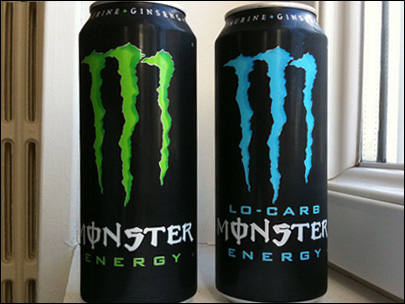
I never really gave a lot of thought to this topic until yesterday when one of my teenage clients came into my office with a huge 24-ounce can of Monster energy drink and suddenly I found myself being a bit concerned for her.

Could drinking energy drinks really have killed the young lady mentioned above and potentially others that are under investigation?  Do they pose a potential risk to the millions of teenagers who drink them on a daily basis?

Caffeine is the most commonly used psychoactive drug in the world. Most teens I know who consume energy drinks do it either to have enough energy needed to make it through the day, to stay up studying, to have increased energy while participating in a physically demanding activity, while partying, and to alter their mood.

Most teens are unaware of the amount of caffeine they are consuming, or don’t care because they think it’s harmless, when in fact it can be harmful if too much caffeine is consumed too quickly and is paired with a pre-existing medical condition.

Many teens are unaware that they have cardiac problems and are at risk for cardiac arrest, thus their caffeine intake should be limited.

Caffeine overdoses have increasingly been on the rise over the past few years with emergency rooms seeing over 12,000 cases last year.

Many researchers believe there is no reason for kids to ingest more caffeine then what is naturally found in the things they already consume, stating that caffeine mixing with the sugar often found in energy drinks can have bad effects on blood pressure and can lead to cardiac problems.

Most teens I know are more at risk when they are out with friends, partying or when they drink energy drinks just before playing a sport. 

Parents should monitor their children’s intake of caffeine and how quickly they consume drinks with caffeine in them.

The Basics of Behavior Modification Techniques

Behavior modification techniques have at times been controversial.

Many people believe that they don’t work in the long run, but I know when done correctly, they can be an effective tool to curve undesired behavior and increase desired ones.

A Very Brief History

Behavior modification is largely derived from tenets of a psychological approach known as operant conditioning created by B.F. Skinner, which proposes that behavior can be shaped by reinforcement or lack of reinforcement.

Behavior modification techniques have been used successfully with adults and children to help with conditions such as attention-deficit/hyper-activity disorder (ADHD), obsessive-compulsive disorder (OCD), generalized anxiety disorder (GAD), pervasive developmental disorders, phobias, and many others.

Reinforcing Positive Behavior 

Reinforcing consequences are anything a person receives as a result of their behavior, that increases the likelihood of that behavior occurring again.

For example, if a child gets a laugh from a parent when they swear, they are more likely to do it again. Or if they get praise for bringing home good grades, they are more likely to continue trying to bring home good grades.

Reinforcers, as the name suggest, reinforce behavior. Some good behaviors, some bad behaviors.

We use reinforcers all the time, often without realizing it. As the saying goes, we teach people how to treat us, because we often reinforce their behavior towards us, good or bad.

When people, especially children hear the word consequence, they usually assume that it is something negative, but consequences can also be positive.

Positive reinforcers are consequences a person wants to receive. They are used in behavior modification to increase desired behavior, usually through a reward system.

Behavioral contracts can be used to outline details of the reward system. As an example, a reward could be one hour of video games per day if all homework assignments for that day are complete, or all chores are done.

Sometimes negative behavior is also unintentionally rewarded. As an example, if a child yells enough and the parents gets annoyed and gives in to the child’s demands, that child is being reinforced to yell whenever he/she doesn’t get their way.

In these cases, the unwanted behavior needs to be stopped through what is called “extinction”.

Extinction

Extinction is basically stopping an undesired behavior by removing it’s rewards. Examples of rewards for undesired behavior include getting what they want after:

  • pleading
  • crying
  • throwing a tantrum
  • yelling
  • withdrawing

Time-out is one of many effective techniques used to extinguish undesired behaviors by removing the person from any rewards.

As I stated before, the saying “we teach people how to treat us” comes back to this, even as adults.

In a relationship, if our partner is being insensitive to our needs, yet we cling to them more and shower them with attention, then we are rewarding their behavior.

Negative Consequences for Behavior

Penalties, punishment and negative reinforcement are all forms of negative consequences.

Penalties are when someone loses something as a result of a behavior, such as the removal of a favorite toy or a privilege.

A punishment is when someone receives a consequence for a behavior that they don’t want, such as a spanking.

Negative reinforcers include the withdrawal of a privilege or addition of extra chores/assignments.

Differences Between Negative Reinforcement and Positive Reinforcement

Punishment, penalty and negative reinforcement usually result in minimal effort on part of the person to achieve the desired behavior.

Positive reinforcement is the only method that will encourage people to give voluntary, extra, enthusiastic effort to achieve the desired behavior.

The key to behavior modification is to use negative consequences as necessary, but to focus more on positive reinforcements.

The Five B’s of Effective Parenting

Lastly, the five B’s are very important when it comes to using behavior modification techniques with effective parenting:

  1. Be positive– try using positive consequences more than negative
  2. Be specific– be specific what behaviors are being punished or rewarded
  3. Be certain– your child should know without a doubt what to expect from you        based on their behavior.
  4. Be consistent– if you don’t apply rules consistently, your child can never be certain of what to expect
  5. Be immediate– act immediately when your child deserves a positive or negative reinforcer.

When used correctly, behavior modification techniques are positive tools and great ways for kids to learn in a rather safe environment about consequences.

They learn that in life, often there are no right or wrong decisions, but they have to be able to deal with the consequences (positive or negative) of their decisions.

Teens, Marijuana and Nutella

The other day during a group therapy session, one of my teenage clients told me she had been tempted to use marijuana for the very first time.

I questioned her about why she was tempted to smoke marijuana and she informed me that she wasn’t going to smoke it, she was going to eat it. She had been offered some marijuana sprinkled on a cracker covered with Nutella.

This was the first time I had ever heard of teens eating marijuana on a cracker with Nutella, but that’s not the point of this post. Most teens believe marijuana is harmless, and I spend a lot of my time trying to convince them that it’s not.

From my experience, working in the field of substance abuse, I tell them that in a lot of cases, marijuana zaps motivation. Teens I work with who use marijuana usually start failing classes, missing school and eventually dropping out or getting kicked out of school.

Also, there is growing evidence supporting a correlation between marijuana use and schizophrenia.

Marijuana doesn’t cause schizophrenia, but it does seem to activate schizophrenia and other mental illnesses in individuals with a predisposition to mental illnesses, especially schizophrenia.

In the book The Center Cannot Hold: My Journey Through Madness by Elyn Saks she shares intimately about her battle with schizophrenia that all started after her first experience with marijuana.

She thought the hallucinations and thoughts that came and stayed for days were all normal and so she didn’t tell her parents out of fear of being punished for having smoked marijuana.

I’ve worked with a handful of schizophrenic patients who had their first schizophrenic experience after smoking marijuana and initially thought that their experience was typical until much later when the hallucinations and delusions didn’t go away for days, weeks or never.

These people all had a predisposition to schizophrenia which seemed to be activated after they started smoking marijuana. If they hadn’t started smoking marijuana, that doesn’t mean some other life event wouldn’t have activated the gene, but who knows.

Teens argue with me that marijuana is not addicting, but it is. Marijuana is psychologically addicting, why else do people who are regular marijuana users do the some of the same things people addicted to harder drugs do when they are addicted?

Some of the signs of being addicted to anything is when that thing starts to interfere with and effect your life negatively.

Teens I’ve worked with who claim not to be addicted to marijuana have:

  • Missed numerous days of school to stay home and smoke mariuana
  • Come to school high and thus got expelled
  • Got caught smoking marijuana at school and thus got expelled
  • Got pulled over while driving and smoking marijuana
  • Have violated their probation for smoking marijuana after being on probation for marijuana in the first place
  • Have lost jobs for smoking marijuana on their lunch break
  • Have stolen from family and friends to support their marijuana use
  • Have damaged relationships with family and friends over their marijuana use
  • Can’t get jobs because they can’t refrain from marijuana long enough to pass a drug test

These are all signs of addiction. These are all the same things people with cocaine, crack, heroin, alcohol and crystal meth addictions do. Yet these teens still think they aren’t and can’t be addicted to marijuana.

Then they argue that marijuana should just be legal. I’m not going to argue that point here, but even if marijuana was legal it still wouldn’t be available to people under 18 and most likely, not to people under 21.

Even then, employers would probably put in place rules where you couldn’t either test positive for marijuana or at the least, not come to work high. Same goes for places of higher education, the department of motor vehicles and such.

So while teens think legalizing marijuana will mean a free pass to smoke at will, it actuality won’t.

Marijuana use also leads to a higher risk of experimenting with other drugs and I’ve seen enough teens using hard drugs that started with marijuana to know that this is indeed true.

No teen I know who smokes weed can imagine smoking crack, but most people I know who smoke crack started off by smoking weed and didn’t see the day coming when they would be smoking crack or shooting heroin.

I’m not saying marijuana is all bad or trying to bash people who use it, but I do know one think for certain, and that’s that no teenager should be smoking or experimenting with marijuana, especially as their brains are still developing and they have enough trouble making good decision when they aren’t influenced by substances as it is.

Is It Okay To Use Different Academic Standards Based on a Students Race?

I was honestly shocked the other day when on the local news I saw a report that the Florida Board of Education, just passed a new race-based standards of academic acceptance which will affect all of the 2.6 million students that are in the state’s public school system.

I was shocked because I don’t remember hearing about this, and yet it has passed. Apparently there was no vote on this from the public and I was even more shocked to hear what the standards are.

The new academic standard says that by 2018, 90% of Asian students, 88% of white students, 81% of Hispanic students and 74% of black students are to be reading at or above grade level.

It also states that 92% of Asian students, 86% of white students, 80% of Hispanic students and 74% of black students will be at or above their math grade level.

Really?

Now some people will say that this is a part of Affirmative Action, but I’d like to argue against that. This is part of goals required from Florida’s waiver of No Child Left Behind. State officials say that these new standards take into account the performance numbers of current students of color.

I say that this is a way the state can take the blame away from where it really should be, and that is on failing schools, inequality of schools and teachers in different communities, poor teachers, bad parenting and failing community services and supports.

It is unconscionable to me that we would expect less of a child based on his or her race/ethnicity. All kids have the ability to learn regardless of race or ethnicity.

It is true that often things such as socio-economic status and parental educational background have a lot to do with a child’s academic performance, exposure and experiences, but to dumb down the expectations of a child based on their race/ethnicity is really backwards.

And where is Florida getting this idea from? Virginia! No offense to Virginians, but Florida is following in Virginia’s footsteps when it comes to educating their students. Some say it’s so that black and Hispanic children won’t feel bad when they don’t perform as well as their white and Asian counterparts. Really?

When I was in high school I had to pass a competency exam to graduate, my race/ethnicity played no part in this. I was expected to get the same passing score as everyone. They same went for the exit exams I took in undergrad and graduate school.

Former Florida Governor Jeb Bush even said that this would send a “devastating message” that Hispanic and black students aren’t as capable as other students.

Palm Beach County School Board Vice-Chair Debra Robinson said she’s “somewhere between complete and utter disgust and anger and disappointment with humanity” because of this.

We do a disservice to our kids when we are basing academic standards on race/ethnicity. We will be placing a black mark on the high school diplomas of every black and Hispanic child.

It would be better to track students individually and not group them by race/ethnicity, but that would cost the state too much, so it’s easier to just make generalized, in my opinion, racist academic standards of achievement.

A long time ago I read a book called The Bell Curve and thought it was the most racist piece of garbage I had ever read. It was largely about whites intellectual superiority over blacks. This isn’t much different.

How can black and Hispanic children feel good about their academic achievements if they are held to a lesser standard, especially in elementary, middle and high school where these poor standards are setting them up for future failure?

In elementary school I always made the honor role until one day I got a “C” and cried. My teacher consoled me by saying “C’s are good for a boy”. After that day, I never made the honor role again until the 11th grade. I was happy with “C’s” and it was only until the end of my sophomore year in high school that I started making all A’s and B’s again.

What changed? I did, not the academic standards, or even the school or teachers, but me.

I learned that “A” stood for excellent, “B” for good, “C” for average, “D” for poor and “F” for failure. I told myself I was above average and aimed to never get below a “B” and from that point on in high school, through undergrad and graduate school, I didn’t.

With Affirmative Action, yes it helps minority students get into college with lower exam scores than whites and Asians, but once in college they are expected to keep up or get out. There’s a difference between that and this.

If we tell our kids it’s okay to be below average because of your race/ethnicity, I think it will have the same affects. Kids won’t try harder, they will accept poor performance as “good for my race/ethnicity”.

Those black/Hispanic kids that are high achievers, will never feel the pride they should feel.

We already have a problem with black/Hispanic kids being stereotyped as “not as good as” whites and Asians, but this is almost like making it official.

We all learn differently and EXPOSURE and EXPECTATION go a long way to defining a child’s self-efficacy. This is not the way of solving a problem, but creating one we all will have to deal with in the future.

Politicians are always saying that they want our nation to be at the top when it comes to math and science, but I guess that doesn’t apply if you are black/Hispanic. We should be encouraging, educating and encouraging all students, regardless of race/ethnicity, to do their absolute best, and not a percentage of what is considered the absolute best.

edit: My 16 year old niece, who is black and attends a predominately black school, just got accepted into the National Honor Society for having a grade point average of or above a 3.5. Imagine if the criteria for the National Honor Society was lowered for her just because she was black. I doubt she would have the same sense of pride and accomplishment she has today. 

Support Groups for College Students

College can be a huge transition for students that usually leads to personal growth, but at times may lead to feelings of loneliness, anxiety and depression.

Many students who I’ve worked with in high school and have graduated and gone off to college, have kept in touch, expressing at times their struggle to adjust or to stay balanced.

Usually I’ll give these students some words of advice or resources I think will help them get back on track, but sometimes they need more attention than I can provide and that’s when I often refer them to a support group on their campus.

There are usually support groups for almost any and every issue a college student may be dealing with including:

Depression and Anxiety

Sudden independence, academic pressure, financial worries and adapting to a new environment are all things that can lead to stress and anxiety, especially among freshman.

Stress and anxiety can lead to depression which can cause a host of other problems including dropping out of school and substance abuse. Most college campuses offer groups such as “Personal Growth” or  “Transitioning into College”  to serve students with these needs.

There are also grief and loss support groups for students dealing with the loss of someone.

Self Esteem

In college, people often start discovering new things about themselves, things they may like, dislike, feel uncomfortable with or are not quite sure of  how to deal with their feelings. This is also the time some people have their first sexual experiences either with the opposite sex or with the same sex.

Some may feel like they don’t fit into the student body on campus for various reasons.

These groups help people suffering with self-esteem and identity issues figure those things out in a safe, confidential environment.

Most college campuses offer support groups, for example, for the gay, lesbian, bisexual and transgender community and for people who have been sexually assaulted. The University of Central Florida, for example has a group called Sister Circle, which gives support to women of color.

Recovery

There are also groups for students dealing with drug and alcohol problems in order to help them stay on the track of recovery. In recovery, it’s very important that a person has a good support system, which is what these groups attempt to provide.

Here is an example of support groups offered at the University of Central Florida and similar groups are found on most college campuses:

  • GLBQ (Gay, Lesbian, Bisexual, Questioning) Growth & Empowerment
  • Sexual Assault Survivors
  • Transgender Bender Group
  • Authentic Connections
  • Women’s Group
  • Creative Connections
  • Exploring your Family
  • Grief and Loss
  • Sister Circle
  • Building Social Confidence

Generally once I’ve connected a student to a support group on campus not only do I feel relieved, but they also tend to improve and make new friends. I’ve always been a proponent of support groups for everyone in need because I know the positive affects they can have on their members.

Rethinking Resiliency In Relation To Teenage Girls: Part 1

Working with inner-city teenagers, I always want them to defy expectations often put upon them by society, their community and even themselves.

Those expectations usually include:

  • getting pregnant
  • dropping out of school
  • being promiscuous
  • abusing drugs and/or alcohol
  • never getting out of the low social economic status they were born in

Resilience is the strength and stress resistance to defy those expectations and to achieve ones dreams.

These are the things I always try to instill in the youth I work with, after all I have faced many of those same societal expectations growing up as an African American male including:

  • going to jail
  • being violent/angry
  • being on drugs/alcohol
  • fathering multiple children with multiple women
  • being lazy and uneducated

Time and time again, especially when it comes to teenage girls, I seem to be facing an uphill battle when asking them to be resilient. Not that I don’t face the same battle with boys, just that the girls often seem to have it all together and then quickly sabotage themselves.

An example of this comes from a 3 year longitudinal study of poor, inner-city adolescent girls called “Understanding adolescents: A study of urban teens considered to be at risk,” directed by Jill McLean Taylor and Deborah L. Tolman.

“Anita” was an African American girl who who stated that she wanted to be a lawyer, and acknowledged in the 8th grade that the only things that could stand in the way of her dream were “kids, kids, kids”.

It’s amazing, that as early as the 8th grade, she realized that having kids that young was a possibility.

In the 9th grade she is still passionate about her goals and dreams to become a lawyer because she felt that there was a need for good African American lawyers, and states “I ain’t going to let nothing get in the way. The only thing that could probably happen is a baby.”

Once again, despite her passion and determination, she is vividly aware that getting pregnant was a real possibility. After all, she had probably seen some of her friends and family members get pregnant at her age. Her mother also had children in her teens.

In the 10th grade she seems even more determined to be a lawyer, stating “there’s a lot of people that I  know that don’t want a Black kid to be somebody.”

That year she still has concerns that a baby might get in the way of her dream, but seems less worried about it. Unfortunately, she also tells the interviewer at this time she has been sexually active and hasn’t been using protection.

By the fall of her 11th grade year, she becomes pregnant and drops out of school.

How could this happen to a young girl that seemed so determined and resilient?

Well, for one, perhaps asking her (and other poor inner-city teens) to be resilient and defy expectations, was also asking her to be different from and possibly even disconnect from people that mean the world to her, including her mother.

Anita and her mother were very close; “(she) is a part of me and I am a part of her… we have trust in each other and rely on each other… we are not that different.”

Her decision to have a baby brings her closer to her mother, although it moves her farther away from he dreams, even if they were dreams both her and her mother shared.

That’s what makes reaching out to poor inner-city teenagers so difficult.

How can we expect them to make better choices, take positive risks and reach for something different and better when doing so also puts them at risk of disconnecting and alienating themselves from important people in their lives.

It’s all mostly subconscious, but I see it all the time. A motivated, successful student gets pregnant and starts missing school more and more to stay at home with her mother, who is not working and is at home with either her own children or one of her other children’s kids.

It is a complex psychological dilemma. On one hand by reaching for and achieving their goals, they may isolate themselves, and betray cultural and family connections. However, by not following through on their dreams and goals, they will be betraying themselves, and possibly the hope and dreams of their family and community.

Asking them to “break the cycle”, is in some ways asking them to distance themselves from people they most love, admire and identify with.