Setting Up A Coping Skills Toolbox

My Journal
My Journal

Today I read a sign that said Sometimes you’re the statue, sometimes you’re the pigeon. It served as a good reminder that not everyday will be a good day.

It’s helpful that in anticipation of those not so good days that we have a set of healthy coping skills easily at our disposal, a “toolbox” if you will.

What are coping skills?

Coping skills are basically behaviors that we have developed to deal with times of distress. Some of those behaviors are positive (i.e., exercising) while others are negative (i.e., smoking). Positive coping skills allow us to deal with life stressors in a healthy way while negative coping skills generally make us feel better temporarily, and then either make us feel worse or lead to bad consequences.

People in recovery have probably heard of a coping toolbox before, it’s something that we usually have them work on in anticipation of relapses, temptations and set backs. I am not just talking about recovery from drugs or alcohol, but recovery from a mental illness, codependency or whatever it is you are trying to overcome.

Even if you aren’t in any form of recovery, having a coping skills toolbox can prove to be an invaluable asset when you have to face those not so good days.

Naturally, we all have coping skills we have developed over the years. Some we are conscious of and some we are not. Many of our coping skills are unhealthy or  ineffective. People who use substances, cut themselves, etc., are all using coping skills that are unhealthy.

The trick is to develop healthy coping skills that we are conscious of so that we can use them when we are having a bad day or feel ourselves headed in that direction. People who have a toolbox that is filled with positive coping skills are better prepared to deal with life stressors.

Because each person is different, one persons coping skills may not work for everyone, but it is useful to try different healthy coping skills to see what does work for you and to put those into your “toolbox” so that you can have a collection of visual or written cues to help you when you are having one of those days where you feel more like the statue than the pigeon.

Positive coping skills are a great way to reduce anxiety and depression and bring back a sense of balance and peace during times of distress.

It’s good to think about and start putting together your toolbox when you are having a good day, before a stressful event happens when you still have the energy and creativity. It’s like putting together a hurricane survival kit (for those of us here in Florida), you don’t wait until a hurricane is here to put together a survival kit, you do it before a storm even develops so that when the hurricane is knocking on your door, your kit is already prepared.

Here are some of the coping skills in my toolbox:

  • Journaling– I love keeping a journal as a way to express my thoughts and feelings, especially when I have a difficult time figuring them out and when I feel like I can’t talk to anyone else about them.
  • Creative writing– sometimes it’s helpful for me to put some of the distress I am going through into fictional characters or situations that may mirror mine. It helps to sometimes work them out in a fictional setting before applying them to my real world or just to vent and play things out without the real risk of harm.
  • Drawing/sketching– art therapy is a great way to release tension or explose your thoughts and emotions. Sometimes I just take a scratch sheet of paper and sketch, nothing in particular, but it helps ease my mind.
  • Exercising– I love to workout, but when I am stressed, working out becomes therapeutic. Sometimes I think it is the only way I have remained sane for so long 🙂 .
  • Meditation– sometimes I just sit steal and don’t try to think, feel or solve anything. Amazingly, sometimes just sitting still and doing nothing for five minutes resolves multiple internal conflicts I was having.
  • Mindfulness– focusing on the here and now often takes away angst I am feeling about the past and future. Just allowing myself to be here and reminding myself that I am exactly where I am supposed to be, allows me to release built up tension.
  • Distraction– sometimes I allow myself to just “change the channel”, virtually taking a mental break from whatever is bothering me. I may play a video game, read a book, call a friend, anything and often that distraction is enough to either allow those bad feelings/thoughts to pass or to put them in better prospective.

This is definitely not a definitive list, it’s just some of the tools I use in my toolbox. I know other people have included music, knitting and yoga in their toolboxes. What are you going to put in your coping skills toolbox?

The Trayvon Martin Tragedy And Psychology, Part Three: Cultural Stereotypes

students_112210-thumb-640xauto-1605In part two of this three part post, we discussed how psychological research suggests that people who have a gun themselves are more likely to assume that other people also have guns, even when they don’t.

We have to wonder if this played a role the night when Mr. Zimmerman saw Trayvon Martin, who was wearing a hoodie and likely carrying the items he had (skittles and a can of ice tea) in the pockets of his hoodie.

Could, based on this research, Mr. Zimmerman think that the probability of Trayvon being armed was very likely which may have been another reason he was more willing to shoot?

In another research done by psychologist Joshua Correll, groups of college students were placed in a simulated situation where images were flashed across the screen, similar to the research mentioned above, instead these college students were asked to either shoot or not shoot the individuals that flashed across their screen depending on if they were armed or not, a situation known as Police Officer’s Dilemma. 

Some of the targets that flashed across the screen were holding an aluminum can, a wallet or a cell phone for instance. Participants who choose correctly to shoot an armed suspect were rewarded 10 ponts, if they correctly didn’t shoot an unarmed suspect they received 5 points. Shooting an unarmed person deducted 20 points and not shooting an armed suspect was deducted the most points, 40, because in reality that could mean paying the ultimate penalty of death.

As each target flashed across the screen, participants were asked to decide as quick as possible to shoot or not so shoot by pressing “shoot” or “don’t shoot” buttons. What the participants didn’t know was that some of the targets would be White and some Black.

Would the color of the suspects skin change the likelihood of shooting an unarmed suspect?

Over the course of four studies, researchers found what they termed shooter bias. Participants were quicker to correctly shoot an armed suspect if he was Black and to correctly not shoot an unarmed suspect if he was White. However, the alarming and sad discovery was that participants were consistently more likely to shoot an unarmed suspect if he was Black.

Why is this? Is this because those participants were racists who believed in the negative stereotypes of Black people being more dangerous, aggressive and likely to be armed? If this is the case, then participants who considered themselves to not be racist, to be fair and equal to all people, would have lower incidents in the research of shooting unarmed Black targets, but that wasn’t the case. Across the board, regardless of the level of racism, the same results could be predicted.

Outright levels of racism didn’t matter, but what did matter was- the participants’ level of awareness that there is prejudice towards Black people in American society, even if the participant adamantly did not support those stereotypes. 

What does that mean? It means that simply being aware that there are cultural stereotypes and prejudice towards a group, even if you personally do not believe and disagree with them, makes it more likely that in a split-second decision in an uncertain conditions, you are more likely to make a biased mistake such as shooting an unarmed, non-threatening person. This bias is likely to be depended on the person race, ethnicity, age, sex, etc.

This doesn’t mean that you are racist. I speak a lot in my group work about how we have all been brainwashed to various degrees by society and most of us have been brainwashed to believe that Black men are armed and dangerous. Even if you don’t believe this to be true, under uncertain conditions where you have to make a split- second decision, those subconscious thoughts come roaring into your consciousness and may make you respond irrationally.

We all live in a culture that embraces certain stereotypes and you don’t even have be aware of it, or think that it effects you for it to become imbedded into your cultural knowledge base. Even without you knowing, they will impact the way you interact, think and behave, sometimes in ways that are shocking.

In the article I wrote about some Black females wanting to have light skinned babies, I talked about the Clark Doll Test. This is another form of brainwashing where without even knowing it, little Black girls had been taught through social cues that Black= ugly and stupid while White= beautiful and smart. No one “taught” them this, it was ingrained into their cultural knowledge base by society.

By the way, when Black participants were given the same test, to shoot or not shoot, they were just as likely to shoot an unarmed Black person as White participants were. Cultural stereotypes affect all of us.

Cultural stereotypes can become automatically activated and influence our behavior, even without us knowing that is what is happening. Most of the participants in the study for instance would have probably been angry and disagree if it was suggested that the race of the target played a role in their decision to shoot or not to shoot, even when faced with the evidence.

Is Mr. Zimmerman a racist? Again, I can not say, but I do believe race played a role in this. However, I don’t think racism alone explains what happened and it is more complex. The fact that Mr. Zimmerman was carrying a gun of course played a role in this tragedy and definitely cultural stereotypes played a major role.

I think this tragedy definitely should open up conversation about many issues including the consequences we and our children have to deal with, growing up in a culturally stereotypical and racist society that affects all of us, even when we don’t realize it.

The Trayvon Martin Tragedy And Psychology, Part Two: Cognitive Bias And Confirmation Bias

Zimmerman Martin 104When we look at the Trayvon Martin case, we have to wonder what was going on in Mr. Zimmerman’s mind the night he spotted Trayvon Martin, an unfamiliar figure, walking through his neighborhood. Instead of looking at this as a race incident, I think it’s important that we take a look at what in psychology is called cognitive bias.

Cognitive bias is something that I find easier to understand than to actually explain, but Haselton, M. G., Nettle, D., & Andrews, P. W. in The evolution of cognitive bias (2005) explain cognitive bias as a pattern of deviation in judgment, whereby inferences of other people and situations may be drawn in an illogical fashion.

Basically, people create their own sense of reality (subjective social reality) based on their perceptions of objective information which influence how they respond and react to situations both mentally and physically. This cognitive bias however can be wrong and lead to poor judgement, wrong interpretations of a situation, perceptual distortions and irrational behavior/reactions.

Confirmation bias on the other hand is when we look for information that confirms what we already believe, even if other information that disconfirms it is also present. For instance, supporters of Mr. Zimmerman and Zimmerman himself will latch on to information that suggest Trayvon had a violence past, used marijuana or was involved in gang activity while Trayvon’s family and supporters will likely relish information that says Mr. Zimmerman was a racist, impulsive or quick to take the law into his own hands.

With little other information about either person, we are likely to come to some pretty strong conclusions based simply on our cognitive biases and confirmation biases alone.

Some cognitive biases are adaptive and help us make decisions faster, especially when a higher value is placed on quick action over accuracy. Others can be learned, generally subconsciously.

There are entire books written on cognitive biases, but the important part is that you have a basic understanding that people often think incorrectly and then act irrationally based on their misperceptions.

Late psychologist Ziva Kunda wrote in her article “The Case for Motivated Reasoning” that “people are more likely to arrive at those conclusions that they want to arrive at” unless they are motivated specifically to make accurate judgements and decisions.

For instance, there’s a study done by psychology professors at Notre Dame and Purdue University that showed that a person carrying a gun is more likely to “see guns in the hands of others”.

In the study, participants were given a toy gun or a foam ball. They were then flashed people across a computer screen holding either a toy gun, a cell phone or something else. The participants with the toy guns were more likely to say that the people on the screen were holding a gun, even when they were not.

In the Trayvon Martin situation this means that Mr. Zimmerman saw what he thought he saw based on his own experiences and mental frameworks. Mr. Zimmerman had stated on several occasions that there had been multiple break ins in his gated community and that “they always get away”. By “they” I am assuming he means burglars or other bad guys, not African Americans, but those who are looking for a racist spin will interpret “they” as meaning African American or black people.

Mr. Zimmerman was looking for Trayvon to be a criminal and thus he saw a criminal, although Trayvon was just walking back to his father’s house from the store and wasn’t involved in any criminal activity. As the neighborhood watchman, Mr. Zimmerman was likely looking for criminal and suspicious activity everywhere and thus was more likely to think someone was a criminal or suspicious even when they weren’t.

Now that Mr. Zimmerman believes he has spotted a criminal, he goes on to do some irrational things based on his cognitive bias that Trayvon is a criminal. He starts following Trayvon, calls the police and then continues to follow Trayvon so that he can give the police an accurate location to find this “criminal”.

Many people want to say that Mr. Zimmerman did what he did on that night because he is a racist, something I can’t say he is or isn’t, but you don’t have to be racist to be prejudice and you’ll be surprised to learn that most of us are prejudice to some extent.

Subconsciously we are more likely to be prejudice towards out-groups, which are people we psychologically do not identify with as part of our group. I discussed in a post I wrote about helping others how this same type of subconscious thinking makes it more likely for us to help those that we feel are similar to us in what is called similarity bias. 

Because Trayvon was of a different race, it made it more likely that subconsciously Mr. Zimmerman was even more suspicious of him. In the next post I’ll discuss how social stereotypes predispose most of us to have certain prejudices that then lead us to have different cognitive bias.

Although these subconscious forces are indeed powerful, there is a way we can control them to a degree through what is called “thinking safe” instead of “thinking quick”. When we think quick, we are likely to make inaccurate assumptions and if Mr. Zimmerman thought he had spotted a criminal prowling his neighborhood, he was most likely thinking “quick” and not “safe” and his cognitive biases and subconscious prejudices combined with that probably contributed a lot to the actions he took that night that left an unarmed teenager dead.

What I am getting to is that while race and prejudices probably played major factors into this tragedy, most of it likely came from subconscious psychological factors that were at play.

We will put all this together and wrap it up in part three of this discussion.

The Trayvon Martin Tragedy And Psychology, Part One: My Personal Thoughts And Experiences With Racial Profiling

trayvon_martin_dad1The Trayvon Martin trial began this week with jury selections that are proving to be difficult for multiple reasons.

The Trayvon Martin case hits home for me for many reasons, not just because I too am an African American, but because the small city this happened in, Sanford, Florida is a suburb of Orlando, the city I live in. As a matter of fact, one of the schools I was offered to transfer to is located in Sanford.

Another reason it hits home for me is because as an African American male I have faced racial profiling many times in my life, especially when I was a teenager.

When I was a young teen it was very common for me to be followed around in stores and I can remember at least twice when I was actually stopped and confronted by a store worker for “stealing” although I wasn’t. My friends and I used to have a joke that once we entered a store they would have a special code they would say over the intercom to alert them that black people were in the store.

When I was young I thought it was a necessary hassle, sometimes I even thought it was funny because the store clerks would try not to be obvious, but they were always obvious to me. I was, even at a young age always aware however that I was seen a a criminal and “guilty” even though I had committed no crimes.

As an older teen things got worse, but still, being a teenager I didn’t take it personal and even thought it was funny at times.

Driving my mother’s car, on a weekly basis I would get pulled over, sometimes searched, but always inconvenienced for absolutely no reason.

I remember my friends and I would go to Dennys and sometimes be there for an hour or longer before we were ever even asked what we wanted to order. At the time I didn’t think anything of it other than bad service, but when I got older, I learned about the discriminatory practices Dennys used in some locations to deter African American customers and have no doubt that is what was going on then, we just didn’t know it.

Being harassed by the police was so common that I started to feel like a criminal whenever I saw one, expecting them to stop and search me for no reason which sometimes they did.

In particularly I remember an incident in which I went to visit with some friends in a gated community and decided to take a walk around the block. Well I didn’t even get half way around the block before I was approached by security and asked what was I doing there. He stated that someone had called about a suspicious person in the neighborhood. I couldn’t help, but to think that the only thing that truly made me suspicious was my skin color, because unlike Trayvon Martin I wasn’t wearing a hoodie and it was daylight out.

The Trayvon Martin case hits so close to home because I, like millions of other black and brown men around our country can identify with his situation. I don’t want to go into detail here because I don’t know all the details, but what I do know is what we know from Mr. Zimmerman himself.

He saw Trayvon Martin and for whatever reason thought that he was up to no good. We know that Trayvon was doing nothing wrong, yet he was viewed as a criminal and guilty automatically, much like I have been multiple times in my life.

For this reason, I will write a bigger, more in-depth article behind some of the psychological reasons I believe this tragic incident happened.

As a young African American male, I took the harassment by store clerks and law enforcement as a necessary price I had to pay for being young and black. I didn’t take it personal, but as I got older and became a college educated adult with a professional job, on the rare occasions I felt harassed because of my skin color, I no longer found it funny or necessary, but extremely irritating and degrading.

About two years ago on my way to work, dressed in a shirt and tie I got pulled over by a police officer. I actually knew he was going to pull me over before he did it because it was just him and me on the road. I didn’t mind the stop because I knew I didn’t do anything wrong and after checking my license and verifying I had no warrants, instead of letting me go he asked me if I had any guns and drugs in the car and if I minded if he searched it.

I was shocked, largely because I had assumed that this type of harassment would stop when I got older and certainly once I went to college and became a professional, but it didn’t, it just became less frequent.

About four months ago I was pulled over by an undercover truck with four police officers, asking me again if I had drugs and guns. It was only when one of the officers recognized me that they eased up and immediately let me go. It was dark and if I had mistakenly took this undercover stop as a carjacking (which I initially was afraid it was) it could have ended tragically for me.

Just yesterday on Facebook, a friend of mine and a successful store manager wrote jokingly, “The first time not getting pulled over for being black I get 2 tickets. I think I prefer them holding me at gunpoint and searching for guns and drugs, it’s cheaper.”

The Trayvon Martin case resonates with me because it could have easily been me or one day, my son.

I think this unfortunate situation has a lot to teach us not just about race relations, but about the way we receive and perceive information through our minds based on preconceived notions which we will explore in my next post.

.

How The Mental Health System Is Failing Minorities

iStock_000009898060XSmallI’ve wrote a bit about how the mental health system is failing those who need it most and a lot of those people are usually poor and/or minorities.

Working in an inner-city area I’ve always been valued as a licensed mental health counselor able to diagnose and treat a wide array of mental issues and refer clients who needed more attention, testing or medication to people and places able to provide those services.

Sometimes I didn’t quite appreciate or understand the praises I got from other school administrators, faculty even clients and their families. To me I was just doing my job, but to them, at times I was seen as a hero.

It wasn’t until recently that I actually thought about this. Within the past year two crucial agencies pulled out of the school because of lack of funding. These two services provided mental health counseling to the students who needed it three days out of the week while I was there everyday. They were not licensed and generally dealt with less severe, but no less important issues.

Because these two agencies are no longer on campus, this year my case load exploded to way more then I could handle by myself, but I had no choice but to try to handle it the best I could which at times wasn’t always that great. I was overwhelmed, underpaid and under appreciated by the agency I work for, but very much appreciated by the school, students and families I served.

To make things worse, I may not be at the school after the end of this month because funding is being cut from my agency as well.

While to me it is ultra important that these kids and families receive my services, like I wrote in my previous post, it boils down to money over actual quality of care.

It was then that I started realizing that there weren’t many options for those in inner-city communities who need mental health services, largely because poor and minority people with mental illnesses are more neglected and inner-city communities receive less funding which is one reason the two agencies I mentioned above pulled out of the school I work at, they lost some of their funding.

A lot of the funding that comes for mental health servies in inner-city communities is based on grants, and grants come and go very easily, often doing great work in a community for a couple of years and then leaving them without any support.

With that being said, it’s really hard for the kids I work with and their parents to receive quality mental health services in their community.

Many of them end up getting services through the jail or prison or are involved with child protective services which is where many of them end up because they have issues such as uncontrollable behavior that haven’t been addressed, but this creates a host of other problems due to the stigma that comes with it and because it eternalizes a racial stereotype that this is where Black people end up.

However, once these people are no longer incarcerated or receiving services through child protection services, without support, most will regress back to their previous mental states and behaviors. Only about 33% of African Americans suffering from a mental illness are retrieving proper treatment.

Because of this neglect, there isn’t much research on treating minorities with mental disorders such as depression, schizophrenia, bipolar disorder, substance abuse and others conditions.

Yes, it is true that for the most part, there is little to no difference in these disorders across races or socio-economic statuses, but there are cultural and social differences that play major roles in properly treating these disorders.

African Americans have been ignored for decades when it comes to mental health. Before the 1960s, it was believed that African Americans could not get bipolar disorder or depression for example. It wasn’t until 2001 when former Surgeon General Dr. David Satcher, who is African American, released Culture, Race and Ethnicity. A Supplement to Mental Health: A Report of the Surgeon General, which brought the disparities into national light.

Working with minorities from African Americans, Haitians, Latinos and Asians, I know that culture plays a large role in who and how individuals receive mental health services.

Some cultures are very private and trying to get the whole family together for a session can be almost impossible, while others, especially African Americans, seem to be more suspicious of the mental health system in general and are more likely to stop treatment early without any follow up and to not follow through on medication recommendations.

Because of this distrust, many will turn to a friend, then their pastor, and then their general doctor before finally turning to a mental health professional for help with a disorder.

Because of all these issues, I see why my role within the school I work with is seen as so important. I am able to bond with the students and give them and their families services that they may not otherwise receive.

On top of that, I think I am helping to remove some of the stigma associated with getting help for a mental health problem.

Many of my minority clients, when I first meet with them automatically tell me that they are not going to take any medication or go to the mental hospital, as if that’s all those who work in the mental health field do, medicate people or hospitalize them.

Through getting to know me, they realize that I just want to help them get through whatever is bothering them and I have no plot to medicate them or put them in a mental hospital unless it is absolutely necessary.

One of the students told me last week when I told her I wasn’t sure if I would be back next school year that, “If you are not here, there will be more kids going crazy, more people fighting and using drugs”. That thought saddened me. I even thought about volunteering some of my time to the students if at all possible.

I am not a hero, I am really just doing my job and doing what I feel called to do, but I see that without my services being conveniently offered on campus where students and their families can easily access them, there isn’t much else around. Unlike in more oppulent areas, there aren’t any private facilities with modern technology. There’s nothing.

So yes, the mental health system is failing most people who truly need it, especially minorities and poor people who are largely ignored and underserved including teenagers just trying to survive in a violent, crime ridden neighborhood at an inner-city school that serves as their haven away from their broken homes and communities.

Monitoring Your Teen: Your Perspective VS Their Reality

istock_000015515974small_2_2I recently watched an episode of Dr. Phil where a mother thought her 15 year old daughter was a popular teen and earning good grades. This mom thought she had the perfect teen, until one day her daughter disappeared and was found days later by the police.

Only then did her mother find out that this teen had not only recently witnessed a murder, but that the life she actually lived was is stark contrast to the life her parents believed she was living.

In reality, their daughter was not this popular teenager with good grades, but she was a drug using, bullied teen who was meeting and sleeping with older men she would meet online on a regular basis. Some were more than twice her age and married. One even committed suicide and she was the one who found his body.

This reality, was nothing that her mother could  ever imagine her daughter going through.

This got me to thinking about a lot of the teens I work with and how their reality often totally differs from the their parents perspectives.

Many teens I work with have parents who believe that they are doing good in school and are really active in after school activities like band and drama, while often these kids are failing school, skipping classes and using after school activities as covers to do other things such as having sex and using drugs.

As a matter of fact, I was so alarmed at the amount of teenage girls who told me that they were having sex after school (while they were supposed to be in drama or band) in an unsupervised location on campus, that I went to multiple school administrators and school resource officers to crack down on the number of teens on campus unsupervised after school.

Here you have parents thinking their child is staying after school to rehearse for a play, yet they are having sex in a storage closet, or leaving campus altogether to have sex or use drugs, but returning to campus later to be picked up by their parents who have the slightest idea of what is really going on in their teens lives.

I’ve sat down with numerous parents who were stunned to find out that their kid was failing multiple classes, missing dozens of unexcused days from school or wasn’t actually in the school play she had been supposedly staying after school for everyday for the past two months.

Teens will be teens, and most of these parents I spoke with took it for granted that they had “good kids” so they rarely checked on them or monitored their activities. They just assumed that they were always doing the right things.

On the Dr. Phil show, he drew the contrast between this young girls realty and her parents’ perspective:

Her Parents’ Perspective                                                                                    Daughters’ Reality

Spent time playing computer games                                                         Spent time meeting men online

Spent the night at friends’ houses and didn’t leave                          Snuck out of friends’ houses to meet men

Popular at school                                                                                                 Bullied at school

Relationship was wonderful                                                                         Parents were distant

I don’t mean for this to scare any parents, but I want you to understand the importance of monitoring your child, even when they are teens… especially when they are teens. It’s important that you trust your teens, but it also important that you verify what ithey tell you is going on.

Monitoring Your Teen

Monitoring your teen means asking questions. It means knowing where they are, who they are with, what they are doing and what time they will be back home. It also means having them check in regularly. Your teen may not like this, but over time they will grow accustomed to it if it is consistent and they know what to expect.

This is especially important when your teen starts getting involved with more activities outside of the home including school activities. Many parents think that as long as their child is at school they are safe and being monitored, but that often is not the case. After school activities can create time and opportunity for teens to get themselves into trouble.

If your teen stays after school for an activity, drop in every now and then to make sure they are where they said they will be.

You don’t have to make it obvious. Maybe bring them a snack or genuinely be interested in whatever the activity they are involved in. The same goes for school. If you can’t drop in every now and then to make sure they are at school, most schools  have websites just for parents where you can monitor your child’s attendance, grades and assignments.

Monitoring your teen is about communication and respect on both ends. Here are a few tips:

  • Let your teen know that you will be monitoring them so that they won’t be surprised. Like I said, they may not like it but they will grow used to it if they know what to expect and it is consistent.
  • If you sense trouble, make those surprise visits to the school, the park, the football field, or call their friends’ parents to make sure your teen is where they said they would be. Let your teen know this is something you may do sporadically.
  • Get involved in the activities your teen is doing at school. If your teen is in band, try to become a band parent, or a drama parent, or just show up to support your teen and the school. The more likely the chance that you will be around, the less likely your teen will do things you disapprove of.
  • Have a rule: “No parents, no party”.  The amount of unsupervised parties the teens I work with go to that are filled with sex, drugs and alcohol is astonishing. Make sure that if your teen is going to a party there will be adequate adult supervision.
  • Get to know the other adults in your teens’ life such at teachers, mentors, coaches, employers, etc. This is important for a number of reasons, but this can also be a network where you can compare notes. If you think your teen is doing great in school, a teacher could tell you that they are missing class a lot or getting bullied for example.
  • Monitor how your teen is spending their money. You wouldn’t believe how many parents I work with who would give their kids money and have no idea what they are doing with it.
  • Monitor your teens online and electronic devices such as phones and ipads. Teens get in all sorts of trouble online and they generally don’t want you in their online lives, but when their safety is your priority then compromises have to be made.
  • Monitor their physical and mental health and look for signs of changes so that you can address them early or seek professional help if needed.

There is much more that could be added to this list, but this is a good start. Most parents will add their own tailored made to their child.

How much monitoring is enough depends on your teen. If they show you that they can be trusted, are accountable and reliable, then you may back off some and only monitor them every now and then, but if they have shown you that they can’t be trusted, you may have to monitor them more.

Look for changes in your teen such as new friends, different behaviors or activities. These are signs that you may want to monitor your teen a little more; also when things are changing such as moving to a new neighborhood, school or when things at home are changing such as divorce or a death in the family.

We all did things as teenagers that make us uncomfortable to think about today, but we are glad that we came out relatively un-scathed. Monitoring your teen so that your perspective matches closely with their reality will hopefully help your teen avoid some of those unnecessary situations, some of which can be life altering and deadly.

Some Of My Frustrations With The Mental Health System And How It Fails Those It’s Supposed To Help

DGStory92211editAfter the tragedy at Sandy Hook Elementary School, there was a lot of talk about our broken mental health system. As a mental health counselor, I have worked in the mental health system since 2006 and could go on and on about why I think the mental health system fails many of those who need it the most.

It basically boils down to politics and money.

When I worked at the psychiatric hospital, I would see severely mentally ill people come in, but because they had no insurance, they were generally released back onto the streets within 24 hours without any medication or follow up appointments. At the same time, patients with insurance, regardless of the severity of their mental state at the time, were almost always hospitalized for at least 72 hours and released with medication, prescriptions, and/or follow up appointments.

Needless to say, the patients without insurance returned on a regular basis, to the point that I got to know them all pretty personally and could even predict when they would return. These clients were considered indigent clients or “regulars” as some of the hospital staff would call them.

They never got better, not necessarily because they didn’t want to, but many of them never really got the chance to get better.

Sure, many of them were homeless, some of them drug and alcohol abusers, and some even used the hospital like a hotel knowing that if they said the right words they would at least have a place to stay for several hours, but the large majority of them never really got the chance to get the help they needed because they didn’t have the money or insurance.

So, they would be back out on the street, most harmless, some committing petty crimes and a few were pretty scary as far as what they were capable of doing to an innocent person unaware that this person was in the midst of a psychological breakdown.

It was sad and frustrating which is one reason I left the psychiatric hospital and started working with juveniles, but even now I see how the system fails many people.

Now things are much more billing and money driven. They don’t care much about clients, giving quality therapy, making sure that counselors are well trained and given opportunities to stay well-trained and updated. All they care about is how many clients you can see and bill for in a day.

We are given three times as many clients as we can properly manage and give quality therapy to, but agencies don’t care about that because they are under pressure and in competition with other agencies and what’s called a “Managing Entity” that holds all the funds given to mental health and substance abuse facilities and can decide which facilities get and lose funding.

It’s frustrating and sometimes makes me want to quit my job because I can’t effectively do my job to the standard I feel like I’m obligated to by my own ethics and the ethics of the American Counseling Association.

On top of all that, my frustrations with the mental health system include a time when I had to have a young woman hospitalized after she had growing paranoia, anxiety and delusions that she was being controlled by other people who were raping her and turning her into a dog. She even crawled around on all fours and urinated on her mom’s carpet.

She was released from the hospital without any diagnosis and was only given a prescription for anxiety. This did not stop or even decrease her paranoia and delusions and I had to have her hospitalized again when her paranoia was so bad she started having thoughts of killing herself.

The reason I had her sent to the mental hospital the first time was because they had the resources and staff needed to truly help her better than I did working out of a school based program. Yet, they basically put a patch on a wound and sent her on her way.

In another situation I had a client stab himself in the neck during an argument with his girlfriend. Sure, this was impulsive and maybe he didn’t need to be hospitalized for an extended amount of time or given medication, but he didn’t even spend the night in the mental hospital before they released him without a diagnoses or any follow up.

If this same guy decides next time to stab his girlfriend in the neck, she may try to sue the hospital, or if she dies, her family may want to try to sue the hospital and everyone will be talking about how the mental health system failed her.

This reminds me of another aspect of working in the mental health hospital.

Almost twice weekly we would get handfuls of inmates being released from jail, inmates the jail didn’t feel were mentally stable enough to be released back onto the streets. Most of these inmates didn’t have any insurance so we would take them in and release them in the morning.

How scary and sad is that? The jail didn’t feel safe letting this inmates free to roam the streets, but they couldn’t legal hold them beyond their sentences, so they entrusted the psychiatric hospital to stabilize these inmates before releasing them, and all we did the majority of the time was give them a place to sleep and then let them out the next day.

In defense of the psychiatric hospital, a lot of it came down to funding and unfortunately, not much funding is given for those without insurance. We would have what were called indigent beds, beds paid for by the state for those without insurance, but there weren’t many and they didn’t pay as much as insurance beds did.

I believe most of the people who work in the mental health field, those who haven’t been tainted or sold their soul so that they can become program managers, directors and supervisors who are more concerned about funding and stats than actually quality of care, really do love and care so much for those who suffer from a mental illness that we go far and beyond what is expected of us and definitely far and beyond what we are paid to do.

Places I’ve worked typically don’t pay their therapists/counselors what they deserve. Those who are licensed could make more as program directors or supervisors who don’t see clients. Positions that once required masters degrees are starting to only require bachelors degrees so that agencies can lower the salary, which usually lowers the education, experience and dedication of those being hired for a lesser salary.

Quality of patient care is sure to suffer.

The mental health system is so broken and so politically and funding driven, that if things don’t change drastically and soon, I can only see much darker days ahead for all of us.

One Teens Attempted Suicide

Today I got one of those out of the blue phone calls that I dread. I was out of the office preparing files for an upcoming audit when I got an email from one of the teachers at the school I work at asking me to call her as soon as possible.

There’s always a lot going on at the school, but I assumed she wanted to ask me for advice with dealing with one of her students or to refer a student to me for counseling. I called her and she informed me that one of my students was in the hospital in critical condition after attempting suicide the night before.

I almost cried. I know that’s not the professional way I was supposed to feel, but I am human and have passion for my clients. Sometimes too much, but that feeling felt appropriate. I have never (fingers crossed) had a client actually commit suicide, but I know it’s always a possiblity. I’ve done crisis counseling at enough schools after a teen has committed suicide to know that it happens all too often. As a matter of fact, 3 weeks ago a student at a high school not too far from the one I work at killed herself.

It’s not that this is the first client of mine to attempt suicide, but this is probably the first client of mine to make a serious suicide attempt. I don’t want to underplay any suicide attempt, but I have had many clients who have made superficial lacerations to their wrists or took three ibuprofens in a “suicide attempt”. Most never needed to go to a medical hospital for medical attention.

Sure, I had to have them sent to the psychiatric hospital because they were having suicidal thoughts and any attempt has to be taken seriously, but it never shocked me because I knew that while they were hurting emotionally and psychologically, they didn’t want to die. They wanted help, they wanted people to see and know that they were hurting, but they didn’t really want to die. The fear in that though is that they could accidentally kill themselves.

This situation was different for a number of reasons.

1) I was very close to this client. I had been working with this particular client for almost two years helping him get through depression, grief and anxiety. I actually tried to become more of his mentor than his counselor because that’s what I felt like he needed most as a young man approaching adult hood.
2) A few months ago this particular client came to me and told me that they were seriously thinking about ending their life. I had him admitted to the psychiatric hospital where he was prescribed medication for anxiety and depression. I was surprised and scared that he didn’t come to me this time before he tried to take his life.
3) He had a lot to look forward to. He was graduating after almost not qualifying to graduate. I had just giving him a graduation card saying that I was excited for him about his future.
4) And lastly, I had just saw this client the day before and he was his normal, apathetic self. I saw no warning signs that less than 24 hours later he would take 3 months worth of medication all at once.
5) While all suicidal talk, gestures and attempts have to be taken seriously, from personal experience, the teens that actually kill themselves do so with little real warning. Some may tell all their friends that they love them, or apologize for past wrongs, but from the crisis counseling I’ve done at different schools after a student has committed suicide, there is rarely any apparent warning signs yet in hindsight, grieving students, faculty and parents usually see subtle signs that they missed.

His mother found him in his room, unresponsive and called 911. He was rushed to the hospital where a host of procedures were done to save his life. When I went to the hospital to see him he was still unresponsive, a result of all the medication he had taken, but the doctor was pretty sure he would make a full recovery… physically.

The fear is, when he finally comes to, is he going to be happy that he’s still alive, or disappointed that he failed to end his life?

That’s why I want to be there for him. I stayed with him in the hospital today for as long as I could, but the hospital staff that was in charge of sitting with him around the clock because he is on suicide watch, told me that it would be at least another day or two before they expected him to start coming around.

I don’t feel like I failed as a counselor. That’s one of the first questions I asked myself. I think that the reason it bothers me so much is because he is my client and I feel a sense of responsibility for him, although I know I can’t be responsible for the decisions he makes.

Looking at him laying in the hospital today was depressing. At times he looked dead except for the frequent rapid eye movement visible through his closed lids. I just hope that when he comes to that he realizes that he is alive for a purpose and rejoices in attempting to discover what that purpose is. I’ll definitely be here to help him anyway I can.

The Ohio Missing Women And Psychological Resilence

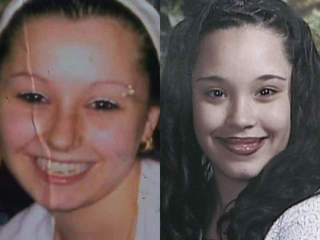
Berry_and_DeJesus_20130506191340_320_240Many people when they first heard of the unbelievable miracle that three women, Amanda Berry, Gina DeJesus and Michele Knight so far unnamed woman who all went missing in three separate incidents were found alive and well, at least physically, 10 years later, asked themselves the same questions:

1) How could this happen in the middle of a neighborhood in a big city? and;

2) Did this women, years later as adults, have chances to escape their captors and if so, why didn’t they?

From a psychological point I understood some of the  damage these women went through. Systematic abuse for long periods of times at the hands of someone who basically has your life in their hands, can create overwhelming feelings of hopelessness and worthlessness, especially when the abuse is taking place in a confined space where you are isolated or severely limited to contact with the outside world.

They most likely had no idea if they would live, die or survive the trauma they faced and struggled to make sense of it.

As human beings we always try to find meaning in things, our survival is based on placing meaning on situations and thus I am sure these women struggled with trying to find a meaning to why this was happening to them. It’s likely one of many reasons they were resilient enough to survive and to not be completely mentally broken, although I am sure their captors did their best bo break them.

Physical, sexual and psychological abuse were all most likely used repeatedly to make these young women feel devalued and worthless.

Jaycee Duggard, who was kidnapped in 1991 when she was 11 and held captive for 18 years before she was rescued, said that once she was raped, she felt defiled and as like she was worthless. As a Christian she held her virginity deeply precious and thought she was practically worthless once the sexual abuse begun.

Elizabeth Smart, who was kidnapped in 2002 when she was 14 and abused repeatedly by her abductor for 9 months before she was rescued, spoke at a human trafficking forum last week and said that her abductor broke her down to the point that she felt like:

“a chewed up piece of gum. Nobody re-chews a piece of gum, you throw it away. And that’s how easy it is to feel like you no longer have worth, you no longer have value. Why would it even be worth screaming out? … Your life still has no value.”

What Elizabeth is describing to some degree is what is called learned helplessness.

Learned helplessness is a psychological condition that happens to both people and animals when they believe that a condition they are in will never get better and that they have no control over it. They will stop trying to get out of the situation and will miss opportunities to escape it. They may not run when the door is unlocked for example.

Another possible, but less likely answer is what is sometimes called Stockholm Syndrome, where victims bond and even start defending their captors. It’s a psychological defense aimed at trying to survive by taking on the views of your captor and making yourself seem less as a threat to hurt them or escape.

It’s similar to what is called called traumatic bonding:  “strong emotional ties that develop between two persons where one person intermittently harasses, beats, threatens, abuses, or intimidates the other.” (Dutton & Painter, 1981).

In traumatic bonding, their is an imbalance of power, the abuse is sporadic, and the victim will start to deny that the abuse is existing or is as bad as it seems as a way to mentally protect themselves. They may even start to disassociate and distance themselves from the physical trauma in what is called cognitive dissonance.

I’m not saying either of these things in part or in whole is what kept these three young women alive and resilient for so long, but it is likely that mentally they had to do some cognitive dissonance in order to keep their sanity.

I was glad to hear today that all of these women had been released from the hospital, but their psychological healing has just begun. They will need time, understanding, patience, their families and privacy to heal their psychological and emotional wounds.

Hopefully they will begin to put this tragedy behind them. Their captors and torturers have stolen so much of their lives, they don’t need to allow them to still any more of their present and future. Their future is still bright and they are still people of much worth and value. They have to believe that in order to not just be survivors of this tragedy, but thrivers.

My Journey To Becoming A Therapist

couch_wide-eb7410d70ac8d556c8331f723e49c918ec26f2dd-s6-c10“What made you want to become a therapist?” That’s one of the most frequent questions I get asked by adults, many who marvel at me as if the ability to sit with, empathize, listen to and accept someone just as they are is some mystical superpower bestowed upon a select few.

Many follow that question by saying that they wouldn’t be able to deal with talking with “crazy people” or emotionally disturbed children all day without going crazy themselves, even saying that they can’t  deal with their own children, friends or family members when they are angry, sad or being irrational.

There was a time when I thought that counseling was something any and everyone could do, but now I know that not everyone can or should be a therapist. I’ve met some very bad therapists, people who may have had the education and credentials to counsel people, but definitely didn’t have the heart, patience or personality that is just as important if not more so.

Thankfully, most of these counselors learned pretty quickly that sitting down and helping someone unravel the complexities of their lives weren’t for them and ended up either getting out of the helping profession all together or moved to a part of the field that was less people oriented, such as working for insurance companies or becoming program directors.

I’ve witnessed teachers, administrators and other professional adults with good intentions do some very bad counseling. Some even made me cringe at either their bad advice, judgmental attitudes or total lack of empathy and I honestly was very thankful and relieved that these individuals weren’t officially counselors.

Being a therapist pretty much comes natural to me. Growing up I was always a very intuitive, carrying and empathetic person. I was always in touch with my feelings and would spend ours alone just trying to figure out why I felt a certain way. That curiosity soon lead to wandering why other people felt certain ways and why they did or didn’t do certain things. People watching became one of my favorite past-times.

In high school I was the person that girls would call and talk to about their problems with their parents, friends or boyfriends. I enjoyed helping them figure out and solve their problems  just as I enjoyed sitting in deep reflection about my own. I was probably one of the only boys in my high school that keep a journal and read self-help books.

Still, at that time I wasn’t even thinking about becoming a counselor. At that time I was interested in becoming a writer, an artist, a dentist or a meteorologist.

In college I decided I wanted to lean towards becoming a writer or an English teacher. I enjoyed writing just as I do today and it was writing that lead me to psychology. I was always interested in making my characters real and multi-dimensional which lead me to reading books on character development and eventually personalities and personality disorders.

There I found my love for psychology.

Soon I started taking every psychology course I could because I found it interested, but even more so because it helped with my writing. This is where I came in contact with Dr. Skinner who was not only my favorite psychology professor, but also became one of my first and most important mentor. He was always encouraging me to further my education in psychology which is one of the main reasons I decided to go on to graduate school.

In graduate school I initially was going to become a guidance counselor because I wanted to work with teenagers, but after taking all the courses required for guidance counseling, I still felt a hunger to learn more about psychology and counseling in general and so I transferred to the counseling and psychology track which was a lot of hard work when it came to reading, writing papers and giving presentations almost constantly.

It was learning the stuff I loved which is why I maintained a 4.0 throughout graduate school while working as a substitute teacher.

It was in graduate school that I started doing official counseling, and I was terrified!  To graduate from the program you had to do a 1,000 hour internship, not with friends or people I already knew, but complete strangers. To make it worst, I knew that I never wanted to be a substance abuse counselor and yet, my internship was at an inpatient substance abuse facility. I was determined to hate it.

I grew up in an inner-city neighborhood. I grew up around drug addicts. I already had my prejudices about people who used drugs and didn’t want to have to deal with them more than I already had growing up.

My dad also had struggled with substance addiction pretty much my whole life. He had been in and out of numerous treatment facilities and I had decided that substance abuse counseling just didn’t work. I tried my hardest to get my internship site changed, but couldn’t.

By the end of my 1,000 hour internship filled with individual, group and family counseling, I had a new respect for those who struggle with addictions and their families. I met people who had been trying to get sober since the 1970s! I met a popular high school football coach who gave up everything, his wife, kids and his prized job for alcohol.

I met women, mothers and daughters, so addicted to drugs and alcohol that their families had them committed to treatment and they were some of the sweetest women you could ever meet, who struggled everyday to control their cravings and stay clean.

Sure it was hard work, sometimes frustrating, disappointing and hard breaking (relapse is a b*tch), but it helped me deal with one of my own demons… it helped me understand my father and his battle with addiction so much better. It allowed me to forgive him.

After graduating I moved on from addiction counseling, perhaps it was still too close to home, and went to work in a psychiatric hospital. I always wanted to work with the severely mentally ill. dsmiv-c317a8bc457aaab1c0fb6b1a1de2b813d655dd09-s6-c10
In the Diagnostic and Statistic Manual of Mental Disorders (DSM) taught to us in school, I had learned so much about schizophrenia, bipolar disorder and other conditions that are rarely seen, yet I wanted to experience them face to face.

I spent three years working overnight in the psychiatric hospital giving psychological evaluations and crisis counseling to some of the most fascinating people ever.

I’ll never forget talking to a rather lucid schizophrenic woman who was having visual hallucinations. She gave me the best explanation of visual hallucinations ever, better than any professor or textbook I had ever read.

I remember trying to calm down a paranoid schizophrenic woman who was shaking like a leaf because she believed a killer was locked in the hospital with us and was specifically trying to kill her.

And I remember giving an evaluation to a tomato red faced woman (all the blood vessels in her face had broken) who had just been released from the hospital after trying to hang herself after finding out her husband was cheating on her.

So many experiences came from my time there, but I knew I was missing out on truly developing my counseling skills. One of my goals was to become a licensed mental health counselor, which is a whole lot of extra work after graduate school and I believed to be a great therapist, I had to know how to not only assess, diagnose and do crisis counseling, but also how to do more traditional counseling with clients who had more everyday type problem.

I still longed to work with children as well so I left the hospital and started working at an inner city high school, focusing mainly on anger management and substance abuse, but soon my job description expanded to include pretty much any and everything that stood in a child’s way of being able to concentrate and focus on their school work.

This is where I learned to work with defiant teens, broken families, damaged teens and teens who just needed someone to guide, care for and encourage them. This is where I saw our future, both promising and disheartening.

While here I also attained my goal of becoming a licensed mental health counselor and continue to learn every single day.

One of the most important things I learned is self-care and to take breaks for myself. Carrying the weight of so many other peoples problems can sneak up on you and break you down before you know it. Sometimes when people know you are a counselor, they will purposely or inadvertently dump their problems on you and that includes family and friends. It becomes important to take the counseling hat off sometimes and if that means going and sitting some place alone, then that’s what I will do.

Being a counselor/therapist is a very rewarding career, but it is probably one of the most mentally and emotionally draining careers I can think of. I enjoy the skills I have developed to analyze people, to read body languages and to be able to already have some ideal what’s going on with a person before he or she even says a word, but sometimes it’s hard to turn that off which sometimes impact my personal life.

One minute a friend will be asking me for advice or wanting to talk to me about a problem, but they don’t want me to “counsel” them. Then the next minute when I make a statement, they will stay “get out of my head” or “stop analyzing me”.

Sometimes I am more comfortable when I am in the counseling role and I will find myself retreating to that mode whenever I am uncomfortable or meeting someone new… not always a good thing. I realize it’s a defense mechanism I use where I limit the amount of information a person knows about me while I gain tons of information about them. That isn’t really fair, but I do it all the time and most people are so happy to talk about themselves that they never call me out on or even notice it.

Lastly, another thing I’ve learned is that being authentic with someone… being present with them and actively listening does miracles. There’s been times when I listened to someone and was present with them, but had no real ideal what to do or say, and after our session they were so grateful to me for listening to and helping them. It’s amazing. Sometimes I didn’t even say a word and yet they would be so grateful. That’s why I stress so much on listening, rather than talking in this blog. I believe that listening sometimes solves more problems than talking, lecturing or berating someone.