One Mother’s Experience with Bipolar Disorder and the Importance of Support Groups for Caregivers

The other day I was fortunate to have the opportunity to speak with a former client’s mother about her experiences dealing with her now 19 year old daughter, who was diagnosed with bipolar disorder at the age of 8.

This girl from what I knew of her was extremely unstable, as could be expected from a teenager suffering from bipolar disorder.

Unlike other people suffering from bipolar disorder, teenage girls tend to be even more fickle when you factor in the normal hormones of teenagers as well as social pressures that make even some non-bipolar teens act and feel erratic.

This girl was prone to bouts of depression, mania, impulsivity and explosive anger.

At home her mom had done everything she was supposed to do to support her child including psychotherapy, family therapy and medication, but her daughter was still a hand-full.

When she was in her manic states she tended to have anger directed towards her mother and would at times try to get physical with her and had to be hospitalized several times for suicidal/homicidal ideations.

Her mother tried all she could to pacify her daughter, including painting her room the pretty purple she wanted, only to come home one day and find nearlyevery inch of that wall covered in permanent marker with words directed towards her mother such as “bitch”, “whore” and “I hope you die”.

On top of that she was extremely needy, wanting to be up under her mom 24/7 to the point that she got angry whenever her mom left her and would tear up the house or refuse to go to school.

When she was depressed she would self-mutilate and attempt to kill herself. Her mother would be afraid to leave her alone.

“My biggest fear, even today, is that I will come home and find her dead”, the mother told me.

The biggest thing this mother did that made the most difference was getting educating herself on her daughter’s illness and counseling for herself and joining a support group.

Support groups are invaluable resources that often aren’t utilized enough by those living with or taking care of people with mental illnesses or substance issues.

Through counseling and the support group she learned that she was not alone, that many other parents were on the same roller coaster ride she was on.

She also learned how to change the way she had been dealing with her daughter.

If what you are doing isn’t getting you the results you desire, you have to try something different.

She started accepting that her daughter was going to have good days and bad days, and sometimes within the same day. She also had to understand her role and limitations as the mother of a child with bipolar disorder.

She had to accept that some days she might feel like giving up, or not care when her daughter threatens to hang herself, and that doesn’t make her a bad mother, but it is a sign that she needs to take a break, regroup and seek support herself.

At the end of our reunion I was happy to see that a mother, who just a couple of years ago who was so flustered, angry and exhausted, had turned into a woman not only surviving, but thriving with a daughter suffering from bipolar disorder.

Her and her daughter are doing better, but they are still taking it one day at a time.

Is Pretending to be Pregnant a Mental Illness: Part 2

In my original  post, Is Pretending to be Pregnant a Mental Illness, I discussed a high school teenager I have known for three, now going on four years, who has been “pregnant” every year and has had a “miscarriage” every year as well.

Last year was no different, but for some reason I believed she was pregnant, even when her closes friends did not. Still I remained skeptical, especially as the “pregnancy” went along and she didn’t get any bigger and refused to tell her mom about it.

Then summer came and I waited anxiously to see her when school started, knowing she should be close to her due time. Yet, when I saw her last week, she was no bigger than she was almost three months ago.

She told me that she had also “lost” that baby (big surprise), but now she is pregnant again and this time she isn’t making it up… and I believe her!

Why would I believe she is pregnant this time when she has lied about being pregnant four previous times?

Well this time she told me she told her mom, something she never did in her previous “pregnancies” even when I offered to talk to her mom with her.

Also, I know she has wanted to get pregnant for the past four years and so it was bound to eventually happen for real. I knew she was having unprotected sex with different guys.

And then today she showed me a picture of her getting a sonogram… a real picture this time and so yes, the girl who pretended to be pregnant for four years is finally pregnant.

It’s so sad because at 18 she is lost, she’s barely passing school, is extremely immature, admitted that her baby’s father is no good, that she doesn’t like him and her family doesn’t either, but yet they are bringing a child into this world.

There is no way she is ready to be a mother and yet, if everything goes right, she will be soon enough.

I’m concerned because this is a young lady with obvious mental issues and if she doesn’t get the help she needs she will raise a child who will potential have further issues because of being raised by an ill-prepared mother.

On top of everything, I really think this girl wanted to get pregnant to fulfill something missing in her life, maybe attention, unconditional love, purpose, who knows, and if having this baby doesn’t meet her conscious or unconscious expectations then where will that leave her and the child?

I see many mothers who had children for the wrong reasons (to keep a man, to fulfill a void, to prove that they can accomplish something, etc.) abandon their children physically, mentally or both when those expectations weren’t met.

Many of those parents end up abusing their kids, resenting them or being negligent in the way they raise their kids.

I’m not saying that this is definitely the case with this young lady, who knows? For a very few, having a baby serves as a catalyst to get them to step up and change their lives for the better so that they can be the best parent they can be for their child.

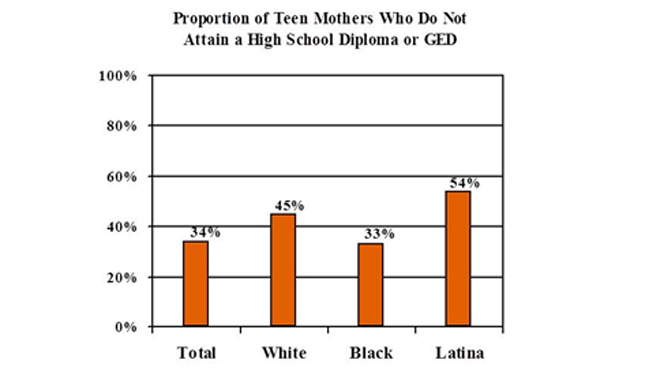
Unfortunately, that is rarely the case. Many impoverished, poorly educated, single, teenage moms end up dropping out of school and remaining in poverty.


The psychological issues that made this young girl persistently pursue to be pregnant for years will probably remain after she gives birth so I won’t be surprised if she isn’t pregnant or “pregnant” again and again even after she gives birth for real.

Parental Favoritism Creates Stress, Anxiety and Depression in Adolescents

It’s very early in the school year and one thing I’ve noticed is that more and more of the students that are getting referred to me for counseling aren’t the typical “bad apples” or “lost” kids, but kids who are good students, are never in trouble, yet are miserable.

How miserable? One cuts herself and thinks about suicide often. Another felt disappointed when she found out she wasn’t pregnant because she thought being pregnant would make her feel alive and purposeful. And one is so depressed that despite appearing to have everything a 17 year old high school girl could ask for, she mopes around campus with her head down.

What do all these students have in common besides being female? They all have a sibling that they are constantly being compared to. A seemingly perfect sibling who makes their accomplishments appear minor in comparison.

These are students, who compared to most other students on campus, are successful. They have mostly A’s and B’s and no disciplinary infractions, yet when compared to a sibling who is making straight A’s , serving as class president and maintaining a thriving social life, they feel inept, especially when their parents are the ones constantly drawing the comparisons.

These students, despite doing their best, are never recognized for it since their best pales in comparison to their sibling’s best. They are often left feeling as if they aren’t good enough and have a diminished sense of self, while the favored child can begin to feel a sense of being special and entitled, often making the less favored child feel even more diminished.

Adolescents tend to be even more sensitive to favoritism by parents than younger children, since they are trying to redefine themselves from being a child to being a young adult.

In doing this they often distance themselves from parents and even have created some tension as they struggle for independence, yet they still want the approval that came along with childhood, approval that the more favored child usually still gets and it can create resentment.

What makes parental favoritism especially harmful is when it is intentional and creates preferential treatment and superiority/inferiority between children.

The disfavored child may begin to believe that they are indeed not as deserving, as good or as smart as the favored child and that could lead to a life time of self-esteem and psychological issues as well as bitterness towards the parents and the other sibling.

So far the students I’m working with, besides complaining about the favoritism and anger towards their parents and sibling, show profound anxiety, depression, self-injurious behavior, low-self-esteem, anger, suicidal thoughts, decrease in self-efficacy and drug use.  And these are the “good” kids.

Imagine if they were kids with more disadvantaged backgrounds and more complex psychosocial issues. They could be drop outs, delinquents, heavy drug users, you name it.

There are many different ways parents can show favoritism, including showing inequitable pride, attention and approval to one child, to giving the favored child more freedom and rewards.

To the disfavored child, they often feel as if their parents care for and think less of them.  This can cause the disfavored child to dislike the favored child and that can come out in the form of resentment that can continue for life.

At times parental favoritism isn’t done on purpose. It is actually very easy to unintentionally start showing favoritism to one child over another.

Parents need to start recognizing, listening to and accepting when one child is claiming to be treated unfair so that they can analyze the situation.

While sometimes it may seem like the child claiming to be treated unfairly is just nagging, they are often trying to tell the parent that they want some attention or are feeling left out.

Parents should try avoiding comparing their children and should let each one know that they are highly valued for their own unique individuality and that they are all favorites because they are all unique.

The period of adolescence is hard enough, the last thing a child needs is to feel discriminated against within their own family unit.

One Kid at a Time

I’ve probably mentioned about a dozen times that the high school I work at is in an inner-city area. It’s not the worst area in the world or perhaps even in the city, but it is a place where poverty, drugs and violence are considered normal.

Just four days into the school year after our school became the first high school in the county to require school colored uniforms to cut down on the large amount of gang activity at school, we’ve already had our first student shot.

A young man got into a fight right across the street from the school and was shot, luckily for him it was only in the leg. According to the news he is being uncooperative with the police as far as giving details about his shooter, which leads me to believe that this is likely gang related.

This happened on the same day that Tyrone Mosby (19) was arrested for killing

Danielle Sampson (15) when a bullet from a drive by shooting found it’s way to the back of her head as she road home from church with her family.

There are a lot of good kids that grow up in that community and that go to the high school, but many of them from the time they were born were dealt a cruel hand that had them almost destined to stay in poverty, be involved in the criminal justice system or headed towards an early grave.

The culture that keeps them at a disadvantage is so intrinsic that it’s often hard for them to see a better life for themselves. Many of them can’t imagine living life any different than from what they know. They grow up in poverty, their parents grew up in poverty and their grandparents likely also grew up in poverty. Everyone around them is either involved in criminal behavior, uneducated, unemployed and or/abuses drugs. They are exposed to all these things and more at a very early age and so psychologically they start to believe that they will be no better (and often don’t want to be much different) than anyone else in their community and thus act in ways that nearly guarantee that they won’t.

Young boys join gangs, start stealing, robbing and even killing. Young girls do much of the same with the addition of getting pregnant and giving birth to more young people who may be cursed from birth to repeat the cycle.

My program focuses on reaching the kids many thought were unreachable. The angry kids, the kids who are using drugs or have given up on school and sometimes life. Often times I lose kids to dropping out or the juvenile justice system and when crimes like the ones I’ve mentioned aren’t rare or even shocking, but “normal”, it’s easy to start wondering how effective not only am I, but also the school and other services in the community are being.

Then I have to realize that I can’t save every kid I come in contact with as much as I would like to. They all have their own lives, their own minds and will ultimately do what ever it is they want to do. I only have them for a very small amount of time during the week and often that doesn’t compare to the impact their family and community, where they spent most of their time, has on them.

I have to remind myself that it’s not about saving everyone, but about trying to save one kid at a time.

Political Bullying: What Are We Modeling to Our Children?

As the political season heats up, I can’t help but to notice that the ads seem to get nastier and more personal, so much so that it takes me back to some of the countless meditations I’ve done with high school students and initially I couldn’t understand why, but then it hit me, these campaign ads are reminding me of bullying.

Just like a lot of the bullying that goes on around school campuses across the nation (and now across the internet via sites like Facebook and Twitter), these politicians are often attacking each others characters, credibility and other qualities.

Unlike the bullying I see on school campuses, this type of bullying is different, and yet similar. It’s different in that it is much more of a sophisticated type of bullying, but it’s similar in it’s purpose and even worse, it is bullying that is played out across the nation, on television screens several times a day for millions to see, often during the times our young and impressionable children are watching.

These kids may not care about either candidate, and they may not even realize what they are witnessing, yet they are being exposed, often several times a day,  to a form of bullying that they may subconsciously model, especially in situations where they want to make themselves look better than someone else, rather in their social circle, sports or even in running for high school level campaigns.

Two adults bullying each other may sound ridiculous, but that is exactly what politicians do all the time. John Mica, who won the Republican primary House District 7 acknowledged that during a brutal campaign, he was severely affected by the mean spirited ads and statements made not only about him, but his family and integrity.

Although many political analyst believe that negative campaigns are necessary as they tend to get more voters attention than positive campaigns (what does that say about our Nation), at the end of the day I am concerned about how much of that negativity and mean spirited attention truly affects us.

As the campaign season continues to play out and ads are likely to get even more cruel, don’t just turn a blind eye to your child sitting there as it interrupts their television show. You may want to change the channel, or better yet, use it as a teaching and bonding opportunity to discuss with your child anything from bullying, the state of the Nation, the economy, to your political views. After all, they are likely getting all that anyway from watching the campaign ads, just that the information they are getting is likely tainted and smeared in figure pointing and character bashing.

A Quick Glimpse at ADHD in Teenage Girls

As I wrote in a previous post, attention deficit/hyperactivity disorder is 2 to 4 times more common in boys than in girls and thus often doesn’t get discussed much when it comes to teenage and adolescent girls.

In her article Calm Down, Boys, Adolescent Girls Have ADHD Too, Mary Bates discusses how ADHD goes unrecognized in girls because they often don’t present with the stereotypical hyperactivity and attention deficit that boys usually present with and because diagnosing ADHD in itself can prove difficult because teenagers can be impulsive, inattentive and disorganized, but not noticeably hyperactive.

Kathleen Nadeau, a clinical psychologist in Silver Spring, Maryland, and coauthor of Understanding Girls with AD/HD states that girls are less likely to be hyperactive and impulsive, but instead may appear “spacey,” unfocused, inattentive, have trouble staying organized and/or remembering directives or homework.

It wasn’t too long ago that ADHD was two separate disorders, ADHD and ADD (attention deficit disorder), but now they are almost always diagnosed as ADHD with a sub-type of either predominately attention-deficit, predominately inattentive or combined.

Since girls often present with different symptoms, they are often diagnosed five years later than boys or go un-diagnosed altogether, thus missing out on proper treatment for their disorder. “A 16-year-old girl who runs stop signs and can never find her homework might not be a rebel- she could have ADHD” Bates says.

Treatment for ADHD includes stimulant medications, school and family counseling. Families can try ignoring minor annoyances while creating a point or contract system (“Wash the dishes now and I will leave you alone while you play your video games”). ADHD is not a curse, many successful and brilliant people today and in history have ADHD, just look at Michael Phelps.

The Relationship Between Anger, Control and Fear

A lot of times when I am working with people with anger problems, I realize that two of the main sources of their anger come from either the need to control other people and fear.

Anger and fear are part of our natural flight or flight responses. The problem is, we are genetically geared to survive real threats that our ancestors who had to deal with threats to their lives on a daily basis were designed for. Today we don’t have to constantly worry about getting attacked by a leopard or the tribe across the river attacking us, and so our mind often generates fear and anger even when it is unnecessary or the threat is just imagined.

Anger in it’s self is not a bad emotion and can actually motivate people to make changes for themselves and their environment. The Civil Rights leaders in our recent history were angry and so they marched, protested and boycotted to make changes. Anger can make you write a letter voicing your disappointment in a company’s costumer service department or make you search for a new job instead of taking the abuse from a harsh boss. It can make you leave a bad situation, stand up for something you believe or protest against something you don’t.

However, anger can be destructive if it’s not dealt with in a healthy way which is when people run into problems.

Most of my clients with anger problems, once they get to the point where they can verbalize and dissect where their anger is coming from, are actually afraid. They are afraid of losing control, being taken advantage of, being ignored, etc. Take a client of mine who got into a fight while standing in line at a burger joint when he felt someone had blatantly skipped him. Does it make since for a grown man to get in a fight over a $5 hamburger because he had to wait an extra two minutes? Was it worth him going to jail and having to take anger management classes? Of course not, but to him at the time it was. He was eventually able to tell me that the reason he got so angry so quickly is because when he got skipped it made him afraid that he was invisible, that he would be seen as weak, and that he wouldn’t be respected. His fear is what made him so angry and caused him to act in an irrational way. At the same time, his need to be respected caused him to want to control the situation by making the other other person respect him and beating him up until he did.

Often times clients tell me, “She ignored me so I hit her”, “He came home late so I burnt his favorite shirt”, “He didn’t say excuse me when he brushed my shoulder so I had to push him”. All of these statements show both fear and control. Fear of being ignored, fear of being cheated on or left by a spouse and fear of being disrespected. They also show the desire to control the other person, to make them pay attention, come home on time and say “excuse me.” The problem is, we can’t control other people, just ourselves. The desire to control other people will always end up stressing us out, making us angry and causing us to act in irrational ways.

Another example is the constant wars that are waged across the world. People are afraid of losing their religion or xenophobia (the fear of people different from you), and will fight and kill out of that fear and the desire to control other people by either making them convert, conform or leave a region.

Lastly, a client of mine and her teenage daughter got into a very big fight after she found her daughters diary and read it. She didn’t like what she read in her daughter’s diary and decided to confront and punish her for the contents of her diary. Now nothing in that diary was life threatening or even “bad”, they were just her daughter expressing how she really felt about her mother and some of the things her mother did. I felt it was wrong 1) for the mother to have read the diary and 2) for her to try to punish her daughter for her private thoughts. Eventually the mother expressed to me that she felt like she had little control over anything in her life except her daughter, and she was terrified of losing control over her daughter. That need for control was actually pushing her daughter further away as well as causing the mother all kinds of anxiety and anger issues.

We have to understand that the only people we can control is ourselves and that if we can’t change a situation, we have to change the way we think about it. Wasting our time trying to change other people or change a situation instead of changing the way we think about it or removing ourselves from it, will only cause us to develop angry feelings as we try to control what we cant.

What is a Co-morbid Psychiatric Disorder?

ImageA co-morbid psychiatric disorder is any disorder that co-occurs with another psychiatric disorder. Often times we see people as having one issue, when often the truth is they have more than one problem which complicates treatment and recovery.

Recently I started seeing a young man who has both attention deficit/hyperactivity disorder and oppositional defiant disorder. This complicates treatment slightly because both issues have to be taken into consideration at all times sincetotally ignoring one while focusing on the other is seldom successful.

When I worked in the adult unit of a psychiatric hospital, it wasn’t uncommon to see people with depression and alcoholism, or schizophrenia and chronic marijuana use. Often these people use drugs to try to self-medicate and lessen the symptoms of their psychiatric disorders and other times the substances help create or amplify the psychiatric disorder. As a matter of fact, substance abuse and mental health disorders often co-occur in individuals and it’s often hard to tell what came first. Did the alcoholic become depressed the more the disease took over him, or did the depression drive him to drink?People with anxiety disorders for example often turn to illegal substances or prescription pills in attempts to relieve their anxiety. One of my clients who became depressed after losing her baby quickly became addicted to the Xanax given to her by her doctor to help cope with her depression and anxiety.

Definitely some disorders are more likely to co-occur with other disorders. As an example, people with bi-polar disorder are highly susceptible to substance abuse, ADHD, obesity and anxiety disorders.

In the high school setting I generally see teenagers who have depression and an eating disorder, so I work with them to solve both, usually paying more attention to what problem seems to be the most present and severe. With the 15 year old I recently started seeing, he is already receiving medication for his ADHD and while I definitely believe that his ADHD plays a role in his oppositional defiant behavior, I’ll focus on that later since the main reason he was referred for counseling is because of his bad attitude, refusing to follow simple rules, and anger towards his parents and teachers.

Often times teachers and parents are only aware of what condition is rearing it’s ugly head the most and aren’t aware that their are other factors contributing to the behavior. Teenagers rarely drink and smoke just because. Sure there are many who do, but usually once I sit down with them there is more to their substance abuse than peer pressure, usually if it’s not problems at home or self-esteem issues there are signs of a psychiatric disorder such as depression, anxiety or bipolar disorder.

That’s what makes treating and dealing with co-morbidity so difficult. If a patient goes to his family doctor complaining of not being able to sleep at night, he may be prescribed a sleep aid. If he doesn’t tell his doctor that the reason he can’t sleep at night is because he’s worried about his job, the economy, his elderly mother, his doctor in college, etc., then his anxiety will not go away and worse yet, he may become dependent on sleep aids.

It’s isn’t to ignore co-morbidity by focusing on just the problem that we see, but it’s important that we ask, what else may be going on. This will not only help us understand the people we care about, people that we deal with on a regular basis, but also ourselves.

Do You Suffer from an iDisorder?

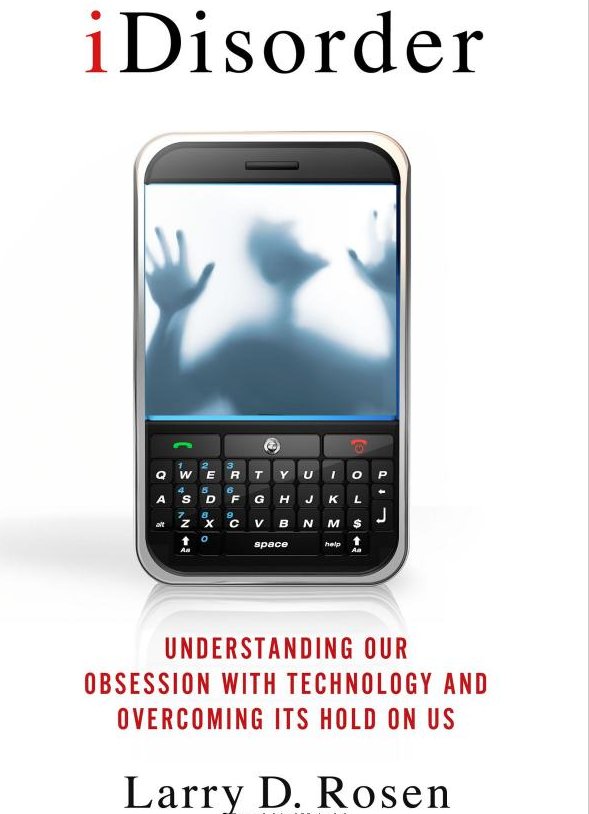
I first heard of the word iDisorder when I came across Larry D. Rosen’s book iDisorder: Understanding Our Obsession With Technology and Overcoming it’s Hold on Us.

While iDisorder is a fairly new term, the idea that our constant and immediate availability to technology causes signs and symptoms that mirror those of some psychological disorders, isn’t.

Most of us have almost immediate and continuous access to either email, our smart phones, our computers or our tablets and often at the same time, using one device to do multiple things like answering phone calls, sending emails, receiving text messages and surfing the web. The thing is, while we use these devices in attempts to control our environment by making everything in immediate access, we also began to become dependent on them.

How many of us have our smart phone with us all the time? Even while on a date or at the dinner table with family we have it next to us, often without thinking, checking text messages or emails instead of being present and engaging with the people right in front of us? Some people find it rude if you are staring at your screen and tapping away instead of making eye contact with them, but it happens so often that I dare to say it is becoming almost socially acceptable.

I remember one time at a restaurant I was people watching as I often do and I saw a couple that looked like they were out on a date, maybe a first date, but instead of sitting across from each other talking, they were both tapping away on their phones and didn’t speak to each other for at least twenty minutes as they waited for their food to be served. At that same restaurant I observed four young ladies all out to dinner together, none of them talking to each other, but all four focused in their smart phones.

There is no doubt that our devices makes it easier for us to get and stay connected with people we might only otherwise communicate with sparingly, but what about the present and those around us. Are we missing out on real life by being too focused on virtual lives?

I have friends who would rather play games on their devices than actually play games with and be around real people. Recently I was co-presenting with another counselor and when I went to turn the presentation over to her I was shocked to see she was texting on her phone. I had to stall until she came back to the here and now. I later asked her what was going on and she laughed it off, saying that it was a text message from one of her kids, nothing was wrong, but she was so used to reading and responding to their text messages that she didn’t think about it even when we were standing in front of hundreds of people.

We get so used to our phones buzzing with phone calls, text messages, emails and other notifications that even when they aren’t going off, our mind is anticipating them going off so much that it triggers our mind and body to think that we feel our phone buzzing in our pockets. These are called phantom vibrations. It’s crazy, I’ve experienced them before and I am sure most of you who are frequent cellphone users have as well.

How many of us are so dependent on our devices that we feel lost without them? Ever leave your house and accidentally left your cell phone? How did you make it through the day or did you turn back around and get it? How many accidents are caused because people are driving and texting. It’s as if that text message has to be read and answered despite the fact we are already engaged in the dangerous activity of driving. Ever watch people who’s smart phone battery is about to die and thy don’t have access to a power source? It’s like watching a drug addicted desperately searching for a fix.

I see kids all the time getting in trouble in school for having their smart phones out, even when they know they aren’t supposed to. And trying to take the phone from them? You’d think you were trying to take a kidney. They throw tantrums, even at times become hostile and risk suspension or worse over a simple device. Can we say addiction?

In his book, Larry Rosen goes on and on connecting our access to technology to things like depression, narcissism, ADHD, hypochondria, voyeurism, eating disorders, anti-social behaviors and a host of other psychological disorders.

On top of that, in teenagers I think it retards their spelling and writing abilities. I’ve seen in teenagers writing that some of them have become so used to short hand text messaging that their spelling suffers and they don’t know when they are writing papers that you can’t just put IMHO when you mean in my humble opinion or txt when you mean text. It’s crazy, but true, so many of the teenagers I work with don’t seem to know when it is and isn’t appropriate to use that type of short hand. One of my teenagers, a very intelligent junior, once wrote me a personal letter I had to decipher. If I didn’t know her I would think she couldn’t read, spell or speak proper for that matter.

The thing is, you can become addicted to anything used in excess and one of the hallmarks of addiction is denial.

As a side note, if you ever have a house party or get together, you may want to thank about banning smart phones as people tend to pull out their phones, start texting, playing games and surfing the internet instead of actually engaging in conversation and activities with people around them. 

It is a good idea for us to unplug every now and then, even if it’s just for a few hours. Put away the cell phone, the tablets, the computers and connect with real people and be present. That would be some thing great for a family to do together although your kids may throw a tantrum at the thought. I think it will help keep us grounded and appreciative of who and what we have surrounding us.

Personal Responsibility

Most of the teens I work with have a multitude of problems, but one trend I see a lot of is the lack of personal responsibility. They think of themselves as victims and take on a personality of victimhood where everything happens to them and they have no direct effect on their lives as

Most of the teens I work with have a multitude of problems, but one trend I see a lot of is the lack of personal responsibility. They think of themselves as victims and take on a personality of victimhood where everything happens to them and they have no direct effect on their lives as if they are living life passively and everything that happens is not their fault. If they fail a class it’s the teacher’s fault, other students in the class’ fault or their parents fault… anybody’s fault but their own. The same is true when they get in trouble, despite any evidence provided to them that it’s their fault, their mindset of victimhood makes it hard for them to see reality for what it is.

I spend a large amount of time teaching the teenagers I work with that they are not victims and are not passive participants in life, but that they directly effect their lives every single minute of the day. Even when things are out of their control, they are still in control of their thoughts which in turn gives them control to how they will feel and react to any situation they don’t have direct control over, but more importantly, they have much more control than they realize.

Thoughts, Feelings, Behaviors

Teenagers (and adults) love to say that someone made them mad, sad, angry or whatever feeling you want to insert here. It takes me awhile to get them to understand that they are not victims and no one can make them mad or sad, but that they do it to themselves with their thoughts. I won’t go into much detail here because it can get complicated and probably deserves it’s own post to pay it proper attention, but basically your thoughts control your feelings which in turn control your behaviors. It’s the things we tell ourselves and the thoughts we have about a situation that makes us feel a certain way and then those feelings make us act in a corresponding way… depressed, angry, nervous, etc. Teaching them to control their thoughts is the first step to getting them to take more personal responsibility.

Things I can and Things I can’t Change

One thing I have them do is make a list of things they can control and things they can’t control. This helps them to realize how much power over their lives they actually have. Many times teenagers are stressed and angry at things they can’t control such as their parents, their teachers and their friends. I let them know that everyone was giving one life and they have to learn when to let other people live their lives, despite the paths they chose, so that they can live theirs. I teach them that they can’t control the situation, but they can control the way they think and respond to the situation.Otherwise what happens is that everyone becomes the blame when something doesn’t go right in their lives instead of them taking responsibility for their own life.

Architects 

The other thing I teach them since most of them are trying to figure out what and who they are, is that they are all architects. They are, like all of us, architects, creators and designers of their own lives. They build, create and establish the life they want, no one else does. Sure many of them are born in poverty and have horrible guardians, but unless they learn that they are responsible for getting themselves into a better situation, they will just replay history and be stuck in the same situation over and over again. I tell my kids who I know are in impoverished situations and yet don’t take school or life seriously to look around. I tell them that if they like where they live and how they are living then to keep doing what they are doing, but if they want something better they have to do something different… different for them and definitely different from what others around them have done even if it means they will be doing something no one they know has done such as going to college, the military, trade school or whatever. They design their own lives and as long as they are allowed to believe they are victims then they will never reach for the stars and will blame everyone else for their failures.

CEOs, CFOs and Mission Statements

I also let them know that besides architects they are also already chief executive officers of their lives. They are in charge of the business of them. They are the sole person responsible for them becoming who they want to be. And I also let them know that they will soon be chief financial officers, in charge of their own money and prosperity. I get them to write mission statements because every company has a mission statement and I think ever person should have a mission statement. A mission statement states who you are, what you believe in, what you value and what’s your purpose. Many of them have no clue about these things and further more, never took the time to sit down and think about it so this is the prime time to have them do this.

All of these things combined together add to a greater sense of personal responsibility and loosens the shackles of victimhood. My question to you is, what is your mission statement? Share it with me if you would like and even if you don’t share it, please think about it and make a mission statement even if it’s just for your eyes. I know it will change the way you interact with life for the bette

if they are living life passively and everything that happens is not their fault. If they fail a class it’s the teacher’s fault, other students in the class’ fault or their parents fault… anybody’s fault but their own. The same is true when they get in trouble, despite any evidence provided to them that it’s their fault, their mindset of victimhood makes it hard for them to see reality for what it is.

I spend a large amount of time teaching the teenagers I work with that they are not victims and are not passive participants in life, but that they directly effect their lives every single minute of the day. Even when things are out of their control, they are still in control of their thoughts which in turn gives them control to how they will feel and react to any situation they don’t have direct control over, but more importantly, they have much more control than they realize.

Thoughts, Feelings, Behaviors

Teenagers (and adults) love to say that someone made them mad, sad, angry or whatever feeling you want to insert here. It takes me awhile to get them to understand that they are not victims and no one can make them mad or sad, but that they do it to themselves with their thoughts. I won’t go into much detail here because it can get complicated and probably deserves it’s own post to pay it proper attention, but basically your thoughts control your feelings which in turn control your behaviors. It’s the things we tell ourselves and the thoughts we have about a situation that makes us feel a certain way and then those feelings make us act in a corresponding way… depressed, angry, nervous, etc. Teaching them to control their thoughts is the first step to getting them to take more personal responsibility.

Things I can and Things I can’t Change

One thing I have them do is make a list of things they can control and things they can’t control. This helps them to realize how much power over their lives they actually have. Many times teenagers are stressed and angry at things they can’t control such as their parents, their teachers and their friends. I let them know that everyone was giving one life and they have to learn when to let other people live their lives, despite the paths they chose, so that they can live theirs. I teach them that they can’t control the situation, but they can control the way they think and respond to the situation.Otherwise what happens is that everyone becomes the blame when something doesn’t go right in their lives instead of them taking responsibility for their own life.

Architects 

The other thing I teach them since most of them are trying to figure out what and who they are, is that they are all architects. They are, like all of us, architects, creators and designers of their own lives. They build, create and establish the life they want, no one else does. Sure many of them are born in poverty and have horrible guardians, but unless they learn that they are responsible for getting themselves into a better situation, they will just replay history and be stuck in the same situation over and over again. I tell my kids who I know are in impoverished situations and yet don’t take school or life seriously to look around. I tell them that if they like where they live and how they are living then to keep doing what they are doing, but if they want something better they have to do something different… different for them and definitely different from what others around them have done even if it means they will be doing something no one they know has done such as going to college, the military, trade school or whatever. They design their own lives and as long as they are allowed to believe they are victims then they will never reach for the stars and will blame everyone else for their failures.

CEOs, CFOs and Mission Statements

I also let them know that besides architects they are also already chief executive officers of their lives. They are in charge of the business of them. They are the sole person responsible for them becoming who they want to be. And I also let them know that they will soon be chief financial officers, in charge of their own money and prosperity. I get them to write mission statements because every company has a mission statement and I think ever person should have a mission statement. A mission statement states who you are, what you believe in, what you value and what’s your purpose. Many of them have no clue about these things and further more, never took the time to sit down and think about it so this is the prime time to have them do this.

All of these things combined together add to a greater sense of personal responsibility and loosens the shackles of victimhood. My question to you is, what is your mission statement? Share it with me if you would like and even if you don’t share it, please think about it and make a mission statement even if it’s just for your eyes. I know it will change the way you interact with life for the bette