
Why Kids Fall Apart After School

Why Kids Fall Apart After School

As the father of an eighth grader and a third grader, I’ve experienced this phenomena firsthand. I’ve often been perplexed when I pick up my child and their teacher tells me they had a great day. They followed directions, completed their work, and got along well with the other children.

But shortly after we arrive home, they become irritable, argue about everything, or refuse simple requests. Sometimes my third grader ends up crying over something that seems incredibly small.

As a parent, naturally, I wondered: If they can control themselves at school, why can’t they control themselves at home?

It’s easy to interpret this behavior as disrespect, manipulation, or a lack of discipline. Sometimes children do need correction and consequences. But the child who falls apart after school may not be deliberately giving you a hard time.

They may have simply run out of the energy required to hold themselves together.

Keeping It Together Takes Work

A school day asks a lot from a child.

They must wake up on time, get dressed, leave the comfort of home, transition between activities, follow instructions, sit when they would rather move, manage distractions, complete difficult work, and navigate relationships with teachers and other children.

They may have to tolerate a noisy cafeteria, crowded hallways, uncomfortable clothing, unexpected schedule changes, teasing, disappointment, boredom, or the anxiety of being called on when they don’t know the answer.

Throughout the day, they are constantly adjusting their behavior.

Wait your turn.

Raise your hand.

Keep your hands to yourself.

Pay attention.

Walk in a straight line.

Use an inside voice.

Finish your work.

For many children, especially those with anxiety, ADHD, autism, learning difficulties, or sensory sensitivities, meeting all these expectations requires tremendous effort. Some children work so hard to manage their emotions and behavior at school that they have very little emotional energy left by the time they get home.

The pattern is sometimes called after-school restraint collapse. It isn’t a formal diagnosis. It is simply a way of describing what can happen when a child spends the day containing their feelings and then releases them in a place that feels safe.

Why Does It Happen at Home?

Parents sometimes feel insulted when their child behaves better for teachers, coaches, relatives, or other adults.

“I’m the one doing everything for this child, and I get the worst behavior.”

That frustration is understandable. You’ve worked all day too. You may be tired, hungry, overstimulated, and trying to manage dinner, homework, household responsibilities, and several competing demands.

But your child may fall apart around you precisely because home feels safer.

At school, there are social consequences for losing control. At home, your child knows consciously or not, that your relationship can survive their difficult feelings. They may trust that you will still love them when they are loud, tearful, unreasonable, or overwhelmed.

That doesn’t make hurtful or destructive behavior acceptable. Feeling safe is not permission to mistreat the family.

It does, however, give us a different way to understand what is happening.

Instead of immediately asking, “How do I stop this behavior?” we can also ask, “What is this behavior communicating?”

Sometimes the Problem Is Surprisingly Ordinary

Before assuming your child is being defiant, consider what condition they are in when they walk through the door.

They may be hungry.

They may be dehydrated.

They may be tired from sitting, concentrating, socializing, and following directions all day.

They may need movement after being physically restricted.

They may need quiet after several hours of noise.

They may be disappointed about something that happened with a friend but unable to explain it yet.

They may simply need a few minutes in which nobody asks them to do anything.

Adults often need a transition period after work. We may sit in the car for a few extra minutes, change clothes, scroll through our phones, take a shower, exercise, or watch television before we are ready to engage with the next part of the day.

Children need transitions too. They just don’t always know how to create them for themselves.

Connection Before Questions

One of the first things many parents ask at pickup is, “How was school?”

Usually, the response is “Fine,” “Good,” or “I don’t know.”

Then we start asking more questions.

“What did you learn?”

“Do you have homework?”

“What happened with your friend?”

“Why didn’t you eat your lunch?”

“Did you remember to turn in that paper?”

Our intentions are good. We are trying to stay involved. But to an exhausted child, those questions can feel like one more set of demands.

Try beginning with connection instead.

“I’m glad to see you.”

“You look tired. Let’s get you something to eat.”

“You don’t have to tell me about your day right now.”

Some children talk best during the car ride. Others open up while eating, drawing, playing, walking, or getting ready for bed. An invitation to talk is often more effective than an interrogation.

The Centers for Disease Control and Prevention encourages parents to maintain open communication and positive connections with their children. Connection gives children a place to bring their experiences when they are ready, not necessarily the moment they enter the car. (CDC).

Create an After-School Landing Routine

A consistent decompression period may reduce some of the conflict that occurs after school. It doesn’t need to be elaborate.

Your child’s landing routine might include:

  • A snack and water
  • Fifteen to thirty minutes without questions
  • Changing into comfortable clothes
  • Quiet time in their room
  • Music, drawing, or reading
  • Outdoor play or physical movement
  • Sitting with a parent without having to talk
  • A predictable time when homework will begin

Different children need different things. One child may need to run outside. Another may need silence. A teenager may want privacy before joining the family.

The goal isn’t to eliminate expectations. Homework still needs to be completed. Chores may still need to be done. Disrespectful behavior still needs to be addressed.

The goal is to stop demanding immediate performance from a child whose emotional resources may already be depleted.

Predictable routines can help children feel more secure, particularly during transitions and stressful periods. (CDC)

Regulate First, Correct Later

When a child is in the middle of a meltdown, that usually isn’t the best time for a lecture.

You can maintain the boundary without trying to teach the entire lesson at that moment.

“I can see that you’re upset. You still cannot hit your brother.”

“You don’t have to talk right now, but you cannot speak to me that way.”

“We’ll discuss what happened when you’re calmer.”

Keep your voice steady and use fewer words. If possible, reduce stimulation and give the child space to settle. The American Academy of Pediatrics similarly advises parents to remain calm and avoid lengthy lectures while a child is overwhelmed. (HealthyChildren.org).

Later, when everyone is calmer, return to the behavior.

Ask what happened. Name the feeling. Restate the limit. Help the child identify what they can do differently next time.

Understanding a behavior is not the same as excusing it. We can be compassionate about the reason and still hold children responsible for how they treat other people.

Look for Patterns

An occasional difficult afternoon is part of family life. Not every meltdown is evidence of a deeper problem.

But pay attention when the pattern becomes frequent, intense, or disruptive.

Ask yourself:

  • Does this happen every school day or only on certain days?
  • Is it worse when my child hasn’t eaten or slept well?
  • Does it happen after a particular class or activity?
  • Is my child struggling academically?
  • Has something changed in their friendships?
  • Are they being bullied, excluded, or embarrassed?
  • Are they working unusually hard to hide anxiety or attention difficulties at school?
  • Does the behavior also occur on weekends and during school breaks?

Talk with the teacher and compare what each of you is seeing. A child may appear fine at school while using enormous effort to maintain that appearance. In other situations, the teacher may have noticed signs of frustration, withdrawal, distraction, or social difficulty that haven’t yet been communicated.

If the behavior is severe, persistent, getting worse, or interfering with your child’s functioning, consider speaking with their pediatrician, school counselor, or a licensed mental-health professional. Early help can make problems easier to understand and address. (CDC)

Parents Need a Landing Routine Too

There is another person in this situation whose nervous system matters: yours.

If you arrive at pickup already stressed, every complaint may sound like ingratitude. Every delay may feel like defiance. Your child’s dysregulation can quickly activate your own.

Then two exhausted people begin demanding that the other one calm down.

Before responding, take a breath. Lower your voice. Remind yourself that you don’t have to solve the entire problem in the first five minutes.

You can be firm without becoming harsh. You can offer comfort without surrendering the boundary. You can take your child’s feelings seriously without treating every feeling as an emergency.

None of this means parents must remain perfectly calm. We are human. Sometimes we will react badly, raise our voices, or realize that we misunderstood what our child needed.

When that happens, we can repair it.

“I was frustrated, but I shouldn’t have yelled.”

“Let’s try that conversation again.”

That teaches children something important too.

Home Can Be Both Safe and Respectful

The child who falls apart after school may not need a harsher punishment. They may need food, movement, quiet, connection, clearer routines, or help making sense of what they have been carrying all day.

They may also need boundaries.

Those things are not opposites.

A healthy home can be a place where children are allowed to have difficult feelings without being allowed to hurt other people. It can be a place where parents look beneath behavior while still expecting accountability.

So, the next time the teacher describes your child as delightful and that delightful child melts down in your kitchen twenty minutes later, pause before concluding that they saved their worst behavior for you.

Maybe they saved their most exhausted, unguarded self for the place where they feel safest.

That doesn’t make the afternoon easy.

But understanding what is happening may help you respond to the child in front of you and not simply react to the behavior coming from them.
Don’t Half-Ass Your Pain: Lessons From Matthew McConaughey

Recently I’ve noticed I’ve been in this sort of uncomfortable space lately and talking to some friends, I’ve noticed a lot of them have been as well. You know the quiet that settles after you’ve absorbed someone else’s storm again. The partner who unloads every day but rarely asks how you’re doing. The child whose mood shifts feel bigger than typical teenage growing pains, yet you hesitate to name it because what if naming it makes it real? You tell yourself it’s temporary, that pushing now would only make things worse. So you stay halfway in. Listening enough, caring enough, but never fully committing to the discomfort of change. It’s a familiar limbo. Not quite miserable enough to leave, not quite fulfilling enough to feel alive in.

This morning, on my drive to work, I came across a YouTube video featuring Matthew McConaughey: “The Most Valuable 20 Minutes of Your Life.” It’s clips pulled from his podcasts and talks raw, not polished, and the theme that kept repeating was this insistence on full commitment. No half-assing. No partial effort. He circles back again and again to a phone call with his father years ago. Fresh out of college, McConaughey had been on track for law school, the safe, structured path his family expected. But something pulled him toward film instead. No backup plan. No safety net. He called his dad late one night, braced for disappointment or anger. After a long pause, his father asked, “Are you sure that’s what you want to do?” McConaughey said yes. And his dad replied, simply: “Well, don’t half-ass it.”

Those three words weren’t soft approval. They were a challenge, a handoff of responsibility. If you’re going to choose this path, no matter how risky and uncertain, then go all in. Finish what you start. Find out what happens when you don’t leave one foot in comfort. McConaughey says that advice became a lifelong code: commit fully, own the outcome, look in the mirror afterward and know you didn’t half-ass it. Because when you do half-ass something, whether a dream, a relationship or a hard conversation, you stay suspended in uncertainty. You never truly know if it could have worked, or if failure was inevitable. That limbo, he points out, keeps more people awake at night than clear success or clear defeat ever does. He says for example, it’s better to shoot for an “A” and get a “C” then to shoot for a “C” and get a “F”.

In the years I’ve spent listening to people unpack their struggles, I’ve seen how often we live in exactly that limbo. We half-ass our own needs to keep the peace. We half-ass boundaries because confrontation feels too exposing. We half-ass love, showing up enough to stay connected on the surface, but pulling back when it requires vulnerability or accountability. In relationships, it looks like being the perpetual emotional tampon: absorbing, steadying, never asking for reciprocity because “it’s not that bad” or “they’re going through something.” Over time, that partial presence breeds resentment, not loud and explosive, but a slow, grinding erosion of trust in yourself and the other person. It sucks.

The same pattern shows up in parenting. You sense the intensity in your child, the withdrawal, the anger that flares too quickly, the signs that echo the worries in posts like “Is Your Child a Psychopath?” or the preteen/teen concerns that draw so many readers. But naming it fully means risking the unknown: a bigger fight, professional help, the possibility that your intuition was right and things need to shift. So we pause, observe from a distance, offer vague support, avoid the direct question that might crack things open. It’s protective in the moment, but it leaves both parent and child in uncertainty: Am I overreacting? Are they okay? What if I don’t step in fully and something worse happens?

Philosophically, this isn’t about perfection or heroic effort as McConaughey points out. It’s about integrity with our own experience. Life rarely lets us coast on partial commitment without exacting a cost, usually in the form of that nagging inner question: What if I’d gone all the way? McConaughey’s point isn’t motivational fluff; it’s a reminder that clarity often comes only after we’ve risked the discomfort of full presence. Half-measures preserve the illusion of control, but they rob us of real knowing about ourselves, our relationships, our capacity to meet what’s hard.

So how do we move toward fuller commitment without it feeling like another impossible demand?

Start by noticing where the half-assing lives right now. Pick one small, specific place, no need to overhaul everything at once. Maybe it’s that pattern in your partnership where you listen but never share your own limits. Sit with it for a day: What would full commitment look like here? Not a dramatic confrontation, but honest words delivered calmly: “I’ve been carrying this emotional load alone, and it’s wearing me down. I need us to find a way to share it more evenly.” Say it, stay in the room, let the silence do its work if it needs to.

In parenting, if you’ve been circling a worry about your child’s mental health or behavior, commit to one un-rushed, direct check-in this week. Keep it simple and presence-focused: “I’ve noticed things seem heavier for you lately, the way you pull away, or the frustration that comes up fast. I’m here if you want to talk about what’s behind it. No pressure to have answers right now.” The goal isn’t to fix it in one conversation; it’s to show up fully, without half-assing or rushing away from discomfort. Listen as long as they let you. If silence follows, that’s information too.

At the end of each day, take two minutes alone, no phone, no distractions, and ask quietly: Where did I half-ass today? Not to shame yourself, but to build awareness. Over time, that gentle noticing strengthens the inner muscle for showing up more completely. It might lead to bigger steps: setting a boundary that feels scary, seeking couples therapy when obligation has replaced partnership, or pursuing an evaluation for your child when intuition won’t quiet down.

McConaughey’s stories aren’t about never failing, they’re about refusing the half-life that comes from never fully trying. The valuable minutes, he suggests, are the ones spent in the room with our own discomfort long enough to see what emerges on the other side. Less resentment masked as “fine.” More honesty that allows real connection. A clearer sense of who we are when we stop half-assing.

It’s not easy. It often hurts more before it eases. But in that fuller presence, something usually shifts: the limbo lifts, even if the outcome isn’t what we hoped. And in its place comes a quieter self-trust, the kind that lets you look in the mirror and know you went all the way.

That’s my goal for the rest of the new year. To challenge myself to recognize when I am half-assing anything and to find a way to put an end to it.

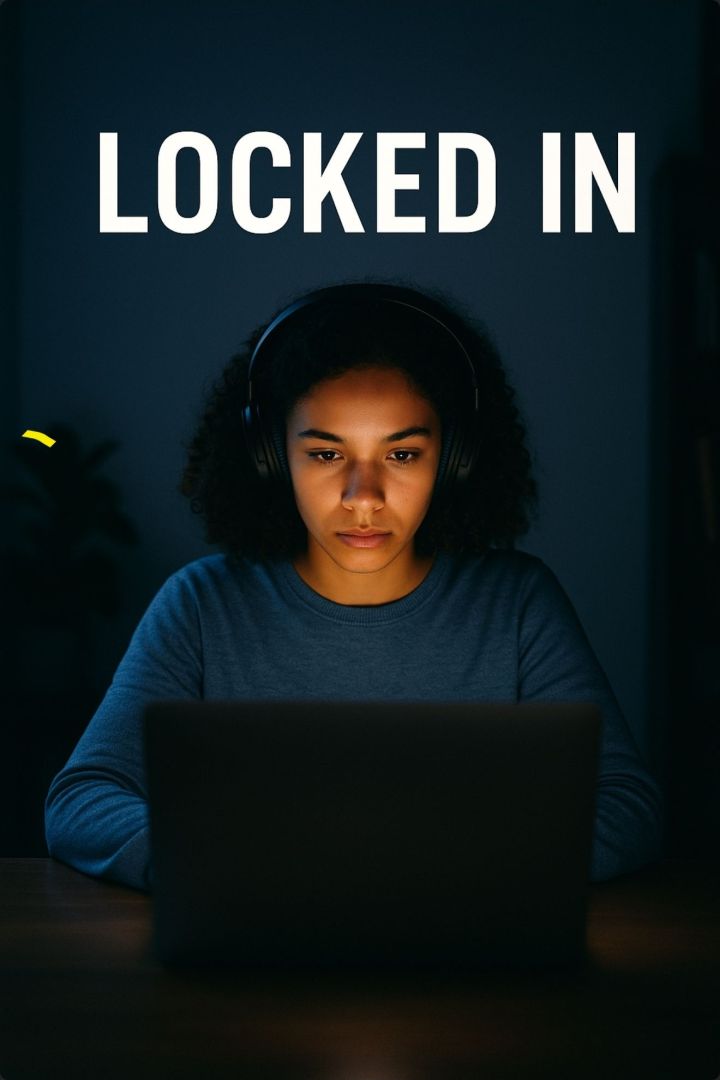
Locked In: Why More Young People Are Choosing Hyper-Focus + How to Do It in a Healthy Way

Locked In: Why More Young People Are Choosing Hyper-Focus + How to Do It in a Healthy Way

“Locking in” (or being “locked in”) has become one of the buzziest phrases among Gen Z and younger Millennials. It’s about more than just staying busy—it means dedicating yourself to a goal with near-military focus, cutting out distractions, and aligning your habits with what you want to build or become. Newsweek+4Refinery29+4The Guardian+4

If you’ve seen motivational TikToks, to-do list montages, or people deleting apps, resisting social plans, or meal prepping like their future depends on it—it’s probably because they’re trying to lock in. Let’s dig into what’s behind the trend, why it’s appealing, some of its darker sides, and how you can try it out without burning out.

What Is “Locking In”?

  • Origins & evolution: The phrase appeared in gaming and sports circles first. As an athlete and sports fan I have been familiar with the phrase for a very long time. “Locked in” meant being super focused during a match, practice, or competition. Reddit+2The Guardian+2 Over time, it has shifted to broader usage. Goals related to work, fitness, finances, academics. The Times+3Refinery29+3The Guardian+3
  • What people are doing: Routines with structure, early alarms, limiting time on phone or social media, meal preps, working on side hustles, studying harder, investing, saving money, etc. Refinery29+2The Washington Post+2
  • Why now: Part of a shift away from “soft life” aesthetics (rest, comfort, peace) toward “hustle with purpose.” Economic stress, uncertainty, comparisons on social media, and a sense that waiting isn’t enough all feed into it. Refinery29+2The Guardian+2

Why It’s Attractive

Locking in holds appeal because it promises:

  • Agency: When things feel chaotic or out of control, it feels good to take back control, structure, and direction.
  • Motivation & momentum: Having a declared goal, public accountability, and a routine helps build momentum and can make progress visible.
  • Purpose & clarity: It pushes you to clarify priorities, what’s important, what to cut out, what to protect.
  • Feeling ahead: There’s this sense of “if I lock in now, I’ll be better prepared later” which feels satisfying psychologically. Yahoo+1

Risks & Pitfalls

But as with many intense trends or lifestyle shifts, there are trade-offs. Some things to watch out for:

  • Burnout: All discipline and no rest often leads to exhaustion. People may push too hard for too long. Refinery29+2The Guardian+2
  • Rigidity & guilt: When you miss a goal, skip a workout, or need rest, guilt kicks in. The trend can cultivate shame around rest or “off days.”
  • Comparisons & performance pressure: Social media amplifies curated lives; seeing someone else “lock in” all out can make people feel they aren’t doing enough.
  • Loss of balance: Sacrificing relationships, spontaneous joy, relaxation for the sake of productivity can degrade wellbeing in other areas.

How to Use “Locking In” Mindfully

If you want to try this trend without letting it dominate or harm your mental health, here are some suggestions:

  1. Set realistic goals
    Start with smaller, achievable targets. Break big goals into parts. Don’t try to overhaul everything overnight.
  2. Include rest & joy
    Block in time for fun, connection, and rest. Rest isn’t optional; it’s part of sustainable performance.
  3. Make accountability work for you, not against you
    Share goals with someone you trust. But don’t let external judgment become your main driver.
  4. Check in with your why
    Ask: “Why is this goal important to me?” If the answer starts to feel like “because everyone else is doing it” rather than something meaningful, you might need to adjust.
  5. Adapt & adjust
    If something feels toxic, unsustainable, or harming other areas of your life (relationships, health, mental clarity), pivot. Flexibility builds resilience, too.
  6. Celebrate progress
    Mark wins, big or small. The process matters, not just the outcome.

Final Thoughts

“Locking in” can be powerful. It’s a collective reawakening of discipline, purpose, and intentional living, especially in times when distraction is easy, and external pressures are high. But strength doesn’t come from endless structure alone. True resilience comes when we combine focus with meaning, rest, connection, and kindness—for ourselves.

So if you’re thinking about locking in: Go ahead. Just make sure you’re doing so in a way that builds you up, rather than wearing you down. Because locking into life should add life, not subtract from it.

Reasons You Should Keep An Online Journal

Young Woman Typing on a Laptop at HomeI’ve wrote before about the importance of  journaling and keeping a diary in my post setting up a coping toolbox. Many famous people throughout history have kept journals such as Anne Frank, Kurt Cobain and poet Sylvia Plath.  I’ve kept journals off and on since high school and it’s great to go back and look through some of the old ones to see how things have changed.

The other day I went back through an old journal and realized that in some situations where at the time I thought I was right, I was actually wrong, selfish and insensitive. That doesn’t mean I went and beat myself up over the past, it just gave me a better understanding of the situation and the person I was then compared to the person I am now and the person I want to become.

Journaling is a great way to express yourself, to relieve stress, to work out emotional and relationship problems from the past and present, to better understand yourself, capture life events and become more mentally and emotionally healthy. Check out 100 Benefits of Journaling.

One of main problems of keeping a traditional journal or diary is privacy. I know I’ve been reluctant to truly express myself in paper-bond journals out of fear of someone else reading it. I’ve also had the misfortune of  breaking the trust and privacy of someone I love by reading their personal journal, so I understand the fear of invasion of privacy that keeps many people from journaling altogether.

Thankful there are now many different ways to keep a journal and I encourage everyone to at least try an online journal. Sure you can keep a journal as an encrypted text file on your computer, but it is not as easily available as an online journal that is available from any computer that has internet access.

Many people try to keep journals using Google Docs or similar programs, but most good online journals have close to military grade encryption where no one, including the site owners can/will read your private thoughts. They also have easy ways you can add pictures, print your pages if you so choose to, email them to yourself, even email a page to someone else, annonymously if you want.

When it comes to online journals, there are many to choose from and feel free to do your own research, but here I’ve put my top three recommendations:

  1. Penzu– it’s what I am currently using. They offer a free and easy way to keep an online journal and promise military-grade encryption and 256-bit SSL encryption. You can upgrade to the Pro version of Penzu for $20 a year which for the most part just allows more customization, but it’s not necessary to upgrade or pay. The free version still offers many features and gives you a great place to record your private thoughts. Penzu is one of if not the most popular online journal and I highly recommend it.
  2. 750 Words– encourages you to write 750 words a day, which is about 3 pages. It is private and a simple way to just get your thoughts out. Their tag line is “Private, unfiltered, spontaneous, daily”. I like 750 words a lot and they send you simple emails everyday to remind you to write, I just couldn’t get into the habit of using it as much as I use Penzu.
  3. My Therapy Journal– this online journal is unique in the fact that it is therapy oriented and can be used by those with and without issues they may be in therapy for. For those who are actively in therapy, this is an absolutely great tool and one I actually encourage over Penzu. The one thing I do not like about My Therapy Journal is that you have to pay for a one month ($5.99 per month renewed and billed monthy), three month ($4.99 per month renewed and billed every 3 months) or annual ($2.99 per month renewed and billed annually) membership. I’m not too keen on an online journal that forces you to pay, but like I said, if you are actively in therapy then this is definitely worth it and you get 14 days to try it for free.

There are many different options out there, but these are my top three. If you have any others you would like to add please post them in the comments section.

Regular writing has many, many benefits from improved mental health to creativity. Finding a place you can trust with your thoughts is important and I hope this helps with that discovery.

November Is National Novel Writing Month!

November is National Novel Writing Month, or as many of us writers affectionately like to say, nanowrimo.

The goal of National Novel Writing month is to write a 50,000 word novel (more like a novella) between November 1st and November 30th.

That equals 1,667 words a day. Doesn’t sound like much, but trust me, it is a tough challenge, especially when coupled with trying to fit writing into your everyday life, but that is part of the fun.

I enjoy challenging myself and I think it’s good for all of us to challenge ourselves in some way shape or form from time to time.

If I get to 50,000 words by midnight November 30th I will ecstatic, if I don’t, I’ll be okay. This is my 8th year and I’ve only gotten to 50,000 words 3 out of those 8 years, but the fun is in trying.

Get out and challenge yourself to something.

Maybe you don’t like to write, but challenge yourself to taking a picture a day for 30 days, fasting from something for 30 days or keeping a gratitude journal for 30 days. Whatever it is, give it a try.

So, for the month of November, instead of taking a break from my blog as I was originally thinking of doing, I will continue to post, but my posts in November may be shorter and may be more from experience and opinion than from facts and research, as often even when I am writing from my experiences and opinion, I take the time to look up the facts to keep my posts as authentic and truthful as possible.

I definitely look forward to both the challenge of writing 50,000 words in 30 days while working full time and trying to maintain this blog, but this will be fun and I have at least 300,000 other nanowrimo writers around the world attempting this with me.

I already hit my goal of 2,000 words today, which is good because I have to do a lecture at a local college at 6:30pm and was really concerned that would put me off schedule, but as of now, I am ahead of schedule and who knows, maybe I’ll write more tonight.

Find something to challenge yourself with, it helps with goal setting, something I’ll be talking about in my next post.