It’s Not All Your Fault

1132x1600_12879_Bat_your_eyes_girl_2d_illustration_girl_sad_woman_portrait_picture_image_digital_artRecently I was talking to a 27-year-old female who had been arrested for the first time on various drug charges. Emotionally she was a wreck. I could tell she was really a good person on the inside, but emotionally she obviously wasn’t as stable as she could be and I immediately sensed that her childhood was filled with some type of neglect or abuse.

Why was I able to sense that? Because from my years of working with people, especially teenagers and women who have been abused and/or neglected as children, I’ve noticed that a large majority of them present very similar including being angry, shy, depressed, manic or lacking boundaries coupled with other cues such as body language.

This young lady was at some points crying, then angry, then laughing, and then crying again. Her life was “a mess” as she put it. She had two children, was in an unstable relationship (like all the other relationships she had been in), couldn’t seem to get her life together or in her words, “do anything right” and she had started smoking crack cocaine, a secret she kept from her family until she got arrested.

She couldn’t understand why she couldn’t get her life together. Why every time things would be going good, she would do something to mess it up. She was living almost in constant chaos and was using drugs to escape it. She had never been diagnosed with anything before and blamed herself for not being able to stop herself from making bad choices over and over again.

And then I asked her if she was ever abused before. I already knew the answer, I would have been shocked if I was wrong, I was hoping I was wrong, but I was right. She started crying and told me she had been molested repeatedly from the age of 8. Her childhood from that point on was filled with abuse, neglect and abandonment. No wonder now as an adult her life was “a mess”.

One of the things that happens to children and even adults when we experience abuse, neglect, trauma, abandonment or anything that is so mentally and emotionally painful that we can’t make sense of it, is that it doesn’t get fully processed and it becomes clutter in our minds, thoughts and emotions.

Our emotions and thoughts become fragmented with a lot of unprocessed feelings and those unprocessed feelings are what eventually will cause us to express ourselves in unhealthy ways, especially if we aren’t naturally resilient or have great social-emotional supports. However, even if we are naturally resilient and have great supports, chances are that fragmentation will still affect the way we think, feel and interact with other people.

That is what was going on with this young lady and until I explained to her how the trauma and pain from her past was affecting her future, she had no idea that at least some of what she was going through wasn’t totally her fault. Deep inside she is holding on to feelings of rage, insecurity and hurt from all the abuse, trauma and abandonment. All that unprocessed, raw emotion has to come out somewhere consciously or unconsciously. In a lot of people it comes out  in the form of rage towards themselves or others.

They may cut themselves, or do other things that demonstrate a lack of love for themselves such as being promiscuous, abusing drugs or alcohol and getting into abusive or neglectful relationships over and over again just to name a few. Some may even attempt suicide. Drugs, sex, self-mutilation and even suicide may be used as ways to try to control the rage they have inside.

They may turn their rage outwards and inflict hurt on others by being abusive, bitter, and pushing people away sometimes to the point where they wake up one day and realize they are totally alone and will blame other people for abandoning them even when they were the one pushing them away.

On top of that, they become so used to hiding their real feelings and emotions that they have difficulty communicating and expressing themselves in a healthy way. In return, they often end up feeling misunderstood and often blaming others for everything that doesn’t go right. Their psychological defenses will leave them blind to their own role in their interpersonal difficulties.

When someone has all this stuff going on in their conscious and subconscious mind, there’s no wonder their lives are continuously in chaos. Almost nothing they do will fix it if they remain unaware and blind to how their past is influencing their present. If they aren’t willing to try to change and get help, then it’s very unlikely that their lives will ever be all that it could have been.

Change Starts With Insight

Sometimes the toughest part of therapy is insight building, which means getting the person to see things as they really are and how they are truly affecting their lives. Many people like to place blame on others and take absolutely no responsibility for their circumstances. Even this young lady at one point was trying to blame her boyfriend for calling the police when he couldn’t find her. When the police found her and search her, they discovered the drugs so this was all the boyfriends fault according to her.

Once I got this young lady to see that she had to take responsibility for her current incarceration, I pointed out to her that it wasn’t all her fault.  Much of her current issues, the relationship instability, the drug use, the emotional instability, all had roots in her past. Once she got this she had an “aha” moment. She had never even put the two together. Even in that moment I could see the light bulb go off as some insight started pouring in.

That was amazing, but now it was time for the real hard work to begin. Now that she had insight, she had even more responsibility to start taking charge of her life and to stop letting the garbage from the past stink up her present and future.

Where To Start Healing

Immediately she said she wasn’t strong enough to do that, that she was too weak and that might be true which is why I told her the first thing she needs to do is to get into rehab. She needs to get clean and then to also find a good psychotherapist. She is going to have to be determined, patient and emotionally open because she will have to face a lot of emotional pain she’s been avoiding and she’ll have to resist the urge and the fear to do what she’s always done which is to get angry,  runaway from getting help or to sabotage herself again.

This is not something that is going to be resolved in one session, one month or even one year. This will likely be a life long battle for her, but one that is worth fighting.

She has a long road ahead of her, but if she is willing to do the work, she will have a much better life. Until she does the work and gets the help she needs, nothing in her life will make sense the way it should and she will always be left feeling like a victim. It’s not all her fault, but she now has the responsibility to take control of her life and to at least minimize the hurt from the past.

This one young lady’s experience echos that of hundred of young women I have dealt with over the last several years. Many of them due to their experiences, stressors, and predispositions to certain illness will go on to become drug addicts, alcoholics, diagnosed with bipolar disorder, borderline personality disorder, depression, anxiety, etc. Some of them will be resilient and despite their past live incredible lives as relatively emotionally healthy people.

It may not be all your fault, but it is your job to take responsibility and control over your life.

Charity Johnson/Stevens: Why It’s So Hard For Us To Detect Con Artists

Charity dressed like a 15-year-old

All morning I have been reading about this 34-year-old woman named Charity Johnson, who has been pretending to be a 15-year-old teenager by the name of Charity Stevens. This woman, not only convinced someone who eventually became her guardian, that she was an orphan, homeless and had been abused by her recently deceased father, but she also enrolled in school as a 10th grader.Charity and Lincoln apparently met when they worked at McDonald’s together and Charity told her soon to be guardian, Tamica Lincoln, that she had no place to stay after both her parents had died. Feeling sorry for her, Lincoln took her in. She even brought Charity, who was actually four years older than her, clothes, did her hair and even attended parent teacher’s conferences.

Lincoln said that Charity even acted like a kid, doing her homework and getting good grades, but eventually her act was exposed when a group Charity tried to join that helps children in need, called Lincoln after they tried to do a background check on Charity.

Charities mugshot where she looks ever bit her real age and more.
Charitys mugshot where she looks every bit her real age and more.

They notified Ms. Lincoln about their questions who then contacted the manager at the McDonald’s she and Charity had worked at together. The manager looked in her file and told Lincoln that Charitys’ real name was Charity Johnson, not Stevens, and that her year of birth was 1979.Lincoln then notified the police and went straight to the school to notify them. Everyone was shocked including administrators, teachers and students, some who even cried after befriending who they thought was a 15-year-old orphan. Police confronted Charity Johnson, who gave them her false name, Charity Stevens. She was then arrested and charged with failure to identify/giving false, fictitious information and given a $500 bond.

My question is, what goes through the mind of someone who can pull off such an elaborate scheme? I wondered if she had some sort of mental problem, but after reading this story over and over, I have come to the conclusion that while she may have some personality deficits, she is simply just a con-artist.

Good con-artists know how to trick you so that you aren’t even suspecting that you are getting conned. Everything seems to be as it should and so our brains don’t pick up on the deceit as easily.
Psychology today puts it like this:

“The most natural answer is that sly or fraudulent, yet persuasive, salespeople signal to our brains that everything is as it should be. Their smooth behavior raises our confidence, thereby boosting our serotonin levels. The well-being chemical serotonin can turn off our critical sense and increase our feeling of content-so much so that our initial beliefs never are subjected to scrutiny in the ventromedial prefrontal cortex, and the anterior insula never gives us the warning sign that would make us step back and think… Our gray matter can distinguish honesty from dishonesty and alarming situations from unruffled ones but it cannot instinctively detect dishonesty and fraud cleverly disguised.”

For the most part, our brains aren’t created to catch con artists. It’s easier to recognize a manipulation on paper than it is when we are face to face with a person, which explains why so many of us get deceived so easily.

It’s best in this situations if we do not make quick decisions and take our time before jumping into something, especially something big or out of the ordinary. It gives us time to think and another chance for our brains to try to read through the deceit.

Con artists in general tend to have antisocial personalities. They do not care who they hurt, use or betray as long as they are getting what they want. They generally never feel sorry for what they are doing and usually never stop, even once they get caught. They will continue to either try to con their way out of the situation, or if they end up incarcerated, will just come up with another con when they get free.

This woman, Charity was getting free housing, free food, clothing, her hair and nails done, attention, affection and another opportunity to relive her teenage years bigger and better than before. She had a lot to gain and didn’t care who she hurt along her path.

I do not believe she is not mentally ill. She may have a mental deficit and even if she qualifies for antisocial personality disorder, it is are hard to treat which is why many of them are in our jail and prison systems. Hopefully some time in jail will help her get back to reality, but I doubt it. I imagine she will be running one scam or another sooner or later.

In the meantime, the people who have allowed her into their lives as a 15-year-old orphan, especially the children at the school she attended, are left trying to wrap their minds around this troubling event and I am much more concerned about how this will affect them. We know she had a best friend and friends at this school, but what if she also had a boyfriend? I shutter to even think about that.

Anti-Depressants May Increase Suicide Risk In Children, Teenagers and Young Adults

Sucide-depression-pillsIt’s been known for a long time that when people with depression are treated with antidepressants, their risks of committing suicide can actually increase, at least initially.

It’s thought that one of the causes of this is because highly suicidal people are often so depressed that they don’t have the energy to go through with attempting suicide. However, when they start taking antidepressants, sometimes they will start to feel more energy before they actually start to feel less depressed, therefore they now have both the thought to commit suicide and the energy to do it.

Recently, a study published in JAMA Internal Medicine explored the effects of antidepressants on children and young adults and found that they too have an increased risk of suicide when they first start on antidepressants, perhaps even more so than older people, especially when given selective serotonin reuptake inhibitors (SSRIs).

SSRI antidepressants can increase suicidal thinking and behavior in children, teenagers and young adults which is why the Food and Drug Administration issued a warning about the risk in 2004 after various independent studies showed a higher rate of suicides and suicide attempts among children and teenagers taking SSRI antidepressants .

The risk of suicide was most severe for those young people who started taking antidepressants at higher than average doses. They were twice as likely to attempt suicide when compared to those taking an average dose.

Than why are SSRI antidepressants being used? It’s because many think the benefits of them far outweigh the risk since the medication eventually lessens the risk of anxiety, depression and suicidal thoughts and behaviors. In most cases, SSRI antidepressants work really well and can be life savers, but there are risks that every parent should know about including the risk of increased suicidal thoughts.

People under 25 who were started on a higher than recommended dose of SSRI antidepressants were twice as likely to attempt suicide, especially in the first three months of starting them.

You may be asking, why then do doctors prescribe a higher dose than necessary?

In the study, almost 20 percent of the people had been given an initial prescription for higher than recommended doses. Part of the reason why is often times doctors including psychiatrist, play a guessing game when prescribing medication. They often don’t know what doses will be effective for a person and often don’t follow guidelines. They start people off with a dose that may be too much or too little and count on them to come back and let them know if it’s working or if they are having too many side effects. Then they will decide if they should increase the dose, decrease it or change the medication all together.

I’ve worked in the mental health field long enough to know that psychiatry is often a guessing game and anyone who has been on psych medications before can attest to this. Many patients often tell me they feel like the psychiatrist is using them as a Guinea pig because they keep trying different medications and doses of medications out on them. In all fairness, usually psychiatrist do this to see what works best for the patient, but often time the patient is left feeling an experiment and may even stop seeking help.

I’ve included a great Ted Talk video on psychiatry that talks about the importance of looking at individual brains instead of playing guessing games when it comes to treating people. Not everyone who has depression or anxiety or any other mental illness should be treated in the same way with the same drugs or with the same therapy, but in psychiatry and the mental health field in general, that is often the case.

If you or your child is depressed and thinking about getting on an anti-depressant, make sure you talk to your doctor, read the black box warnings and ask the important questions so that you will be informed and also know what warning signs to look for. antidepressants have worked wonders for many, but for some they have also been tragically bad.


Yesterday Does Not Define You

istock_000002301808xsmallIn the 8th or 9th grade I wasn’t the best student. At times my grades weren’t all that great and my behavior in school wasn’t either. I was never the type of student that was always in trouble, but I was always struggling to find my place amongst all the other teenagers who were just as lost as I was.

Often times I would find myself trying to do things to try to fit in. Things the popular kids were doing, such as not caring about grades and caring more about being respected and feared over being respected and respectful.

Sometimes I would do things that I didn’t understand, which I am sure many of us can attest too, especially when we were teenagers and our hormones were raging and our still developing brains were still trying to come together.

This would often lead to be being unhappy with myself for one reason or another. I would be unhappy with my grades which often barely straddled C’s and more closely D’s. I would find myself unhappy with the way I dealt with certain situations, rather it was bullying other people or getting bullied. Emotionally I was all over the place. Sometimes depressed, sometimes angry, but never truly happy for long.

It was during this time that I realized that every Monday I had a chance to start over. To almost be, or at least try to be, a totally different person than I was the week before. Maybe last week I got detention, was mean to one kid or allowed another kid to make me afraid to walk down the hall. Maybe the week before I wasn’t the best student, but every Monday gave me an opportunity to try to do better, to start over.

That was always such a relief, such a refreshing feeling, to know that I did not have to be the person that week that I was the week before. That I could start over fresh. And that’s how I started to get better, as a student and as a person, by starting over one week at a time, trying to do better each week and not letting the previous week define me.

It wasn’t until later in high school that I realized I could use that same technique, that same mental reset everyday. I didn’t have to wait until Monday. If I had a bad day today, I could start fresh tomorrow. Eventually, and I think I was a senior in high school or maybe in college when I realized every hour I could start over. If I had a bad morning, that didn’t mean the rest of my day had to go bad. If I had a bad moment even, I didn’t have to dwell on it and let it define my day.

That is one of the great things about life, that we can start over everyday, every moment if we really wanted to and learn from our mistakes. We don’t have to dwell on yesterday. We don’t have to let yesterday or 2 minutes ago define us. We can learn from those mistakes and move on.

By using that technique way back in high school, my grades and behavior improved. I became an overall better person, more in touch with myself and not depending so much on others, or the mistakes of yesterday to define me. I still use that technique today, albeit, sometimes as an adult it is harder to remember and actually do, but when I do it, it is just as refreshing to know that I don’t have to stay stuck in the past.

We are not our past and yesterday does not define us. Too many people get mentally and emotionally stuck because they let their past define who they are and they don’t realize that they can break out of that rut by simply trying to do better, to do something different, to have a different attitude or to try to take on a different perspective.

Sometimes that is easier said than done, but once you learn how to “reset” your life, it’s one of the best gifts you can give yourself, each and every moment.

Conscious Uncoupling: What Is It Exactly?

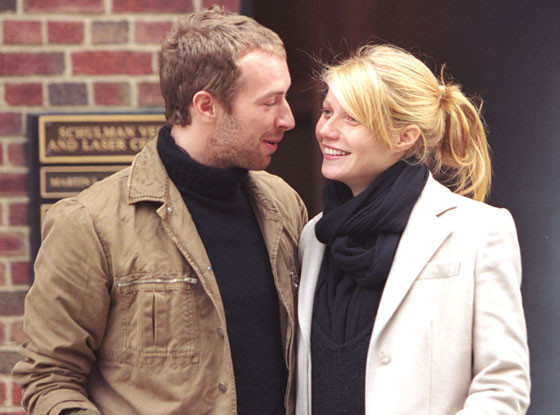
rs_560x415-130724130535-560.martin.cm.72613A lot has been made about Gwyneth Paltrow and Chris Martin deciding to consciously uncouple, after more than 10 years of marriage. Many people are unsure of what exactly conscious uncoupling is and figure that it’s just a new age, more amiable way to say divorce, but is it?

The couple stressed in a statement that “in many ways we are closer than we have ever been”, they have come to the conclusion that “while we love each other very much we will remain separate”.

Conscious uncoupling is a great and healthy way to  to end a relationship, while remaining complete as a person. It’s basically when, in an ideal situation, a couple comes to an agreement that their romantic relationship isn’t working for them and that they should end that part of their relationship, leaving room for friendship or at least parting ways without bad feelings.

It sounds very Pollyannaish, but why do breakups, divorces and the end of relationships have to be so painful, heartbreaking and dramatic?

Part of it is because that is what is taught and modeled to us by society, our families and the media. We are taught breakups are supposed to be destructive and negatively impact our lives, but they don’t have to be.

Imagine if when one person realizes that the relationship isn’t working for him or her, that they were able to talk to their partner and have a conversation where they both agreed to consciously uncouple. There would be less pain, less negativity and less destruction in those two peoples lives.

They wouldn’t carry the baggage from their past relationship (at least not as much) into the rest of their lives and into their new relationships. They would be overall more mentally and emotionally healthy individuals.

Sadly, many of us aren’t rational enough to do conscious uncoupling. Most of us are naturally irrational and neurotic when it comes to love and our feelings for each other. Most of us, even when we know a relationship isn’t working out, stay anyway.

Much of the time we stay in relationships out of fear; fear of being alone, fear of hurting the other person, fear of what the future without that person will look like it. We all have our reasons for why we stay in relationships we really want out of.

We stay and become bitter, or stay and cheat either physically or emotionally. We stay and withdraw love, affection and sex to punish the other person. We stay until the other person does something that makes us leave, something which usually ends up hurting us and thus we usually leave relationships wounded and go into our new lives damaged with a greater risk of entering into a new relationship baring scars from old relationships.

I wish I had the rationale and guts to at least try conscious uncoupling in my previous relationships. It would have saved them and myself much pain, heartache, regret and sorrow, but I didn’t out of fear.

Conscious uncoupling takes audacity, a healthy overall sense of self, and I think for it to work successfully for both people, it takes two people who already have not only a healthy sense of who they are as individuals, but also have an overall healthy relationship with great communication to start with.

You may be thinking, if they had  a healthy relationship and great communication, then what was the problem? The problem could be anything. We don’t have to be in bad relationships to decide that it should end. We don’t have to be in good relationships and then consciously or unconsciously make them bad so that we have a reason to leave. We can practice conscious uncoupling as a healthy way to end a relationship while keeping us whole.

For more detailed information, and if you have 50 minutes, you can watch psychotherapist and author Katherine Woodward Thomas discuss conscious uncoupling. She specializes in “the art of completion” which she says is  “a proven process for lovingly completing a relationship that will leave you feeling whole and healed and at peace”

From experience I know that it hurts when relationships ends, but conscious uncoupling reminds me that it doesn’t necessarily have to.

Tragic Romeo And Juliet: Teens Kill Officer Then Themselves

7EE7E49C-E9C2-4100-9434-AC8F2F01D337.png
Officer Robert German

In an article I wrote previously Are You In Tune With Your Teenager,  I discussed the importance of parents engaging their teenagers in conversation and actually listening to what they have to say. So many parents simply do not listen to their teens and in this one incident in particular, it proved to be deathly.

Last week, in Windermere, Florida, a very small town just outside of Orlando, 18-year-old Brandon Goode and 17-year-old Alexandria Hollinghurst, two troubled teens in love from Davenport, Florida, decided to run away together. They were both suicidal.

Alexandria seemed to have been suffering from depression while Brandon may have suffered from any number of mental issues (in 2012 his mother called the police reporting that her son had painted his face black and was threatening her with an axe).

Their relationship seemed to be as unstable as the typical teenage relationship, but much more so due to both of their emotional and mental health states. Alexandria’s family didn’t seem to like Brandon too much, and three days before they ran away together, Brandon wrote Alexandria a letter apologizing for the trouble he had caused her with her parents and thought it would be better if they broke it off so he wouldn’t continue to cause her pain.

In that letter which was partially made public, and previous letters, it was obvious that the two were in love and had an intense emotional relationship, even declaring themselves to be engaged. They had thoughts of running away to the west coast of Florida together and sailing a boat to Panama where they would get married and live happily every after. A teenage fantasy that they were determined to either make happy, or die trying.

Brandon Goode and Alexandria Hollinghurst

On the day they ran away together, Brandon left a suicide note that said: “Please don’t be sad, this is what I want now, I get to die peacefully with the woman I love, the woman of my dreams, my fiance (Yes we were engaged!).”

Alexandria had written a suicide note a day earlier, stating to her mother: “If I  had stayed another minute I would have painted the walls and stained the carpets with my blood, so you could clean it up,” she wrote in another letter to her mother “you turned a conversation about depression and suicide  into something all about you.”

Her mom called the police who were there when Alexandria showed back up at her home. She denied being suicidal and the deputy left. The next day she ran away with Brandon. The two were immediately listed as “missing and endangered” and local and surrounding police officers went looking for them, even spotting them once before they drove off recklessly, only to later encounter Windermere police Officer Robert German as they walked along the side of the road.

Officer German immediately called for assistance, but it was too late. The teens shot and killed the officer before killing themselves.

Could the murder of this officer and the suicide of these two teens have been prevented? I’m almost sure it could have, but it may have taken some type of intervention a long time ago. However, I can’t help, but to wonder what if Alexandria’s mother would have really listened to her when she tried to talk to her about depression and suicide? Would she have been able to save her daughter, get her some help and maybe both her daughter and Officer German and maybe even Brandon would be alive today?

We will never really know, but I definitely think this reinforces the fact that parents really need to listen to their teens, make sure they understand what their teen is trying to say and DO NOT turn their conversation into a lecture or something about the parent. That’s not what your teen needs in that moment. They need you to listen, to be in tune with them and definitely to help support and guide them.

There is a lesson to be learned from every tragedy and I hope this one helps us learn to listen, communicate and pay attention to warning signs before it’s too late.

The True Toll Of War

20140320-203936.jpg

I’ve written before about the affects of war on our veterans. About how on average 22 veterans kill themselves everyday, many suffering from post traumatic stress disorder, traumatic brain injuries, physical injuries, substance abuse, depression and other mental stressors. However, what is rarely talked about is wars toll on the families of veterans.

Many military spouses, children, even siblings and parents end up suffering when their loved ones are deployed and sadly, many of them end up killing themselves as well. Exactly how many is unknown as that record is not yet being kept the way the number of veterans who commit suicide is, yet it is an issue that needs to be tackled.

Deployment after deployment can take its toll on any veteran and his or her family. The fear, trauma, uncertainty, pressure and strain can be too much for some of them to bear. Many are left feeling exhausted, isolated and desperate.

Multiple deployments can leave a family feeling despondent. Many families end up emotionally and financially shattered as they take care of injured veterans with physical and or emotional wounds that can take their toll over time. Some are so grief stricken over the loss of a loved one at war, that they themselves can’t stand to live.

I am not saying that stress, plus deployment equals suicide. Suicide is much more complicated than that. The combination of reasons a person commits suicide is different for each individual. There are many military families who deal with war, injury and death fairly well and show great resilience.

However, when it comes to suicide there are usually many underlying factors such as a wife who was already depressed and gets extremely depressed when her husband is deployed. Alone and depressed, she may be more tempted to take her own life.

Many family members get severely depressed when their loved one is deployed, but fail to seek mental health help out of fear that it will jeopardize the career of their loved one. After all, they are supposed to be the strong ones, supporting their family members at war. However, they too suffer.

Many who sought help felt like they did not get adequate treatment. Some confided in their doctors only to receive medication with no counseling or follow up care.

Take Faye Vick for example, a 36-year-old Army wife of a newborn and 2-year-old who killed herself and both kids by asphyxiation in her car while her husband was deployed.

Cassey Walton, a wife of an Iraq vet who killed himself outside his home in 2007, shot and killed herself just days later wearing her husbands fatigue jacket and dog tags.

Monique Lingenfelter, the wife of a sergeant, barricaded herself in her home and killed herself and her baby despite police trying for hours to persuade her to come out.

Sheena Griffin told her husband while he was away at Fort Hood preparing to be deployed to Afghanistan, that she wanted to kill herself and their 8 and 9-year-old sons. By the time he called police and they arrived to her house, the home was already engulfed in flames and Sheena and her two sons were both dead.

And then there is Jessica Harp who wrote a nearly 4,000 page suicide letter that went viral, detailing how her marriage had deteriorated after her husband served in the war.

According to Harp, her husband came back changed, drinking, impulsive and most likely suffering from PTSD. She said that if her husband had died she would have been surrounded with support, but because he wasn’t dead physically, but wounded mentally, there was little to no support and the weight and emotional strain was too much for her to bear.

Harp didn’t kill herself. Her letter was preprogrammed to be sent out, but she ended up in a local hospital instead of killing herself.

Melinda Moore, a researcher at the University of Kentucky says, “The service member is like a pebble in a pool, the pain a person carries affects everyone around them. Trauma ripples outward.”

You can see these affects on their spouses, their children, other family members and even friends before, during and after deployment. War has a way of changing people. The person who left isn’t always the person that comes back and this has an affect on the entire family unit from parents, to spouses and kids.

The number of military family members who have killed themselves or attempted to kill themselves is unknown, because it isn’t being tracked, something I hope will change soon. In 2009 there were 9 confirmed suicides of service family members and “too many to count” attempted suicides in just the army alone according to Army officials.

The way we treat our veterans who come back from war has to be holistic, meaning that we treat not only the veterans, but those are are closes to them as well in order to keep families together, people mentally health and a live.

If you or anyone you know who is a family member, spouse or even friend of a service member and you need help, here’s a list of resources.

Veterans Crisis Line- A 24/7 hotline open to family members of all armed forces: 1-800-273-8255 and press 1

For nonemergency help try TAPS (Tragedy Assistance Program for Survivors): 1-800-959-TAPS (8277)

Military OneSource- provides counseling referrals and assistance with all needs of military life including mental health: 1-800-342-9647

Social-Emotional Development in Children Zero to Five: Part 1

My 7 month old son Kaiden

Over the next few weeks, I will be covering some information on social-emotional development and mental health for children 0 to 5 years of age. The reason for this is not only because I have my own seven month old son, but because of my new position as a children therapist.

In the last month or so in my new position, I have come across a handful of patients aged 2 to 4 and have had some difficulty trying to figure out the best way to treat them. It’s one thing to work with children, it’s another thing to work with the smallest of children who generally have no idea what they are doing and why they are doing it and their parents have already given up on them.

I’ve seen parents with 2 year old children, reporting signs of hyperactivity, inattention, defiance, aggression, you name it. They insisted that their child was different then all other children, out of control and demanded medication. And I’ve seen these kids, 2 to 5 year old kids who definitely were expressing signs and symptoms not typical of the average child.

In many of these cases, it ends up being the parent that needs the most help, either counseling themselves or parent skill training to learn how to deal with their children and curve unwanted behaviors. Still, in a few of these cases, it was obvious that there had been some type of trauma in the very early years of these kids lives. Trauma that remained unprocessed and so the child was dealing with the trauma in the best way they knew how, acting out.

Most of the time, finding out this information is not easy because the parents either don’t tell you the information or they didn’t even recognize that the traumatic event was actually traumatic for the child. Many parents believe that children 0 to 5 aren’t affected by certain events, especially younger children 0 to 2. In reality, even in utero, children can be affected by stressors their mom goes through.

For instance, when I talk to the moms of many of the children I work with who are 0 to 5, I find out that many of them were in abusive relationships during their pregnancy and afterwards. Many of them got abused regularly in front of their infants and young children, not thinking this would have an affect on them. Many of them yelled and screamed with their partners or other family members regularly with their child in their arms.

These things can have a really big affect on their child which is why I suspect, at least in part, is why their children now are “out of control”. They have experienced a lot of stuff, emotions, things that may not seem like trauma to us adults, but can be traumatic experiences to the child, and they don’t know what to do with it. They lack the ability to communicate like adults so they internalize it and express it the best way they know how which can look like disruptive behavior.

Another two year old I saw, his mom had no idea why he was so “wired” and screamed all the time. She pretty much said he was born that way, but I knew that wasn’t likely the case. After much probing and counseling, I eventually found out that this mom too had been in an abusive relationship throughout her whole pregnancy and afterwards. As a matter of fact, her baby was in a car seat when the father was driving and beating on her at the same time. They ended up getting into a bad car accident where the baby somehow ended up flying unto the floor and stuck under the passenger seat of the car for nearly half an hour until he was freed by firefighters. If that wasn’t traumatic enough, he ended up spending 3 months in the hospital recovering from his broken bones and internal injuries. Yet, this mother didn’t think that this had any affect on her 2 year old childs’ current behavior until I brought this to her attention.

Without going into the neuroscience behind it (at least not at the moment), the brain is always changing and young brains are changing and developing the most. Experiences are the one of the  things that change the brain the most, causing the actual brain structure to change.

Everything we experience from sights, to sounds, the people we love, the emotions we feel, event the music we listen to and the books we read, affect the way our brain develops and this is especially true in children 0 to 5.In the next part of this series we will continue to explore behavior, parenting and early social and emotional development  and ways parents can nurture social and emotional skills in children 0 to 5.

It’s Rarely About Us

20140309-134341.jpg

In life, we have enough to deal with with our own personal battles, the up and downs of everyday life and our own junk from our past and worries about our future. Still, most of us allow other people to dump on us, to put some of their battles, junk and worries into our already cluttered lives.

Most of the time we don’t even know this is happening and the people doing it to us are usually unaware as well. This all happens in our unconscious for the most part and is what is called displacement in psychology.

Displacement is an unconscious defense mechanism where someone transfers feelings of emotions, ideas or even desires unto other people or even objects. This usually happens in an effort to relieve anxiety, especially when it comes to things like aggression and sexual impulses.

Take for example, a wife who is sexually attracted to her boss and feels extreme guilt about it. She may come home and accuse her husband of being unfaithful, wanting to be with other women or even not finding her sexually desirable any more.

The wife will do this with so much emotional energy, that the husband will have no idea where these thoughts and feelings are coming from and will most likely do everything he can to assuage his wife and may even find himself stressed out although in all actuality, the situation has nothing to do with him.

The issue is not his, but he will make it is. He will take on all the emotional energy although it is not his in an effort to allay his wives feelings.

He may lose sleep about it and wonder what it is he is doing wrong.

We’ve all been in situations, arguments even where we knew on some level that it was not about us. I’ve been in situations where someone made me feel like I did something wrong and I did everything I could to rectify the situation, only to eventually find out it had nothing to do with me, meaning that although I was stressing and doing everything I could to make the person happy, there was really nothing I could do because it wasn’t really about me.

A good clue that it isn’t about you is when the level of emotion is out of proportion to the situation.

Lets say you accidentally drop and break a dish, but your partner goes berserk about it or you come home five minutes late and your spouse is raging out of control over your tardiness. Chances are, they are displacing their feelings, be it anger, anxiety or whatever.

Emotions can be considered energy in motion. When people have a build up of energy, they have to find a way of getting rid of it or it will affect them in other harmful ways (depression, self-harm through drugs, alcohol, reckless behavior).

Often the easiest and even safest way to get rid of that pent up energy is to direct it at the people they love simply because they know that chances are you aren’t going anywhere.

Your husband can curse you out and you may fight, but chances are you will still be there tomorrow. If he curses the person he really wants to curse out, for example, his boss, chances are he will not have a job tomorrow.

In psychology we are used to this and call it transference. Most clients eventually will transfer or displace feelings unto us, rather its issues they had with their mother, their father, their ex-husband, or whomever we start to “remind” them of.

As a male therapist, when I worked in a high school, I used to get a lot of teenage girls who would displace their anger and fear about their absent fathers towards me and in therapy, we work through this. It is part of my job, but in the real world, it is usually much more difficult and frustrating to deal with.

In some of the worst cases of displacement, it can become abuses. Lets say a husband is angry with his boss, but he can’t hit him, so he comes home and unconsciously picks a fight with his wife and hits her, displacing his anger. This may eventually become his way of “dealing with” his anger and the abuse cycle begins.

Sometimes this can have a chain reaction. Suppose the wife, now hurt and angry, displaces her anger unto their child by hitting him and the child then goes and hits the dog.

It can be a vicious, unhealthy cycle.

Displacement is an amazing psychological deception and some people will do it just as much consciously as unconsciously.

Some people will purposely displace their anger, worries, whatever unto others so that they can either attempt to avoid their own feelings or to distract the other person from the real problem.

When this type of displacement happens, it can be more abusive than simple unconscious defense mechanisms at work.

Take for example a wife who really is cheating and her husband gets suspicious. She gets scared and instead of confessing, she very angrily accuses him of being the one who is cheating. He may get so caught up in her strong emotional energy that he feels guilty for his suspicions and ends up being the one trying to treat her like a queen in an effort to show her that she is the only one for him, all the while she has successfully distracted him from the real problem at hand.

So the next time someone yells at you, gets angry really quick or displays any other emotion that seems out of proportion to the activating event, before you allow yourself to get caught up in all that emotion, take a few seconds and ask yourself, “Is this really about me?”. Sometimes that’s all it takes to avoid getting caught up in a battle of emotion that is not yours to fight and prevent yourself from unnecessary stress.