Cognitive Behavioral Therapy, A Brief Primer Part 1: Automatic Thoughts, Assumptions and Personal Schemas

Cognitive Behavioral Therapy (CBT) is one of the most popular forms of therapy used in the Western world. The premise behind CBT is that stressful states such as depression, anxiety and anger are often maintain or exacerbated by exaggerated or biased ways of thinking. The role of the therapist is to help the patient recognize his or her idiosyncratic style of thinking and modify it through the application of evidence and logic.

One of the key components of CBT is getting the person to start recognizing their automatic thoughts which usually serve to maintain their undesired state.

Automatic thoughts come spontaneously, so much so that we often give no thought to them, and they appear to be true even when distorted, which often lead to problematic behaviors and disturbing emotions.

Some forms of automatic thoughts include fortune tellingdichotomous (all or nothing thinking), catastrophizing, personalizing, mind-reading and labeling.

Automatic thoughts could be true or false. For example, someone may have the mind-reading thought that “My boss doesn’t like me” and that could be true. However, the problem is that without sufficient evidence, we usually believe our automatic thoughts to be totally accurate, even when they aren’t. Combine this with the other underlying assumptions and rules that we all have, which tend to be rigid, over-inclusive, almost impossible to attain and ascribe vulnerability into the future, and we have a recipe for repeated disappointment, anger, depression, anxiety and a host of other unhealthy feelings and thoughts (Leah, 2003).

For example, if the person who has the automatic thought “My boss doesn’t like me”, also has the underlying rule that “Everyone must like me or I am a bad person”, will be deeply upset over the thought that his/her boss doesn’t like them. The same is true with rejection which partially explains why some people do not take rejection as well as others. One person can ask someone out on a date and if that person politely says “no”, that person goes on with their day, giving little thought to the rejection. But if another person has the rule and automatic thought “If she rejects me, that means I am undesirable to all women and will spend the rest of my life alone”, they will handle the rejection totally differently.

Underlying assumptions are deeply linked to personal schemas. Personal schemas are basically the core beliefs of what we belief about ourselves. We all have personal schemas, some positive and some negative, which influence the way we interpret information filtered through our automatic thoughts.

Back to our example. If someone has the personal schemas, “I am undesirable”, “I am worthless”, “I am unattractive”, they will have selective attention and memory as they look to validate their core beliefs about themselves and thus their automatic thoughts will also work to validate their core beliefs. So if the person already has the personal schema “I am undesirable”, and the automatic thought “this person will probably reject me” (mind reading), if they get rejected it will validate their personal schema and thus send them into a tail spin of self-pity, depression and anxiety, building on the strength of their erroneous thinking, assumptions, and schema.

(The ego always wants to be in balance with you and wants to make you happy. “The ego’s mission is to take the beliefs of the self and turn them into the experiences of the self.” – Falco, 2010)

This person, like many people with depression or anxiety, will filter out any information that contradicts their negative personal schemas and assumptions. For example, they may not notice the cute guy that flirts with them, but will fall to pieces at the person who makes a disapproving comment about her hair or her dress.

The goal of a CBT therapist would be to get the person to start recognizing all of these erroneous patterns of thinking, unravel them and replace them with more accurate forms of thinking.

We will discuss in a later post how thoughts create feelings.

help4yourfamily's avatarhelp4yourfamily

Kate Oliver, MSW, LCSW-C

I usually get an eye-roll when I mention the idea of breathing or paying attention to one’s breathing in my office.  It is so simple.  We all breathe all day, everyday.  As my dad would say, “It’s better than the alternative.”  This week, I want to give you a simple task to go along with your affirmation.  Pay attention to your breath.  Notice how you are breathing at different times of the day.  If each breath is felt most in your shoulders, try taking in a breath that fills your belly like a balloon, then lets the air out of the balloon.  It only takes a moment.

Take a deep breath- through your nose if possible- and let it out slowly.  You can even try the trick my meditation teacher taught me called the “mindsweep.”  When someone has entered your space and left a bad feeling…

View original post 252 more words

Human Rights Violations, Psychological Damage and Caster Semenya

Most of us know Mokgadi Caster Semenya as the South African middle-distance runner who’s gender came into question after she blew away her competition during the women’s 800 meters at the 2009 World Championships with a then world record time of 1:55.45.

I remember when her gender came into question first in the media, then among my peers who insisted due to Semenya’s masculine appearance, voice and astonishing athletic feats, that she had to be a man, or at the minimum, not all woman.

The International Associate of Athletics Federation (IAAF) reported that they had to investigate Semenya after she made improvements in both her 800 and 1500 meter times by 8 seconds and 25 seconds respectfully, improvements in performance that usually arouse suspicions of performance enhancement drugs (PEDs) use. At this time, the IAAF also tricked Semenya and performed a gender test without her permission, something she confirmed during an interview with NBC before her Olympic race in London. Semenya stated that she knew she was being tested for PEDs, something she was used to, but didn’t know she was going through a gender test until the testing became more of a violation, poking and probing in areas she knew weren’t part of any PEDs test she had ever been through.

If this is true, which various sources confirm, it is a violation of her human rights. Furthermore, she had to seek the legal services of Dewey & LeBoeuf who are acting pro bono to make sure her legal, human and civil rights will not be further violated.

After more gender tests and speculation over her eligibility to compete as a woman, the IAAF finally cleared her in July 2010 to return to competition as a woman and has yet to release their findings from her gender tests. Since her medical records are private, it may never be known if much of the embarrassment and scrutiny Semenya was subjected to was all for nothing, but one would suspect that if the IAAF had enough evidence to suggest Semenya wasn’t “technically” a woman, they would have released it.

I have to imagine that this young lady, at the time this all began she was only 18, suffered imaginable psychological damages having the world not only question who she was as a person, but to be examined like an animal with the world waiting for the results.

Since returning to international racing Semenya hasn’t been her self. During her 800 race in the London Olympics she got silver after trailing most of the race and only running hard towards the end to secure a second place finish. Many commentators, sport analyst and spectators commented that Semenya seemed to lose the race on purpose, saying that she didn’t seem tired after the race, much like she had in an earlier international race where she got a silver. If this is true, it is sad, but can you see why someone who previously fell under world scrutiny after finishing first, would purposely opt out of being in that position again.

In an interview after the race, Semenya stated that her head just wasn’t into it. This is the Olympics, what professional athlete’s head is not into their Olympic event? Maybe one who had her human rights violated and was kept out of competition while the IAAF tried to verify her gender which indeed caused an untold amount of psychological damage.

In that same interview with NBC, Semenya asked the interviewer, Mary Carillo how she would feel if she was subjected to the same scrutiny while the world watched through a microscope and the interviewer had no response. Semenya stated “you might even think about taking a suicide” which to me suggests at some point, Semenya did indeed think about committing suicide.  I am so glad that she was strong enough, confident enough and resilient enough to overcome that destructive and irreversible thought. Now if only her psychological damages can be healed enough where she can feel free to race at her best and win without fear of once against being cast into the world spotlight for anything other than being one of the best women 800 meters runners ever.

Gabrielle “Gabby” Douglas and A.N.T.S.

Recently I watched as Gabrielle “Gabby” Douglas won two gold metals in the Olympics and made history by becoming not only the first African-American woman, but also the first woman of color to win the individual-all around in gymnastics. Remarkable feats for anyone, let alone a 16 year old. Being an African-American I was so proud of her, so you can imagine my shock when I was told that much of the talk about Gabby within the African-American community online wasn’t about her gold metals or her history making accomplishment, but about her hair. Her hair? Are you kidding me?

I took some time reading different blogs and websites and was shocked to see that a lot of people were more concerned about the texture, style and condition of her hair than about what this 4’11” exceptional athlete was doing in London. The more I read, the more I found myself enraged at the ignorance of those who expressed that Gabby was representing all African-American women “and her hair should look good” while she was doing it. This is so ridiculous. She is representing African-American women, showing that if you are dedicated, focused, work hard, refuse to take no for an answer and never give up on yourself, you can accomplish all of your dreams. Instead, many people are worried about the superficial and that got me to thinking.

There are so many places I could go with this. I could talk about the psychology of racism, self-hate, the European standard of beauty, stereotypes, the psychodynamic value (or devaluation) of African-American hair, post traumatic slave syndrome, images in the media that make many African-American’s consciously or sub-consciously reject their own images as attractive, self esteem, and the list could go on and on. However, I decided to try to stay as true to this blog as possible, and discuss something I think everyone could benefit from and that is understanding automatic negative thoughts, or ANTS.

You see, we all have automatic thoughts which are thoughts that just pop into our head without us giving much thought about them. We will discuss this more in detail next week. We all at times even have ANTS (automatic negative thoughts), but some people seem to be infested with ANTS and when reading those disparaging remarks about Gabby, I realized that those people were infested. Instead of looking at a beautiful, successful, incredible young woman, they quickly pointed out the negative and decided to focus on that for whatever reason (in the African-American community, the word “crabbing” is often used to describe when other African-American’s complain about more successful African-Americans, often in attempts to make the other person feel bad while also making the person complaining feel better about themselves). Those ANTS keep them from being able to truly see or recognize the beauty right in front of them.

People with ANTS, if you take them to a beautiful beach will complain that it’s too hot, the waves are too loud, it smells too salty or that the sand is getting between their toes.  If you take them on a beautiful midnight stroll they will complain that the moon is too bright or that their feet hurt. Or, if you show them a beautiful teenager making Olympic history, will complain that her hair isn’t done nicely. They will never be happy unless they are complaining about something. They are so used to being miserable that they are only happy when complaining. These people usually don’t even know that they have a problem because they have lived with the ANTS for so long that they are part of them.

Are there people in your life who have ANTS? People who always seem to rain on your parade, point out the negative in every situation or seem to only be somewhat content when they are complaining about how miserable they are or pointing out flaws and imperfections in other people? If so, recognizing that they are infested with ANTS helps keep you from making their issue, your issue, and allows you to detach from them either physically or emotionally. Maybe you recognize that you have an infestation of ANTS. Start paying attention to your automatic thoughts, especially those ANTS and next week we’ll start working on getting rid of them.

How to Resuscitate Your Life

The other day as I was sitting in a CPR recertification class, I couldn’t help but to think how could I apply the principles of CPR to my daily life.

Compressions

In the CPR recertification class we were taught that compressions are the most important part of CPR, keeping the blood flowing through the body. That got me to thinking that when it comes to resuscitating your life, perhaps the most important thing is to find, or rediscover the things you love and actually do them.

Many of us have hobbies or things we love to do, yet often allow the stressors of daily life to rob us of those joys and before we know it, it’s been weeks, months and sometimes even years since we’ve done those very things we claim to love. As a result we often find ourselves feeling drained, burnt out and unhappy as our time is spent more and more with obligations and less and less with the things that actually make us excited about life. This leads many of us to feel like we have lost a part of ourselves and sometimes don’t even know who we are because the real us has been smothered by this other person who doesn’t have time to do the things that actually make our hearts beat with joy.

Breathing

The second part of CPR is breathing, and I take that to mean breathing life back into yourself. Sometimes it’s easy to just come home from work and do nothing because we are tired and before we know it, a whole year has passed by without us accomplishing many of our goals or developing our personal lives the way we would have wanted to. We have to find motivation and inspiration to actually live life, be active participates in life and not just participate in it passively. What is it you need to do to breath life back into yourself? Maybe it’s getting up and going for a walk instead of taking a nap, or calling a friend instead of texting. Maybe it’s registering for a class you’ve always wanted to take, but never find the time or motivation to actually do it. Our maybe it’s surrounding yourself with people you know will help breath life back into you.

AED

Lastly, if all else fails in CPR, an Automatic External Defibrillator may be required to try to shock the person back into life. Do you need a jolt? Do you need to jump in head first in order to get past your initially trepidation? I know a friend who was afraid of heights and he signed up to sky dive as a way to overcome his fear. I’m not suggestion something so drastic, but what I am suggesting is that you push yourself out of your comfort zone if you know the reward for that is worth it. I know overweight people who are afraid to join gyms because they think people will look at them. Truth is, most people in a gym could care less and will actually compliment them when they start seeing results. They could find encouragement there, make friends, find motivation, but they can’t get over that initial fear enough to even step foot into the gym. Do you need to push yourself through that door, step into that uncomfortableness, recognize and accept that you feel uncomfortable, but know that it will pass and you will be a better person because of it?

Here is a very short list of suggestions, I would like to hear more from you and you can always create your own personalized list. Now, go out and reclaim your life!

  1. Eat some chocolate
  2. Go for a walk
  3. Take a three minute breathing space
  4. Do something pleasureable
  5. Meditate
  6. Be mindful of yourself and surroundings (mindfulness is something we will talk about in another post)
  7. Keep a gratitude journal
  8. Go to a movie
  9. Go for a walk
  10. Call an old friend

The Relationship Between Anger, Control and Fear

A lot of times when I am working with people with anger problems, I realize that two of the main sources of their anger come from either the need to control other people and fear.

Anger and fear are part of our natural flight or flight responses. The problem is, we are genetically geared to survive real threats that our ancestors who had to deal with threats to their lives on a daily basis were designed for. Today we don’t have to constantly worry about getting attacked by a leopard or the tribe across the river attacking us, and so our mind often generates fear and anger even when it is unnecessary or the threat is just imagined.

Anger in it’s self is not a bad emotion and can actually motivate people to make changes for themselves and their environment. The Civil Rights leaders in our recent history were angry and so they marched, protested and boycotted to make changes. Anger can make you write a letter voicing your disappointment in a company’s costumer service department or make you search for a new job instead of taking the abuse from a harsh boss. It can make you leave a bad situation, stand up for something you believe or protest against something you don’t.

However, anger can be destructive if it’s not dealt with in a healthy way which is when people run into problems.

Most of my clients with anger problems, once they get to the point where they can verbalize and dissect where their anger is coming from, are actually afraid. They are afraid of losing control, being taken advantage of, being ignored, etc. Take a client of mine who got into a fight while standing in line at a burger joint when he felt someone had blatantly skipped him. Does it make since for a grown man to get in a fight over a $5 hamburger because he had to wait an extra two minutes? Was it worth him going to jail and having to take anger management classes? Of course not, but to him at the time it was. He was eventually able to tell me that the reason he got so angry so quickly is because when he got skipped it made him afraid that he was invisible, that he would be seen as weak, and that he wouldn’t be respected. His fear is what made him so angry and caused him to act in an irrational way. At the same time, his need to be respected caused him to want to control the situation by making the other other person respect him and beating him up until he did.

Often times clients tell me, “She ignored me so I hit her”, “He came home late so I burnt his favorite shirt”, “He didn’t say excuse me when he brushed my shoulder so I had to push him”. All of these statements show both fear and control. Fear of being ignored, fear of being cheated on or left by a spouse and fear of being disrespected. They also show the desire to control the other person, to make them pay attention, come home on time and say “excuse me.” The problem is, we can’t control other people, just ourselves. The desire to control other people will always end up stressing us out, making us angry and causing us to act in irrational ways.

Another example is the constant wars that are waged across the world. People are afraid of losing their religion or xenophobia (the fear of people different from you), and will fight and kill out of that fear and the desire to control other people by either making them convert, conform or leave a region.

Lastly, a client of mine and her teenage daughter got into a very big fight after she found her daughters diary and read it. She didn’t like what she read in her daughter’s diary and decided to confront and punish her for the contents of her diary. Now nothing in that diary was life threatening or even “bad”, they were just her daughter expressing how she really felt about her mother and some of the things her mother did. I felt it was wrong 1) for the mother to have read the diary and 2) for her to try to punish her daughter for her private thoughts. Eventually the mother expressed to me that she felt like she had little control over anything in her life except her daughter, and she was terrified of losing control over her daughter. That need for control was actually pushing her daughter further away as well as causing the mother all kinds of anxiety and anger issues.

We have to understand that the only people we can control is ourselves and that if we can’t change a situation, we have to change the way we think about it. Wasting our time trying to change other people or change a situation instead of changing the way we think about it or removing ourselves from it, will only cause us to develop angry feelings as we try to control what we cant.

What is a Co-morbid Psychiatric Disorder?

ImageA co-morbid psychiatric disorder is any disorder that co-occurs with another psychiatric disorder. Often times we see people as having one issue, when often the truth is they have more than one problem which complicates treatment and recovery.

Recently I started seeing a young man who has both attention deficit/hyperactivity disorder and oppositional defiant disorder. This complicates treatment slightly because both issues have to be taken into consideration at all times sincetotally ignoring one while focusing on the other is seldom successful.

When I worked in the adult unit of a psychiatric hospital, it wasn’t uncommon to see people with depression and alcoholism, or schizophrenia and chronic marijuana use. Often these people use drugs to try to self-medicate and lessen the symptoms of their psychiatric disorders and other times the substances help create or amplify the psychiatric disorder. As a matter of fact, substance abuse and mental health disorders often co-occur in individuals and it’s often hard to tell what came first. Did the alcoholic become depressed the more the disease took over him, or did the depression drive him to drink?People with anxiety disorders for example often turn to illegal substances or prescription pills in attempts to relieve their anxiety. One of my clients who became depressed after losing her baby quickly became addicted to the Xanax given to her by her doctor to help cope with her depression and anxiety.

Definitely some disorders are more likely to co-occur with other disorders. As an example, people with bi-polar disorder are highly susceptible to substance abuse, ADHD, obesity and anxiety disorders.

In the high school setting I generally see teenagers who have depression and an eating disorder, so I work with them to solve both, usually paying more attention to what problem seems to be the most present and severe. With the 15 year old I recently started seeing, he is already receiving medication for his ADHD and while I definitely believe that his ADHD plays a role in his oppositional defiant behavior, I’ll focus on that later since the main reason he was referred for counseling is because of his bad attitude, refusing to follow simple rules, and anger towards his parents and teachers.

Often times teachers and parents are only aware of what condition is rearing it’s ugly head the most and aren’t aware that their are other factors contributing to the behavior. Teenagers rarely drink and smoke just because. Sure there are many who do, but usually once I sit down with them there is more to their substance abuse than peer pressure, usually if it’s not problems at home or self-esteem issues there are signs of a psychiatric disorder such as depression, anxiety or bipolar disorder.

That’s what makes treating and dealing with co-morbidity so difficult. If a patient goes to his family doctor complaining of not being able to sleep at night, he may be prescribed a sleep aid. If he doesn’t tell his doctor that the reason he can’t sleep at night is because he’s worried about his job, the economy, his elderly mother, his doctor in college, etc., then his anxiety will not go away and worse yet, he may become dependent on sleep aids.

It’s isn’t to ignore co-morbidity by focusing on just the problem that we see, but it’s important that we ask, what else may be going on. This will not only help us understand the people we care about, people that we deal with on a regular basis, but also ourselves.

I know all too well the importance of healthy eating on children’s behaviors. So many of the “problem” behaviors I work with could be diminished by healthier eating habits and proper nutrition. Excellent post and great reminder for all of us.

help4yourfamily's avatarhelp4yourfamily

Written by, Kate Oliver, MSW, LCSW-C

It’s the middle of the summer.  Schedules are out of whack and ever-changing.  We have vacations and might be spending more meals on the go or out at restaurants.  Summer can be brutal to a healthy diet, especially if we take the old approach of telling ourselves what not to eat, instead of focusing on what to eat.  It might not seem like a big difference, but focusing on what to eat over what not to eat can make a big difference.  Think of it as looking for abundance rather than deprivation.  Which sounds better to you?  Try this affirmation for the week to see about getting your health back on track or keeping it healthy.

I nourish myself by joyfully eating healthy foods and sharing them with my family.

What does this have to do with parenting?  Two major things happen as…

View original post 414 more words

help4yourfamily's avatarhelp4yourfamily

Written by Kate Oliver, LCSW-C

English: Children at play in the 'Cottage Home...

Boundaries are tough for a lot of people, especially if they were not always honored for you while you were growing up in your family of origin.  They are also ever- changing.  The boundaries you have with your two-year old will be very different from those you have with your teenager.  Extenuating family circumstances and developmental issues can also play a major role in the boundaries we set with our children.

What I would like for each parent to take a moment to do this week is to really think about how your child will have many, many adults go in and out of their lives, but very few parents.  Your role is so special and unique for your child.  They look to you to show them the way to be in the world.  They want you to guide them and teach them how…

View original post 235 more words

Do You Suffer from an iDisorder?

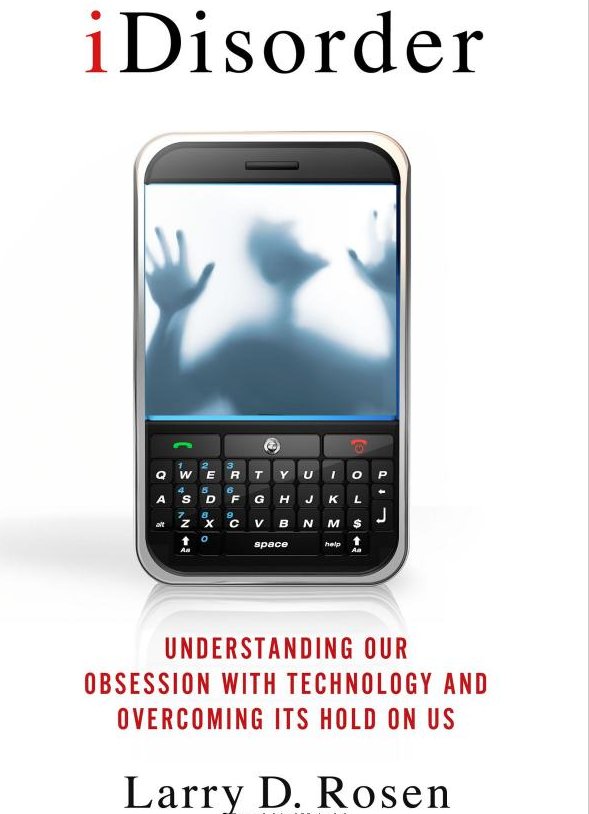
I first heard of the word iDisorder when I came across Larry D. Rosen’s book iDisorder: Understanding Our Obsession With Technology and Overcoming it’s Hold on Us.

While iDisorder is a fairly new term, the idea that our constant and immediate availability to technology causes signs and symptoms that mirror those of some psychological disorders, isn’t.

Most of us have almost immediate and continuous access to either email, our smart phones, our computers or our tablets and often at the same time, using one device to do multiple things like answering phone calls, sending emails, receiving text messages and surfing the web. The thing is, while we use these devices in attempts to control our environment by making everything in immediate access, we also began to become dependent on them.

How many of us have our smart phone with us all the time? Even while on a date or at the dinner table with family we have it next to us, often without thinking, checking text messages or emails instead of being present and engaging with the people right in front of us? Some people find it rude if you are staring at your screen and tapping away instead of making eye contact with them, but it happens so often that I dare to say it is becoming almost socially acceptable.

I remember one time at a restaurant I was people watching as I often do and I saw a couple that looked like they were out on a date, maybe a first date, but instead of sitting across from each other talking, they were both tapping away on their phones and didn’t speak to each other for at least twenty minutes as they waited for their food to be served. At that same restaurant I observed four young ladies all out to dinner together, none of them talking to each other, but all four focused in their smart phones.

There is no doubt that our devices makes it easier for us to get and stay connected with people we might only otherwise communicate with sparingly, but what about the present and those around us. Are we missing out on real life by being too focused on virtual lives?

I have friends who would rather play games on their devices than actually play games with and be around real people. Recently I was co-presenting with another counselor and when I went to turn the presentation over to her I was shocked to see she was texting on her phone. I had to stall until she came back to the here and now. I later asked her what was going on and she laughed it off, saying that it was a text message from one of her kids, nothing was wrong, but she was so used to reading and responding to their text messages that she didn’t think about it even when we were standing in front of hundreds of people.

We get so used to our phones buzzing with phone calls, text messages, emails and other notifications that even when they aren’t going off, our mind is anticipating them going off so much that it triggers our mind and body to think that we feel our phone buzzing in our pockets. These are called phantom vibrations. It’s crazy, I’ve experienced them before and I am sure most of you who are frequent cellphone users have as well.

How many of us are so dependent on our devices that we feel lost without them? Ever leave your house and accidentally left your cell phone? How did you make it through the day or did you turn back around and get it? How many accidents are caused because people are driving and texting. It’s as if that text message has to be read and answered despite the fact we are already engaged in the dangerous activity of driving. Ever watch people who’s smart phone battery is about to die and thy don’t have access to a power source? It’s like watching a drug addicted desperately searching for a fix.

I see kids all the time getting in trouble in school for having their smart phones out, even when they know they aren’t supposed to. And trying to take the phone from them? You’d think you were trying to take a kidney. They throw tantrums, even at times become hostile and risk suspension or worse over a simple device. Can we say addiction?

In his book, Larry Rosen goes on and on connecting our access to technology to things like depression, narcissism, ADHD, hypochondria, voyeurism, eating disorders, anti-social behaviors and a host of other psychological disorders.

On top of that, in teenagers I think it retards their spelling and writing abilities. I’ve seen in teenagers writing that some of them have become so used to short hand text messaging that their spelling suffers and they don’t know when they are writing papers that you can’t just put IMHO when you mean in my humble opinion or txt when you mean text. It’s crazy, but true, so many of the teenagers I work with don’t seem to know when it is and isn’t appropriate to use that type of short hand. One of my teenagers, a very intelligent junior, once wrote me a personal letter I had to decipher. If I didn’t know her I would think she couldn’t read, spell or speak proper for that matter.

The thing is, you can become addicted to anything used in excess and one of the hallmarks of addiction is denial.

As a side note, if you ever have a house party or get together, you may want to thank about banning smart phones as people tend to pull out their phones, start texting, playing games and surfing the internet instead of actually engaging in conversation and activities with people around them. 

It is a good idea for us to unplug every now and then, even if it’s just for a few hours. Put away the cell phone, the tablets, the computers and connect with real people and be present. That would be some thing great for a family to do together although your kids may throw a tantrum at the thought. I think it will help keep us grounded and appreciative of who and what we have surrounding us.